Quick answer
A thong rides up when the fabric is too small for your hip and waist measurements, when the rise sits too low for your torso, or when the back panel is too narrow to stay put. Check the size on your hip measurement first, then the rise, then the back coverage. If the waistband digs in or the fabric pulls, size up or switch to an original rise thong with a wider back panel.
Symptom: The back panel disappears between your cheeks
If the fabric narrows to a string the moment you walk, the back panel is too narrow for your body or the size is too small. A thong should stay in place without needing constant adjusting. When the back panel is cut too narrow, there is nothing to anchor the fabric, so it migrates. Check the product description for the back coverage measurement. If it is listed as a string or minimal coverage, that style may not work for your shape.
Symptom: The waistband rolls or digs into your hips
A rolling waistband usually means the elastic is stretched too tight because the size is too small. Measure your hips at the fullest point and compare to the size chart. If you are between sizes, go up. A waistband that sits flat and stays put without leaving marks is the goal. If the band still rolls after sizing up, the rise may be too low for your torso, which pulls the band downward.
Symptom: The front rides down or the sides twist
When the front dips or the side seams twist forward, the rise is likely too low for your body. Rise is the distance from the crotch seam to the top of the waistband. An original rise sits higher on the waist and can reduce shifting because it anchors above the hip bone. If you have a longer torso or high hip, a low-rise thong will constantly slide. Switching to an original rise style often solves this without changing size.
Corrective action: Check size, then rise, then fabric
Start by re-measuring your hips and waist. Use a soft tape measure and keep it level. If your hip measurement falls at the top of a size range, choose the next size up. Next, assess the rise: if the waistband sits below your hip bones and you feel it pulling down, try an original rise. Finally, consider fabric. Cotton-spandex blends stretch and recover, while all-lace styles may have more give. A thong with a lace waistband and cotton body can balance softness and structure.
When to stop adjusting and choose another option
If you have sized up, tried an original rise, and the thong still rides up, the style may not match your body's proportions. That is not a failure—it is a fit mismatch. In that case, consider a different cut such as a brief or boyshort, or look for a thong with a wider back panel and higher rise. If you constantly need to pull the fabric down, stop wearing that pair. Discomfort is a sign to switch, not to tolerate.
Diagnose your ride-up pattern
- Back panel disappears: The back fabric narrows to a string and slips between your cheeks as you move. Likely cause: back panel too narrow or size too small. Try a style with wider back coverage or size up.
- Waistband rolls or digs: The waistband folds over or leaves red marks on your hips. Likely cause: size too small. Measure your hips and go up a size if you are between sizes.
- Front dips or sides twist: The front of the thong slides down, or the side seams rotate forward. Likely cause: rise too low for your torso. Switch to an original rise thong that sits higher on the waist.
Products that address common ride-up causes
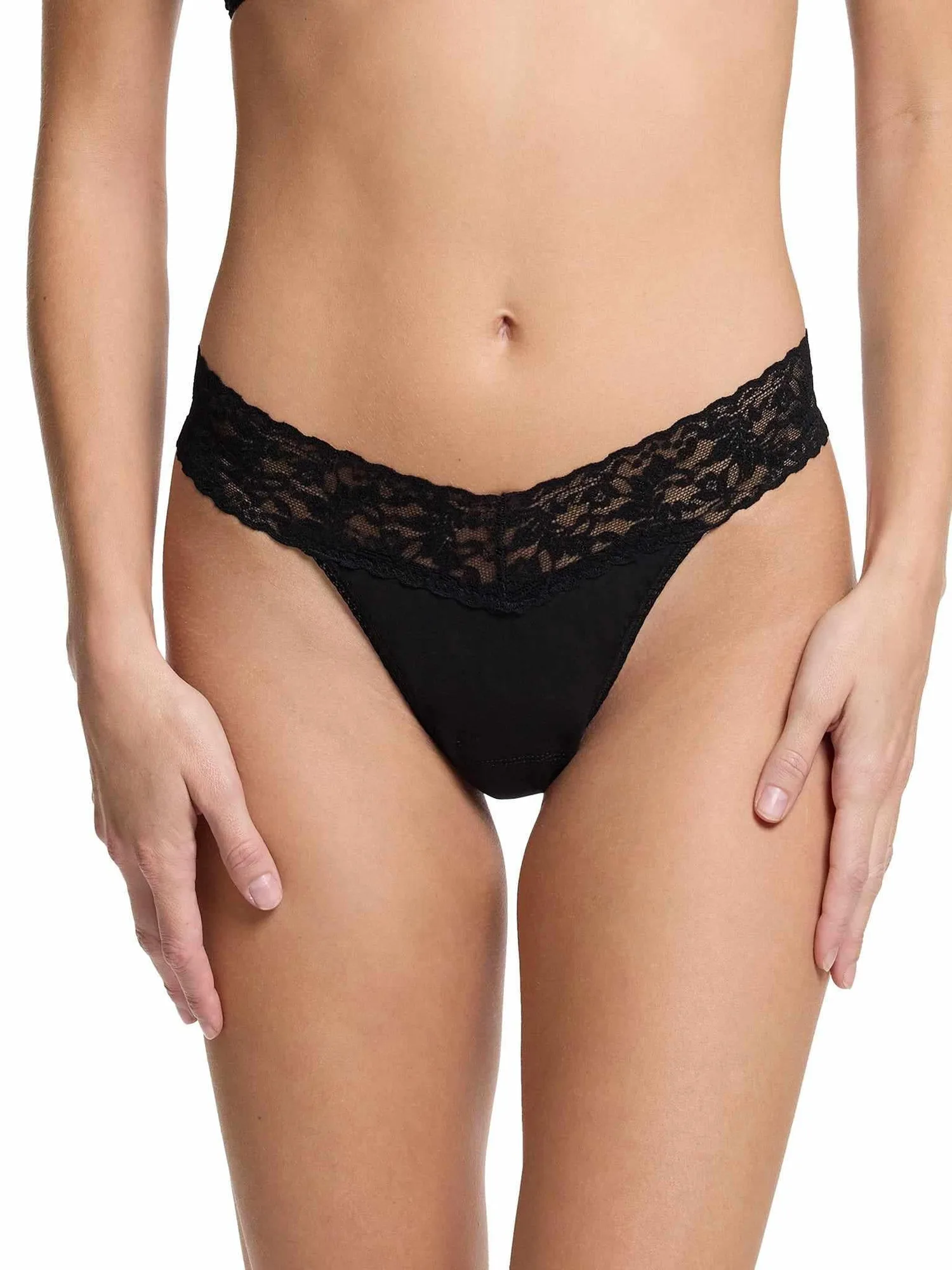
- Supima® Cotton Original Rise Thong: Supima® Cotton Original Rise Thong features a flattering V-front and V-back waistband and is known as the World's Most Comfortable Thong®. The original rise sits higher on the waist, which can prevent the downward pull that causes riding up, and the V-back helps the fabric stay in place.
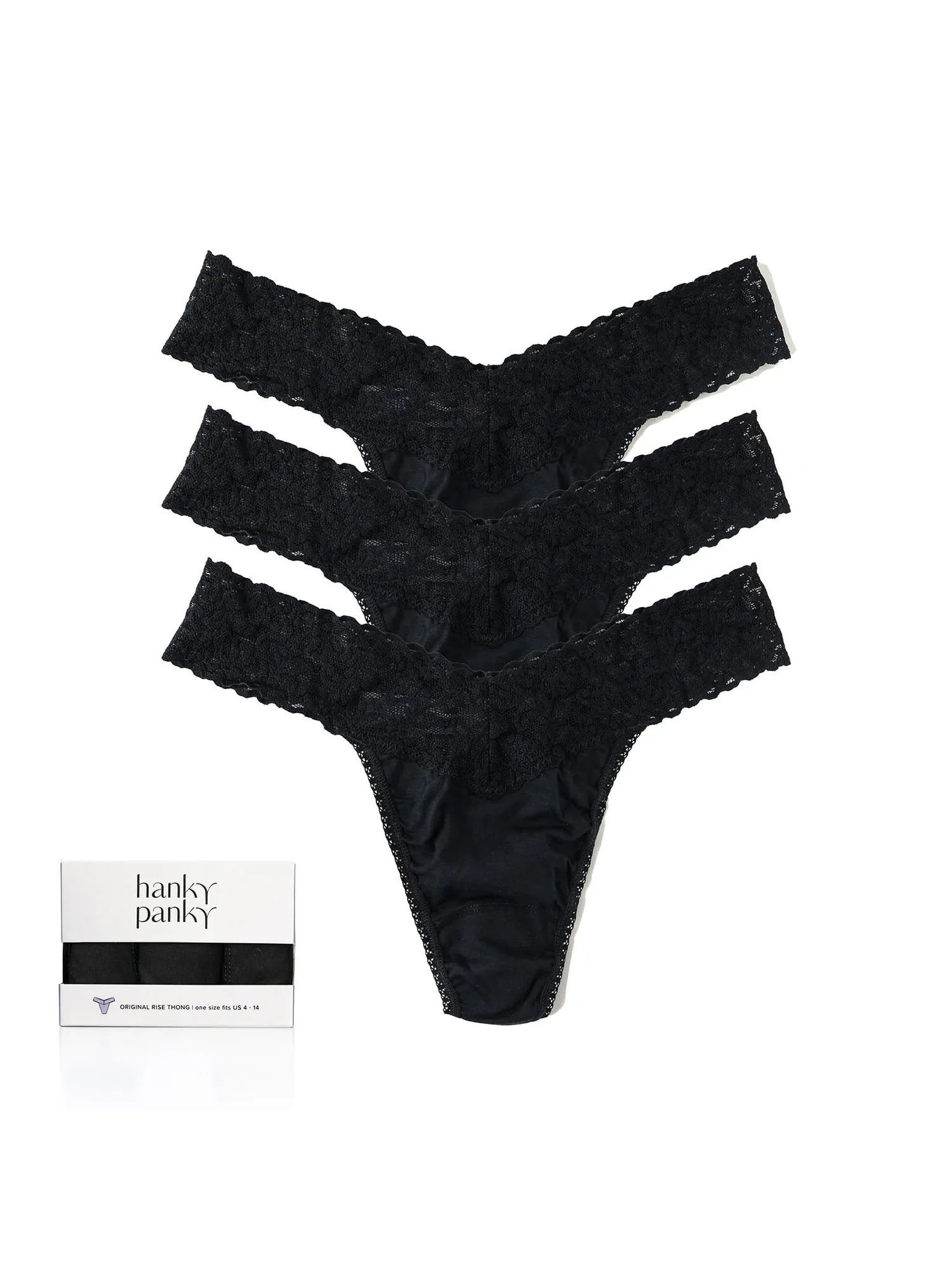
- 3 Pack Supima® Cotton Original Rise Thongs: 3 Pack Supima® Cotton Original Rise Thongs combine a soft lace waistband with Supima® cotton-spandex for comfort. The cotton-spandex blend stretches and recovers, so the thong adapts to your shape without losing fit, reducing the chance of constant adjusting.