Quick answer
Most tracking drift comes from three fixable sources: poor polar alignment or balance, mechanical backlash in the clutch or gear train, or autoguider settings that fight the mount instead of correcting it. Work through them in that order, because each one masks the next. Only replace hardware after you have confirmed the mount itself is the weak link.
First, read the drift pattern before touching anything
A single star that slowly slides in one direction over several minutes usually means polar alignment or tracking rate, not a broken mount. A star that jumps, stalls, or reverses direction points to backlash or a binding worm. Fast, erratic corrections that overshoot suggest autoguider aggression is too high. Spend one session simply recording which of these patterns you see; the fix depends entirely on the pattern, and guessing wastes a clear night.
- Steady one-way drift: check polar alignment, balance, and tracking rate.
- Periodic jump or reversal: inspect worm mesh, clutch tension, and backlash.
- Overshooting or oscillating corrections: reduce autoguider aggression and recalibrate.
- Drift only on one side of the meridian: suspect balance shift, not the mount's electronics.
Polar alignment and balance: the free fixes first
Polar alignment errors produce drift that grows with exposure length, and no amount of guiding fully hides a large misalignment. Use your mount's polar scope or a drift-alignment routine until a two-minute unguided exposure holds a round star. Then balance the scope slightly east-heavy in right ascension so the drive gear stays loaded; a perfectly balanced or west-heavy mount can rock between gear teeth and mimic backlash.
Balance in declination should be neutral, with the camera and cables in their final positions. Cables that pull as the mount slews are a common and overlooked cause of telescope mount tracking problems, because the load changes as the scope moves.
Backlash and clutch tension: the mechanical middle ground
If drift appears as a delay followed by a jump, you likely have backlash. Test it by centering a star, pressing a slow-motion button in one direction, then reversing; the pause before movement is your backlash. On many mounts you reduce it by adjusting worm mesh or by increasing clutch friction so the axis does not slip. Over-tightening a clutch, however, makes the mount stiff and can damage the drive, so adjust in small increments and re-test.
This is where a worn or dry clutch interface causes inconsistent tension. If your mount uses clutch knobs and the axis slips no matter how you set them, the contact surface may be the problem rather than your adjustment technique.
Autoguiding errors: tune before you replace
Autoguiding tracking errors often look like mount faults when the real issue is calibration or aggression. Recalibrate near the celestial equator and meridian, set guide exposure long enough to average out seeing (usually 1-3 seconds), and lower aggression until corrections stop overshooting. If the guide star is faint or the guide scope flexes, the software chases noise and the mount appears to drift.
Also confirm your guide rate matches the mount's expected pulse-guide rate. A mismatch causes corrections that are too large or too small, and the resulting drift is a settings problem, not a hardware failure.
When the mount is genuinely the limit
If you have fixed alignment, balance, backlash, and guiding, and the mount still cannot hold a star for your target exposure, the mount's periodic error or load capacity is the ceiling. At that point the honest choices are to shorten exposures and stack more frames, or to move to a mount rated for your payload. Do not buy parts hoping to fix a capacity problem; no bearing or hand control adds payload capacity.
For refractor users chasing round stars, the telescope's focal length matters too. A longer focal length magnifies every tracking error, so a short, well-corrected refractor is often a more practical fix than upgrading the mount. The supplied catalog lists refractors and mount accessories that address specific mechanical and control issues, not tracking capacity itself.
Drift diagnosis flow
- Symptom: slow one-way drift over minutes: Likely cause is polar alignment or tracking rate. Correct by refining polar alignment and confirming the mount is set to sidereal rate. If a two-minute unguided exposure is round, stop here.
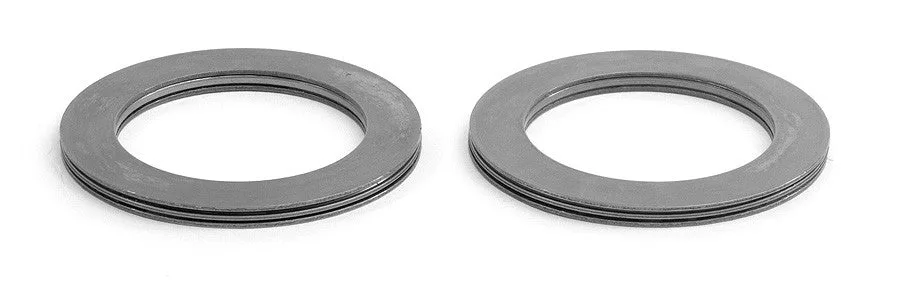
- Symptom: pause then jump when reversing direction: Likely cause is backlash or loose clutch tension. Correct with small worm-mesh or clutch adjustments, then re-test the reversal. If the jump persists and the clutch will not hold, consider the clutch knob thrust bearing set.
- Symptom: corrections overshoot or oscillate: Likely cause is autoguider calibration, aggression, or guide rate mismatch. Recalibrate, lower aggression, and match the pulse-guide rate. If corrections are smooth but stars still trail, the mount's periodic error or capacity is the limit.
- Symptom: drift only with a long focal length scope: Likely cause is magnification of an existing small error. Correct by shortening exposure or moving to a shorter focal length refractor. Choose a shorter refractor before replacing a mount that already tracks well.
Relevant parts from the Cloud Break Optics catalog
- Clutch Knob Thrust Bearing for G11, GM8, and G9: Set of 2 clutch knob thrust bearings compatible with Losmandy G-11, GM 8, and G9 mounts, SKU CKTB. If your clutch knobs slip or feel gritty and you have already ruled out alignment and guiding, replacing the thrust bearings restores consistent clutch tension so the axis holds while you adjust backlash.
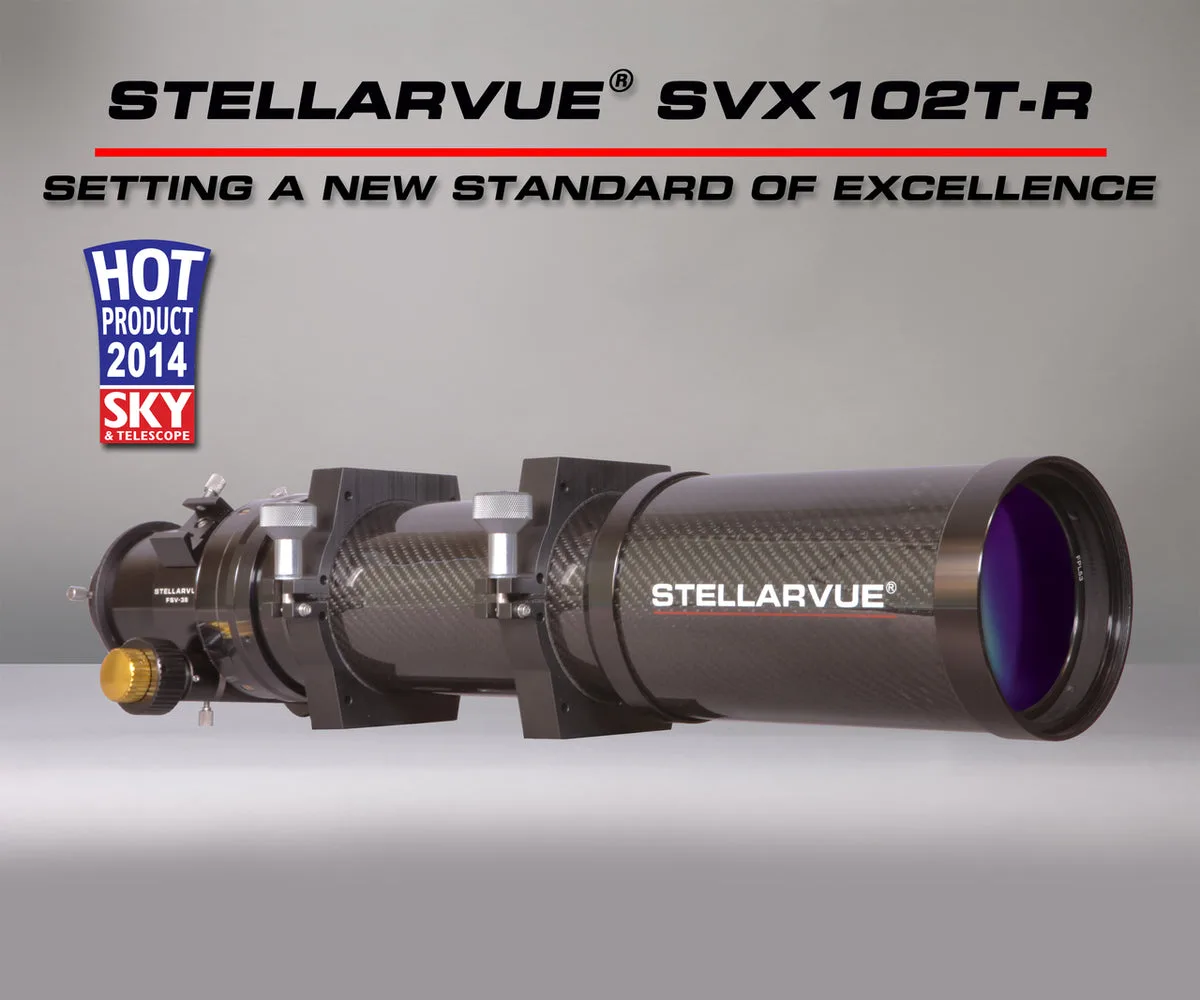
- SVX102T-R Premier Apochromatic Triplet Refractor (with Feathertouch Focuser, Flattener, & Dovetail Plate): SVX102T-R is a 4-inch f/7 air-spaced apo triplet refractor with 714 mm focal length, supplied with a Universal Field Flattener (SFFX-1-102T) and a 7-7/8-inch Vixen-style dovetail plate (TP010). A shorter focal length reduces how much every tracking error is magnified, so if your mount is already well tuned but your long scope shows drift, this refractor is a practical way to get rounder stars without replacing the mount.
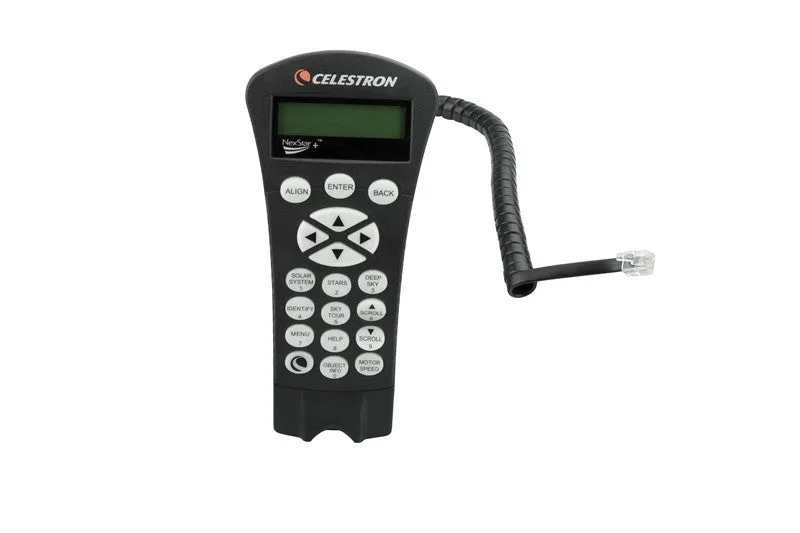
- Nexstar+ Hand Control USB, EQ (93982): NexStar+ Hand Control USB, EQ (93982) works with Celestron equatorially mounted computerized telescopes including Advanced VX, CGEM, CGEM II, CGEM DX, CGX, and CGE Pro, and connects to a PC via mini-USB. If drift traces back to firmware or PC control rather than mechanics, this hand control provides the compatible interface and flash-upgradeable firmware path for those mounts.