Quick answer
If your quilt is wider than about 40 inches, wide backing fabric is usually the faster and flatter choice. A 108 inch wide backing lets you cut one piece with no horizontal seam, so you skip the piecing, the pressing, and the lump that a seam creates on the back of a large quilt. Buy wide backing when the quilt is bigger than a throw and you want to load it on the frame without wrestling a pieced back.
You have finished the top, and now the back is staring at you: three yards of regular quilting cotton that has to be cut, seamed, and pressed before you can even start quilting. That extra step is where a lot of large-quilt projects stall.
Wide backing fabric solves one specific problem, and it solves it well. This article separates the symptom from the cause, shows the fix, and tells you when wide backing is not the right call so you do not overspend on fabric you did not need.
The symptom: your quilt back has a seam you did not want
The telltale sign is a ridge running across the back of the quilt, usually right where the two lengths of fabric meet. On a large quilt, that seam can add bulk under the needle, shift the backing as you quilt, and create a visible line that no amount of quilting hides. If you have ever basted a back only to find the seam off-center, you have met the problem.
The cause is simple math. Standard quilting cotton is about 42 to 44 inches wide. A quilt that finishes 70 inches wide needs at least two lengths joined, which means cutting, pinning, stitching, and pressing before the backing is usable.
- Measure the finished quilt top, not the pattern size, before buying backing. Quilting can draw the top in slightly.
- Add 4 to 8 inches to each side for longarm or frame loading, depending on your quilter's preference.
The fix: one cut instead of a pieced back
A 108 inch wide backing removes the seam entirely for most bed and throw sizes. You cut one length to the height you need, and the width is already there. That means no seam to match, no pressing, and a flat back that loads evenly on a frame or a domestic machine. For a queen-size quilt, this is often the difference between a 20-minute backing prep and a 90-minute one.
The tradeoff is price per yard and limited print selection. Wide backing usually costs more per yard than standard-width cotton, and the prints tend to be larger-scale or more tonal because the fabric is printed on a wider goods. If you love a specific small print, you may still prefer to piece a back from standard-width fabric.
- Wide backing is sold in larger increments, so check the cut length before you order. Some listings sell in 2 yard cuts.
- Pre-wash wide backing if you pre-wash your quilt top fabrics, so the shrinkage matches.
How to choose a wide backing that actually works
Start with the quilt's finished width and add your loading allowance. If that number is under 108 inches, a single cut works. If it is over 108 inches, you will still need a seam, so wide backing only reduces the number of seams rather than eliminating them. For king-size quilts, check the math before assuming one cut is enough.
Then match the backing to how the quilt will be used. A bed quilt that gets washed often benefits from a durable cotton like the Crushed Velvet Texture Blue108 wide backing, which is 100% cotton and sold in 2 yard cuts. A wall hanging or a show quilt may call for a backing that matches the front more closely, even if it means piecing.
- Buy the backing after the top is finished, not before. Finished size is more reliable than pattern size.
- If you are short by a few inches, a vertical seam down the center is less noticeable than a horizontal one across the middle.
When wide backing is not worth it
Skip wide backing if your quilt is a baby quilt, a table runner, or anything under about 40 inches wide. Standard-width fabric covers those with a single cut, and you will have more print choices at a lower price. The same goes for scrap quilts where the back is intentionally pieced from leftovers.
Also skip it if you already own enough standard-width fabric in the right color. Piecing a back from stash is slower, but it costs nothing new and can look deliberate when the seam is centered and pressed open.
- A pieced back is not a flaw. Many quilters prefer it for color control and cost.
- If you are making a quilt as a gift and the back will rarely be seen, standard-width fabric is often the practical choice.
Diagnose your backing decision
- Symptom: the back is wider than 40 inches and you are dreading the piecing: This is the classic case for wide backing. A 108 inch wide fabric removes the horizontal seam for most throws and bed quilts, so you cut once and load. Choose wide backing if the quilt finishes under 108 inches wide and you want the fastest path to quilting.
- Symptom: you already bought standard-width fabric for the back: You can still piece it. Cut the lengths, remove selvages, and join with a half-inch seam pressed open to reduce bulk. Center the seam on the quilt back so it sits away from the edges. Do not buy wide backing on top of fabric you already own. Piece what you have first.
- Symptom: the quilt is a baby quilt, runner, or wall hanging: Standard-width fabric covers these in one cut. Wide backing adds cost without saving meaningful time at this size. Stop here and choose a standard-width backing or a pieced back from stash.
- Symptom: your quilt is wider than 108 inches: Wide backing reduces the seam count but does not eliminate it. You will still join two panels. Plan the seam placement so it falls where quilting will hide it best. Measure twice. If the finished width exceeds 108 inches, buy enough for two panels and accept one seam.
Wide backing and club options from the shop
- Crushed Velvet Texture Blue108" Wide Backing Fabric - CVEW6017B - 2 YARD CUT: A 2 yard cut of 108 inch wide Crush Velvet Texture Blue from P&B Fabrics, 100% cotton, measuring 72 inches by 108 inches, cut in 2 yard increments. One 2 yard cut gives you a 72 by 108 inch piece, which covers many large quilts without a seam. Check your quilt's height against 72 inches before ordering.
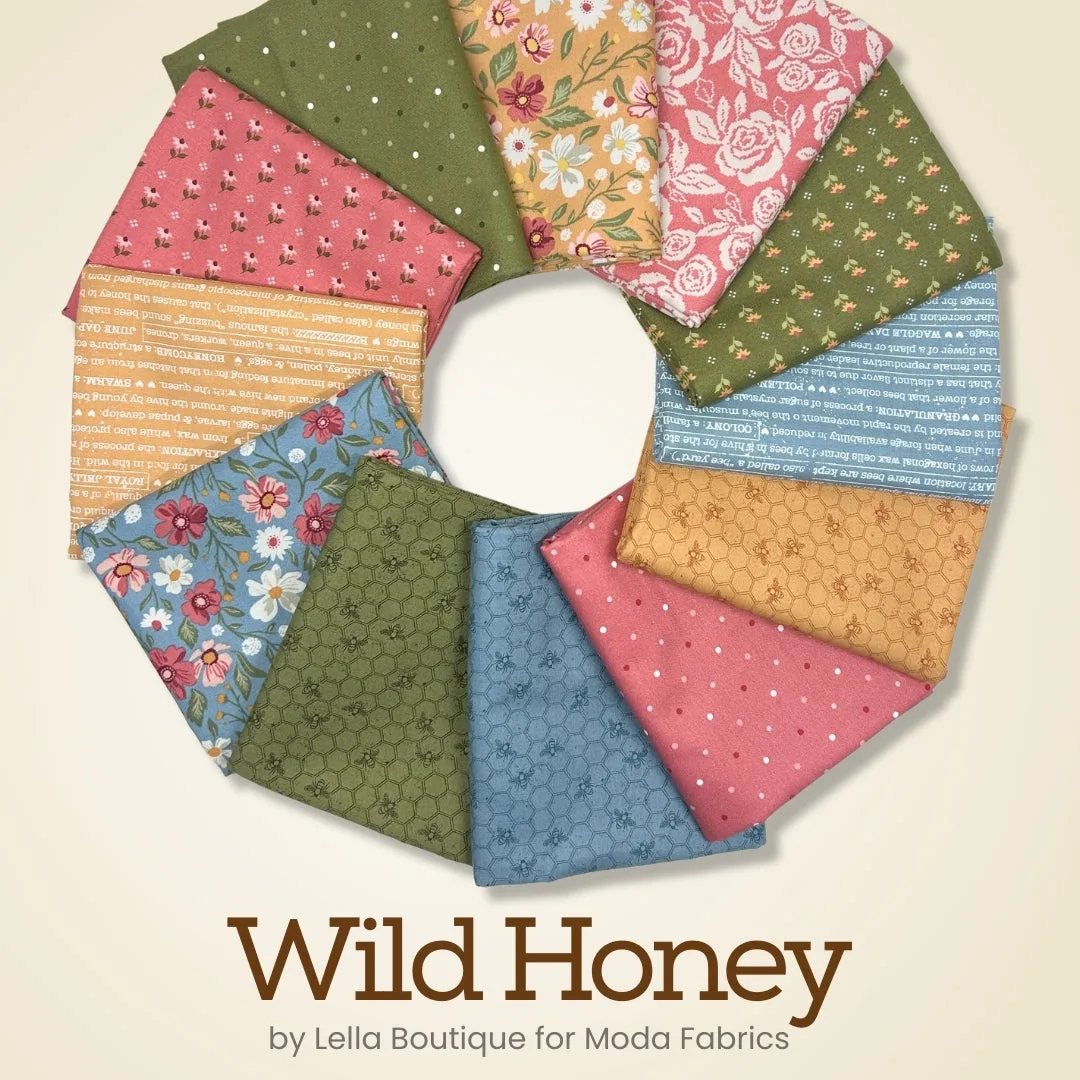
- Wild Honey Half Yard Bundle: A 12-piece half yard bundle from Lella Boutique in honeyed mustards, dusty rose, soft sky blue, and earthy olive greens, 100% cotton. If you decide to piece a back instead of buying wide goods, a coordinated bundle gives you a planned palette rather than random stash pulls.
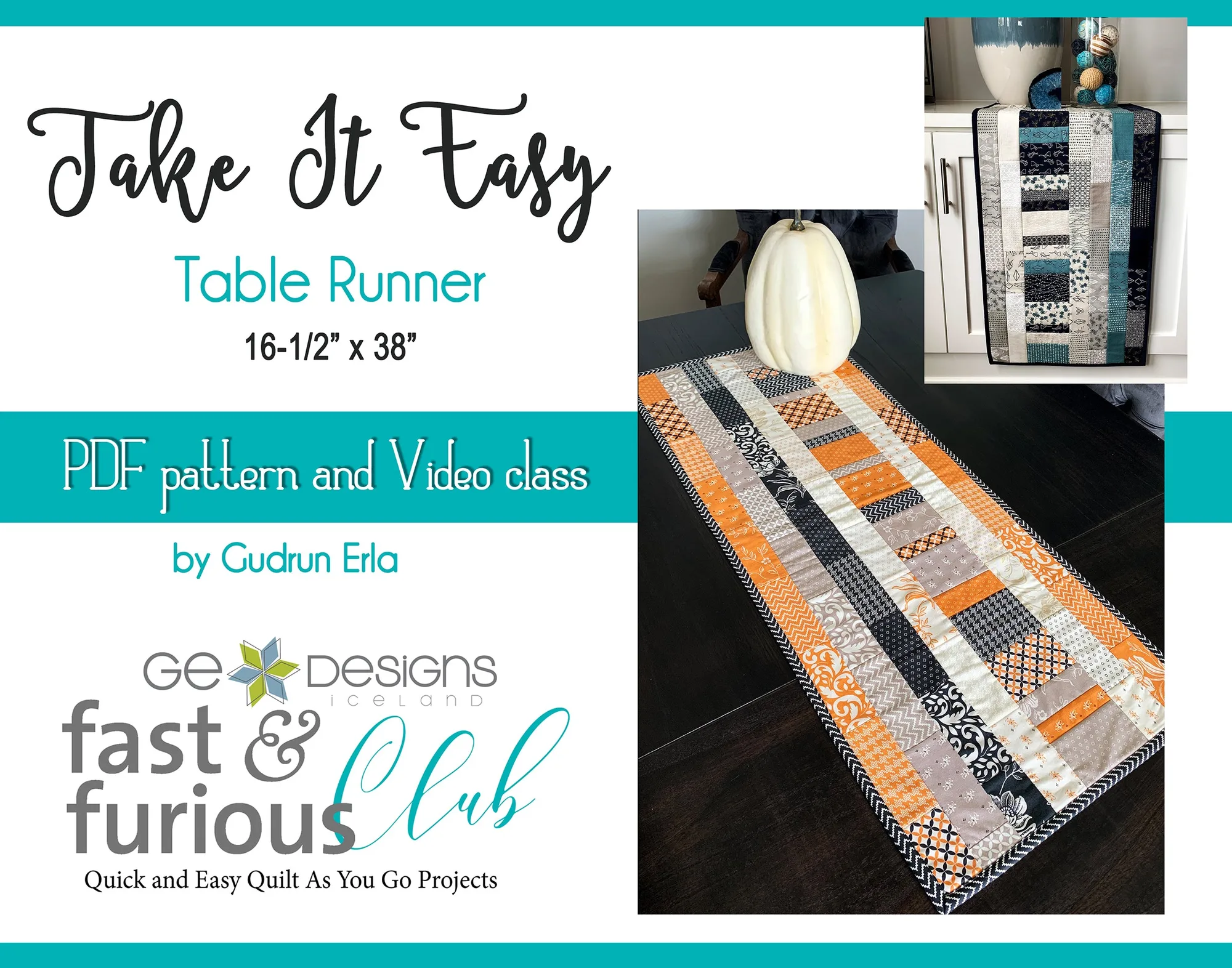
- Take It Easy Table runner - Pattern and Video Class: A downloadable PDF pattern for a 16-1/2 inch by 38 inch table runner plus a video class, using a quilt-as-you-go method. Small projects like this runner fit on standard-width backing, so you can save wide backing for the large quilts that actually need it.
Wide backing is a time-saving tool, not a rule. Measure your finished quilt, add your loading allowance, and if that number fits inside 108 inches, one cut of wide backing will get you to the quilting step faster and flatter. If it does not fit, or the quilt is small, piece the back and put the savings toward thread or a new pattern.