Two Grain-Free Cans, One Key Difference
Wild Islands offers two grain-free canned dog foods that look similar at a glance: both are 185g patés made in New Zealand with 92% animal ingredients, and both are complete and balanced for all breeds and life stages. The real decision comes down to protein source. The Chicken & Turkey recipe builds on familiar poultry and liver, while the Venison recipe uses free-range New Zealand venison as the first ingredient and is formulated without the Big 9 allergens. That distinction matters most if your dog has known food sensitivities or you simply want to rotate proteins.
What Each Recipe Brings to the Bowl
-
Wild Islands Island Chicken & Turkey Recipe Premium Grain-free Canned Dog Food 185g: 92% chicken, chicken liver & turkey; grain-free with no gluten, potato, corn, wheat, or soy; free from artificial colors, flavors, and preservatives. A high-meat poultry option for dogs without chicken sensitivities, and a familiar flavor profile that picky eaters often accept.
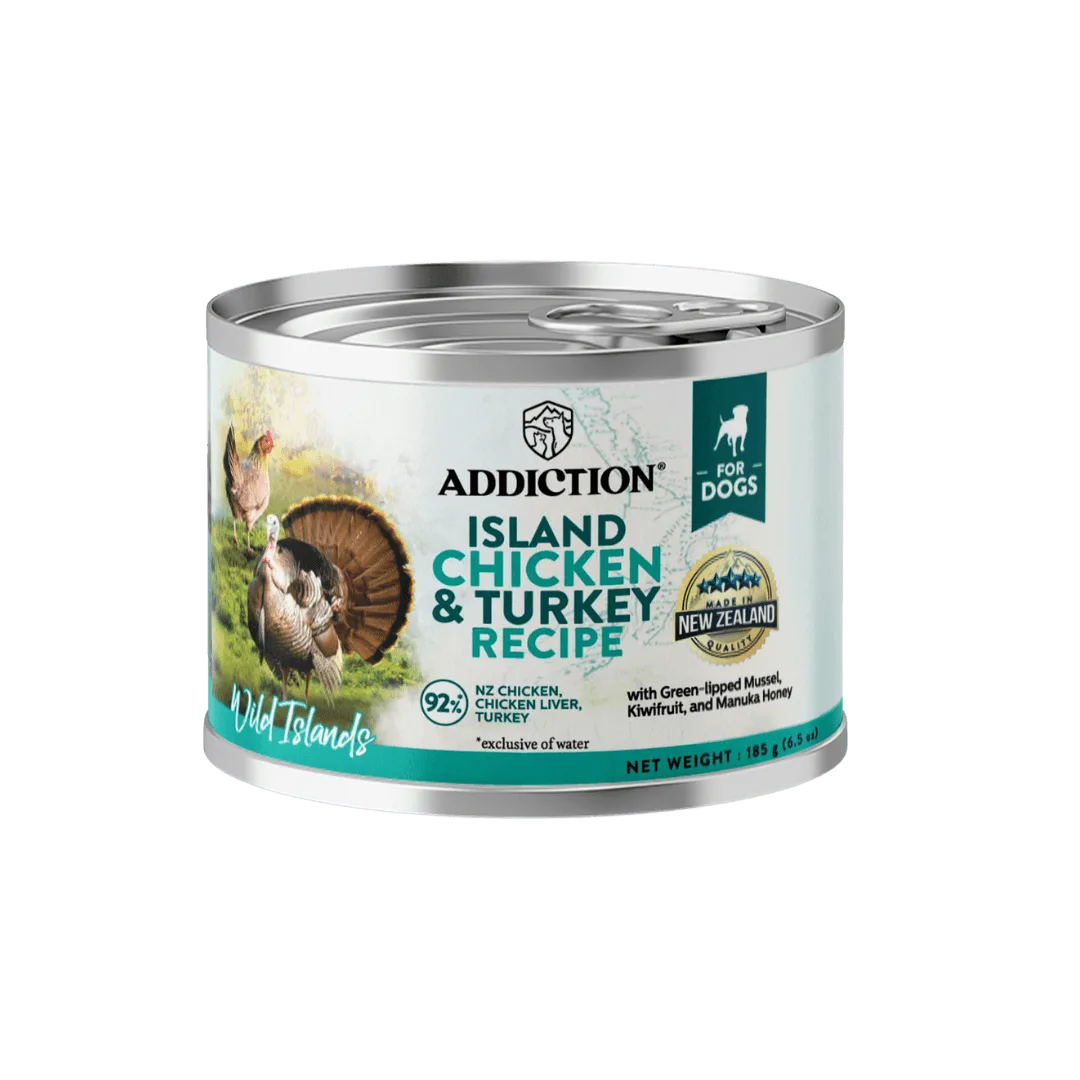
Wild Islands Island Chicken & Turkey Recipe Premium Grain-free Canned Dog Food 185g
-
Wild Islands New Zealand Venison Recipe Premium Grain-free Canned Dog Food 185g: Free-range New Zealand venison as the #1 ingredient; 92% animal ingredients; free from grains, gluten, and the Big 9 allergens. A novel-protein choice that avoids common allergens, useful for dogs with sensitivities or for protein rotation.
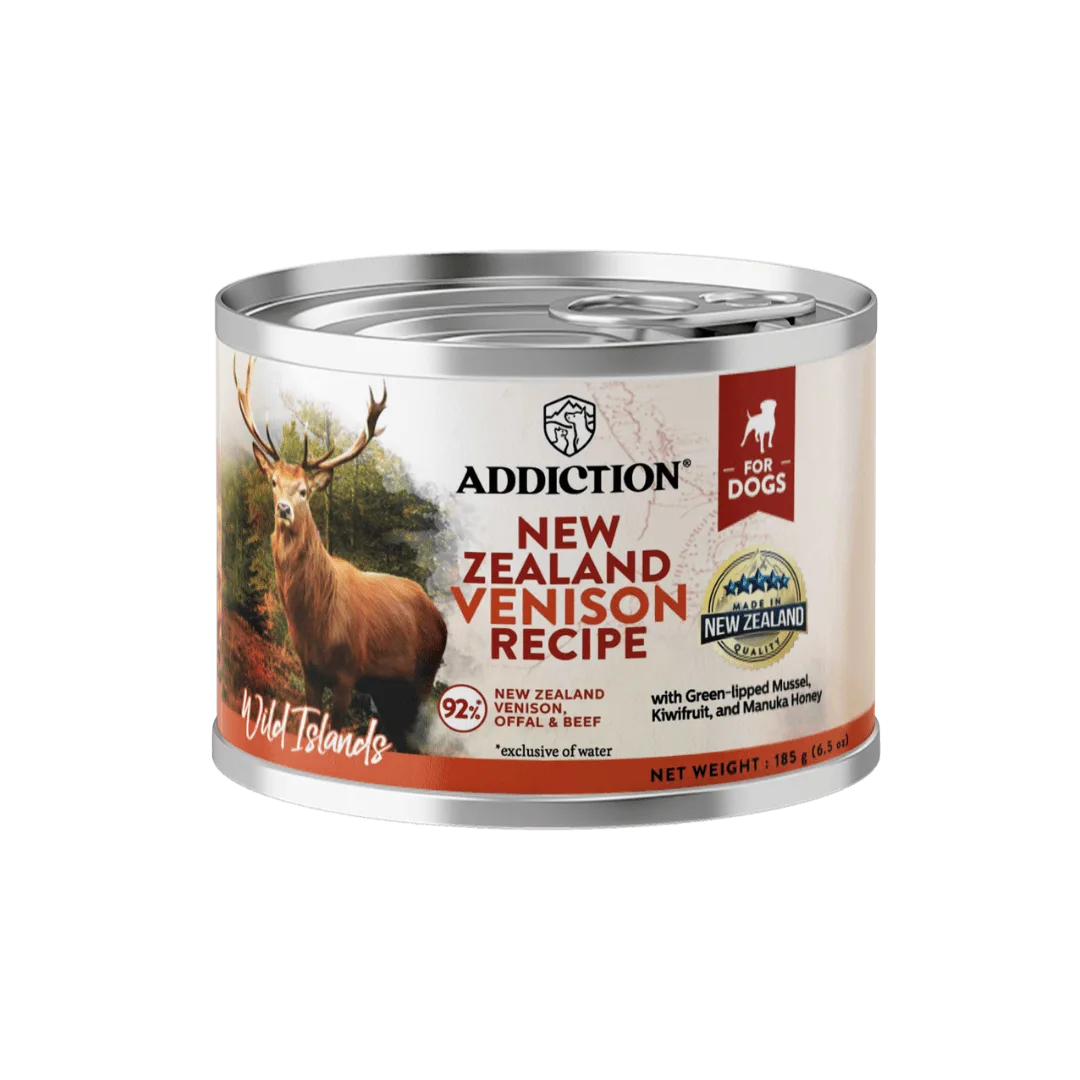
Wild Islands New Zealand Venison Recipe Premium Grain-free Canned Dog Food 185g
Venison vs Chicken & Turkey: Side by Side
- Primary protein: Venison: free-range New Zealand venison (first ingredient) plus venison offal and beef. Chicken & Turkey: fresh chicken, chicken liver, and turkey.
- Allergen profile: Venison is free from the Big 9 allergens (including chicken, beef, grains, and soy). Chicken & Turkey contains poultry and is free from grains, gluten, potato, corn, wheat, and soy, but not chicken.
- Grain-free status: Both are grain-free with no gluten, potato, corn, wheat, or soy.
- Can size and variants: Both come in 185g cans, available as single cans or multi-packs of 4, 6, 12, or 24.
- Price per can (catalog): Venison: USD 5.63 (compare at USD 8.79). Chicken & Turkey: USD 5.43 (compare at USD 7.99). Prices may vary.
- Life stage and breed: Both are complete and balanced for all breeds and life stages.
When Venison Wet Food Makes Sense for Sensitive Dogs
If your dog has reacted to chicken or other common proteins, the Venison recipe is the more cautious starting point. It is explicitly free from the Big 9 allergens, and venison is a novel protein for many dogs. That does not guarantee it will suit every sensitive dog—individual reactions vary—but it removes several common triggers from the ingredient list. The recipe also includes green-lipped mussel, Manuka honey, and kiwifruit, which the brand describes as supporting immunity and digestion. Those are formula features, not medical treatments; if your dog has a diagnosed allergy or health condition, confirm the choice with your veterinarian.
When Chicken & Turkey Is the Practical Choice
For dogs with no known poultry sensitivity, the Chicken & Turkey recipe is a straightforward high-meat option at a slightly lower catalog price. The poultry and liver base provides natural vitamins and minerals, and the paté texture works as a complete meal or a topper. If your dog is a picky eater who turns up their nose at unfamiliar proteins, chicken and turkey are often more readily accepted. It is also a sensible choice if you simply want to keep costs down while still feeding a grain-free, high-meat canned food.
How to Choose Without Overthinking It
- Start with your dog's history: If chicken has caused issues before, choose Venison. If not, either recipe is a reasonable option.
- Consider protein rotation: Many owners rotate between proteins to add variety. Keeping both recipes on hand lets you switch without changing the brand or format.
- Match the multi-pack to your routine: Single 185g cans suit trial feeding or small dogs; 12 or 24-can packs make sense if you have multiple dogs or feed canned daily.
- Treat the can as a complete meal or topper: Both recipes are complete and balanced, so you can serve them alone or mix with dry food. The brand does not supply feeding amounts in the product information, so follow your vet's guidance or the label on the can.
What the Product Information Does Not Confirm
The supplied records do not include feeding guidelines, calorie content, or preparation instructions beyond the fact that both are wet foods. They also do not list specific guaranteed analysis figures. If you need those details for portion control or a therapeutic diet, check the can label or contact the manufacturer. This comparison is based only on the information provided; absence of a detail here does not mean the product lacks it. For most healthy dogs, either recipe is a complete food, but your dog's individual needs should guide the final choice.