Quick answer
The Willow Wave manual pump is simple to use: position it over your breast, squeeze the bulb to create suction, and empty the collection cup into a bottle or storage bag. For cleaning, disassemble all parts and wash with warm soapy water after every use, then air-dry completely before reassembling.
Why manual pumping works for everyday use
The Willow Wave is designed for quiet, discreet pumping without cords or batteries. Its compact, wearable design fits easily into your daily routine, making it a practical choice for quick sessions at home, at work, or while traveling.
Manual pumping gives you full control over suction and rhythm, which can be more comfortable for some mothers than electric pumps. However, it requires one hand and may take a bit longer for full sessions, so it's best for short, on-demand pumping rather than exclusive pumping.
Understanding the parts and their care
The Willow Wave includes a soft flange, a collection cup, and a squeeze bulb. Each part plays a role in creating suction and collecting milk. Keeping the gaskets and valves clean is essential to prevent leaks and maintain suction.
If you notice a drop in suction, check the bulb and gaskets for cracks or wear. Regular cleaning and proper reassembly prevent most performance issues.
Step-by-step: Using and cleaning your Willow Wave
- Wash your hands and gather supplies: Before handling the pump or your breasts, wash your hands with soap and water. Have a clean, dry surface and a collection bottle or breast milk storage bag ready. Never skip handwashing—it's the first line of defense against contamination.
- Assemble the pump correctly: Check that the flange is securely attached to the collection cup and the bulb is firmly connected. Ensure all parts are dry and free of debris. A loose connection can cause air leaks and reduce suction, so double-check each part.
- Position the flange over your breast: Center the flange over your nipple, ensuring a good seal. Hold the pump with one hand, keeping it upright to prevent milk from spilling. A proper seal is key—if you feel air escaping, reposition the flange.
- Squeeze the bulb to start suction: Squeeze the bulb firmly, then release to create gentle suction. Repeat rhythmically to stimulate milk flow. Adjust the squeeze pressure to your comfort level. Start with gentle pressure and increase gradually to avoid discomfort.
- Empty the collection cup when full: When the cup is about half full, carefully remove the pump and pour the milk into a storage bottle or breast milk bag. Do not overfill the cup, as it may spill when removing. Emptying early prevents spills and makes the pump lighter to handle.
- Disassemble and rinse immediately: After use, take the pump apart completely. Rinse all parts in cool water to remove milk residue, then wash with warm soapy water using a mild dish soap. Rinsing right away prevents milk from drying and makes cleaning easier.
- Air-dry all parts completely: Place all parts on a clean drying rack or towel, ensuring they are fully dry before reassembling. Do not use a towel to dry the inside of the bulb, as lint may stick. Moisture can harbor bacteria, so make sure every part is bone-dry before storing.
Product facts
-
Willow Wave Manual Breast Pump: The Willow Wave Manual Breast Pump offers comfortable, portable pumping designed for everyday use, with manual operation for quiet, discreet pumping without cords or batteries. Its lightweight, manual design makes it easy to slip into a diaper bag and use anywhere, giving you flexibility without needing an outlet or charging.
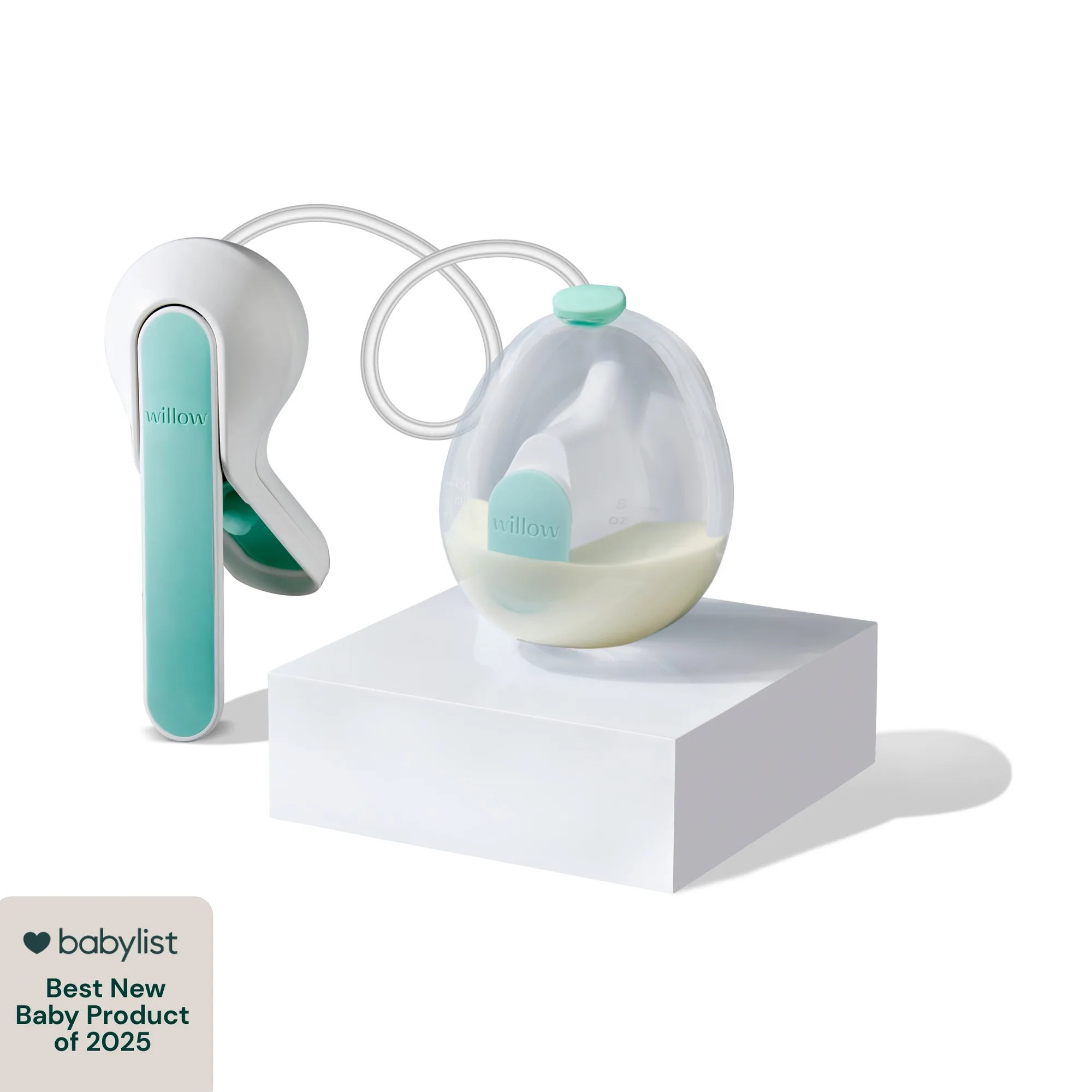
Willow Wave Manual Breast Pump