Quick answer
Treat lighting as part of storage, not decoration: keep bottles in the dark, use short bursts of low-heat light only when you are searching, and organise by how soon you plan to drink. A simple zone system plus the right opening and serving tools means you stop handling bottles twice and stop losing track of what you own.
Why light matters before you buy any shelving
Ultraviolet and blue light accelerate the breakdown of a wine's aroma compounds, and the damage is cumulative, so a bottle that sits under bright light for months can taste flatter than the same wine kept in darkness. This is why clear glass is the worst case: a bottle with no protective glass or wrapping gets the full dose. Dark storage is not a stylistic choice, it is the baseline condition for everything else you build.
- Keep bottles in closed cabinets, behind doors, or under opaque covers when possible.
- If you want to see labels, use a low-heat LED and switch it on only while you are in the room.
- Avoid leaving decorative display lighting on all evening in the same spot.
- Remember that light damage is cumulative, so the bottle that sits in the brightest spot suffers most.
Map your collection into drinking zones
Organisation fails when every bottle is treated as equally urgent. Split the collection into three zones: drink now, drink within a year, and hold. Put the drink-now bottles at eye level and near the door, the one-year bottles in the middle, and long-hold bottles in the least accessible, darkest corner. This single decision reduces handling, which is itself a form of protection because every time you move a bottle you risk disturbing sediment and knocking labels.
- Label shelves or racks by zone rather than by grape or region alone.
- Keep a simple written or phone list of what is in each zone so you can check without pulling bottles out.
- Reserve the top and bottom rows for bottles you rarely touch.
- Re-sort once or twice a year as bottles move between zones.
Choose accessories that match the job, not the aesthetic
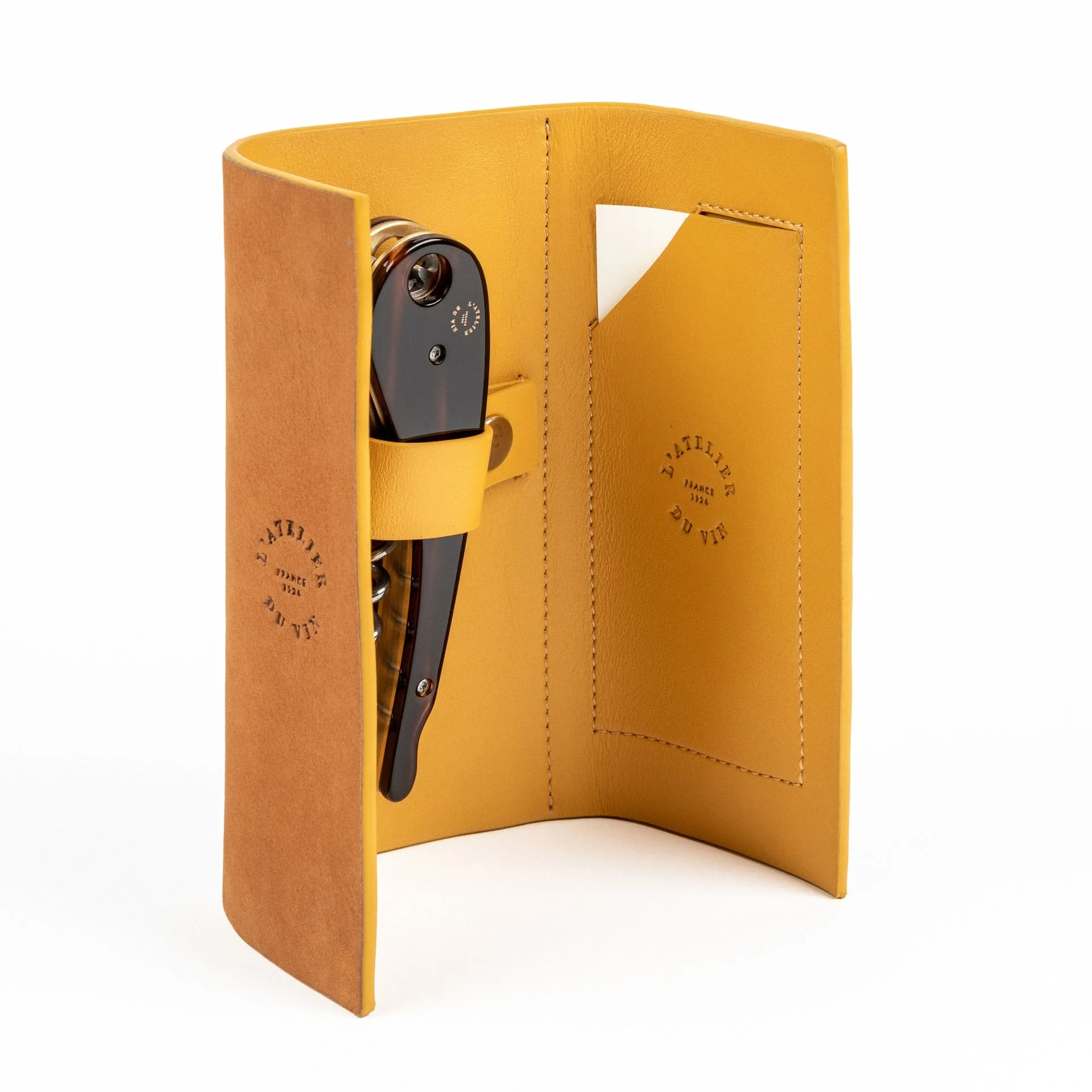
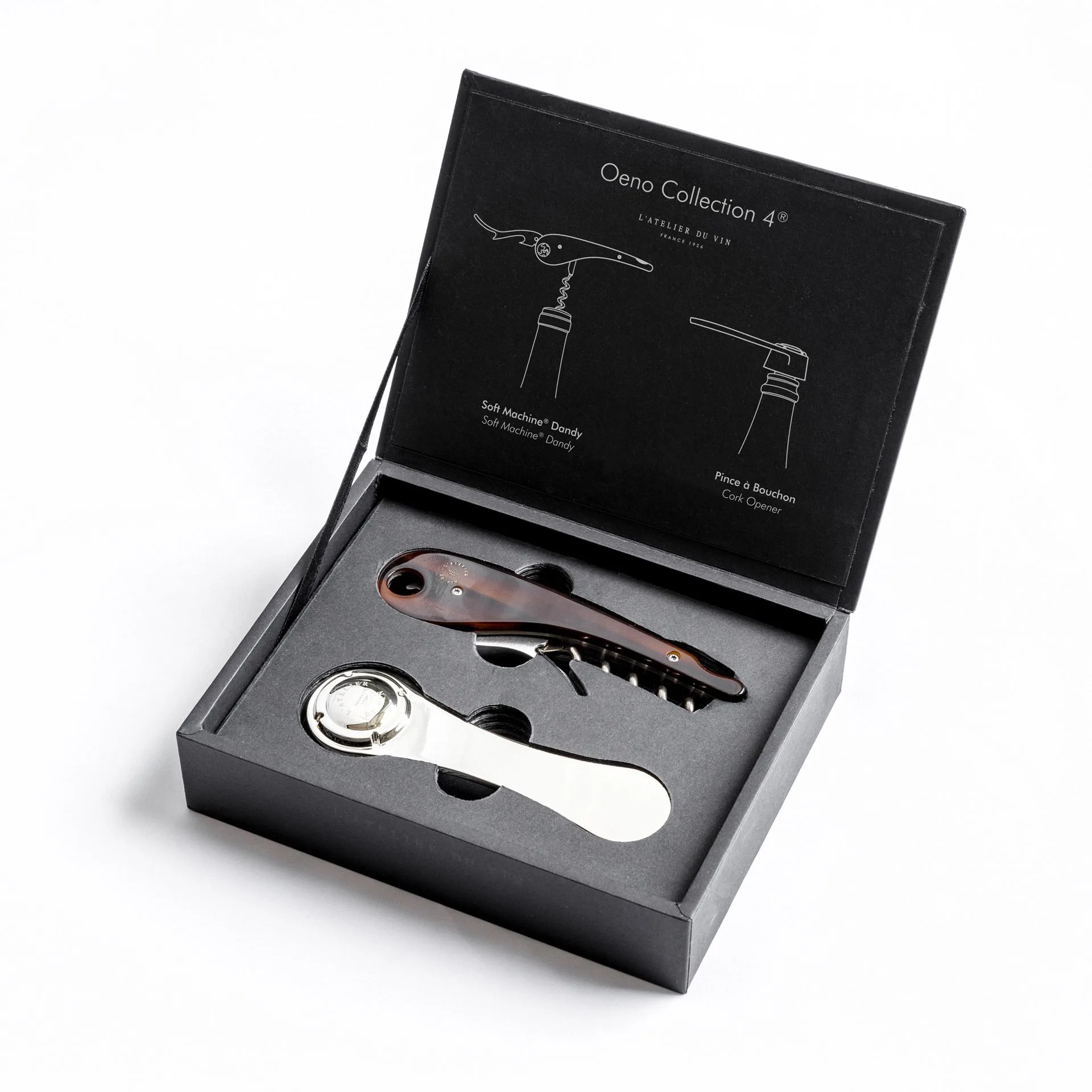
A cellar needs a small set of tools that work in low light and close quarters. The practical shortlist is an opener you can use without looking, a way to deal with sparkling closures, an aerator or pourer for young wines you open on the spot, and a case or box that keeps those tools together so you are not searching shelves for a corkscrew. L'Atelier du Vin's Oeno Collection 4 sommelier box bundles two opening tools, a Soft Machine Dandy bottle opener and a champagne cork opener, which covers the two most common closure types in one box. For a more portable setup, the Soft Machine Nomad leather case holds a Soft Machine Dandy corkscrew in a leather case, so the tool travels with you rather than staying on a shelf.
- Keep the tools you use weekly in one place at the entrance to the cellar.
- Choose an opener that works by feel if your lighting is dim.
- Add a reusable flexible wine aerator if you often open young reds or whites straight from the rack; the pack of five means you can keep one with the serving tray and spares elsewhere.
- Do not buy storage accessories before you know your zone layout, or you will buy the wrong size.
Control temperature, humidity and vibration around the light
Light is only one variable. Heat from the wrong bulb, dry air, and constant vibration from a nearby appliance all shorten a wine's useful life. If your cellar is a converted room, check what else is running there: a fridge motor, a boiler, or a bright overhead fixture can undo good shelving. Where you cannot control a factor, note it honestly and move your most valuable bottles away from it rather than pretending the whole room is ideal.
- Use LED rather than incandescent or halogen near bottles to limit heat.
- Keep bottles off the floor and away from exterior walls that swing in temperature.
- If humidity is very low, consider sealing labels or using closed storage rather than open racks.
- Do not place long-hold bottles next to a vibration source.
Your cellar setup, step by step
- Audit the light in the room: Walk the space at the time of day you usually use it and note where direct or bright light lands on bottles. Check whether any fixture runs hot or stays on for long periods. Checkpoint: if a bottle would sit in that spot for weeks, move it or block the light.
- Pick a dark baseline for storage: Move long-hold bottles into closed cabinets, opaque boxes, or the least lit corner. Keep only the bottles you are actively choosing from in visible positions. Checkpoint: the brightest shelf should hold the bottles you will drink soonest.
- Sort into three drinking zones: Create drink now, drink within a year, and hold sections. Place them by how often you need access, with the most-used bottles nearest the door and at eye level. Checkpoint: you should be able to find a drink-now bottle without moving more than one other bottle.
- Write the list before you buy more storage: Record what is in each zone and roughly how many bottles you actually keep. Use that number to choose rack or box sizes rather than guessing. Checkpoint: if the list and the shelf count disagree, you have bottles hidden in the wrong zone.
- Set up one tool station: Keep an opener, a sparkling closure tool, and an aerator pourer together at the cellar entrance. A box or case keeps them from migrating into the kitchen. Checkpoint: you should be able to open any bottle in the room without leaving it.
- Review once a season: Move bottles between zones as your plans change, check for light exposure and heat sources, and confirm that nothing valuable has drifted into a bright or vibrating spot. Next step: replace any decorative lighting that stays on with switched, low-heat light.
Tools that fit a cellar routine
- Oeno Collection 4, a sommelier box with wine accessories: The Oeno Collection 4 sommelier box includes 2 wine opening tools: a Soft Machine Dandy bottle opener and a champagne cork opener. One box covers both still and sparkling closures, so you are not hunting for a second tool when you switch styles.
- Soft Machine Nomad | Leather Wine Accessories Set: Soft Machine Nomad leather case with the Soft Machine Dandy corkscrew. An elegant wine accessories set designed for discerning wine lovers. A cased corkscrew stays protected and ready, which suits a cellar where tools are stored away from light and dust.
- Reusable flexible wine aerator | L'Atelier du Vin: Reusable flexible wine aerator pourer, pack of 5, flexible and reusable design, compatible with all standard wine bottles. Useful for bottles you open straight from the rack, and the pack of five lets you keep one near the serving area and spares in reserve.