Check the bottle, not the room
Serving temperature changes how a wine smells and tastes, but the room thermometer on your wall tells you about the room, not the wine. A wine thermometer is designed to check the bottle itself so you can decide whether to pour now, chill a little longer, or let the bottle warm up.
The Wine Thermometer from L’Atelier du Vin is made for exactly this job: ensuring every bottle is served at its ideal tasting temperature for optimal flavour and expression. The practical question is how to use that reading before you pour.
How to take a useful reading
Work in this order so the reading reflects the wine, not the outside of the bottle or the glass.
- Start with the bottle you plan to serve: Take the reading from the wine you are about to pour rather than from a bottle still in the cellar or a decanter you have just filled.
- Measure before you pour: Check the temperature while the wine is still in its bottle. Once wine is in a glass, the glass and the room begin to change the reading.
- Read the thermometer and decide: Use the reading to choose one action: pour now, chill further, or wait for the wine to warm. The supplied product information does not specify a scale, probe depth, response time or calibration procedure, so follow the instructions that come with your thermometer for those details.
- Recheck only when you change the conditions: If you move the bottle from the fridge to the table or from the cellar to a warm room, take a fresh reading before serving rather than relying on the earlier one.
What the Wine Thermometer is designed to do
-
Wine Thermometer – Serving Temperature | L’Atelier du Vin: Wine thermometer designed to ensure every bottle is served at its ideal tasting temperature for optimal flavour and expression. This is the tool’s stated purpose: a bottle-level check before serving, not a general room or cellar gauge.
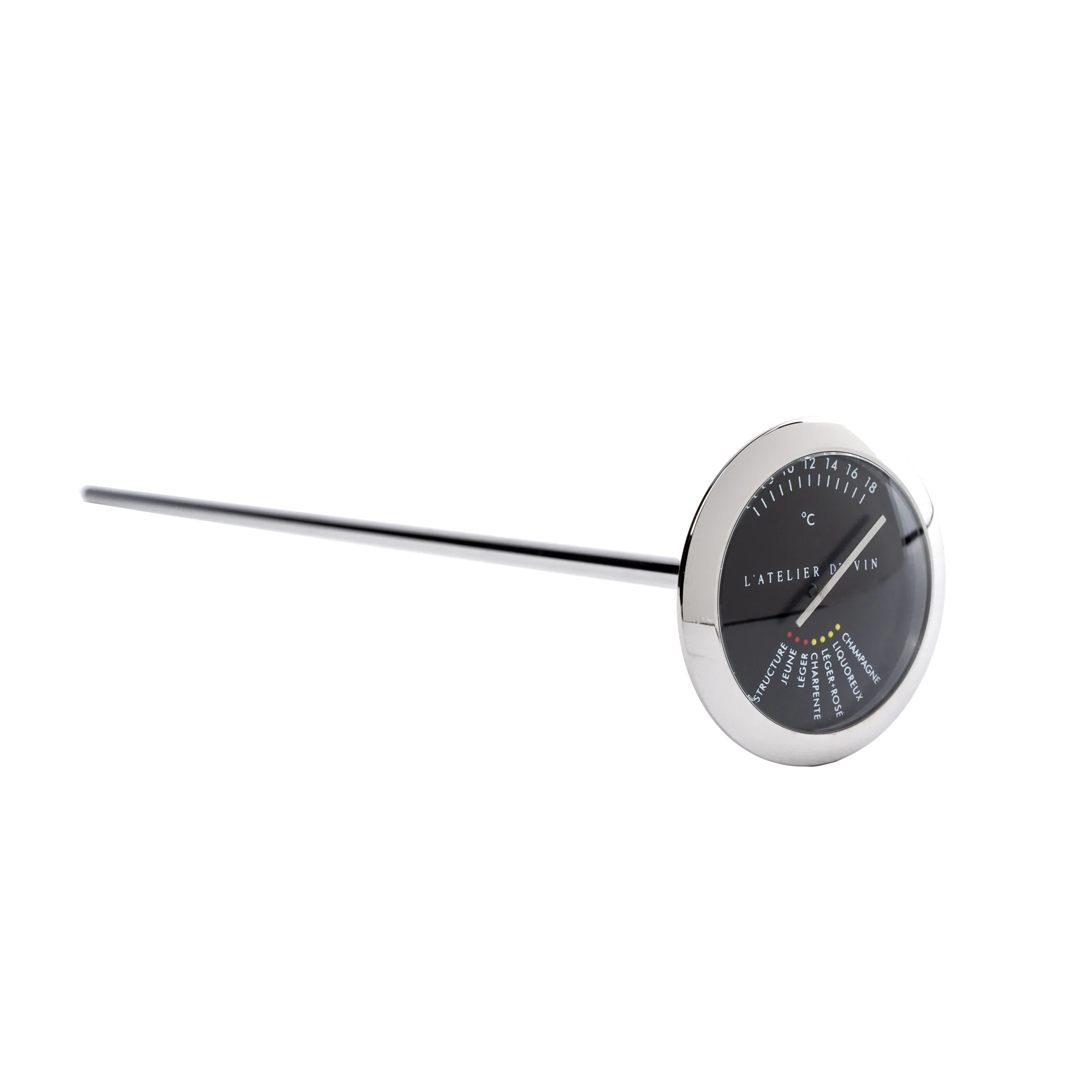
Wine Thermometer – Serving Temperature | L’Atelier du Vin
Red, white and sparkling: what to check before pouring
The right serving temperature depends on the wine in front of you. Use the thermometer reading as the checkpoint, then adjust with the method that suits that style.
- Red wine: Red wine is often served too warm in a heated room. Take a bottle reading before pouring; if it is warmer than you want, give it time in a cooler spot rather than guessing from the label.
- White wine: White wine is often served too cold straight from the fridge. Check the bottle, then let it stand to warm slightly if the reading says it is colder than you intended.
- Sparkling wine: Sparkling wine is usually served chilled, but the bottle warms quickly once opened. Check the unopened bottle before you pour so the first glass is served at the temperature you planned.
Why a chart alone will not settle it
An ideal wine temperature chart gives a starting range for a style, but it cannot tell you the temperature of the bottle in your hand. The same red wine can sit in a cool cellar, a warm dining room or a car boot, and each bottle will pour differently. A thermometer closes that gap by giving you a reading from the actual bottle.
The supplied product information does not include a printed temperature chart or style-by-style ranges. Use your own serving preferences alongside the thermometer reading rather than treating the tool as a source of fixed numbers.
Practical habits that keep readings honest
- Check the bottle, not the glass: A glass warms quickly in the hand. Measure before pouring so the reading reflects the wine you are about to serve.
- Do not rely on the room: A comfortable room is not a wine-serving measurement. The bottle can be several degrees away from the room, especially after time in a fridge or cellar.
- Recheck after a move: Bringing a bottle from the cellar to a warm kitchen changes its temperature. Take a new reading at the point of service.
- Keep the tool where you serve: A thermometer stored with your wine tools is easier to use before pouring than one buried in a kitchen drawer.
What the thermometer cannot tell you
A thermometer measures temperature, not quality. It will not tell you whether a wine is ready to drink, whether it needs decanting, or whether a bottle is faulty. Those are separate judgements.
The supplied information for the Wine Thermometer does not confirm a temperature range, accuracy tolerance, battery type or cleaning method. If those details matter to you, check the product documentation before relying on the tool for a specific serving standard.