Quick answer
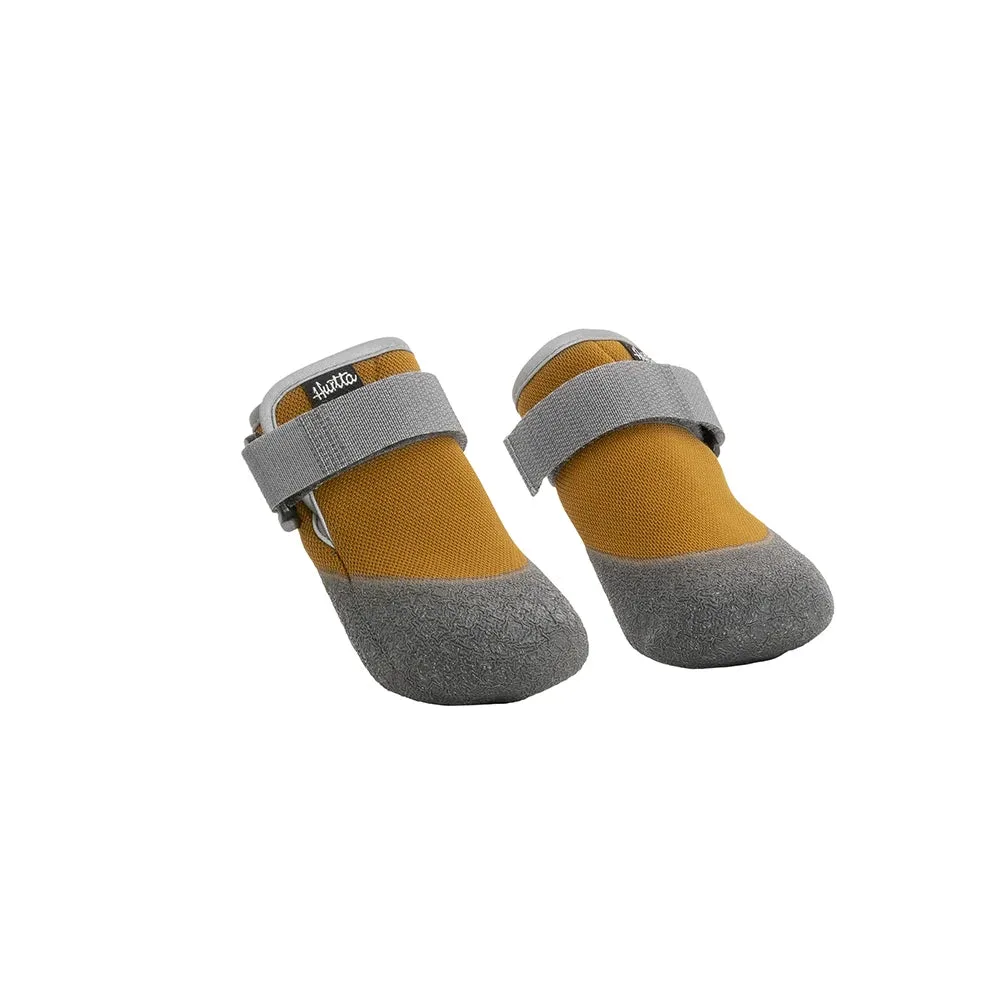
Use Weekend Warrior Tossut when winter surfaces threaten your dog's paws: sharp ice, coarse gravel, glass shards, or road salt that stings. They are not a full snow boot, so treat them as targeted paw protection for cold streets, forest trails, and recovery from minor paw injuries. Fit matters more than anything else: the boot should stay on during a brisk walk without pinching the toes.
Why winter paws need more than a quick wipe
Winter paw problems rarely come from snow alone. The bigger risks are what sits on top of it: road salt that burns between the pads, refrozen ice with sharp edges, and gravel or glass that cuts during a normal walk. Weekend Warrior Tossut are designed to shield the paw in exactly those mixed conditions, whether you are crossing a salted city street or picking through a forest trail with sharp stones and branches.
They also earn their place when a paw already needs protection. If your dog has a minor cut, a tender pad, or a bandage that must stay clean, a boot limits direct contact with grit and salt. Think of them as a barrier first and warmth second.
Sizing and first-fit checks that prevent lost boots
Weekend Warrior Tossut come in multiple sizes and colors, so the real work is matching the boot to the paw rather than guessing from breed. Measure the paw at its widest point while your dog stands, then compare that to the size range. A boot that is too long will slide off; one that is too narrow will rub the outer toes.
Before you commit to a full walk, do a two-minute indoor test. Put one boot on, let your dog walk across a hard floor, and watch for dragging, twisting, or a high-stepping gait. If the boot rotates, stop and recheck the size and strap tension. A boot that looks fine standing still can behave very differently in motion.
Introducing boots without a wrestling match
Most dogs object to boots because the first experience is rushed. Start with one boot, not four, and pair it with something your dog already enjoys, like a treat or a favorite toy. Let them wear it for a few minutes indoors, then take it off. Repeat over a couple of days before adding a second boot.
When you move to all four, keep the first outdoor session short and on familiar ground. A driveway or a quiet sidewalk is enough. If your dog freezes or refuses to move, go back to fewer boots for another session. Patience here saves you from a dog that associates boots with stress.
Snow, salt, and ice: matching protection to the surface
On packed snow, the main job is keeping ice balls from forming between the pads. On salted sidewalks, the boot keeps the paw away from the chemical burn. On refrozen ice or gravel, the boot adds a layer against sharp edges. Weekend Warrior Tossut are built for these varying conditions rather than deep powder, so they suit everyday winter walks and weekend trails.
If you are out in wet slush for a long time, expect the boot to get wet. That is normal. The priority is the barrier between paw and ground, not waterproofing. Bring a small towel and dry the paws after the walk so moisture does not sit against the skin.
After-walk paw care that catches problems early
When you get home, take the boots off and check each paw. Look between the pads, around the nails, and at the skin where the boot strap sat. Salt and grit can hide in those spots even if the boot did its job. Rinse with lukewarm water if you walked on treated roads, then dry thoroughly.
This is also your early-warning system. Redness, a small cut, or a tender spot is much easier to manage when you find it the same day. If a paw is already injured, keep using the boot as a protective cover and contact your vet about how long to continue.
Winter paw protection in five steps
- Measure the paw while standing: Measure the widest part of the front paw with your dog standing on a hard surface. Compare that measurement to the Weekend Warrior Tossut size range before ordering. Checkpoint: if the measurement falls between sizes, size up only if the boot still stays on during a test walk.
- Test one boot indoors first: Put a single boot on and let your dog walk on a hard floor for two minutes. Watch for twisting, dragging, or a high-stepping gait. Common mistake: fitting all four boots at once and missing a poor fit on one paw.
- Build up to all four boots gradually: Add one boot per session over a few days, pairing each session with treats or a toy. Move to all four only when your dog walks normally in two. Checkpoint: a dog that freezes or refuses to move needs fewer boots, not a tighter strap.
- Match the boot to the surface: Use Weekend Warrior Tossut for salted streets, refrozen ice, gravel, glass shards, and sharp forest debris. For deep powder or long wet slush, accept that the boot will get wet and focus on the ground barrier. Common mistake: expecting a paw boot to keep the whole foot dry in wet snow.
- Inspect and dry paws after every walk: Remove the boots, check between the pads and around the nails, rinse off salt with lukewarm water, and dry thoroughly. Repeat on every winter walk, not just the long ones. Next step: if you find redness, a cut, or a tender spot, keep the boot on for protection and ask your vet how long to continue.
Product facts
- Weekend Warrior tossut: Weekend Warrior Tossut are designed to protect a dog's paws in varying conditions, including frozen streets, sharp forest stones and branches, glass shards, coarse gravel, and winter road salt. This makes them a targeted winter paw-protection option for city walks and forest trails rather than a general-purpose snow boot.