Quick answer
Wireless charging does not automatically damage your battery, and it is not always slower than plugging in. The real problems are heat and mismatched gear. A 100W wireless charging base can power multiple devices, but only if your phone supports the faster Qi standard. Buy for your actual devices, not for myths.
Myth: Wireless charging always cooks your battery
Heat is the real enemy, not wireless charging itself. Any charger that runs hot will stress a battery over time, whether it uses a cable or a coil. The fix is simple: avoid stacking thick cases, don't charge on a soft surface that traps heat, and choose a base with enough power headroom so it doesn't strain. A 100W base like the Prime Wireless Charging Base (100W, 3 Ports) is designed to spread power across devices, which can reduce the load on any single coil compared to a weak charger working at its limit.
Myth: Wireless charging is always slower than wired
Speed depends on the standard and the adapter, not the absence of a cable. A basic 5W pad is slow, but a 100W wireless charging base can deliver fast charging to compatible phones and still have power left for other devices. The catch is that your phone must support the same fast wireless standard. If it doesn't, it will fall back to a slower rate. Check your phone's spec before blaming the charger.
Myth: A multi-device wireless charger is just a fancy stand
A multi device wireless charger replaces a tangle of cables and wall bricks. The Prime Wireless Charging Base (100W, 3 Ports) can charge a phone, earbuds, and a tablet from one spot, which is genuinely useful on a desk or nightstand. But it only helps if you actually own multiple wireless-charging devices. If you mostly charge one phone, a compact wired charger like the 523 Charger (Nano 3, 47W) is smaller, cheaper, and faster for that single device.
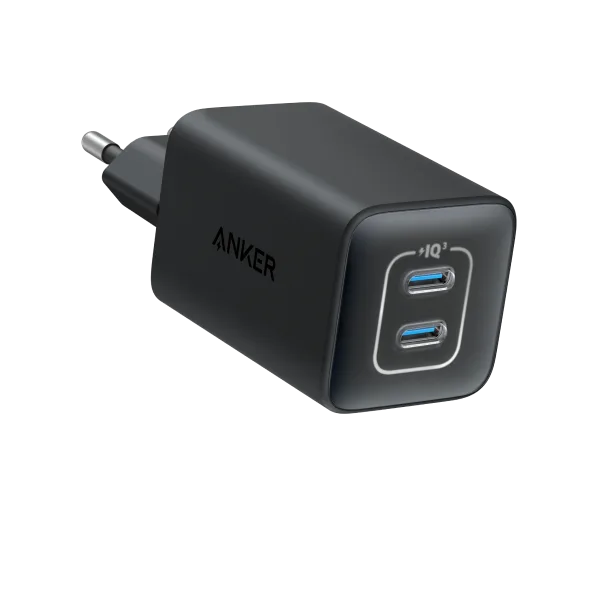
523 Charger (Nano 3, 47W)
Myth: You need wireless everywhere, including your car
Wireless charging in a car sounds convenient until you factor in phone mounts, cases, and alignment. A dual-port car charger like the PowerDrive III Duo USB-C Car Charger lets you charge two devices at once with a cable, which is often faster and more reliable on bumpy roads. Wireless is great for a nightstand or desk; in a moving vehicle, a secure wired connection usually wins.
Verdicts on common wireless charging claims
- Wireless charging damages your battery: False. Heat is the issue, not the coil. Use a charger with enough power and avoid insulating cases. Verdict: Myth, with a heat caveat.
- Wireless is always slower than wired: False. A 100W wireless base can be fast, but only if your phone supports the same fast standard. Verdict: Depends on your phone, not the technology.
- You need a multi-device wireless charger: Only if you own several wireless-charging devices. Otherwise a compact wired charger is cheaper and faster. Verdict: Buy for your device count, not the hype.
- Wireless charging is always convenient in the car: Often not. A dual-port car charger with cables keeps devices secure and charging reliably on the road. Verdict: Wired still wins for driving.
Products that put these myths to rest
- Prime Wireless Charging Base (100W, 3 Ports): Prime Wireless Charging Base (100W, 3 Ports) delivers up to 100W across three ports. Enough headroom to fast-charge a compatible phone while powering two other devices, reducing the need for multiple wall chargers.
- 523 Charger (Nano 3, 47W): 523 Charger (Nano 3, 47W) is a single USB-C port compact charger with 47W output. A better fit than a wireless base if you only charge one device and want the smallest, fastest option for travel.
- PowerDrive III Duo USB-C Car Charger: PowerDrive III Duo USB-C Car Charger has dual USB-C ports for charging two devices simultaneously. A practical alternative to wireless in the car, where cables keep devices secure and charging predictable.