Quick Answer
Choose an in-ground fence if you have a yard with clear buried-wire routes and want a boundary that follows irregular shapes. Choose a wireless system only if your yard is relatively open and you can place the transmitter centrally. For determined dogs, the PetSafe Stubborn Dog In-Ground Fence is the more reliable containment choice because it pairs a physical wire boundary with a receiver collar built for hard-to-train dogs.
How the Two Systems Actually Differ
A wireless fence uses a transmitter that broadcasts a radio signal in a circular or oval pattern. You adjust the range on the transmitter, and the dog wears a receiver collar that corrects when it approaches the edge of that signal. There is no wire to bury, but the boundary is only as consistent as the signal, which can be affected by the shape of your yard, metal buildings, and terrain. An in-ground fence uses a buried wire loop connected to a transmitter. The dog wears a receiver collar that corrects near the wire. The boundary can follow almost any yard shape, and the signal is contained by the wire rather than broadcast through open air.
The practical difference shows up in two places: how much control you have over the boundary shape, and how much installation work you are willing to do. Wireless systems go up in an afternoon but force you to work around the signal pattern. In-ground systems require trenching or stapling wire along a path, but they let you define exactly where the boundary sits.
Yard Size and Layout: Where Each System Wins
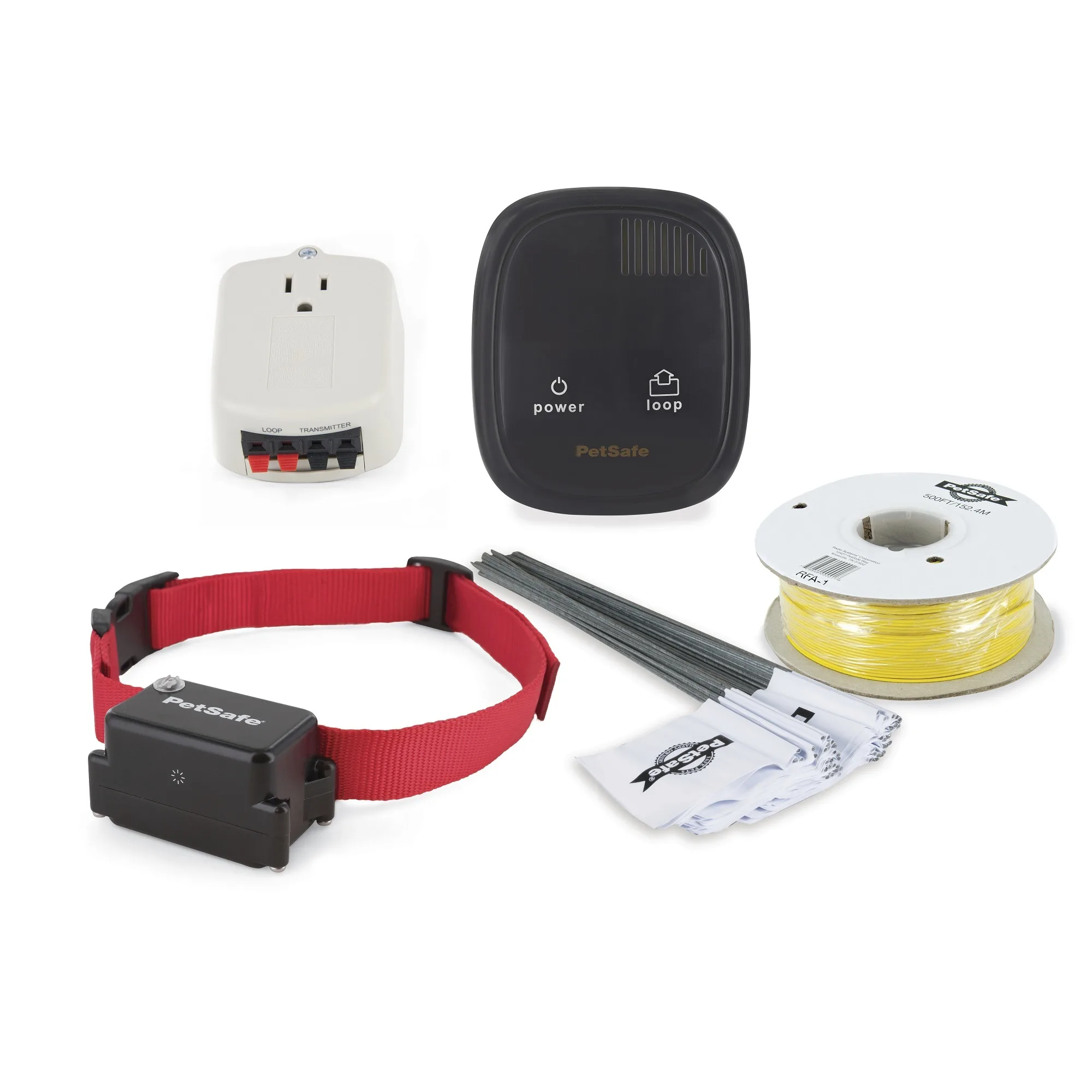
For small, open yards with a central power source, a wireless system can be a quick solution. But if your yard is larger than about a third of an acre, or if it has an L-shape, a side yard, or a garden bed you need to exclude, a wireless signal will not follow that layout. The PetSafe Stubborn Dog In-Ground Fence kit includes 500 feet of wire, which creates up to a 1/3-acre containment area in most yard shapes. With additional wire, the same system can contain up to a 25-acre yard. That scalability is the main reason in-ground fences are the default choice for rural properties and large lots.
Wireless systems do not publish the same kind of expandable acreage because the boundary is signal-based. If your property is measured in acres rather than square feet, the in-ground approach is the one that can actually grow with the yard.
Stubborn Dogs and Correction Levels
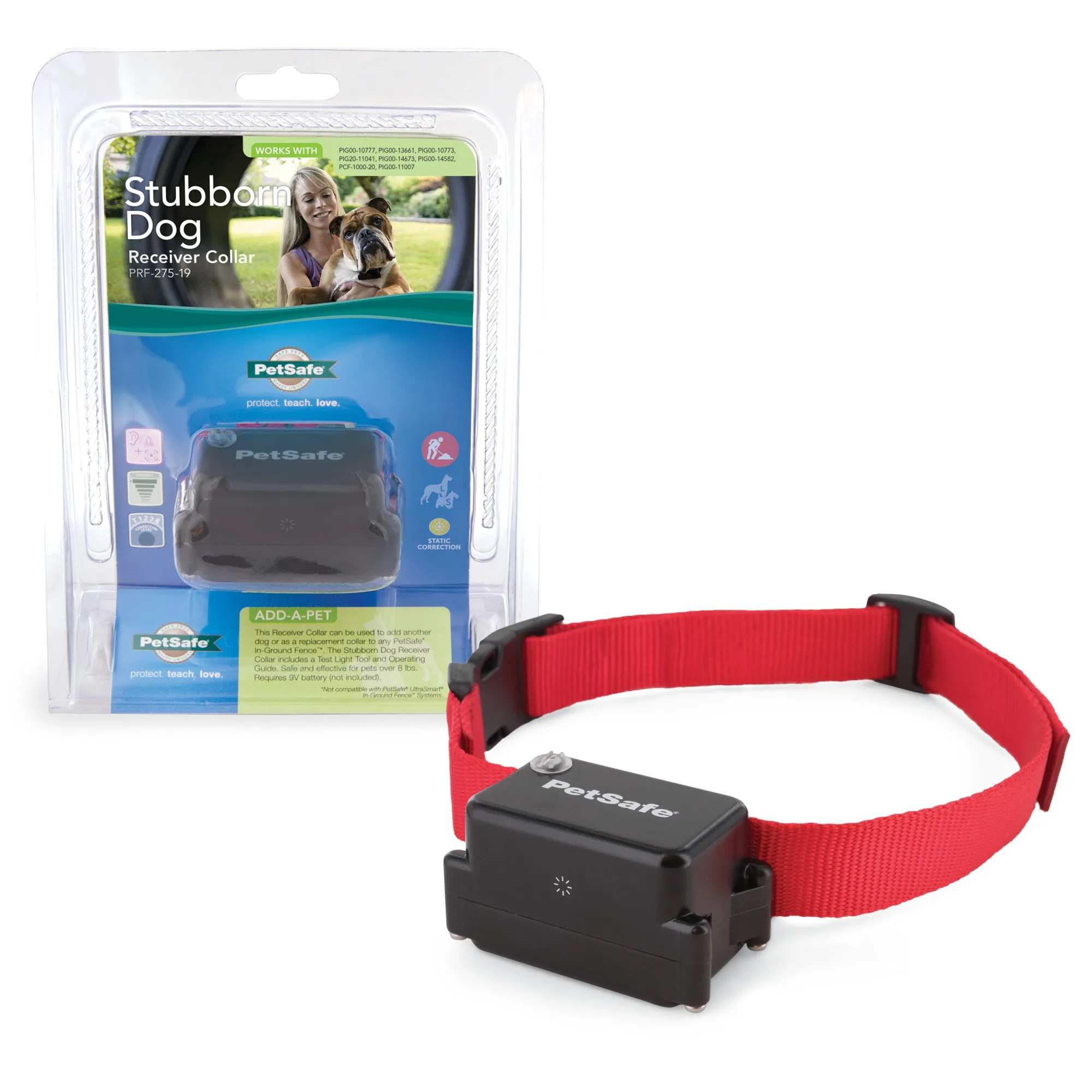
A fence system is only as useful as the collar your dog wears. The PetSafe Stubborn Dog In-Ground Fence Receiver Collar offers 4 levels of static correction, which is more than standard receivers and is intended for stubborn or hard-to-train dogs. That matters because a dog who ignores a lower-level correction will test the boundary, and a boundary that gets tested repeatedly stops being a boundary.
If you already own a PetSafe in-ground fence system, this receiver can also add a second dog or replace a worn collar. The same receiver works with the Stubborn Dog In-Ground Fence models PIG00-10777 and PIG23-10682. Wireless systems vary widely in correction levels and compatibility, so check the receiver before assuming you can mix and match.
Setup Effort and Ongoing Maintenance
Wireless setup is mostly about finding the right transmitter location and walking the boundary with the collar to confirm the signal. There is no wire to break, but you may need to move the transmitter if the signal is inconsistent. In-ground setup is a weekend project for most yards: you plan the wire route, bury or staple the wire, connect it to the transmitter, and test the boundary. Once installed, the main maintenance is checking for wire breaks after digging or landscaping work.
Neither system is maintenance-free. The trade-off is front-loaded labor versus ongoing signal management. If you would rather do the work once and have a fixed boundary, in-ground is the better fit. If you rent, move often, or cannot dig, wireless is the practical choice even with its limitations.
Cost and Expansion Compared
A wireless system usually costs less up front because there is no wire and less installation labor. An in-ground system costs more initially, but the per-dog cost of adding another dog is often just a receiver collar. The PetSafe Stubborn Dog In-Ground Fence Receiver Collar is priced at USD 70.37, compared to a catalog comparison price of USD 109.95, and it works as an add-on or replacement. The full PetSafe Stubborn Dog In-Ground Fence kit is USD 176.69, compared to a catalog comparison price of USD 284.99.
For multi-dog households, that receiver cost is the number to watch. A wireless system may require a compatible receiver for each dog, and compatibility is not universal. In-ground systems from the same brand tend to have clearer receiver compatibility across the line.
Trade-Offs at a Glance
- Boundary shape: In-ground fences follow the buried wire and can handle L-shapes, side yards, and garden exclusions. Wireless fences broadcast a signal that is typically circular or oval and cannot exclude interior zones. If your yard is not a simple open shape, in-ground is the realistic option.
- Yard size: The PetSafe in-ground kit covers up to 1/3 acre with the included wire and up to 25 acres with additional wire. Wireless range is limited by the transmitter and site conditions. For lots larger than a third of an acre, plan on an in-ground system.
- Stubborn dogs: The PetSafe Stubborn Dog Receiver Collar provides 4 levels of static correction. Standard wireless receivers may offer fewer levels or different compatibility. Match the receiver to your dog's temperament, not just the fence type.
- Installation and upkeep: Wireless goes up fast but may need transmitter repositioning. In-ground requires burying wire but holds a fixed boundary with less day-to-day signal management. Choose based on whether you prefer upfront digging or ongoing signal checks.
- Adding dogs: With the PetSafe in-ground system, you add another dog by purchasing an extra receiver collar. Wireless add-on compatibility varies by brand and model. Check receiver compatibility before buying a second collar for any system.
Key Products in This Comparison
- PIG00-10777 Stubborn Dog In-Ground Fence™ by PetSafe: The PetSafe Stubborn Dog In-Ground Fence kit includes 500 feet of wire to create up to a 1/3-acre area, and with additional wire it can contain up to a 25-acre yard. This is the clearest advantage for large or irregular yards, because the boundary follows the wire rather than a broadcast signal.
- PRF-275-19 Stubborn Dog In-Ground Fence™ Receiver Collar by PetSafe®: The PetSafe Stubborn Dog In-Ground Fence Receiver Collar offers 4 levels of static correction and works as an add-on or replacement for the Stubborn Dog In-Ground Fence models PIG00-10777 and PIG23-10682. If you have a determined dog or want to add a second dog, this receiver gives you more correction range and a known compatibility path.
Which System Fits Your Situation?
Best for
- Owners with large or irregular yards who need a boundary that follows a specific path
- Households with stubborn or hard-to-train dogs that need higher correction levels
- Owners who want to add a second dog without replacing the whole system
- Rural properties where a wireless signal cannot cover the full containment area
Not for
- Renters who cannot bury wire or make permanent yard changes
- Owners who want the fastest possible setup with no digging
- Very small, open yards where a wireless transmitter can cover the whole space
- Dogs that respond well to lower correction levels and basic containment