Quick Answer
For women over 50, prioritize a multivitamin that delivers adequate vitamin D, calcium, vitamin K, and magnesium for bone health, plus vitamin C, zinc, and antioxidants for immune support—and check that the form is easy for you to absorb and tolerate.
Why Women Over 50 Have Different Nutrient Needs
After menopause, estrogen levels drop, which accelerates bone density loss. That's why calcium, vitamin D, and vitamin K become more critical. Additionally, immune function can decline with age, making vitamins C and D and zinc especially valuable. A women's 50+ multivitamin is formulated with these shifts in mind, so it often contains higher amounts of these nutrients than a standard multivitamin.
The Trade-Off: Capsules vs. Gummies vs. Tablets
Capsules are often easier to swallow and may have fewer added sugars than gummies. However, some people prefer gummies for taste or if they have trouble swallowing pills. Tablets can be more economical but may be larger and harder to digest. Consider your own swallowing comfort and any dietary restrictions when choosing a form.
Absorption and Bioavailability: What Actually Matters
Nutrient forms matter. For example, vitamin D3 is more effective than D2, and magnesium citrate is generally better absorbed than magnesium oxide. Look for ingredients that are known for good bioavailability. Also, check whether the multivitamin is meant to be taken with food—some nutrients are fat-soluble and need dietary fat for proper absorption.
Decision Rules for Choosing a Women's 50+ Multivitamin
- Check key nutrients: Ensure the label includes vitamin D (at least 800 IU), calcium (around 500–600 mg), vitamin K, magnesium, vitamin C, and zinc. These are the core nutrients for bone and immune health in women over 50. Compare labels side by side to see which product delivers the most complete profile.
- Look at nutrient forms: Prefer vitamin D3 over D2, and magnesium citrate or glycinate over oxide. These forms are more easily absorbed and used by the body. If the label only lists generic 'vitamin D' or 'magnesium oxide', consider a different product.
- Consider your diet and lifestyle: If you're vegan or vegetarian, check for gelatin capsules or animal-derived ingredients. If you have trouble swallowing, choose a smaller capsule or a gummy (but watch added sugar). Your personal dietary restrictions are as important as the nutrient list.
- Evaluate value and dosage: Compare the price per serving, not just the bottle price. Also, check how many capsules you need per day—some products require multiple pills, which can be inconvenient. Calculate the cost per day to find the best value for your budget.
Product Facts
-
Women's 50+ Multivitamin Capsules: BioSchwartz Women's 50+ Multivitamin Capsules include vitamins C, D, zinc, and antioxidants to support immune defense, plus high-potency vitamin D with calcium, vitamin K, and magnesium for bone and breast health. This formula directly addresses the two biggest concerns for women over 50: immune support and bone health, so you don't need to buy separate supplements for these needs.
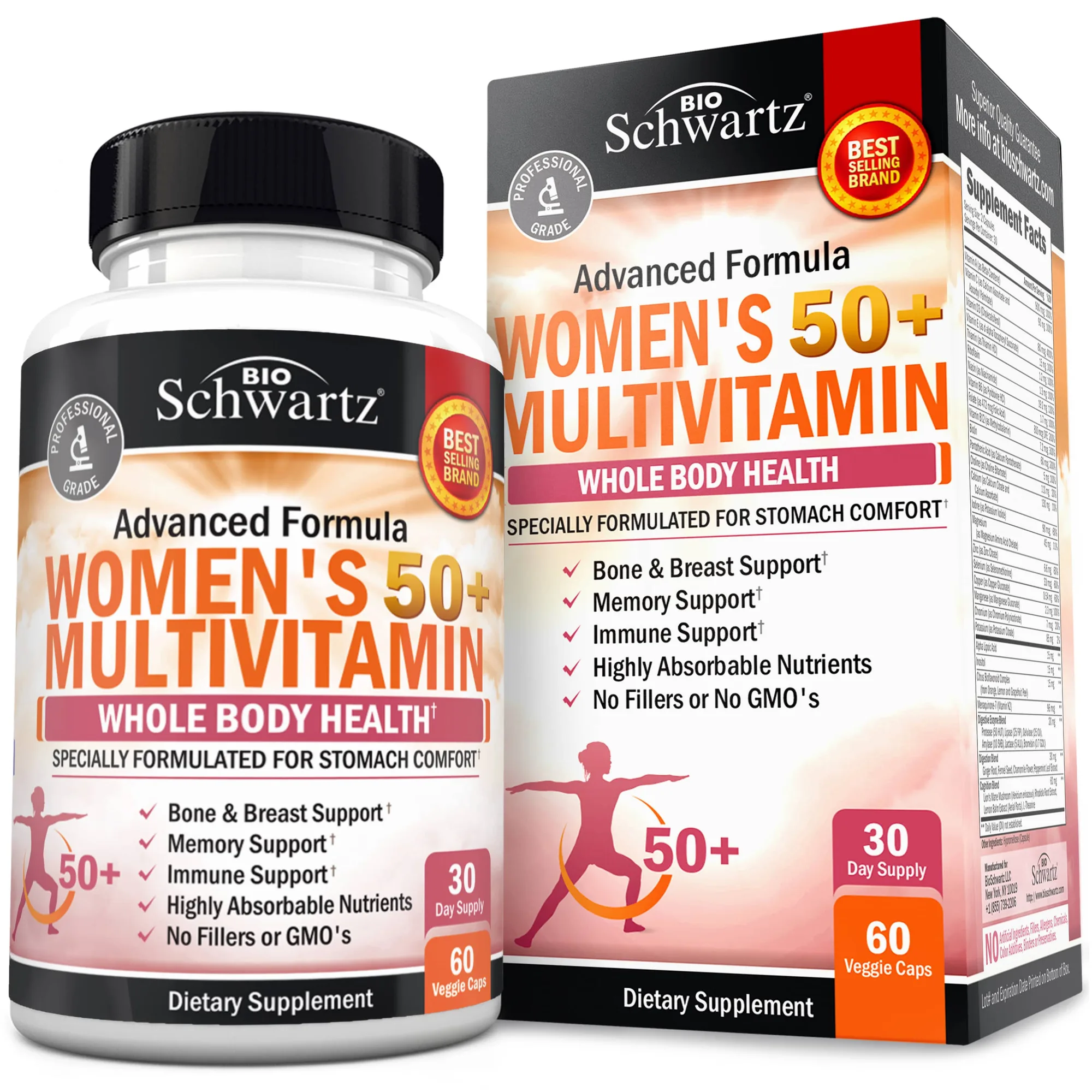
Women's 50+ Multivitamin Capsules
Who Should Choose This Type of Multivitamin
Best for
- Women over 50 who want a single supplement to cover bone and immune health
- Women who prefer a capsule form and want a formula with high-potency vitamin D and minerals
Not for
- Women who have difficulty swallowing capsules and prefer gummies or chewables
- Women with specific medical conditions who need a targeted supplement (e.g., iron deficiency) and should consult a doctor first