Quick Answer
Choose a women's multivitamin that fills the most common nutrient gaps—like vitamin D, iron, and B12—and matches your life stage, with third-party testing for quality.
Why a women's multivitamin is different
Women have unique nutrient needs that change with age, activity, and life stages. A formula designed for women typically includes iron for menstruating women, more calcium and vitamin D for bone health, and folate for reproductive health. A one-size-fits-all multivitamin may not provide these in the right amounts.
Your diet and lifestyle also matter. If you eat a varied diet, a multivitamin is a safety net, not a substitute. If you follow a restrictive diet or have a medical condition, your needs may be higher, and a multivitamin can help fill gaps.
Key nutrients to look for
Most women's multivitamins include a core set of vitamins and minerals, but the amounts vary widely. Look for vitamin D for bone and immune health, iron for energy and blood health (if you still menstruate), and B vitamins for energy metabolism. Folate or folic acid is important for reproductive-age women, and calcium supports bone density.
Check the label for the form of each nutrient. For example, methylated B12 (like methylcobalamin) is more easily absorbed by some people, and chelated minerals like magnesium glycinate are often gentler on the stomach. These details can make a difference in how you feel.
Quality and safety checks
Not all supplements are created equal. Look for brands that follow good manufacturing practices (GMP) and have third-party testing for purity and potency. Certifications like NSF or USP are strong indicators of quality, but they are not the only ones.
Read the label for allergens and additives. Some capsules contain soy, gluten, or artificial colors. If you have sensitivities, choose a formula that avoids them. Also, check the serving size—some multivitamins require two or three capsules daily, which can be inconvenient.
Decision Rules for Choosing a Women's Multivitamin
- Check your life stage: If you are under 50 and menstruating, choose a formula with iron. After menopause, switch to an iron-free multivitamin with extra calcium and vitamin D. Re-evaluate your multivitamin every decade or after major life changes.
- Compare nutrient amounts: Look for vitamin D at least 400-800 IU, calcium 200-500 mg, and B12 10-50 mcg. Avoid formulas with excessive amounts that exceed daily needs unless prescribed. More is not always better; megadoses can cause side effects.
- Check for third-party testing: Choose a brand that tests for purity and potency, and verify the label claims. Look for certifications like NSF, USP, or a 'third-party tested' statement. If the brand doesn't provide testing info, consider another option.
- Consider your diet and allergies: If you are vegan, look for plant-based capsules and check for B12 and iron. If you have allergies, avoid formulas with common allergens like soy, gluten, or dairy. Read the full ingredient list, not just the 'free from' claims.
Product Spotlight
-
Women's Multivitamin Capsules, 60ct: BioSchwartz Women's Multivitamin combines Vitamins C, D and Zinc to support immune health by encouraging the production of immune cells. This blend is especially helpful if you want a multivitamin that also supports your immune system, not just basic nutrition.
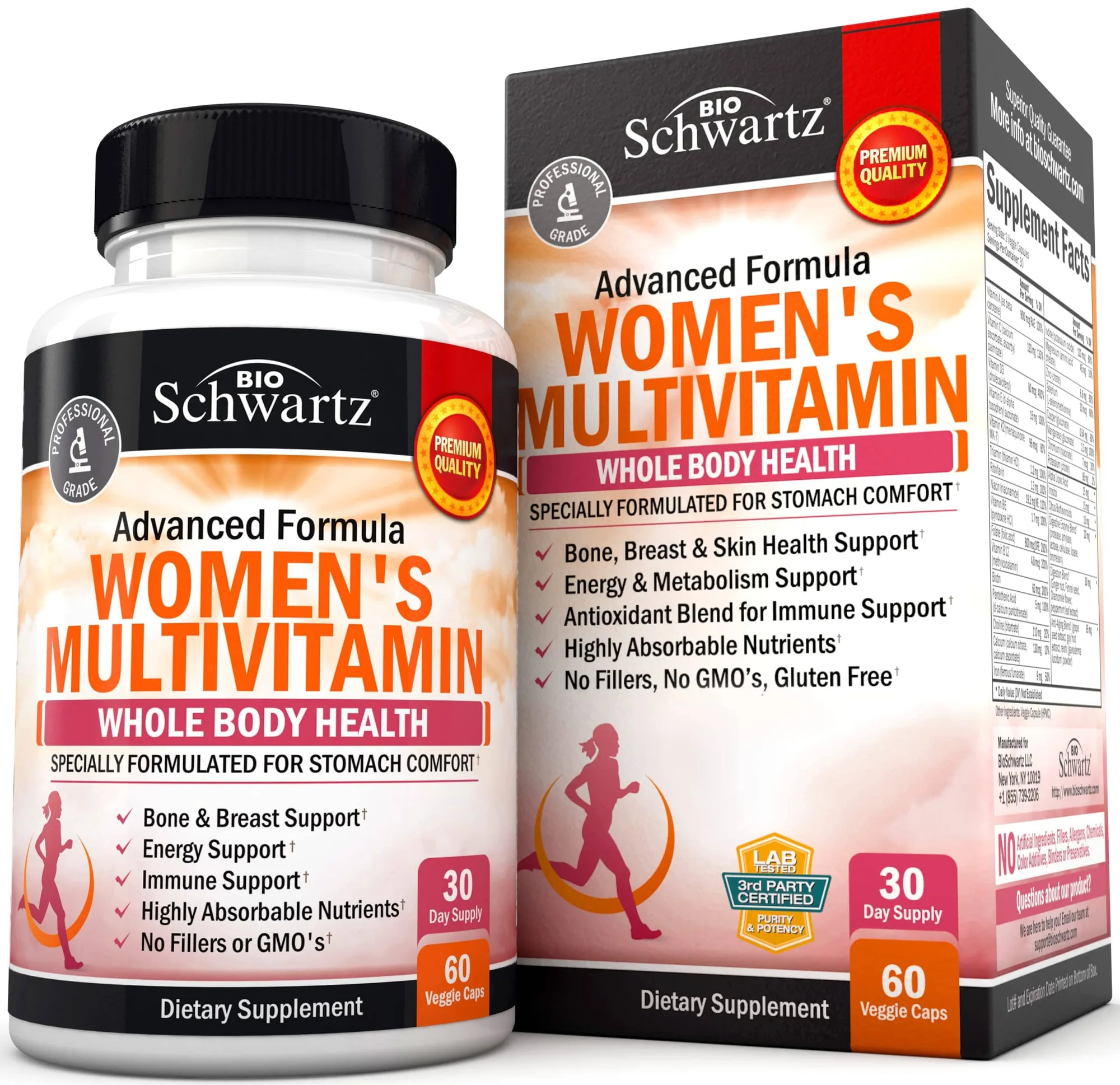
Women's Multivitamin Capsules, 60ct
Who Should Choose a Women's Multivitamin?
Best for
- Women who want a convenient daily safety net for nutrient gaps
- Women over 40 who need extra vitamin D and calcium for bone health
- Women with busy lifestyles who may not always eat a balanced diet
Not for
- Women with specific medical conditions that require targeted supplements (e.g., iron deficiency anemia) without a doctor's advice
- Pregnant women who need a prenatal formula with specific higher doses of folate and iron