Quick Answer
For most home cooks, a rubberwood cutting board offers the best balance of durability and knife-friendliness, while a polypropylene board is the practical choice for raw meat and easy cleanup. Choose based on your primary tasks and maintenance preferences.
Material Matters: Key Differences
The material of your cutting board affects knife edge retention, maintenance, and hygiene. Wood boards are gentle on knives but require more care, while plastic boards are dishwasher-safe and non-porous but can dull blades faster. Rubberwood, an eco-friendly hardwood, offers a middle ground with durability and a smoother surface for knives.
Consider how you cook: if you frequently prepare raw meat, a non-porous plastic board is easier to sanitize. For everyday chopping of vegetables and fruits, wood or rubberwood provides a stable, attractive surface that also doubles as a serving platter.
Maintenance and Lifespan Trade-offs
Wood and rubberwood boards need hand washing and occasional oiling to prevent drying and cracking. They are not dishwasher-safe. Plastic boards can go in the dishwasher and are more resistant to odors and stains, but they may develop deep knife grooves over time that can harbor bacteria.
If you prefer low-maintenance and are willing to replace boards more frequently, plastic is convenient. If you value longevity and aesthetics, wood or rubberwood is a better investment.
Decision Rules for Choosing Your Cutting Board
- If you frequently cut raw meat or poultry: Choose a polypropylene or plastic board that is dishwasher-safe and non-porous. Use one side for meat and the other for produce to avoid cross-contamination. Replace plastic boards when deep grooves appear.
- If you value knife edge retention and aesthetics: Opt for a wood or rubberwood board. Edge-grain or end-grain construction resists warping and is gentler on blades. Hand wash and oil regularly. Oil your wood board monthly to prevent cracking.
- If you need a versatile board for serving and prep: Consider a rubberwood board that can double as a serving platter. Its smooth finish is practical and attractive for entertaining. Use a separate plastic board for raw meat to keep serving surfaces clean.
Cutting Board Options to Consider
-
Calphalon Edge Guard Rubberwood Cutting Board: The Calphalon Edge Guard Rubberwood Cutting Board features edge-grain construction that resists warping and maintains its shape after repeated cutting and washing. This makes it a durable, low-warp option for daily chopping while being gentle on knife edges.
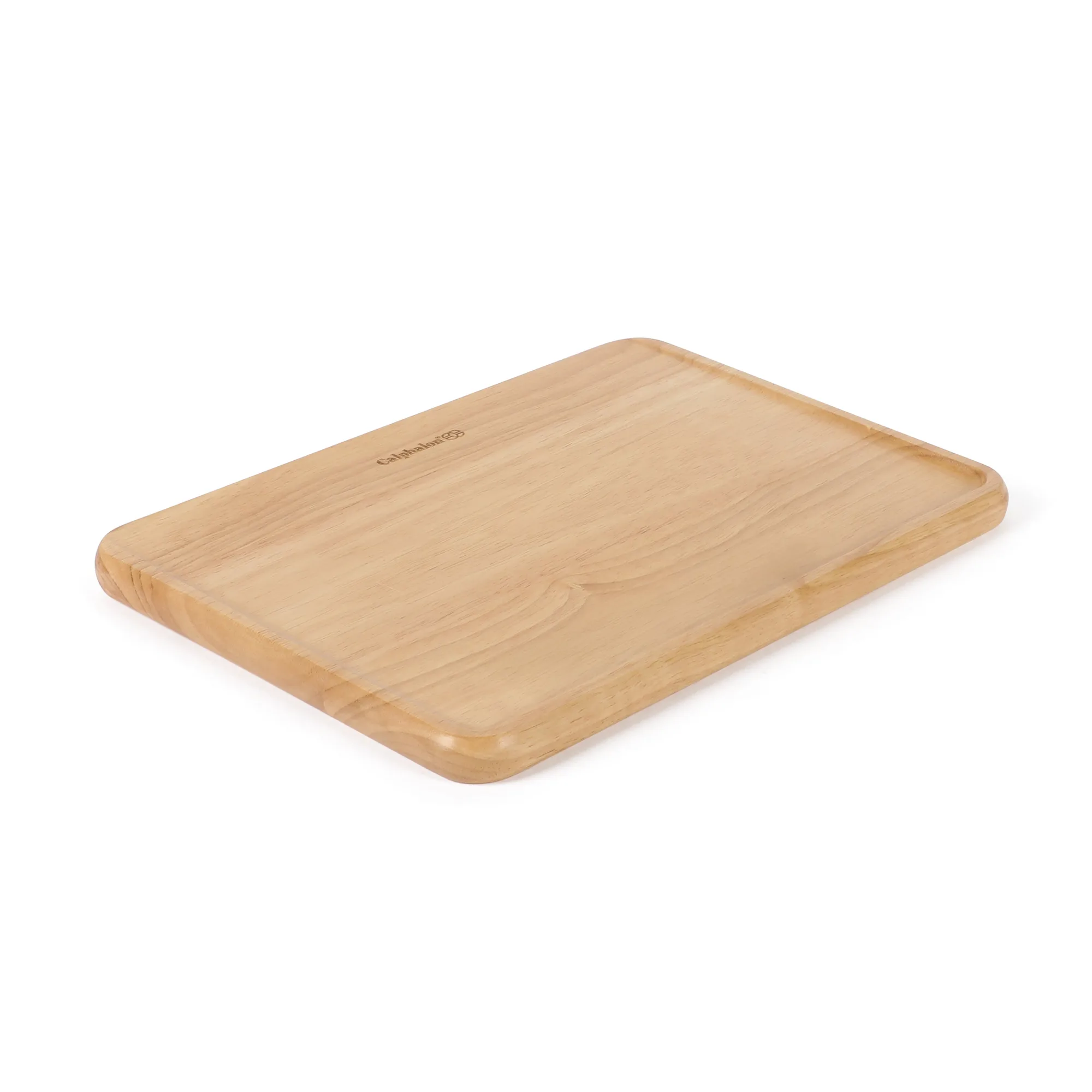
Calphalon Edge Guard Rubberwood Cutting Board
-
Sur La Table Kitchen Essentials 2-Piece (17" x 12" & 13" x 9") Polypropylene Cutting Board Set: The Sur La Table Kitchen Essentials 2-Piece Polypropylene Cutting Board Set is BPA-free, non-porous, and non-absorbent, with reversible sides to separate meat and produce. This set is ideal for hygienic food prep and easy cleanup, especially when handling raw proteins.
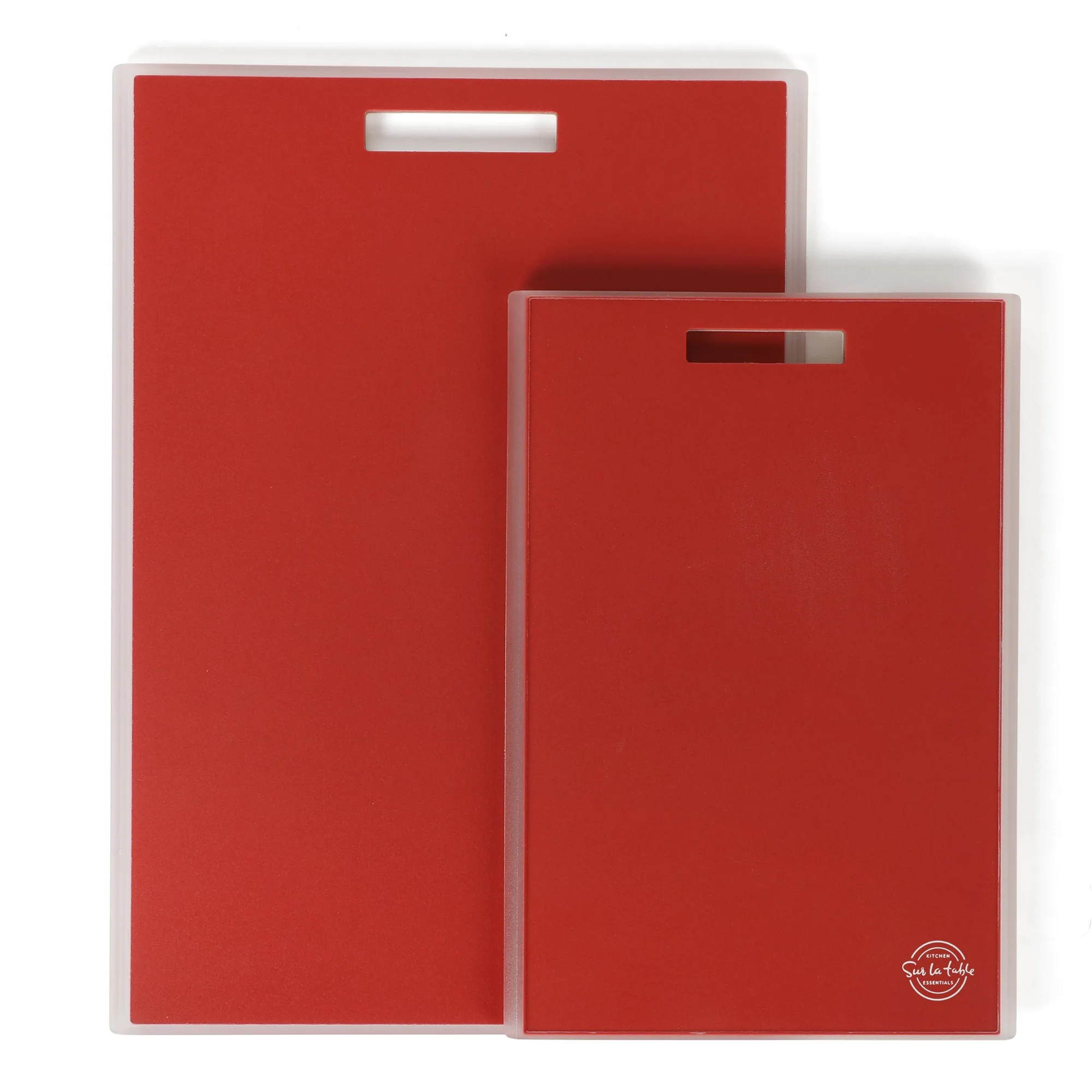
Sur La Table Kitchen Essentials 2-Piece (17" x 12" & 13" x 9") Polypropylene Cutting Board Set
Who Should Choose What
Best for
- Home cooks who prioritize knife care and want a durable, attractive board for everyday chopping.
- Those who prefer a low-maintenance, dishwasher-safe option for handling raw meat and easy cleanup.
Not for
- If you dislike hand-washing and oiling, avoid wood and rubberwood boards.
- If you want a board that lasts for decades and develops a patina, a plastic board may disappoint.