Quick answer
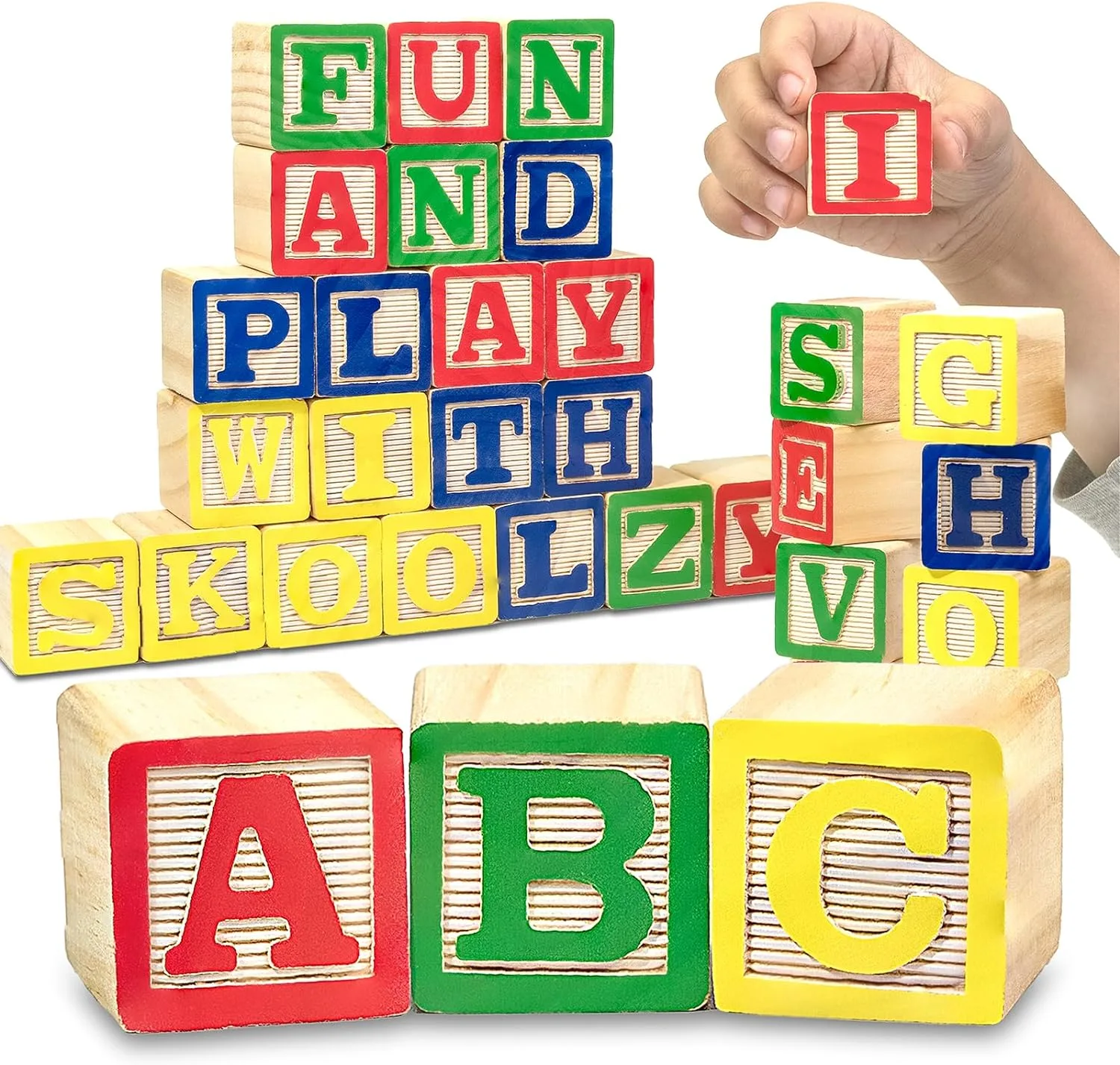
Start with free stacking and sorting, then move to matching one letter at a time, and only add spelling practice once your child names most letters. Keep sessions to five or ten minutes, follow your child's interest, and use blocks that are easy to grip like the 30 Wooden Alphabet Letter Blocks.
Set up the play space so blocks get used
Put a small basket of blocks on a low shelf where your toddler can reach it without help. A tray or shallow box keeps blocks from scattering, and a clear surface gives your child room to build. Rotate a few letters at a time rather than dumping the whole set; fewer pieces means less overwhelm and more focused play.
Match letters to names and sounds
Once your child can stack and knock down blocks, add a simple matching game. Say a letter name, then ask your child to find it. Start with the letters in their name because those are meaningful and motivating. Keep your voice calm and give plenty of wait time; the goal is exposure, not a quiz.
Move from letters to simple words
When your child recognizes several letters, line up blocks to spell a short word like cat, dog, or their name. Say each sound as you point to the block. Let your child copy the word next to yours. If they lose interest, stop and return to building; spelling practice works best in short, happy bursts.
Six steps to teach letters with wooden blocks
- Step 1: Free play first: Hand your toddler the blocks with no instructions. Let them stack, knock down, and carry blocks around. This builds comfort and grip. Checkpoint: your child reaches for the blocks without prompting.
- Step 2: Sort by color or shape: Ask your child to put all the red blocks together or find blocks with straight lines. Sorting builds the same visual skills used in letter recognition. Common mistake: turning sorting into a test. Keep it playful and stop while it is still fun.
- Step 3: Name one letter at a time: Pick a single letter, such as the first letter of your child's name. Say its name and sound, then ask your child to find it among a few blocks. Checkpoint: your child points to or picks up the correct letter two or three times.
- Step 4: Match letters to everyday objects: Place a block next to a toy that starts with that letter, like B next to a ball. Say the letter and the object name together. Common mistake: introducing too many letters at once. Two or three letters per week is plenty.
- Step 5: Build simple words together: Line up blocks to spell a short word. Say each sound as you point, then let your child copy the word beside yours. Checkpoint: your child can copy a three-letter word with minimal help.
- Step 6: Let your child lead a spelling game: Ask your child to spell a word from memory or make up a silly word for you to read. Follow their lead and celebrate attempts. Next step: rotate in new words each week and keep blocks accessible for independent play.
Why these blocks work for early literacy
- 30 Wooden Alphabet Letter Blocks: These letter blocks are a wood gift and classic education learning tool; children stack, play, and build with them. Open-ended building keeps toddlers engaged while letters are quietly absorbed.