Quick Answer
For most toddler playrooms, a hardwood block set is the better long-term investment because it lasts for years and supports open-ended play. Choose foam blocks if you need a lightweight, quiet option for very young toddlers or spaces where noise and softness matter more.
Durability and Longevity
Hardwood blocks are built to withstand years of stacking, knocking down, and chewing. They don't dent easily and can be passed down to younger siblings. Foam blocks, while sturdy, are more prone to compression marks and can be chewed through by aggressive teethers.
If you want a set that grows with your child from toddler to preschool, wood is the clear winner. Foam may need replacement sooner if your child is rough on toys.
Safety and Noise Considerations
Both materials are safe for toddlers, but they address different concerns. Foam blocks are soft, so they're ideal for babies who are still unsteady on their feet and may fall onto the blocks. Wooden blocks are heavier and can cause a loud crash when toppled, which might startle a sensitive child or disturb others in the room.
If you have a playroom on a second floor or share a wall with a neighbor, foam blocks can significantly reduce noise. Wooden blocks are more likely to wake a napping sibling.
Cost and Value
Foam block sets often cost more upfront, but they include a larger number of pieces and a storage bag. Wooden block sets are generally more affordable and can last for many years, making them a better value per use.
Consider your budget and how many blocks you need. A smaller set of wood blocks might be enough for a toddler, while a larger foam set offers more variety for group play.
Trade-Offs at a Glance
- Durability: Wooden blocks last for years and resist dents, while foam blocks may show wear from aggressive play. If you want a set that survives multiple kids, choose wood.
- Safety for Young Toddlers: Foam blocks are soft and lightweight, reducing injury risk during falls, while wood blocks are heavier and harder. For under-2s, foam is the safer choice; for older toddlers, wood is fine.
- Noise Level: Foam blocks are quiet when knocked down, while wood blocks create a loud crash. If noise is a concern, foam is better for apartments or shared walls.
- Price and Value: The 100-piece wooden block set is more affordable and lasts longer, while the 152-piece foam set costs more but includes more pieces and a storage bag. Calculate cost per play session: wood often wins for long-term value.
Product Facts
-
100 Wooden Blocks: 100 primary colored building blocks made of hardwood in nine shapes. The variety of shapes supports open-ended building and helps toddlers learn spatial relationships.
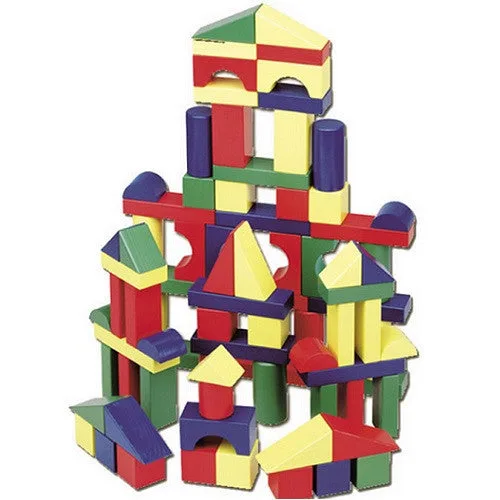
100 Wooden Blocks
-
152 Wonderfoam Blocks with Storage Bag: 152-piece foam block set with cylinders, half spheres, rectangular prisms, and more, plus a durable storage bag. The wide assortment and precise edges make stacking easy for little hands, and the storage bag keeps the playroom tidy.
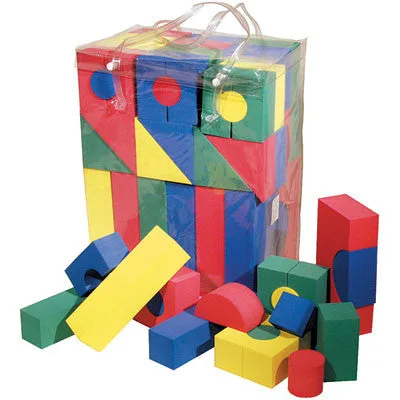
152 Wonderfoam Blocks with Storage Bag
Which Set Fits Your Toddler?
Best for
- Toddlers who enjoy traditional building and will use the blocks for years
- Playrooms where noise is acceptable and durability is a priority
Not for
- Parents of very young toddlers who need a soft, quiet option to prevent injuries