Quick answer
Store wooden brain teasers flat in a stable, moderate-humidity spot (aim for 35–55% relative humidity), away from direct sun and heat. Clean with a dry or barely damp cloth and never soak the wood. If a piece fits loosely, first reacclimate the puzzle for a few days before sanding or waxing. This routine prevents warping and keeps interlocking parts snug.
Why wood moves—and what that means for your puzzle
Wood is hygroscopic: it absorbs and releases moisture from the air, causing it to swell in humid conditions and shrink in dry ones. That movement is normal, but uneven moisture—one side of a base drying faster than the other—is what leads to warping and loose joints. Because most brain teasers rely on tight tolerances, even a small change can make a piece bind or rattle.
The goal is not to seal wood off from the air entirely but to keep its environment stable. Sudden swings—like moving a puzzle from an air-conditioned room to a damp basement—are harder on wood than a consistent, slightly dry climate. If you live in a very humid region, a simple room dehumidifier or a sealed storage bin with a silica gel packet can make a noticeable difference.
Set up a stable storage spot
Choose a shelf or drawer that stays between 65–75°F (18–24°C) and 35–55% relative humidity. Avoid attics, garages, basements, and windowsills—these areas swing widely in temperature and moisture. Keep puzzles out of direct sunlight, which can dry and fade wood unevenly.
Store puzzles flat, not on edge. Leaning a board against a wall for months can cause it to bow. If you keep pieces assembled, place them on a felt pad or cork mat to cushion the base. For disassembled puzzles, use the original box or a breathable cotton bag; plastic bags trap moisture and can encourage mold if any dampness is present.
Clean without adding moisture
Dust is the main enemy of smooth sliding parts. Use a soft, dry microfiber cloth or a clean, soft-bristle brush to wipe surfaces and crevices. For sticky fingerprints, barely dampen the cloth with water—never wet the wood—and dry immediately with a second cloth. Avoid commercial furniture polishes, which can leave oily residue that attracts dust and may soften a finish.
If you want to refresh the wood, a tiny amount of clear, solvent-free paste wax (like carnauba or beeswax) on a cloth, buffed thoroughly, can add a little protection. Test on an inconspicuous area first. Never use olive oil or cooking oil; they can turn rancid and gum up moving parts.
Handle interlocking puzzles gently
Burr puzzles and other interlocking designs depend on precise fits. When assembling or disassembling, work on a tray with a lip so pieces don't roll away. Avoid forcing a piece; if it binds, stop and check alignment. Forcing can compress fibers and create a permanently loose fit.
If a puzzle has been sitting assembled for a long time, disassemble and reassemble it occasionally. This redistributes wear and lets you inspect for swelling or cracks. Keep small parts like steel balls in the included organza bag or a small container so they don't get lost.
Fix a loose fit before it gets worse
A piece that suddenly feels loose is often a sign of seasonal drying, not permanent damage. Before modifying anything, let the puzzle sit in your normal living space for 3–5 days. If the fit returns, no action is needed. If it remains loose, a thin coat of paste wax on the tenons or contact points can add slight friction. Apply sparingly and buff off excess.
If a piece is genuinely too small due to wood shrinkage, a tiny strip of removable tape on a hidden surface can add thickness as a temporary fix. For a permanent repair, consult a woodworker. Never sand a loose piece down—that makes the problem worse. If a piece is too tight, very light sanding with 400-grit paper on the tight spot may help, but remove material in tiny increments and test frequently.
Your step-by-step wooden puzzle care routine
- 1. Check the room's humidity: Place a hygrometer near your puzzle storage area. Aim for 35–55% relative humidity. If it reads consistently above 60%, use a dehumidifier or a sealed bin with silica gel. Below 30%, a room humidifier can help. Checkpoint: If you see condensation on windows, humidity is too high for wood puzzles.
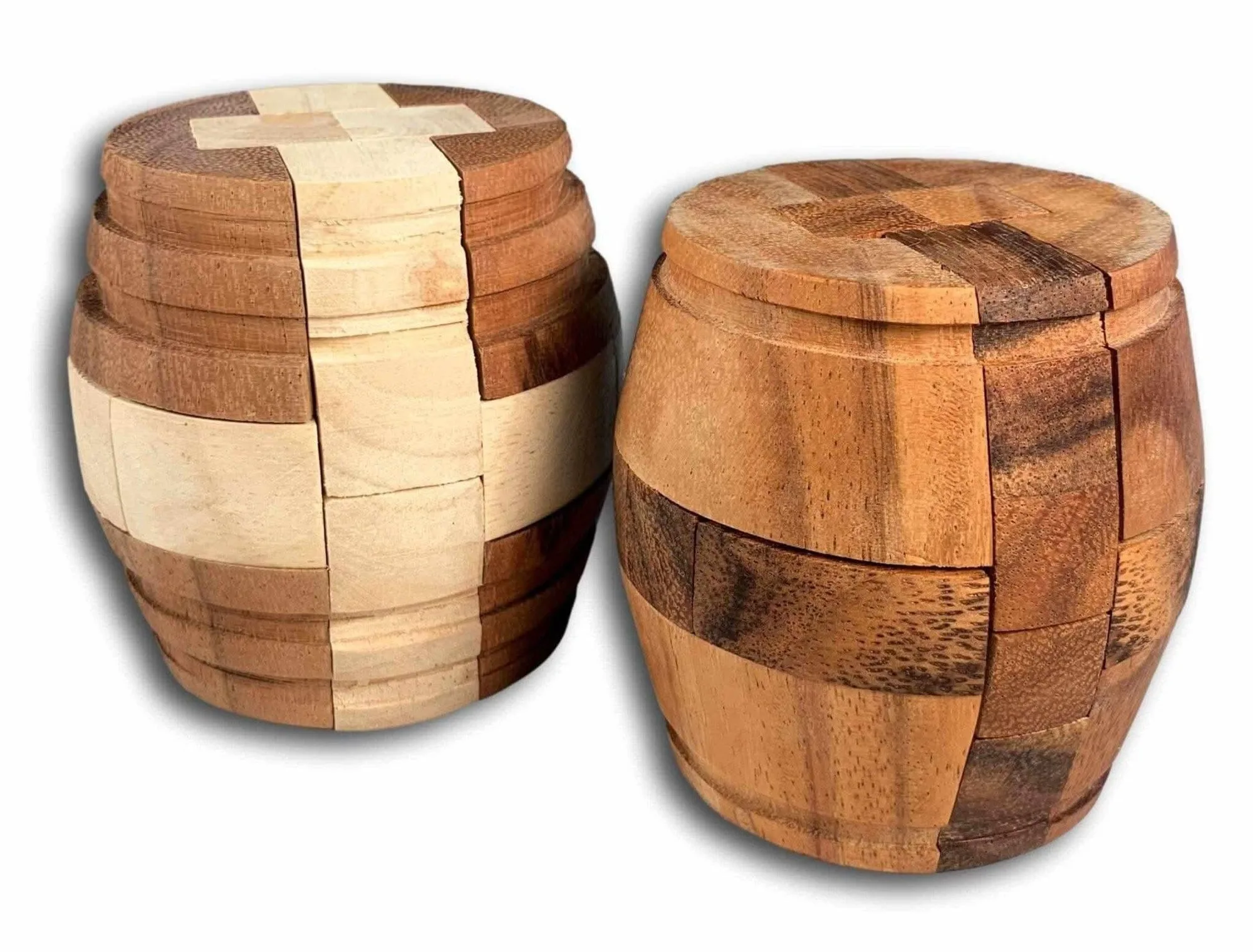
- 2. Store flat and separated: Keep puzzles flat on a shelf or in a drawer, not leaning. If disassembled, keep pieces in the original box or a cotton bag. For interlocking puzzles like the Wine Barrel Burr, store assembled to maintain tension, but check it every few months. Common mistake: stacking heavy items on top of puzzle boxes can warp bases.
- 3. Dust weekly with a dry cloth: Use a soft microfiber cloth or brush to remove dust from all surfaces and crevices. For acrylic tops, use a dry cloth only; avoid paper towels, which can scratch. Do not use water unless necessary, and never soak. Checkpoint: If you feel grit when sliding pieces, stop and clean before continuing.
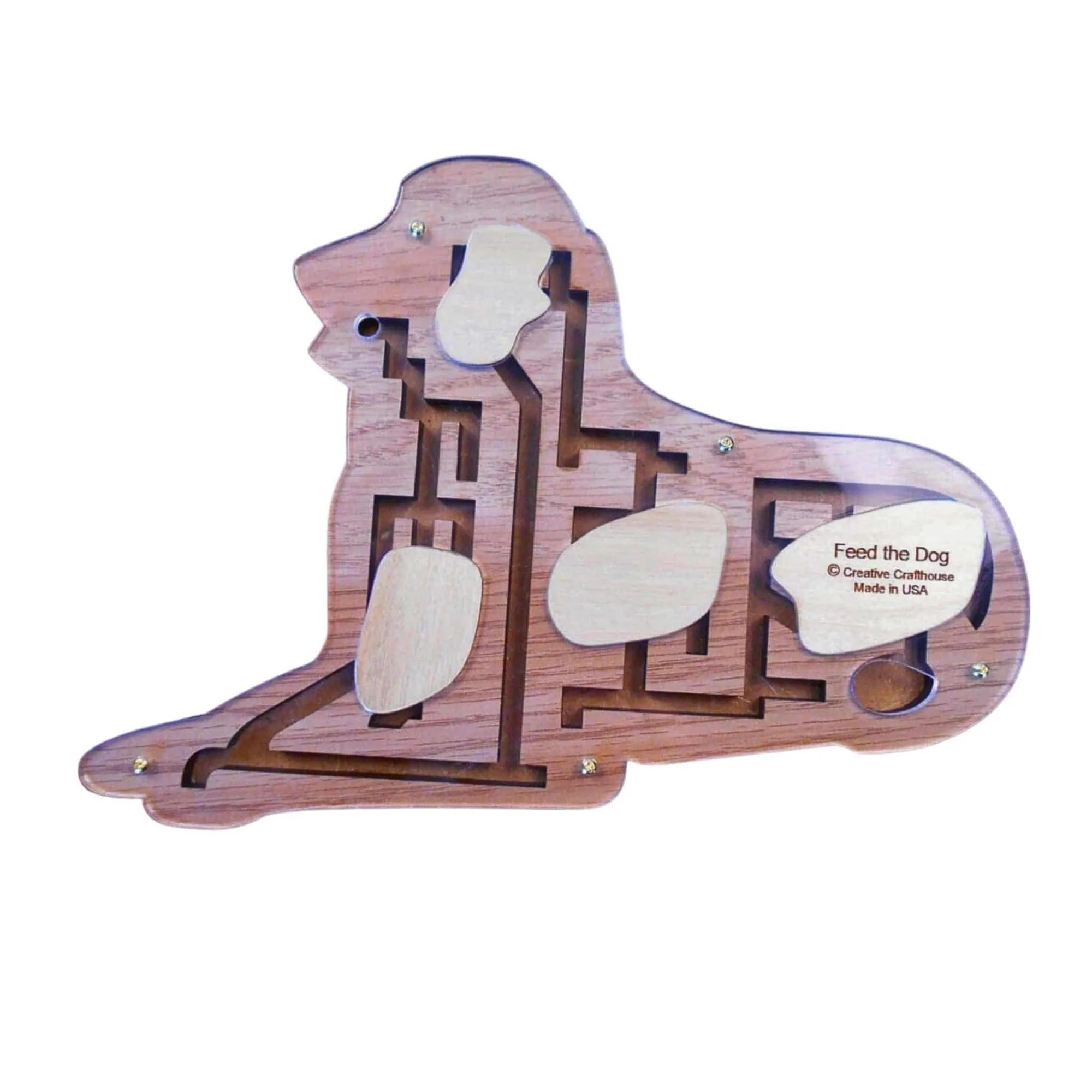
- 4. Handle with clean, dry hands: Oils and lotions can transfer to wood and attract dirt. Wash and dry hands before solving. Work over a tray with a lip to catch dropped pieces. For puzzles with small parts, like the Feed the Dog Maze steel balls, keep the organza bag handy. Common mistake: solving on a bare table where pieces can roll off and get lost.
- 5. Reacclimate before adjusting fit: If a piece feels loose or tight, let the puzzle sit in your normal room for 3–5 days. Many seasonal fit changes resolve on their own. If not, apply a thin coat of paste wax to contact points for loose fits, or very lightly sand tight spots with 400-grit paper. Checkpoint: After any adjustment, test the fit gently; never force a piece.
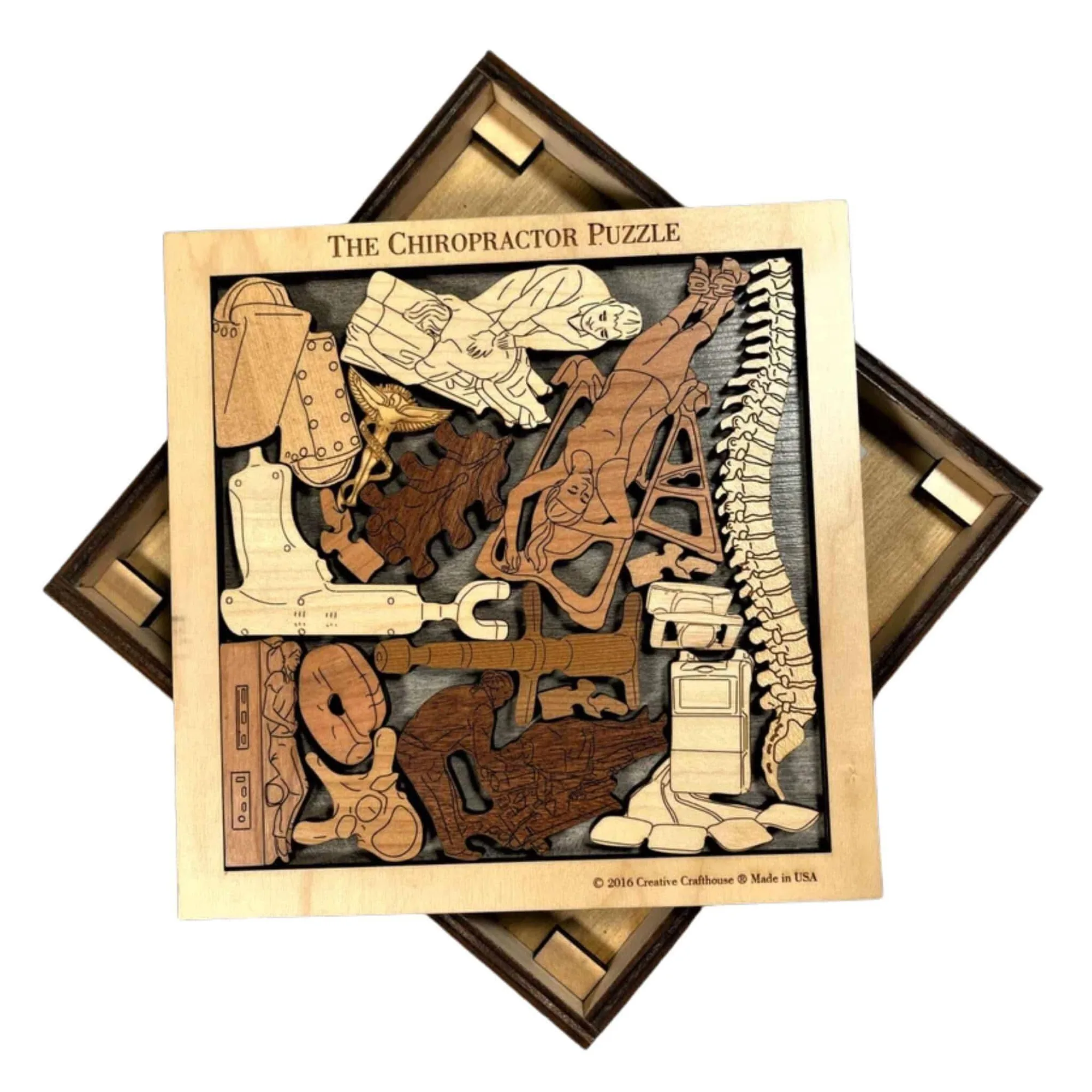
- 6. Inspect and rotate annually: Once a year, disassemble puzzles that have been assembled for a long time, inspect for cracks or swelling, and reassemble. This redistributes wear and lets you catch problems early. For personalizable puzzles like the Chiropractor Wood Puzzle, check that the base is still flat. Next step: If you spot mold or a persistent warp, isolate the puzzle and consult a professional conservator.
Product facts that shape care
- Feed the Dog Maze | Handmade Wooden Puzzle: Feed the Dog Maze is a wooden brain teaser with a durable wooden base and acrylic top, and it includes an organza bag with 12+ steel balls. The acrylic top protects the maze but can trap dust; wipe it with a dry microfiber cloth. The steel balls should be stored in the organza bag to prevent loss and to keep them from scratching the acrylic.
- Wine Barrel Burr Puzzle | Interlocking Wood Brain Teaser: Wine Barrel Burr Puzzle is a classic interlocking wooden puzzle that comes apart into 12 pieces and uses a slide-and-interlock system; it is available in large and XL sizes. Because it relies on precise interlocking, changes in humidity can make it bind or loose. Store it assembled and flat; disassemble on a tray to avoid losing the 12 pieces.
- Chiropractor Wood Puzzle - Personalizable Thank You Gift: Chiropractor Wood Puzzle is a personalizable thank-you gift puzzle where pieces fit into a base, and the pieces show scenes associated with chiropractic care. The fitted base can warp if exposed to moisture, so keep it in a stable spot. If it is a gift, include care instructions so the recipient knows to avoid humid areas.