Start with the coffee maker, not the whole café
A wooden play coffee maker for toddlers works best when you introduce it in stages. The Tiny Land set includes 15 pieces—the coffee maker, filter, milk jug, two cups, two coasters, a cake, cake plate, two cake slices, four capsules, a spoon, and a menu—so the first step is to set out the machine and one or two serving pieces rather than the entire spread.
Place the coffee maker on a low, stable surface at your child’s height. Keep the smaller accessories in a shallow bin nearby so your toddler can reach them without dumping everything at once. This keeps the focus on the barista action: making and serving coffee.
How to run a first barista session
These steps follow the supplied play instructions and keep the routine simple enough for toddlers to repeat.
- Load the beans: Place the pretend coffee beans in the machine. This is the starting point for the coffee-making sequence.
- Turn the side knob: Show your child how to turn the knob on the side of the coffee maker. The supplied instructions note a fun clicking sound as the knob turns, which gives immediate feedback.
- Add a cup and coaster: Set one of the two cups on a coaster and pretend to brew. The coaster gives a clear place for the cup and keeps the play area tidy.
- Serve something sweet: Bring in the cake, cake plate, or cake slices. Serving a drink and a treat turns the action into a café exchange.
- Use the menu: Hand the menu to a customer or point to it together. The menu gives toddlers a simple prop for taking an order.
What the Tiny Land set includes
-
Tiny Land® Play Kitchen Accessories – Children’s Coffee Maker: Wooden Kids Play Coffee Maker Set: Includes 1 wooden coffee maker, 1 filter, 1 milk jug, 2 cups, 2 coasters, 1 cake, 1 cake plate, 2 slices, 4 capsules, 1 spoon, and 1 menu. Knowing the full contents helps you decide what to set out first and what to store for later.
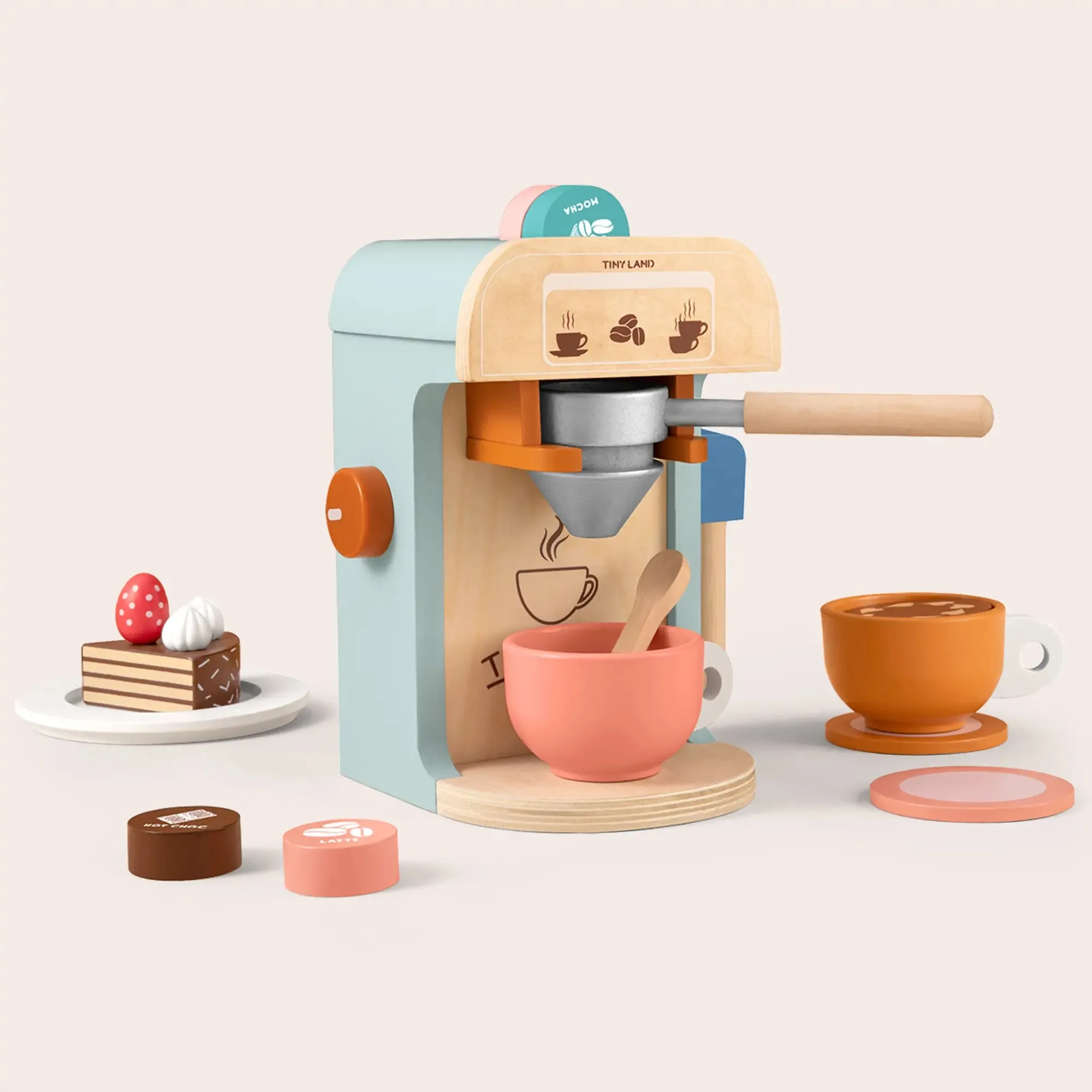
Tiny Land® Play Kitchen Accessories – Children’s Coffee Maker: Wooden Kids Play Coffee Maker Set
-
Tiny Land® Play Kitchen Accessories – Children’s Coffee Maker: Wooden Kids Play Coffee Maker Set: Place the coffee beans in the machine and turn the side knob for a fun clicking sound. This is the core play action, so it is the first thing to demonstrate.
Pretend barista play ideas that use the whole set
Once your toddler knows the basic coffee-making action, add one new role or prop at a time.
- Take an order: Use the menu and spoon as order-taking props. Ask your child to choose a drink and a cake slice for you.
- Make it a café counter: Set the coffee maker on a low table with the cups and coasters beside it. The cake plate can hold the cake and slices so the counter looks like a serving area.
- Practice turn-taking: Be the customer, then switch roles. The two cups and two coasters make it easy to serve one drink at a time and pass the role back and forth.
- Add a milk jug step: Bring in the milk jug when your child is ready for a second step. Pretend to pour milk after the coffee is made.
Keep the pieces together between sessions
A 15-piece set can scatter quickly. Store the small accessories—capsules, spoon, cake slices—in one shallow container and keep the coffee maker, cups, and coasters on the play surface. At the end of play, count the pieces back into the bin together. This turns cleanup into a matching game and makes the next session faster to start.
The supplied information does not include specific cleaning instructions, so check the product packaging or care guidance before washing any part of the set.
Set details that affect daily play
- Tiny Land® Play Kitchen Accessories – Children’s Coffee Maker: Wooden Kids Play Coffee Maker Set: The set is designed with bright, engaging colors to capture kids’ attention. Visual appeal helps draw a toddler back to the coffee maker during independent play.
- Tiny Land® Play Kitchen Accessories – Children’s Coffee Maker: Wooden Kids Play Coffee Maker Set: Role play is described as building communication skills, creativity, imagination, fine motor skills, and basic life skills. These are the play benefits the set is designed to support, not a claim about your child’s development.