Quick answer
Wooden play equipment is not automatically safer, greener, or better than plastic, but it does offer real advantages: it can be repaired, refinished, and passed down, and it fits a calm indoor playroom far more easily than most plastic sets. The honest tradeoff is weight and price up front. Choose wood when you want a long-term indoor climbing setup, and choose plastic when you need something portable, cheap, and easy to hose down.
Parents searching for wooden play equipment benefits run into the same claims over and over: wood is safer, wood is greener, wood is always better than plastic. Some of that holds up. Some of it does not. This article takes five common claims and gives each one a straight verdict, using only what we can actually verify about the products on our shelves.
The goal is not to sell you wood. It is to help you decide whether a wooden climbing set belongs in your home, and if so, which features matter. If you are weighing wooden vs plastic play equipment for a playroom, the differences that count are repairability, footprint, weight, and how the set ages over years of daily use.
wooden climbing set
Myth 1: Wooden play equipment is always safer than plastic
Verdict: false as a blanket claim, but wood has one practical safety advantage worth noting. A wooden climbing frame does not flex or crack the way some thin plastic does under repeated load, and you can inspect it. If a joint loosens or a surface roughens, you can see it and fix it. Plastic usually hides stress marks until something fails.
That said, safety comes from design, assembly, and supervision, not the material alone. A wooden set bolted to a wall incorrectly is more dangerous than a well-built plastic one. Whichever material you choose, follow the manufacturer's mounting instructions and check fasteners regularly.
- Inspect wooden joints and bolts every few months, especially on wall-mounted pieces.
- Sand any rough spots lightly and refinish with a child-safe product if the surface dries out.
Myth 2: Wooden sets are only for toddlers
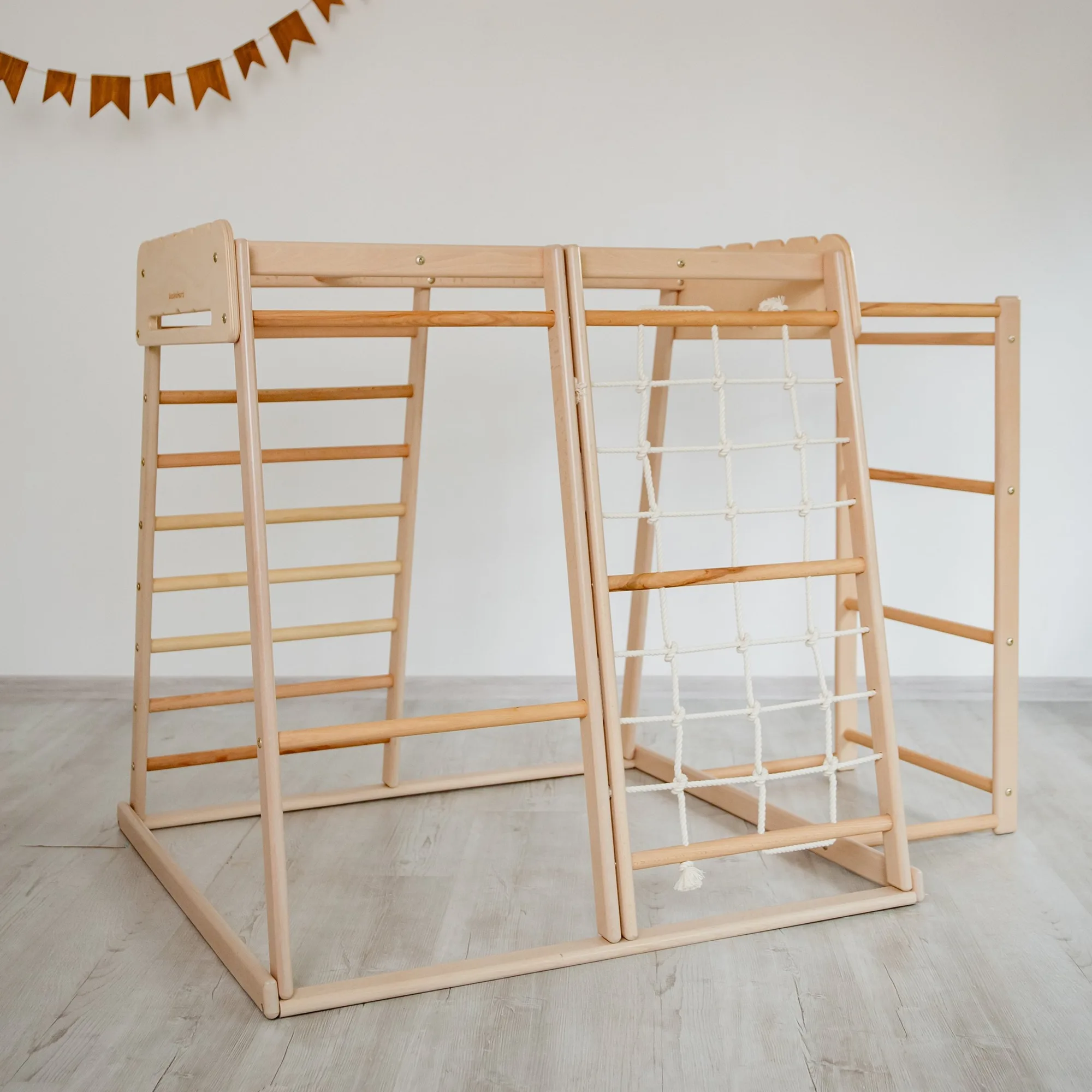
Verdict: false. Age range depends on the specific product, not the material. Some wooden pieces are designed for children as young as 18 months, while others are built for ages 3 and up. A wooden climbing wall, for example, is designed for children aged 3 and up, while a multifunctional jungle gym playset is designed for ages 18 months to 6 years.
jungle gym playset
That spread matters when you are buying for siblings or planning to use the same setup for several years. Check the stated age range on each product rather than assuming all wooden equipment is preschool-only. A set that starts at 18 months may still be useful at age five, but the way your child uses it will change.
- Match the product's stated age range to your youngest regular user, not the average age of your kids.
- If you have a wide age gap, choose modular pieces that can be reconfigured as children grow.
Myth 3: Wooden play equipment is automatically eco friendly
Verdict: partly true, with caveats. Wood is a renewable material and wooden equipment can often be repaired instead of replaced, which extends its useful life. That is a genuine sustainability argument. But eco friendly play equipment is not just about the base material. It also depends on the finishes, glues, and packaging used, and on how long the product actually stays in use.
The most sustainable purchase is usually the one you keep for years and pass on. A wooden climbing set that survives two children and then goes to a cousin has a very different footprint from a plastic set that is discarded after a season. If longevity is your goal, prioritize solid construction and replaceable parts over marketing labels.
- Ask whether individual parts can be replaced rather than the whole set.
- Plan for the set to be used by more than one child if you want the environmental case to hold up.
Myth 4: Wooden sets are too heavy and complicated for indoor use
Verdict: mostly false, but weight is a real tradeoff. Wood is heavier than hollow plastic, and a large wooden climbing structure is not something you will move from room to room on a whim. However, many wooden pieces are designed specifically for indoor playrooms and can be mounted to walls or ceilings, which actually saves floor space.
For example, a set of kids climbing ropes is designed to be mounted to the ceiling, using cotton rope and beech wood. That approach keeps the floor clear and turns unused vertical space into a climbing area. The tradeoff is that installation is permanent, so you need to be confident about the location before you drill.
- Measure your ceiling height and wall stud locations before ordering a mounted wooden set.
- Keep floor-standing wooden pieces near a wall so they feel stable and take up less visual space.
Myth 5: Wooden vs plastic is an either-or decision
Verdict: false. Most playrooms end up with a mix, and that is fine. A wooden climbing frame can anchor the room while a plastic slide or ball pit handles messy, quick-change play. The right question is not which material wins overall, but which pieces you want to keep for years and which ones you expect to outgrow or replace.
If you want a long-term indoor climbing setup, wooden equipment usually makes more sense because it can be repaired and refinished. If you need something lightweight you can move outside, wipe down, and store in a garage, plastic may serve you better. Being honest about how you will actually use the equipment prevents expensive mistakes.
- List the pieces you expect to keep for more than three years, and invest in wood for those.
- Use plastic or fabric for temporary, seasonal, or highly portable play items.
Verdicts at a glance
- Wood is always safer than plastic: Safety comes from design, correct assembly, and supervision, not the material alone. Wood lets you inspect and repair joints, which is a real advantage, but a badly mounted wooden set is still unsafe. Verdict: false as a blanket claim, with a repairability edge for wood.
- Wooden sets are only for toddlers: Age ranges vary by product. Some wooden pieces start at 18 months, others at 3 years. Check each product's stated range instead of assuming. Verdict: false.
- Wood is automatically eco friendly: Wood is renewable and repairable, but finishes, glues, and how long you keep the product also matter. Long use is the biggest factor. Verdict: partly true, with caveats.
- Wooden sets are too heavy for indoor use: Weight is a real tradeoff, but wall- and ceiling-mounted wooden sets save floor space and are designed for indoor playrooms. Verdict: mostly false, but plan installation carefully.
- You have to choose wood or plastic: Most playrooms mix both. Use wood for long-term climbing pieces and plastic for portable or messy play. Verdict: false.
What our wooden sets actually include
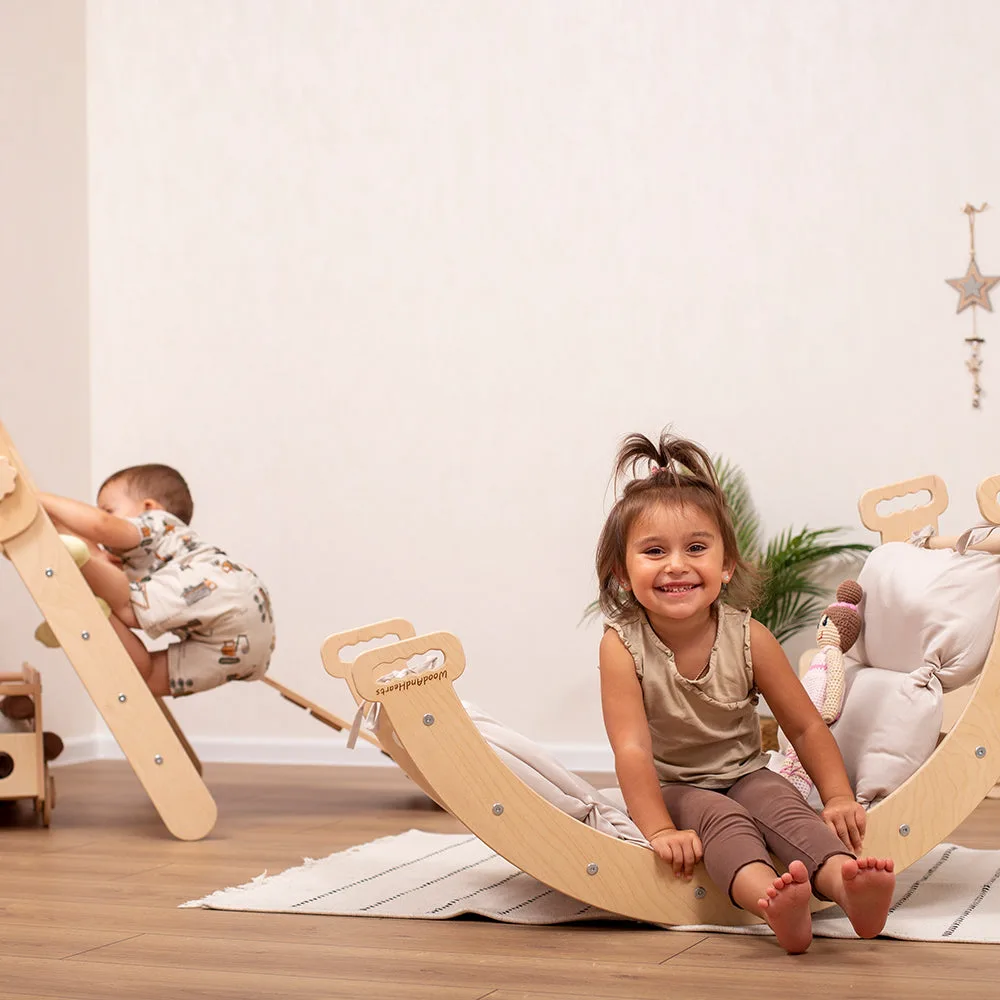
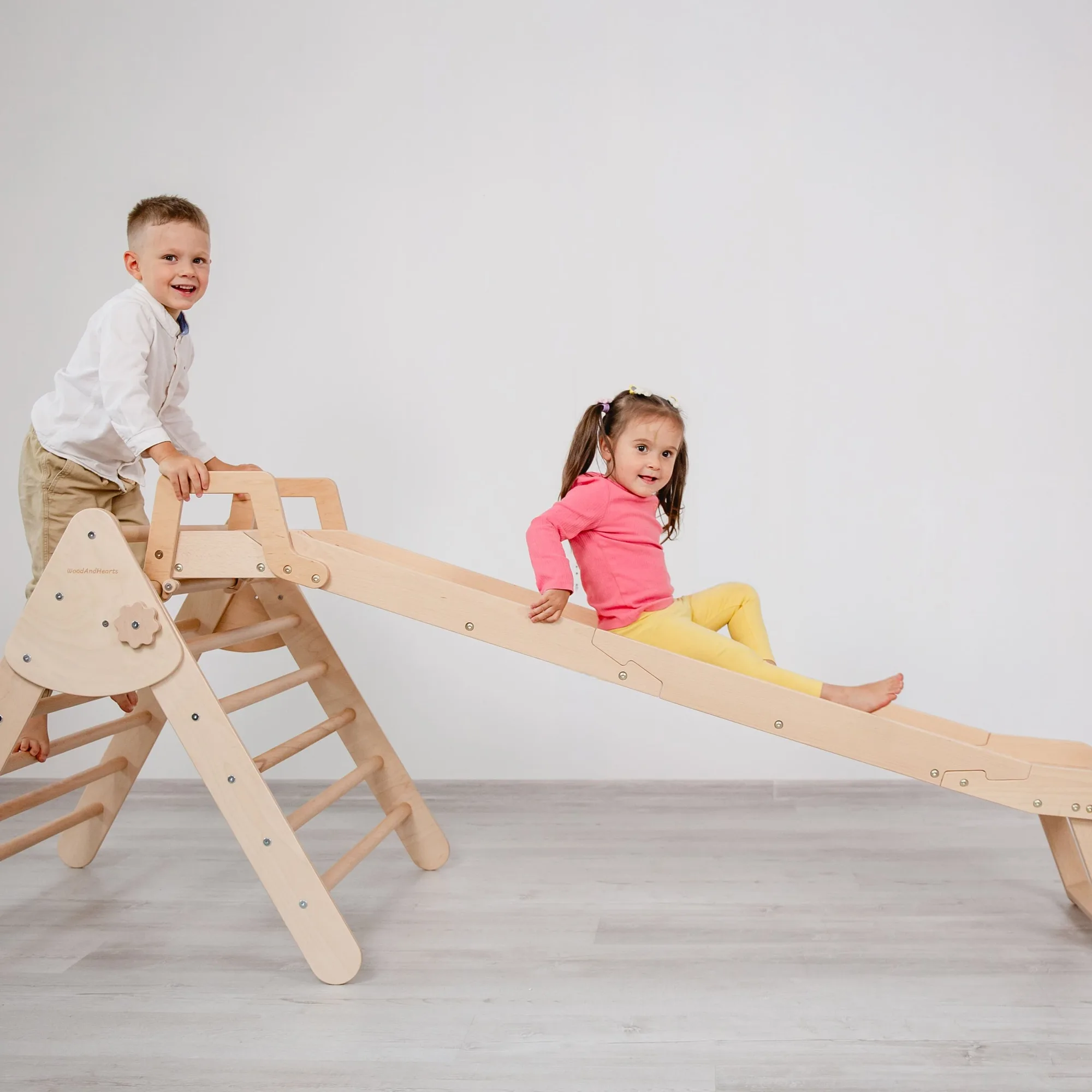
- Montessori Climbing Gym with Cushion: This playset features a triangle ladder, climbing arch, slide, and a cozy cushion for the arch, crafted from premium birch plywood. A single set covers climbing, sliding, and lounging, so you need less floor space than buying separate pieces. The included cushion also makes the arch usable as a quiet reading nook.
- Jungle Gym Playset: This multifunctional playset in natural wood color is designed for children aged 18 months to 6 years and is inspired by Montessori principles. The wide age range means the same set can serve a toddler and an older sibling, which is useful if you want one purchase to last several years.
- Kids Climbing Ropes: This set features 4 long ropes that should be mounted to the ceiling, made with cotton rope and beech wood. Ceiling mounting keeps the floor clear, which is a smart option for small playrooms where a floor-standing frame would block the room.
- Rock Climbing Wall: Designed for children aged 3 and up, this wall promotes strength, coordination, and confidence. A wall-mounted option turns unused vertical space into climbing terrain, but it is a permanent installation, so plan the location carefully.
Wooden play equipment is a smart choice when you want a repairable, long-lasting indoor climbing setup and you are willing to plan the installation. It is not a magic material, and it is not always the cheapest or most portable option. Decide which pieces you will keep for years, check the stated age range, and mount everything according to the instructions. That approach will serve your family better than any single material label.