Quick Answer
Choose a wooden play gym if you want a stable, floor-standing frame with a fixed footprint and simple, classic hanging toys. Choose a baby activity gym if you need something lightweight and portable that can be moved room to room or packed away. For most newborns, either works; the deciding factors are how much floor space you can dedicate and whether you prefer a stationary setup or a portable one.
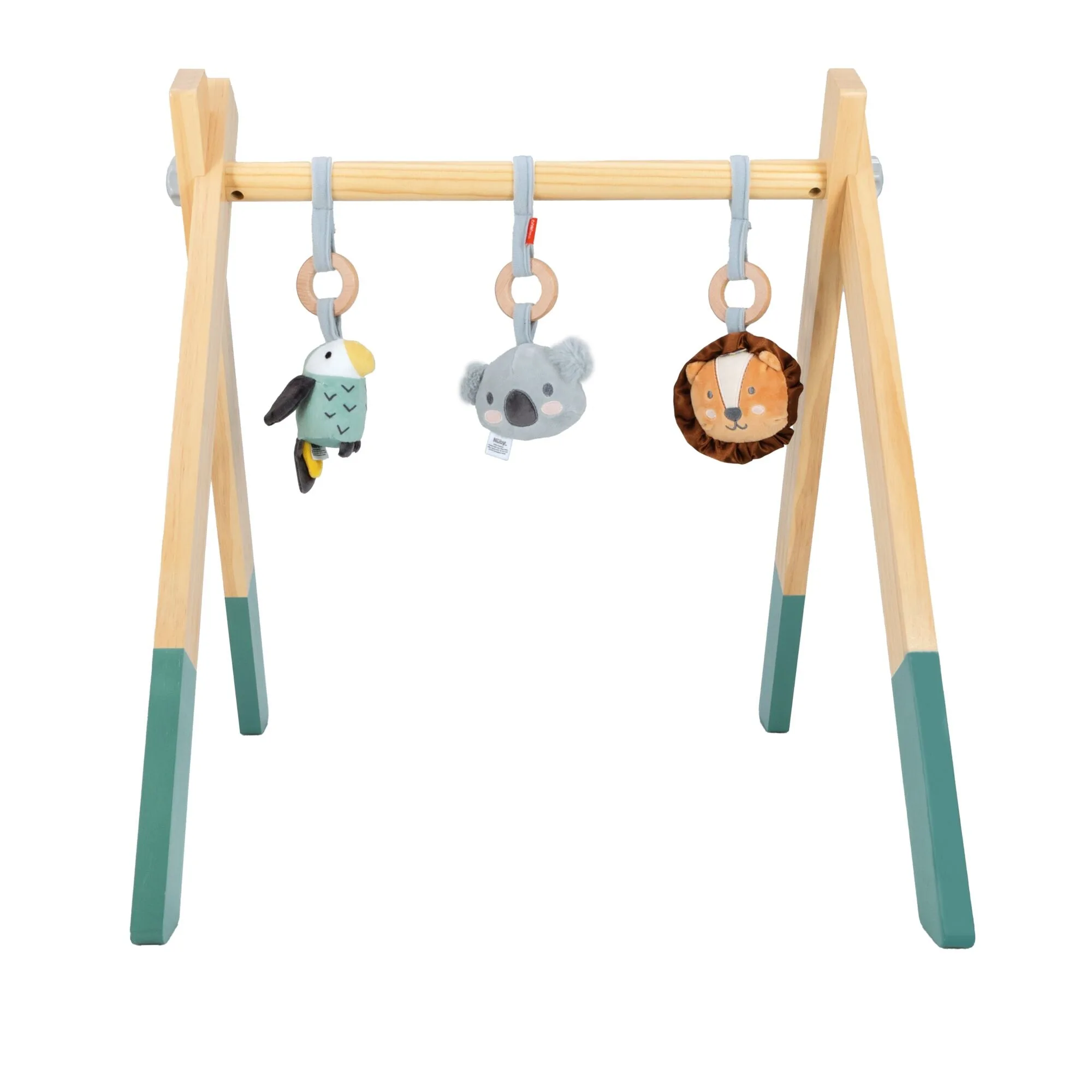
wooden play gym
A play gym looks like a simple purchase until you're standing in the aisle comparing a solid wood frame against a padded, foldable mat. Both give your baby something to look at, reach for, and bat at during tummy time and back play, but they solve different problems. One stays put and feels like furniture; the other moves with your day.
This comparison sticks to what the supplied product facts actually tell us, so you can match the gym to your baby's stage, your floor plan, and how you actually use your home. We'll cover setup, space, play value, and the trade-offs you'll live with after the novelty wears off.
How the Two Setups Differ
A wooden play gym is a freestanding A-frame, usually with hanging toys suspended above a mat or blanket you place underneath. The Nuby Animal Adventures Wooden Play Gym uses a solid wood A-frame that the catalog describes as sturdy and able to hold up as your little one plays. It comes with soft hanging toys including a squeaking koala, a rattling parrot, and a little scrunching lion, which support reaching, grabbing, and hand-eye coordination.
A baby activity gym is typically a mat with arches or a collapsible frame, often made from fabric and plastic. It's built to be lighter and more portable than a wood frame. If you plan to move the gym between the living room and a bedroom, or tuck it away when guests come over, that portability matters more than the furniture-like feel of wood.
- Measure your floor space before you buy: a wooden A-frame needs a dedicated spot, while a portable gym can fold or shift.
Play Value and Developmental Fit
For newborns, the job of a play gym is to give them something high-contrast and interesting to track with their eyes, plus a reason to swipe at hanging objects. The wooden gym's soft hanging toys are designed for exactly that: the squeaking koala, rattling parrot, and scrunching lion each offer a different sound and texture to engage a wiggly baby. That variety encourages repeated reaching and grabbing, which builds hand-eye coordination.
Portable activity gyms often add lights, music, or removable toys, but those features aren't part of the supplied facts here. What we can say is that a wooden frame stays in one place, so once your baby learns where the toys are, they can reliably find them again. That predictability supports early play routines. If your baby is not yet sitting up or rolling, either style works as long as the toys hang within reach.
- Rotate hanging toys every few days to keep a stationary gym interesting for longer.
Space, Storage, and Everyday Use
The biggest practical difference is footprint. A wooden play gym occupies a fixed patch of floor and generally stays there. That's fine in a nursery or playroom, but it can feel like an obstacle in a small apartment or a room that has to serve multiple purposes. The trade-off is stability: a solid wood A-frame doesn't slide or tip the way a lightweight arch can when a baby grabs and pulls.
A portable activity gym wins on storage and flexibility. You can move it to wherever you're supervising, take it to a grandparent's house, or fold it away. The trade-off is that lighter frames can shift during enthusiastic play, and fabric mats need more frequent cleaning. Neither option is universally better; it comes down to whether your home has a permanent spot for a play gym or needs one that disappears.
- If you have hardwood floors, put a mat or blanket under a wooden gym to soften the landing zone.
Materials and Longevity
Wood frames are generally heavier and more furniture-like, which can make them feel like a longer-term purchase. The Nuby wooden gym is built around a solid wood A-frame, and its hanging toys are soft, so it reads as a calm, classic piece rather than a battery-powered toy. The trade-off is that it doesn't fold flat, and it won't convert into a toddler toy later.
Activity gyms made with fabric and plastic tend to be lighter and often cheaper, but they may show wear sooner if they're washed frequently or left out in the sun. If you want one item that stays useful as your baby grows into sitting and crawling, a portable gym with a removable mat can sometimes transition into a play mat. A wooden gym typically stays a gym.
- Check that hanging toys attach securely; a wooden frame's toys should be easy to swap but not easy for a baby to pull off.
Trade-Offs at a Glance
- Stability vs. portability: A solid wood A-frame like the Nuby Wooden Play Gym stays put and won't slide during enthusiastic grabbing, but it occupies a fixed spot. A portable activity gym moves easily but may shift under a determined baby. Pick stability if you have a dedicated play area; pick portability if your space doubles as something else.
- Classic simplicity vs. feature density: The wooden gym keeps things simple with soft hanging toys that squeak, rattle, and scrunch. Many activity gyms add lights, music, or removable toys, but those features aren't part of the supplied facts for the wooden option. If you want fewer batteries and less noise, the wooden gym is the calmer choice.
- Long-term furniture vs. short-term gear: A wooden frame tends to feel like a piece of furniture you keep in one room, while a portable gym is often designed to fold or pack away. Neither converts into a toddler toy, but the wooden gym may hold its spot longer. Decide whether you want a play gym that lives in your home or one that comes out and goes away.
Product Facts That Matter
- Wooden Play Gym: The solid wood A-frame is sturdy and holds up as your little one plays, and it includes soft hanging toys: a squeaking koala, rattling parrot, and scrunching lion. A stable frame stays put during reaching and grabbing, and the varied toys give your baby different sounds and textures to explore, supporting hand-eye coordination.
- Kids' Ball Pit for Home with 200 Balls | Aqua: The soft but sturdy walls offer security when babies sit upright, and the sleek, modern design looks at home in any setting. It is light and easy to move. Once your baby can sit up, a ball pit adds a contained, bump-friendly play space that can be moved or stored, complementing either gym style.
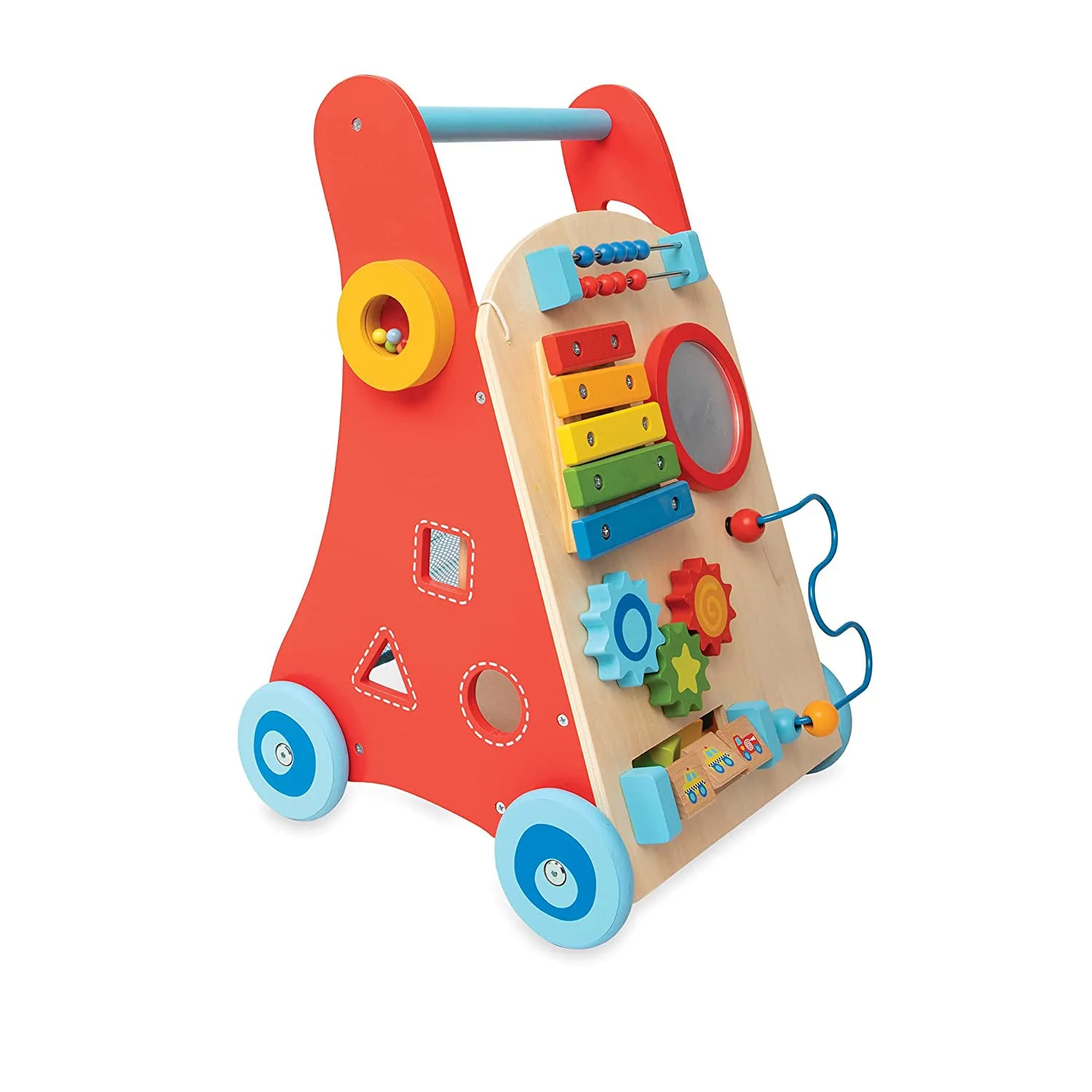
- Wooden Baby Walker: The walker's push and pull function encourages first steps by providing sturdy support for little hands to hold on to. As your baby moves from floor play to pulling up and stepping, a wooden walker extends the wooden-toy approach into active play.
Which One Fits Your Home?
Best for
- Parents with a dedicated nursery or playroom corner who want a stable, furniture-like gym that stays in place.
- Families who prefer simple, classic hanging toys over battery-powered features.
- Babies who are starting to reach, grab, and track objects and need a consistent spot to play.
Not for
- Small apartments or shared rooms where every item needs to fold or move out of the way.
- Parents who want to carry a gym between rooms, upstairs, or to a grandparent's house.
- Shoppers looking for a play gym that converts into a toddler toy later.
If your home has a spot that can belong to a play gym, the Nuby Wooden Play Gym gives you a stable, classic setup with soft hanging toys that support early reaching and grabbing. If your space is tight or always changing, a portable baby activity gym will serve you better. Match the gym to your floor plan and your daily routine, and you'll get more use out of whichever you choose.