Quick answer
When choosing a wooden play kitchen for toddlers, prioritize safety (rounded edges, non-toxic finishes), the right size (counter height around 20–22 inches), and interactive features that match your child's age and interests.
Why wood over plastic?
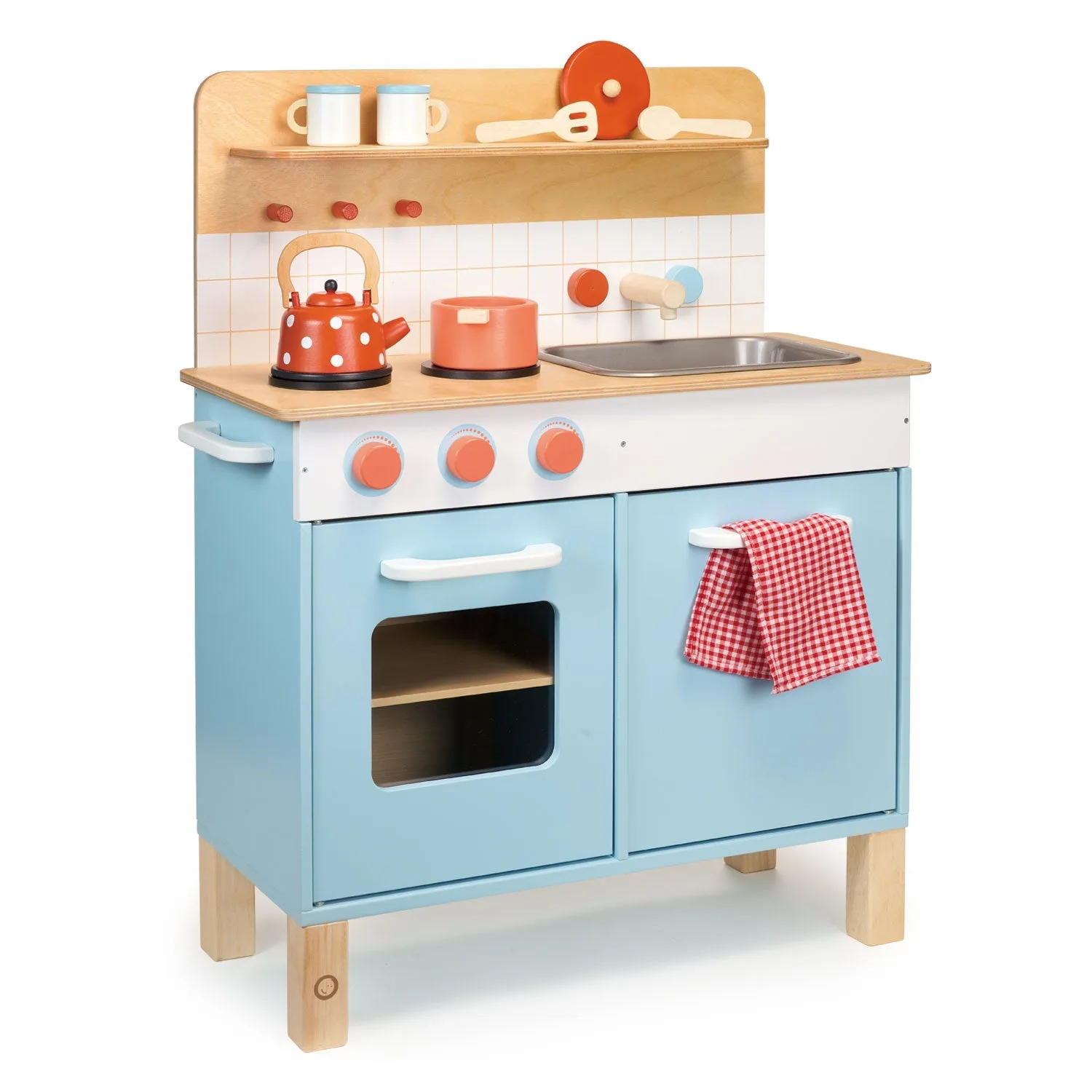
Wooden play kitchens are generally more durable and stable than plastic alternatives, which can tip over more easily. They also tend to have a classic look that fits well in any playroom and can be passed down to younger siblings. The trade-off is that wooden kitchens are heavier and more expensive upfront.
Safety comes first
Toddlers put everything in their mouths and are still wobbly on their feet. Look for a play kitchen with rounded corners, smooth surfaces, and non-toxic, lead-free paint or finishes. Avoid small detachable parts that could be a choking hazard. Always check the age recommendation—most wooden play kitchens are suggested for ages 3 and up.
Size and space considerations
Measure your available floor space before buying. A typical wooden play kitchen is about 30–40 inches wide and 15–20 inches deep. The counter height should be low enough for a toddler to reach comfortably—around 20–22 inches is ideal. If space is tight, consider a compact or corner kitchen model.
Features that encourage pretend play
Look for interactive elements like doors that open and close, knobs that turn, and a pretend sink or stove. Some kitchens come with realistic sounds or lights, but these often require batteries and may not last as long as the kitchen itself. Simple, open-ended features often spark more creativity than complex electronic ones.
Decision rules for choosing a toddler play kitchen
- Check the materials: Ensure the kitchen is made from solid wood or high-quality plywood, not particleboard. Look for non-toxic, water-based paints and finishes. Avoid any sharp edges or splinters. A well-made wooden kitchen can last through multiple children.
- Measure the height: The counter height should be between 20 and 22 inches so your toddler can reach all the play areas without straining. If the kitchen is too tall, your child may lose interest or feel frustrated.
- Prioritize open-ended play features: Choose a kitchen with simple, realistic elements like a sink, stove knobs, and storage shelves. Avoid kitchens with too many electronic sounds or lights—they can be distracting and may break quickly. A kitchen with fewer bells and whistles often encourages longer, more creative play.
- Consider assembly and stability: Read reviews about how easy the kitchen is to put together. A sturdy, wobble-free kitchen is safer for active toddlers. Look for models that can be anchored to the wall if needed. Check if the kitchen comes with clear instructions and all necessary hardware.
Product spotlight
-
Tiny Land® Iconic Wooden Play Kitchen – Cream Pretend Cooking Set for Kids: Tiny Land® Iconic Wooden Play Kitchen – Cream Pretend Cooking Set for Kids features a timeless cream-colored design, spacious cooking area, and charming wooden details. Its classic style and generous play space make it a durable centerpiece for pretend play, while the cream finish blends easily with most home decor.
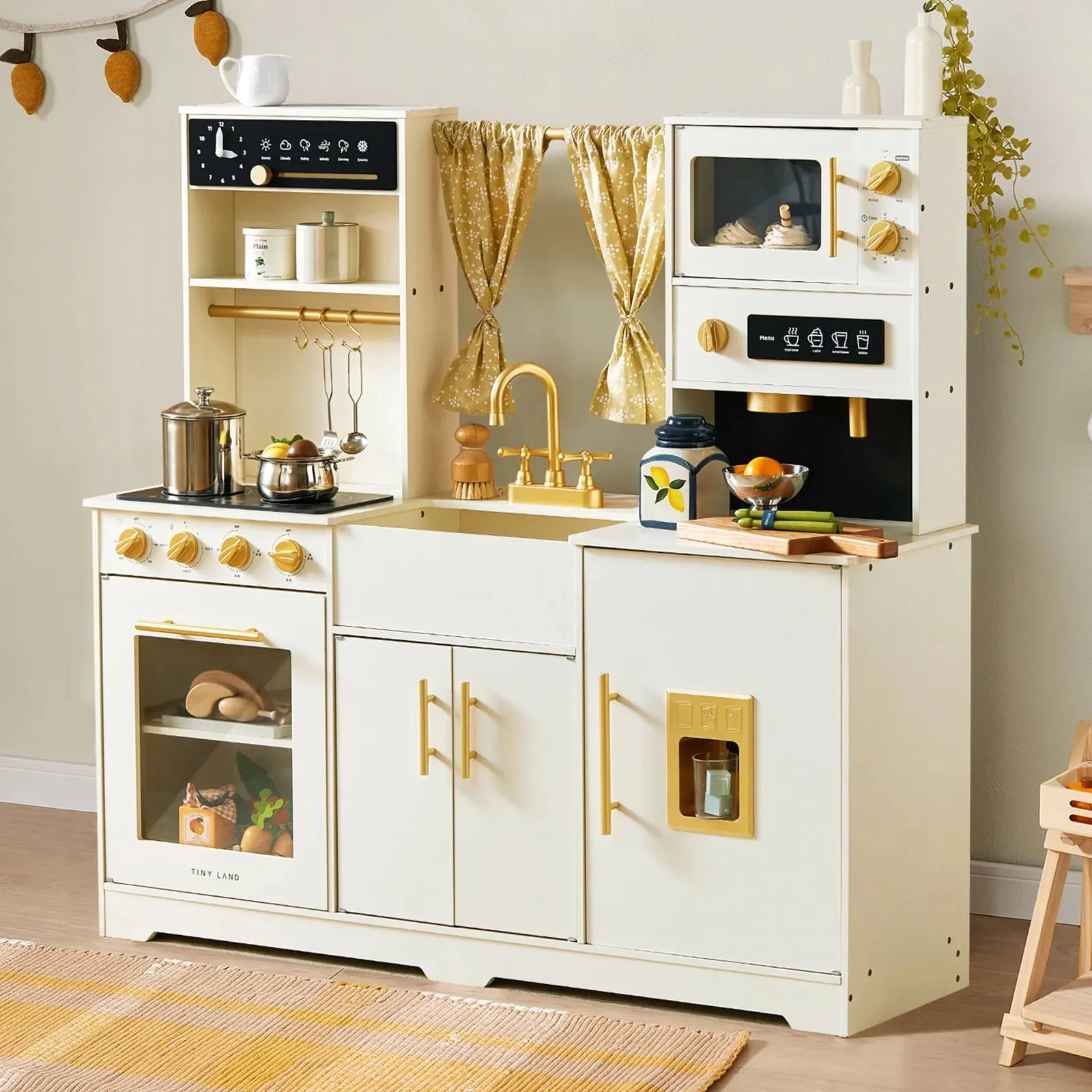
Tiny Land® Iconic Wooden Play Kitchen – Cream Pretend Cooking Set for Kids
Finding the right fit
Best for
- Parents who want a durable, long-lasting toy that can be passed down
- Families with toddlers aged 3–5 who are starting pretend play
- Homes with a dedicated play area where a heavy wooden kitchen won't be moved often
Not ideal for
- Families with very limited floor space (consider a compact or foldable model)
- Parents on a tight budget (wooden kitchens are more expensive than plastic)
- Children under 2 years old (most wooden kitchens have small parts or are too tall)