Quick answer
Under $60, the best value for most builders is a kit that adds a display feature you will actually use—like touch or motion lighting—rather than just more pieces. If you want a lit book nook, plan for about $39. If you prefer a compact 3D scene with a nostalgic twist, $32 gets you a lit theater. And if you are testing the hobby, $12–$13 kits deliver a complete build without the extras.
What actually changes between $12 and $60
Price in this range rarely reflects difficulty alone. The biggest jumps come from three things: whether the kit includes a light, whether it is designed to sit inside a bookshelf versus on an open shelf, and how many display-ready details are pre-cut or pre-printed. A $12 kit can have 280 pieces and take two hours; a $39 kit can have fewer pieces but include a touch sensor. Decide which of those upgrades matters to your space before comparing numbers.
The lighting threshold: when a kit stops being just a puzzle
Lighting is the clearest dividing line under $60. Kits without lights are pure builds—you assemble, display, and dust. Kits with touch or motion sensors become functional decor: they glow when you walk past or tap them, which changes where you can put them. A lit kit works on a dark shelf, a bedside table, or a hallway console. An unlit kit needs nearby room light to show its details. If your display spot is dim, put more of your budget toward lighting and less toward piece count.
Scale and footprint: bookshelf insert versus open-shelf scene
Book nook kits are sized to nestle between books, so they tend to be taller and narrower. Open-shelf scenes like theaters or miniature stands are wider and shorter, and they often read better from the front. Measure your intended spot before you buy: a nook that is 6 inches wide may not fit a narrow shelf gap, while a 9-inch-tall theater may be too tall for a low cubby. Assembly dimensions are listed per product, so use those instead of guessing from photos.
Build time and piece count are not the same as value
A 280-piece kit that takes 2 hours can feel like a better deal than a 150-piece kit, but piece count only matters if you enjoy the repetition. Some builders want a long, meditative session; others want a finished object in one evening. Under $60, you can get both—just not in the same kit. Read the listed assembly time and piece count together, then ask whether you want the process or the result to be the main event.
Decision rules for spending under $60
- If your display spot is dim: Prioritize a kit with touch or motion lighting, even if it has fewer pieces. A lit kit reads as decor; an unlit kit disappears in shadow. Spend on lighting before piece count.
- If you want a one-evening build: Check the listed assembly time and keep it under 3 hours. Piece count is a weaker signal than time for how long the build will actually take. Time is the honest measure of commitment.
- If you are buying for a shelf gap: Measure the gap first, then compare against assembled dimensions. Book nooks are designed for narrow gaps; open scenes need more width. Fit beats features when space is tight.
- If you are new to wooden kits: Start at the $12–$13 tier to confirm you enjoy the process. You can always add a lit kit later without wasting budget on a large first build. Test the hobby cheaply, then upgrade.
Three kits that show the tiers
- Hands Craft | Narcissus: 280 pieces, 2-hour assembly, 6.5 x 5.7 x 8.1 inches assembled, age 14+. This is the entry tier: no lighting, but a full architectural build that doubles as decor. Best if you want a longer build session and already have good room light.
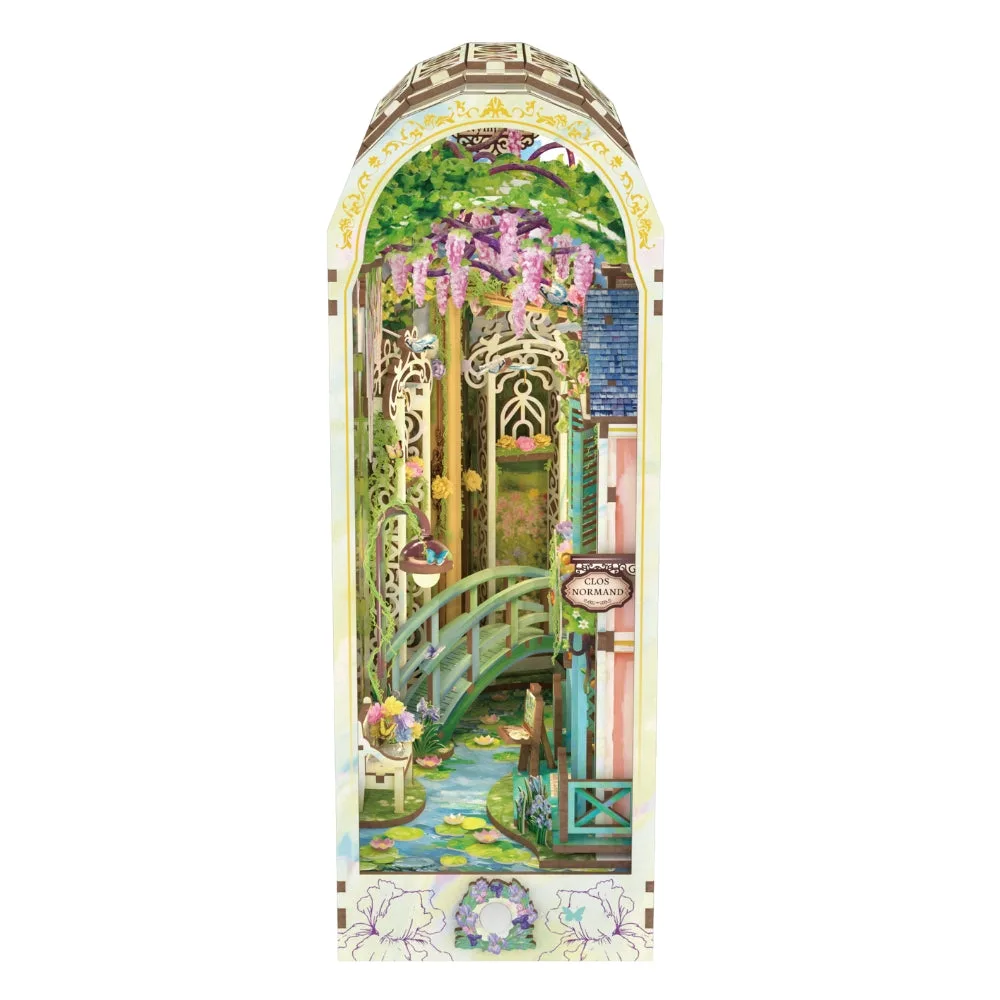
- Hands Craft | Giverny Garden: Touch-sensor power button and motion-sensor function for ambient light. This is the lighting upgrade tier: the kit works in a dim bookshelf gap because it lights itself. Choose this if your display spot has no nearby outlet or lamp.
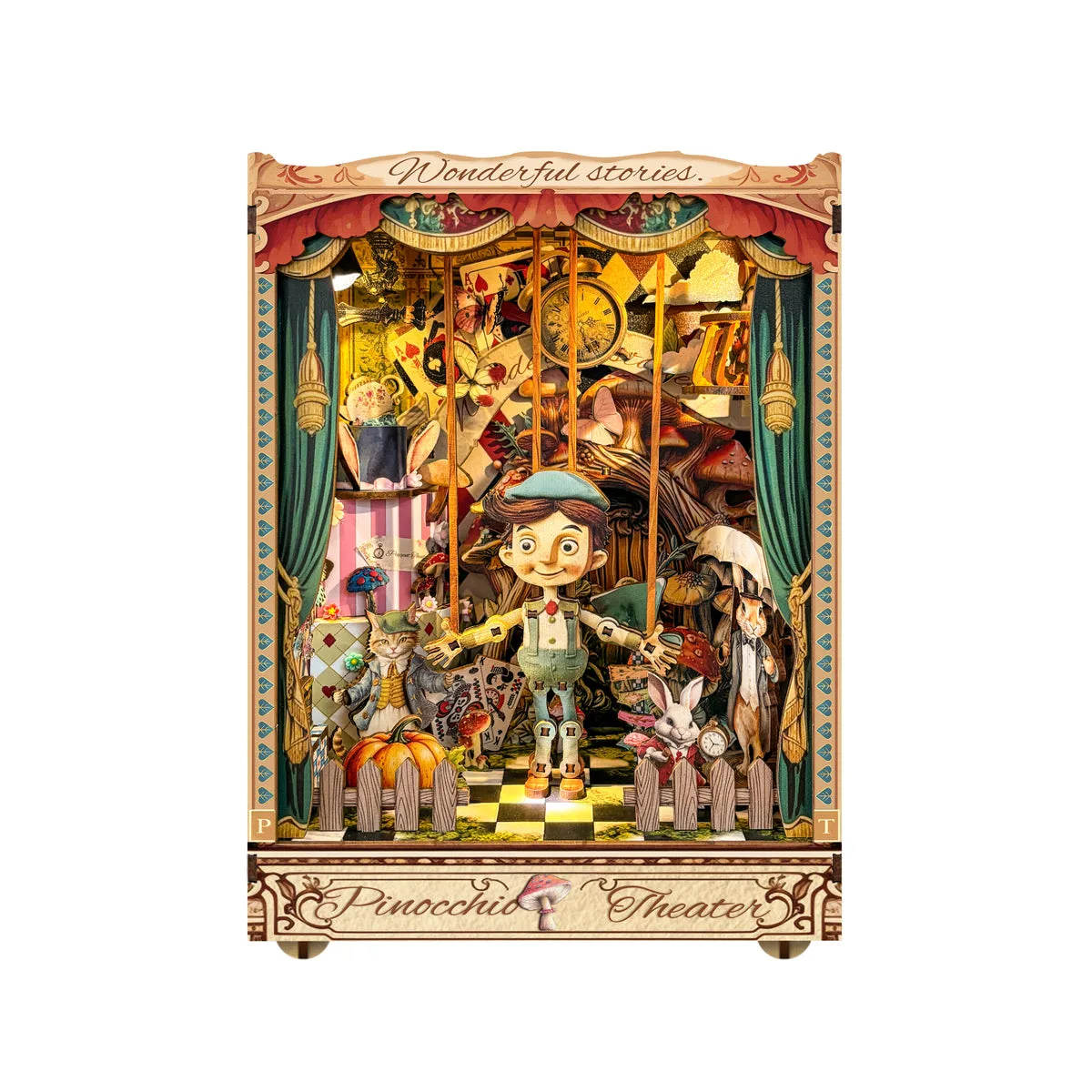
- Hands Craft | Pinocchio Theater: Touch-activated LED light; requires 3 AA batteries (not included); 6.1 x 4.3 x 9.0 inches assembled; age 14+. A mid-tier lit scene that is taller than it is wide. The battery requirement means you need to plan for power, but you avoid a cord running to the shelf.
Who should buy in this range
Best for
- Builders who want a finished piece that works as decor, not just a puzzle.
- Anyone display a kit on a dim shelf or in a hallway where a light adds function.
- Gift-givers looking for a $30–$40 project with a clear 'wow' feature.
Not for
- Shoppers who want the lowest possible price and do not care about lighting.
- Builders who prefer very large piece counts and long, multi-session builds.
- Anyone who cannot use or replace batteries for a lit kit.