Start with one puzzle, not all three
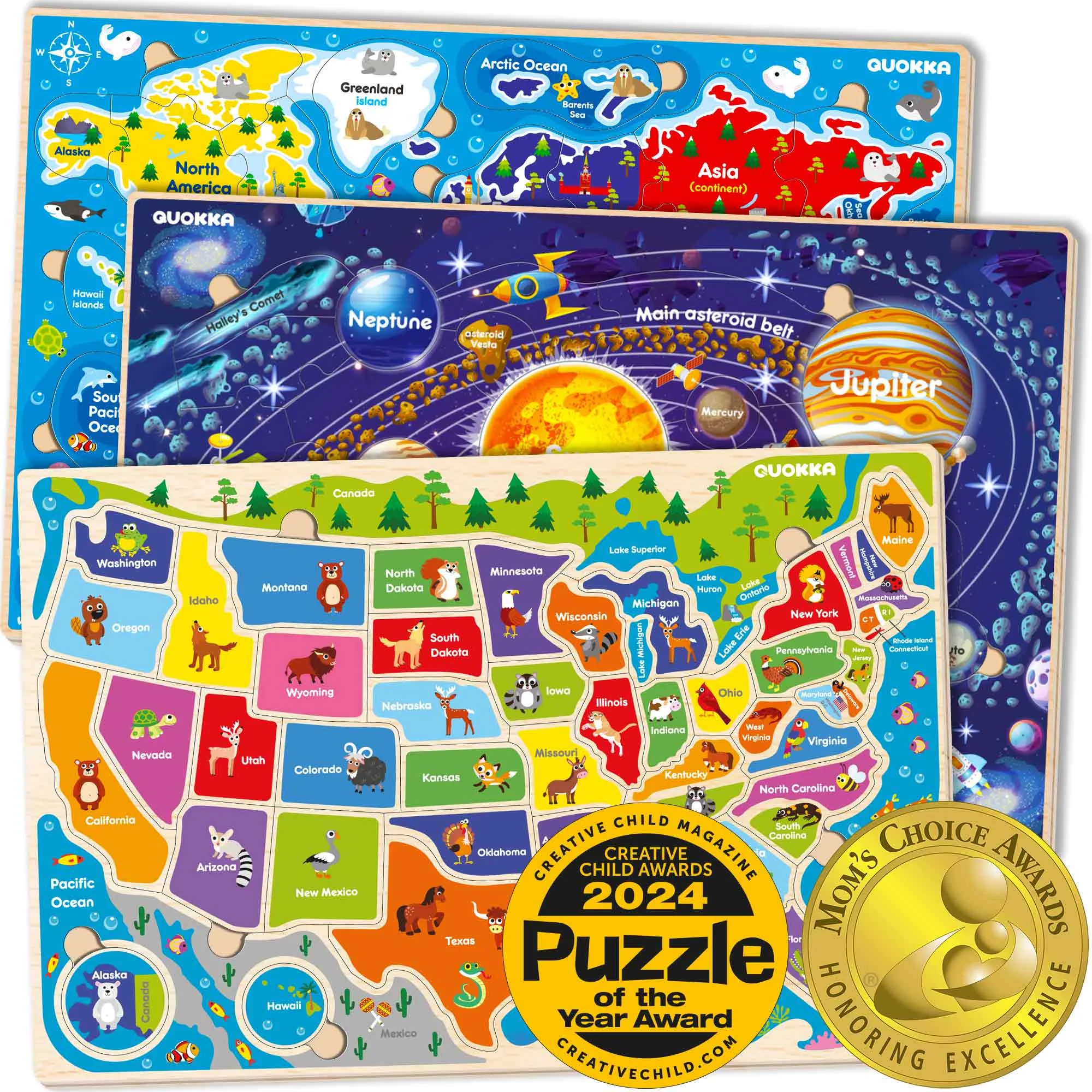
This set gives you three separate wooden jigsaw puzzles: a World Map with 38 big pieces, a United States map with 42 pieces, and a Space puzzle. Trying to use all three at once turns a learning activity into a pile of loose pieces. Pick one theme for the session, finish it, and put it away before opening the next.
The puzzles are designed for kids 3 years and up, and the pieces are cut on natural birch wood with a full-color picture printed directly on the wood. That printed surface is water- and scratch-resistant, which matters because kids handle puzzle pieces far more than they handle a poster.
A useful first session is short: build the border together, name a few pieces, and stop while the child is still interested. The goal is familiarity with the map, not completion speed.
A simple routine for map and space puzzle sessions
The order below works for any of the three puzzles. Adjust the pace to the child; there is no required timing.
- 1. Sort by region or color first: Spread the pieces face up and group them by the colors and shapes printed on the wood. On the World Map, that means separating oceans from landmasses. On the Space puzzle, it means grouping the planets and other objects by their look.
- 2. Build the outer edge: The border gives the child a frame to work inside. On the USA puzzle, the outer states form that frame, which is a natural chance to name the coasts and borders.
- 3. Fill one section at a time: Choose a continent, a region of states, or one part of the solar system. Talk about what is on each piece as it goes in: a country name, a state capital, or a planet.
- 4. Do a naming pass at the end: Once the puzzle is complete, point to pieces and ask the child to name them. This is where the printed picture does the teaching work, because the names are right there on the wood.
- 5. Pack up by puzzle: Keep each puzzle's pieces together so the next session starts clean. Mixing pieces from three puzzles makes sorting take longer than building.
What each puzzle in the set covers
-
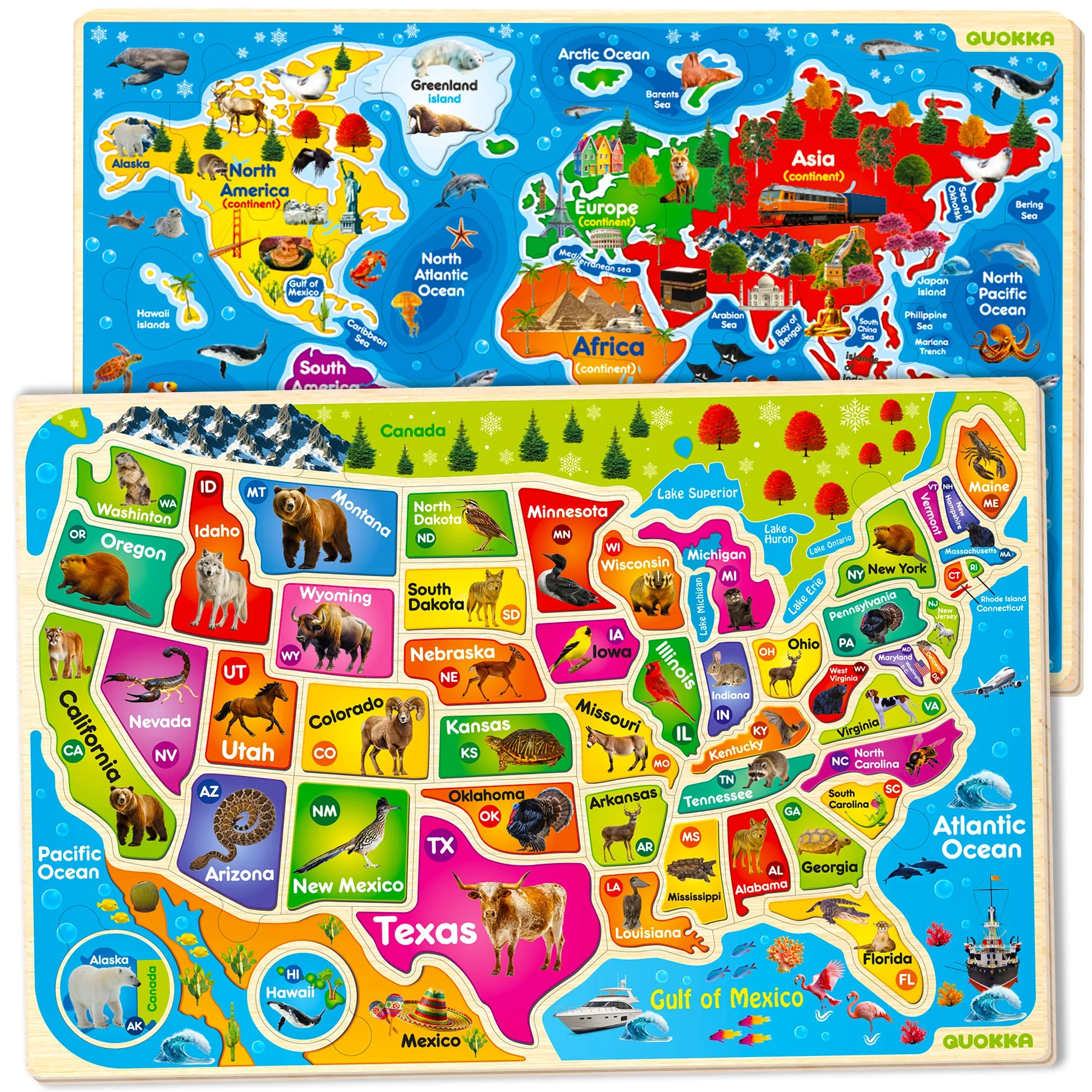
Wooden Puzzles for Kids Maps, Space | Learning Toys: World Map puzzle: 38 big wooden pieces with countries, oceans, wild and ocean animals. The animal pieces give younger kids a way into geography before they can read country names.
Wooden Puzzles for Kids Maps, Space | Learning Toys
-
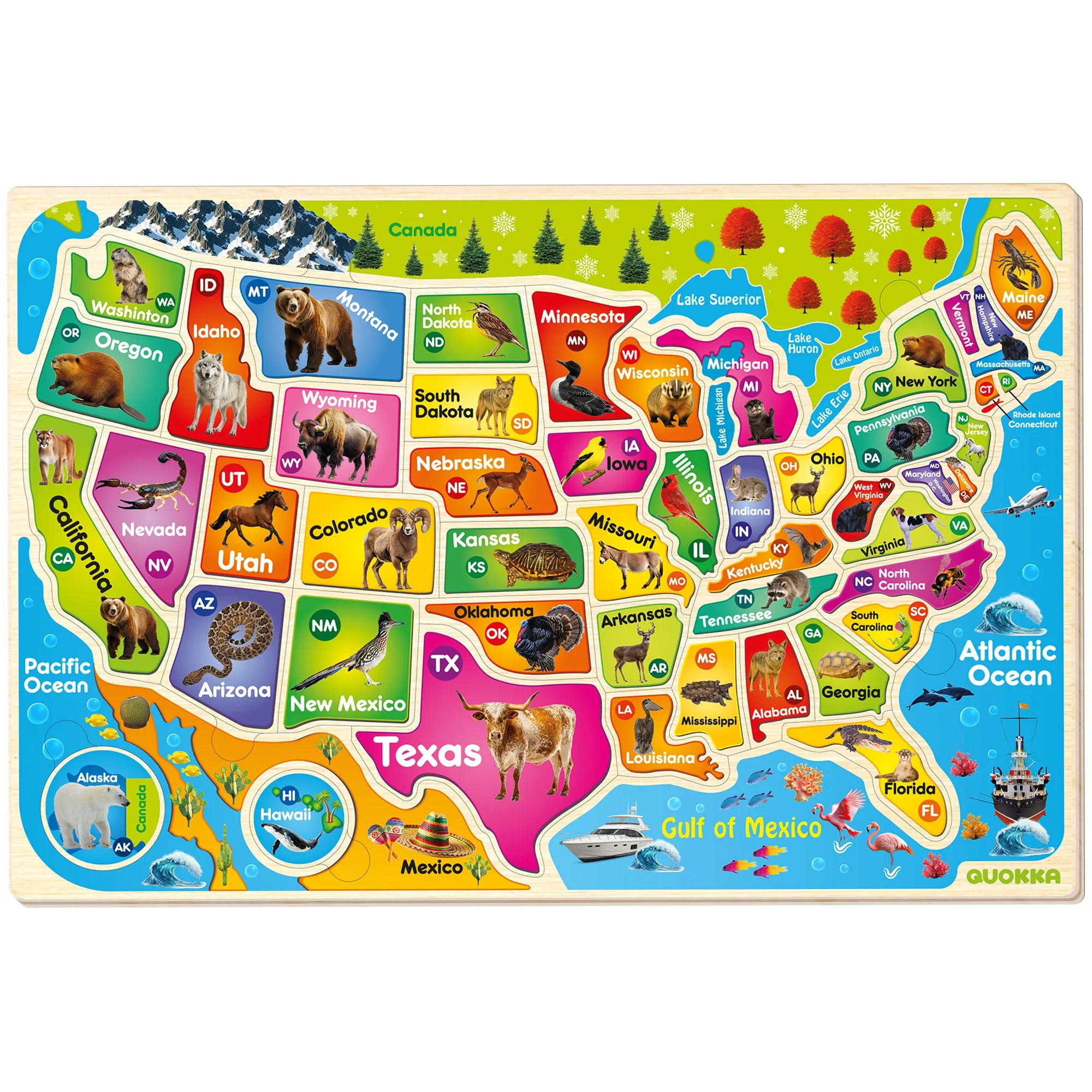
Wooden Puzzles for Kids Maps, Space | Learning Toys: The United States puzzle: 50 American states and their capitals on 42 puzzle pieces. Capitals are printed on the pieces, so the puzzle doubles as a reference during the naming pass.
-
Wooden Puzzles for Kids Maps, Space | Learning Toys: Space puzzle: a full-color picture of the universe and its objects. This is the space themed wooden puzzle in the set and works as a standalone activity for a child who prefers planets to maps.
-
Wooden Puzzles for Kids Maps, Space | Learning Toys: Each puzzle measures 14.6 x 9.8 x 0.4 inches. That size fits a standard table or a large lap tray, so you can set up one puzzle without clearing the whole room.
How to use map puzzles for real geography practice
A geography puzzle for kids works best when the child has to find a piece, not just place it. Ask a question that sends them looking: Which piece has the ocean animal? Which state is next to the one you just placed? The World Map pieces carry country and ocean names alongside animals, so the child is reading the map while handling it.
For the USA puzzle, the 42 pieces cover 50 states and their capitals, which means some pieces combine more than one state. That is worth knowing before you promise a child that every state gets its own piece. Use the printed capitals as the naming target and let the child trace which states share a piece.
Keep a simple rule: one question per piece. More than that turns a puzzle into a quiz.
Making the space themed wooden puzzle part of the rotation
The Space puzzle is the easiest of the three to run as a standalone session because it does not depend on map knowledge. Start by having the child point to the objects they recognize, then build around those pieces. The full-color picture printed on the wood means the reference image is on the pieces themselves, so you do not need a separate poster.
If your child is deep in a space phase, run the Space puzzle first and the World Map second. The World Map's ocean and animal pieces give a familiar foothold after the less familiar space objects.
What to check before you buy
- Age fit: The set is listed for kids 3 years and up. The pieces are described as big wooden pieces, but the supplied information does not give a measured piece size, so check the 14.6 x 9.8 x 0.4 inch puzzle size against your child's usual puzzle experience.
- Piece counts differ by theme: The World Map has 38 pieces, the USA puzzle has 42, and the Space puzzle's piece count is not stated in the supplied information. Plan the first session around the map puzzles if you want a known piece count.
- One cut line per piece: All wood puzzle pieces have a unique cut line, so pieces are not interchangeable between puzzles. Store each puzzle separately.
- Surface care: The images are printed directly on the wood and described as water- and scratch-resistant. The supplied information does not include a cleaning procedure, so avoid assuming the puzzles can be washed.
- Skills the set targets: The set is described as encouraging hand-eye coordination, fine motor skills, and cognitive development. Treat those as the design goals rather than measured outcomes.
Set details that affect how you store and rotate it
- Wooden Puzzles for Kids Maps, Space | Learning Toys: The set is designed in the U.S.A. by Adducate and made on natural birch wood. Wood construction is why the pieces hold a printed image rather than a paper surface, which shapes how you store them.
- Wooden Puzzles for Kids Maps, Space | Learning Toys: Catalog price is USD 23.03, compared with a catalog comparison price of USD 31.99. At this price the set covers three separate puzzles, so the per-puzzle cost is lower than buying three single-theme puzzles.