Quick answer
Use a wooden star wand to spark storytelling, movement, and role play. This guide offers simple, actionable steps to turn the wand into a tool for creative adventures.
Why a wooden wand works for imaginative play
A wooden star wand is open-ended, meaning it doesn't dictate one specific game. Its simple design lets a child decide if it's a fairy wand, a magic scepter, or a conductor's baton. This flexibility supports dramatic and symbolic play, which is key for developing creativity and social skills.
Because the wand is handcrafted from repurposed hardwood and finished with non-toxic milk paint, it feels substantial and safe in small hands. The natural materials also add a sensory element that plastic wands often lack, making the play experience richer.
Common mistake: Over-directing the play
It's tempting to show a child exactly how to use a toy. With an open-ended item like a wooden wand, the best approach is to follow the child's lead. If they turn it into a magic wand for turning siblings into frogs, go with it. The goal is to encourage their imagination, not to teach a specific game.
5 simple steps for imaginative play with a wooden star wand
- 1. Start a story prompt: Hold the wand and say, 'This wand can grant one wish. What do you wish for?' Let the child describe their wish and act out the result. This builds narrative skills and confidence. Avoid correcting the wish; the goal is creative expression, not logic.
- 2. Create a movement game: Use the wand as a conductor's baton. Wave it fast for quick movements, slow for gentle ones. The child can dance, hop, or spin based on the wand's speed. This combines physical activity with imaginative play. Let the child take the lead as conductor after a few rounds to keep them engaged.
- 3. Set up a role-play scene: Pair the wand with a simple costume or prop, like a scarf or a crown. The child becomes a fairy, wizard, or king. Encourage them to act out a short scene, like casting a spell or granting a favor. Don't overcomplicate the setup; a single prop is enough to spark a story.
- 4. Use it for problem-solving play: Present a pretend problem, like a stuffed animal that is sad. Ask the child to use the wand to 'fix' the problem with a magical solution. This encourages empathy and creative thinking. Accept any solution the child offers, no matter how silly, to keep the play positive.
- 5. End with a calming ritual: Use the wand to signal the end of playtime. Wave it gently and say a goodbye rhyme, like 'Wand, wand, time to rest, put away your magic best.' This helps transition from active play to a quieter activity. Consistency helps; use the same ritual each time to make the transition predictable.
Product used in this guide
-
Wooden Star Wand: Each wand is made from repurposed hardwood off-cuts and painted with non-toxic milk paint and finished with a natural wax. The natural materials make the wand safe for mouthing and durable for active play, while the repurposed wood gives each piece a unique character.
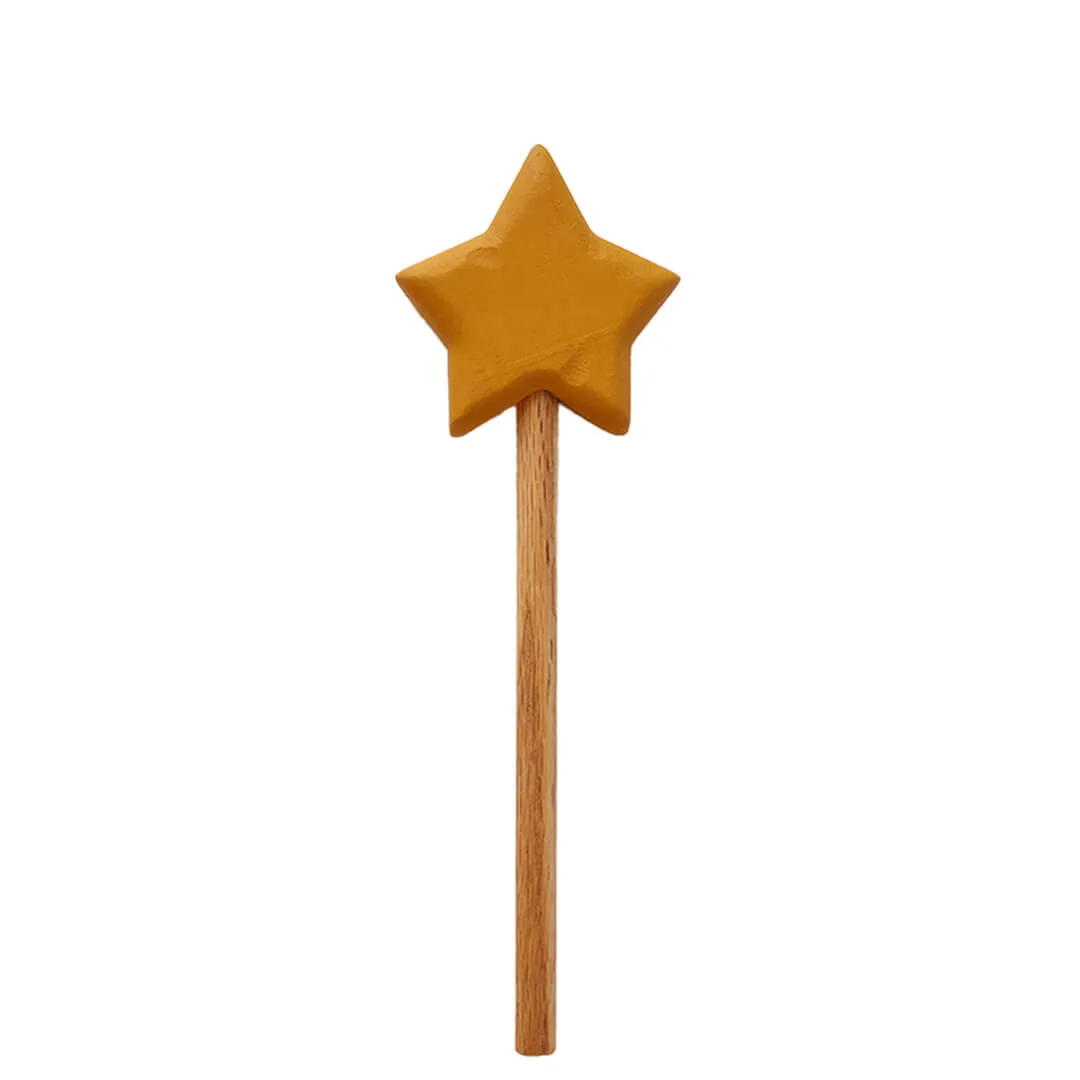
Wooden Star Wand