Quick answer
In humid weather, clean wooden baby toys with a barely damp cloth and dry them immediately. Store them in a breathable cotton bag or open bin instead of a sealed plastic tote, and check weekly for mold, swelling, or loose joints. If a toy feels damp or smells musty, remove it from the play area until it is fully dry.
Why humidity is harder on wooden toys than on plastic
Wood is porous, so it absorbs moisture from the air. In a humid climate, that can cause a toy to swell, warp, or develop mold in the grain and in the seams where pieces are glued or joined. Plastic toys are largely unaffected, which is why a storage routine that works for a plastic rattle may fail for a wooden stacking toy.
The risk is highest in closed containers. A sealed plastic tote traps damp air around the toys, and a closet against an exterior wall stays more humid than an open shelf in a living area. The goal is not to keep wood bone-dry, but to let it exchange air with a room that stays reasonably dry.
What to keep on hand before you start
You do not need a cabinet of special products. A soft microfiber cloth, a second dry cloth, mild fragrance-free dish soap, and a breathable cotton drawstring bag or an open bin cover most situations. Skip bleach sprays, furniture polish, and essential-oil blends on anything a baby mouths.
If your home stays above roughly 60 percent relative humidity for weeks at a time, a small dehumidifier in the playroom or nursery does more for your toys than any cleaner. It also helps the room itself feel less clammy, which matters for sleep and play.
Step-by-step humid-weather toy care
- 1. Wipe, do not soak: Mix a drop of mild fragrance-free dish soap in a bowl of water, wring a microfiber cloth until it is barely damp, and wipe each wooden toy. Follow immediately with a dry cloth. Mistake to avoid: dunking wooden toys or leaving them to air-dry wet. Standing water is what drives swelling and mold.
- 2. Dry fully before storage: Let wiped toys sit in a well-ventilated room, away from direct sun and radiators, until they feel completely dry to the touch, including crevices and drilled holes. Checkpoint: run a finger over joints and edges. Any coolness or dampness means it needs more time out.
- 3. Store in breathable containers: Use cotton drawstring bags, woven baskets, or open bins with airflow. If you must use a plastic tote, leave the lid off or drill ventilation holes. Mistake to avoid: sealing toys in a lidded plastic bin in a humid room. That is the fastest way to grow mold.
- 4. Control the room, not just the toys: Keep the play area between roughly 40 and 50 percent relative humidity with a dehumidifier or air conditioner during wet seasons, and avoid storing toys against exterior walls or on damp floors. Checkpoint: if windows fog up or laundry takes days to dry indoors, your toys are in a high-risk zone.
- 5. Inspect weekly for early warning signs: Look for a musty smell, dark speckles, raised grain, sticky paint, or joints that wiggle. Pay closest attention to twisting cubes, lacing beads, and puzzles with glued layers. If you find mold or a loose joint, remove the toy from play until it is cleaned or repaired. Do not let a baby mouth a damaged piece.
How our Montessori boxes are built for this
- Montessori Educational Box (0-2 Months): Montessori Educational Box (0-2 Months) includes six products, all made from sustainable and safe material, including Black & White Sensory Cards, a Soft Grip Ball, and a Sensory Mobile. The mix of wood, fabric, and card in one box means you should not treat every item the same way. Wipe wooden pieces, air-dry fabric, and keep paper cards out of damp bins.
- Montessori Educational Box (19-24 Months): Montessori Educational Box (19-24 Months) includes six products, all made from sustainable and safe material, with items such as a Twisting Cube, Rainbow Abacus, Lacing Beads, and My First Puzzle. Twisting and lacing toys have more joints and small parts, so they are the pieces to check first for swelling or loosened connections after a humid stretch.
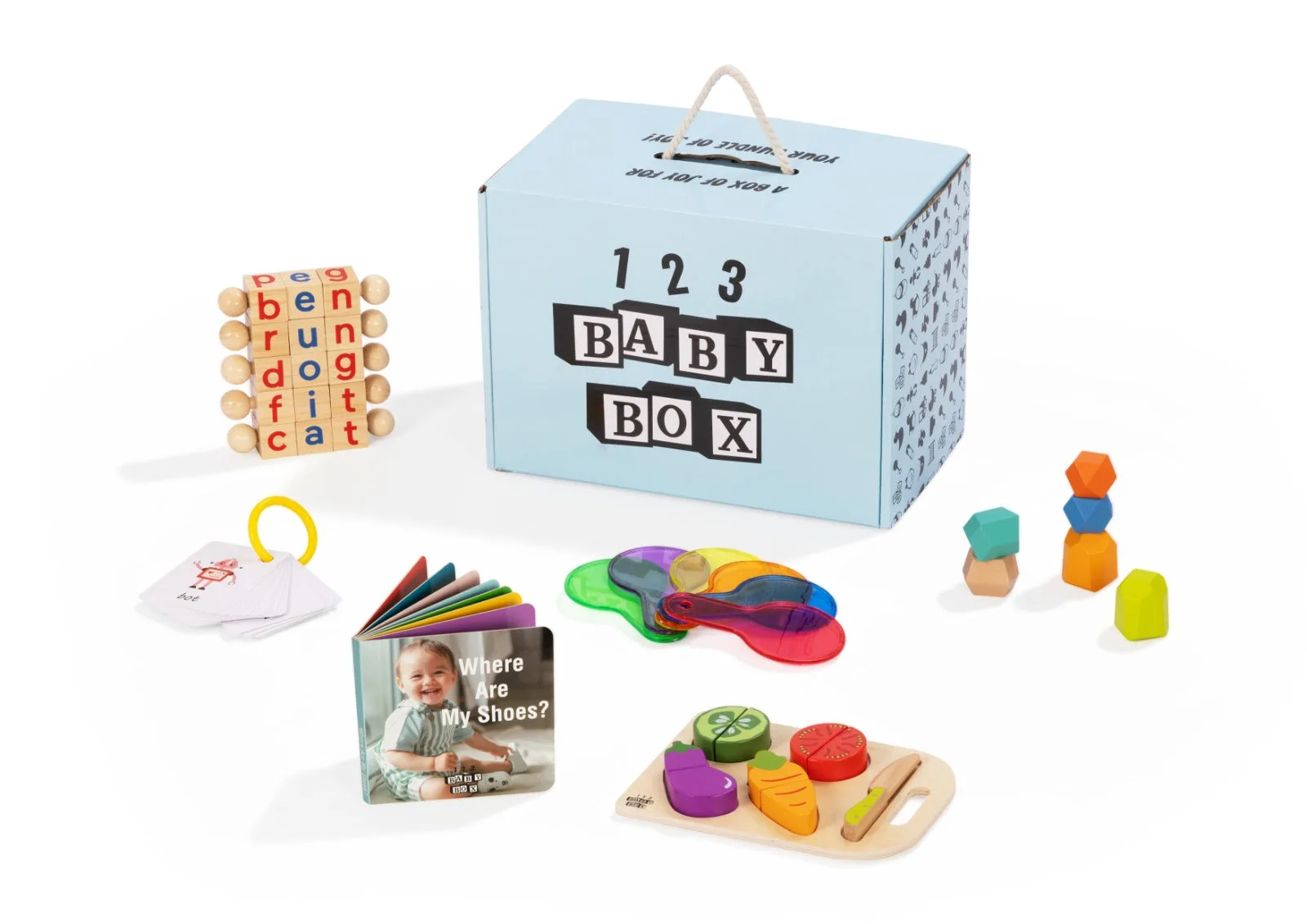
- Montessori Educational Box (34-36 Months): Montessori Educational Box (34-36 Months) includes six products, all made from sustainable and safe material, with items such as a Spelling Game, Stacking Rocks, and a Vegetable Board. Flat painted pieces and stacking shapes are easy to wipe and dry, but they are also the ones most likely to show raised grain or peeling paint if left damp.