Quick Answer
For keeping outdoor toys dry, a plastic storage box with a tight seal generally outperforms a wooden toy chest, but a well-sealed wooden chest offers better durability and style for covered patios.
Weather Resistance: Plastic Seals, Wood Breathes
Plastic storage boxes are molded with gasketed lids that lock out rain and moisture, making them the default choice for fully exposed backyards. Wooden toy chests, even when sealed, rely on caulk and sealant that can degrade over time, and the natural expansion of wood can create gaps where water sneaks in.
That said, a wooden chest placed under a covered porch or inside a shed can stay dry for years with proper maintenance. The trade-off is simple: plastic wins on out-of-the-box weatherproofing, while wood rewards you with classic looks and long-term repairability.
Durability and Maintenance: Wood Repairs, Plastic Replaces
Plastic boxes are tough but can crack in extreme cold or become brittle with UV exposure. When they fail, you typically replace the whole unit. Wooden chests, especially those made from cedar, resist rot and insects naturally, and a cracked panel can be sanded, patched, and resealed.
The trade-off is upkeep: wood needs annual sealing or staining to maintain its weatherproofing, while plastic is essentially zero-maintenance until it breaks.
Style and Integration: Wood Blends, Plastic Stands Out
A wooden toy chest with a rich amber stain complements wooden playsets and natural landscaping, making it feel like a permanent part of your backyard. Plastic storage boxes, while available in many colors, often look utilitarian and can clash with a rustic setting.
If your goal is a cohesive outdoor aesthetic, wood is the clear winner. If you prioritize function over form and need maximum moisture protection, plastic is the practical pick.
The Trade-Off: What to Choose
- Plastic storage box: Choose a plastic storage box with a gasketed lid if your toys will sit in an open area with no overhead cover. It provides the best seal against rain and humidity out of the box. Check the lid seal before buying; a loose fit defeats the purpose.
- Wooden toy chest: Choose a wooden toy chest if you have a covered porch, patio, or shed. The natural cedar and sealed finish will keep toys dry while adding a classic look to your backyard. Plan to reapply sealant every 1-2 years to maintain weatherproofing.
- Hybrid approach: If you love the look of wood but need extra protection, place a wooden chest under a cover or use a waterproof liner inside. This combines style with added moisture defense. Use a desiccant pack inside to absorb residual moisture.
Product Spotlight
-
Wooden Toy Chest: This large amber stained/sealed Cedar chest encourages kids to store their outdoor toys, promoting an organized and safe play area. Cedar naturally resists moisture and insects, and the sealed finish helps protect toys from light rain when placed in a covered area.
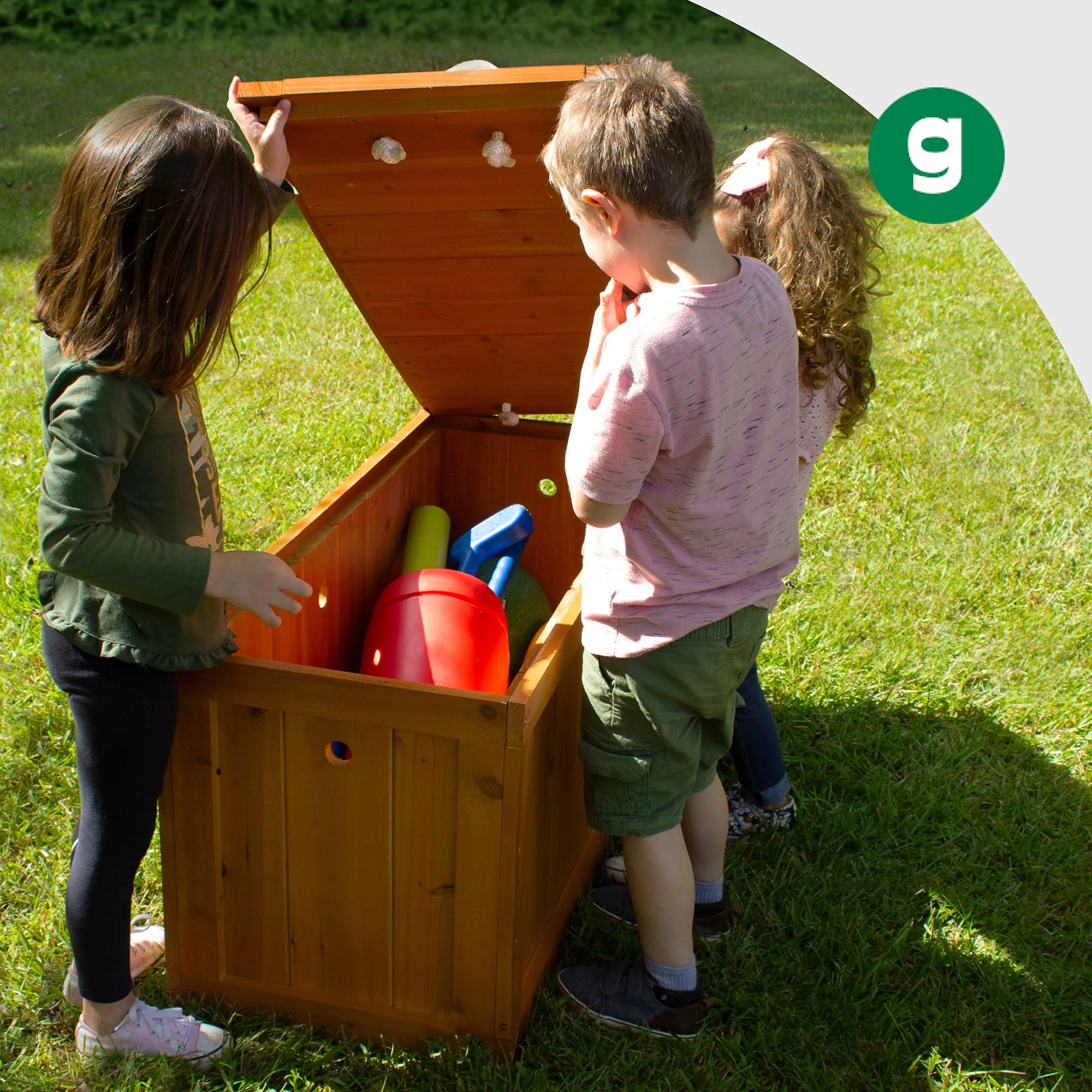
Wooden Toy Chest
Who Should Choose Which
Best for
- Families with a covered patio or porch who want durable, attractive storage that blends with wooden playsets
- Those who prefer repairable, long-term furniture over disposable plastic
Not for
- Toy storage in an open, fully exposed backyard where rain and snow are frequent
- Anyone who wants zero-maintenance storage and isn't willing to reseal wood periodically