Quick answer
Match the gift to the child's current stage first, then to the space and noise level of the home. For a first birthday or holiday gift, choose a sturdy walker or a simple counting set; for a 3-5 year old, choose open-ended pretend play or stacking toys that grow with them. If you are unsure, pick a set with clear pieces and one obvious way to start playing.
A wooden toy can be a brilliant birthday or holiday present, but only if it fits the child and the household. The most common mistake is buying for the age on the box rather than the age of the child in front of you. A four-year-old who still mouths toys needs different pieces than a four-year-old who builds elaborate stories.
This guide gives you decision rules instead of a ranked list. You will see how to check age, space, sound, and play style before you buy, and how specific sets from Tender Leaf Toys fit different gift situations. Use it to narrow your options quickly, then choose the one that matches your recipient.
Start with the child, not the toy
Before you look at any product, write down three things: the child's age, how they usually play, and where the toy will live. A child who lines up cars and sorts colors will use a counting or stacking set immediately. A child who runs and climbs may need a gift that supports movement, such as a walker, rather than a tabletop activity.
Also check who else is in the home. If there is a younger sibling, small parts are a real risk, and you should either choose a set with larger pieces or plan to store it out of reach. If the home is small, a bag-based play set that folds flat will get more use than a large floor toy that has to be packed away after every session.
- Write the child's age and current favorite activity before browsing.
- Check for younger siblings before buying anything with small parts.
- Measure the storage spot, not just the play space.
Use age bands as a starting filter
Age bands are a rough guide, not a guarantee. For a one-year-old, look for sturdy pieces that can be grabbed, mouthed, and pulled without breaking. A walker with a wide base and a solid handle is a classic first-birthday gift because it supports standing and early steps while giving the child something to push.
For two- and three-year-olds, choose toys with a clear, simple action: stack, sort, count, or pretend. These children repeat the same play many times, so durability matters more than novelty. For four- to six-year-olds, open-ended sets that allow storytelling and role play tend to last longer than single-purpose toys, because the child supplies the plot.
- One to two years: prioritize grip, weight, and no loose small parts.
- Two to three years: choose one obvious action the child can repeat.
- Four to six years: favor open-ended pretend play and building.
Match the gift to the play style
Some children are builders, some are storytellers, and some are movers. Builders will use a stacking toy with many pieces and variations. Storytellers will get more from a themed set with characters and a setting they can rearrange. Movers need a toy that invites standing, pushing, or carrying, otherwise it will sit on a shelf.
If you are buying for a child you do not know well, choose a set that supports more than one style. A counting set with colors and numbers can be sorted, stacked, or used in pretend play. A themed story bag can be a quiet activity or the start of a bigger adventure. The more ways a toy can be used, the lower the risk that it is ignored.
- Builders: look for many pieces and stacking or sorting options.
- Storytellers: look for characters, settings, and a carry bag.
- Movers: look for a walker or a toy that can be pushed or carried.
Budget, space, and noise
Wooden toys often cost more up front than plastic equivalents, but they tend to survive being handed down. Set a budget before you browse, and remember that a smaller set used daily is better value than a large set that is too heavy or too loud for the room. If the household is noise-sensitive, avoid toys with rattles or hard pieces that clatter on wood floors.
Space is the other hidden cost. A walker with 29 blocks needs floor space and a storage box. A garland or a small counting set needs almost none. If you are shipping a gift, a flat or bag-based item is easier and cheaper to send, and it is less likely to arrive damaged.
- Set a total budget including any storage container.
- Check the floor surface: hard floors make wooden pieces louder.
- For shipping, favor flat or bag-based gifts over bulky ones.
What to avoid when buying wooden toys as gifts
Avoid buying a toy that is clearly above the child's stage just because it will last longer. A toy that is too advanced gets ignored or used roughly, and that is how pieces get lost. Avoid sets with many tiny parts for a child who still puts things in their mouth, even if the box says the age is suitable.
Also avoid assuming that all wooden toys are silent or safe for every child. Some sets include small painted pieces, and some have moving parts that can pinch. If the catalog does not list a specification you need, such as exact piece size or finish, treat that as a limitation and ask the store before buying rather than guessing.
- Do not buy above the child's stage just for longevity.
- Do not buy small parts for a child who mouths toys.
- If a spec is missing, ask before you buy.
Decision rules for choosing a wooden toy gift
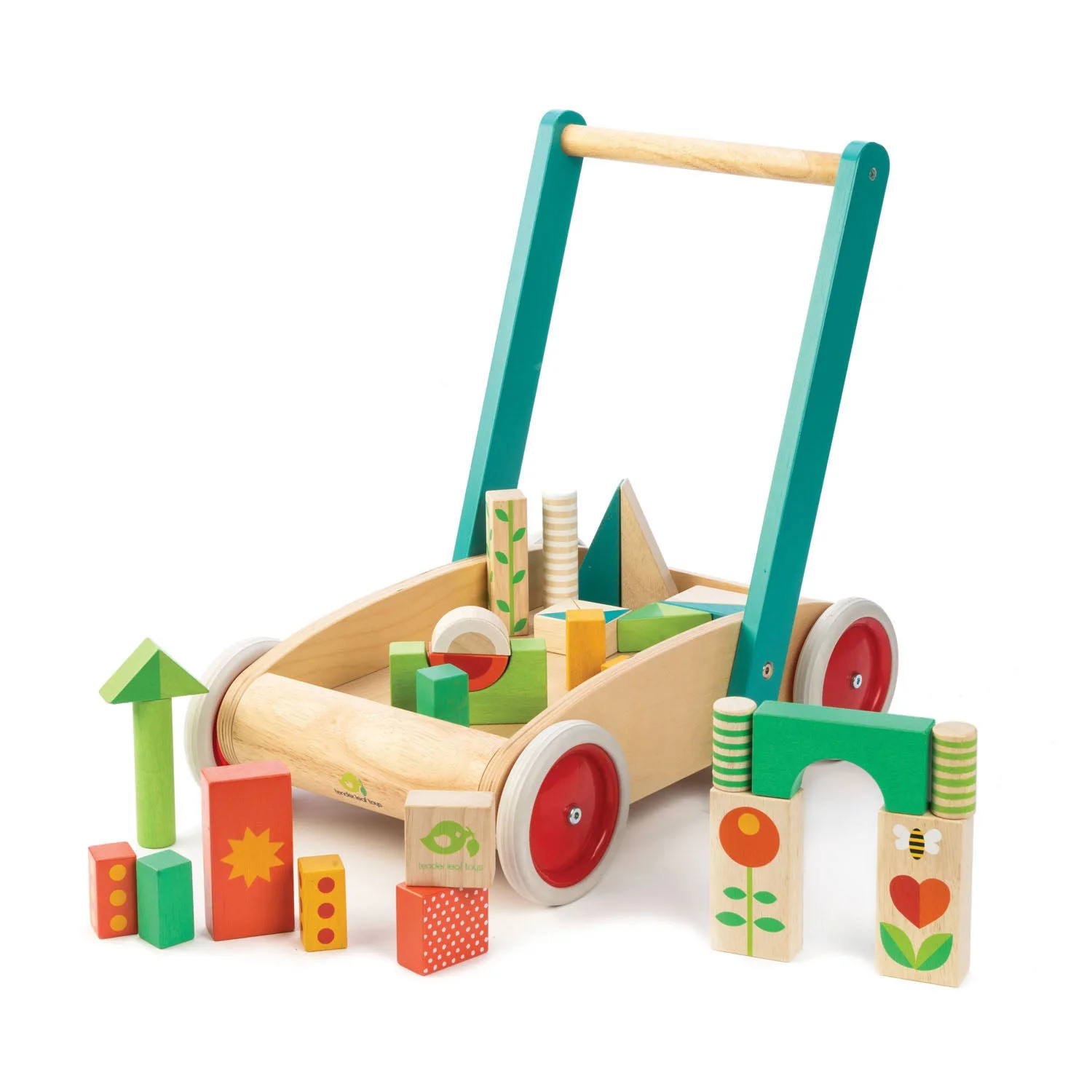
- If the child is under two: Choose a walker or a large-piece set with no loose small parts. The Baby Block Walker fits this stage because the handle is sturdy enough for toddlers to lean on. Prioritize safety and movement over piece count.
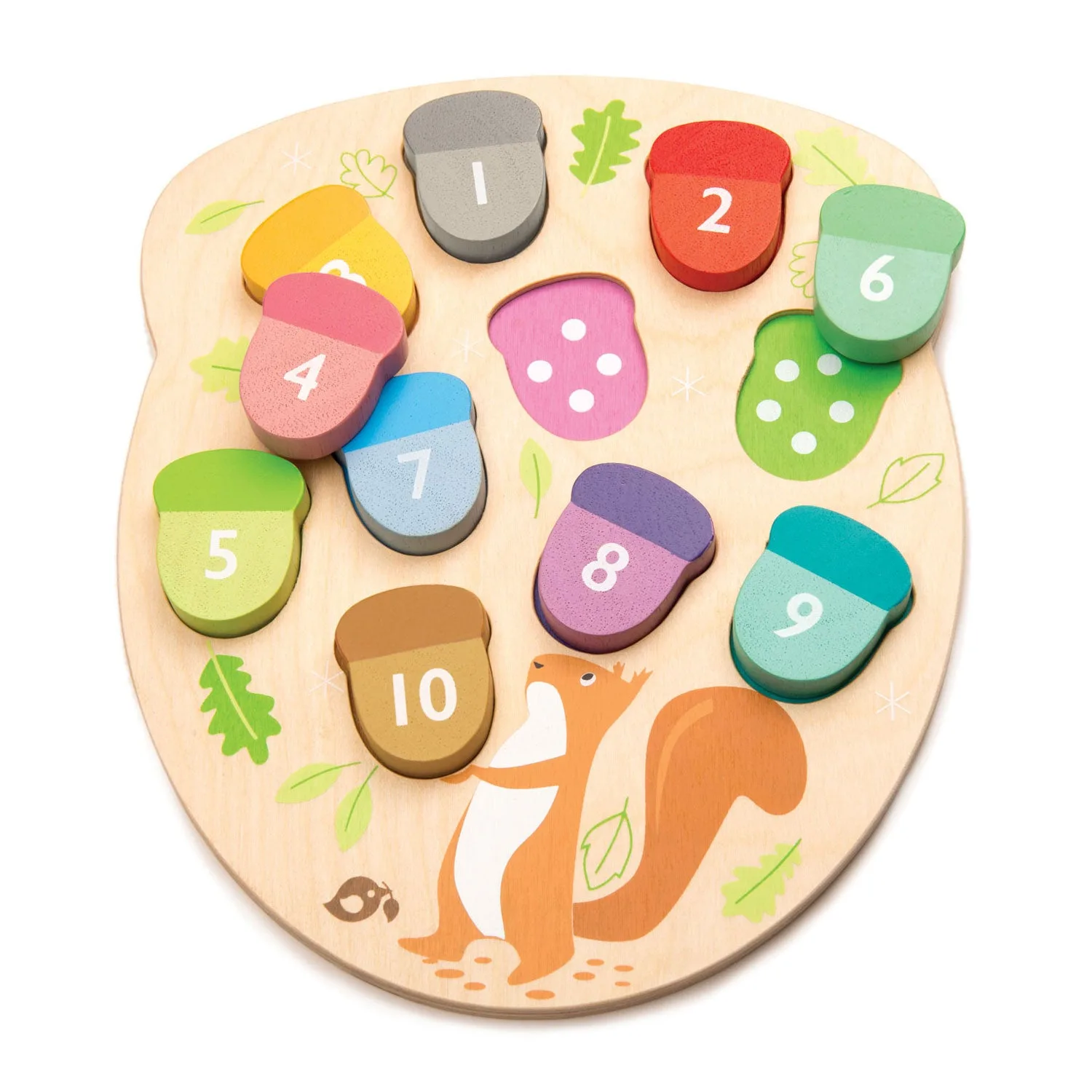
- If the child is two or three: Choose a set with one clear action, such as counting or stacking. How Many Acorns? gives a simple count-and-color task with 10 acorns. One obvious activity beats a complicated set.
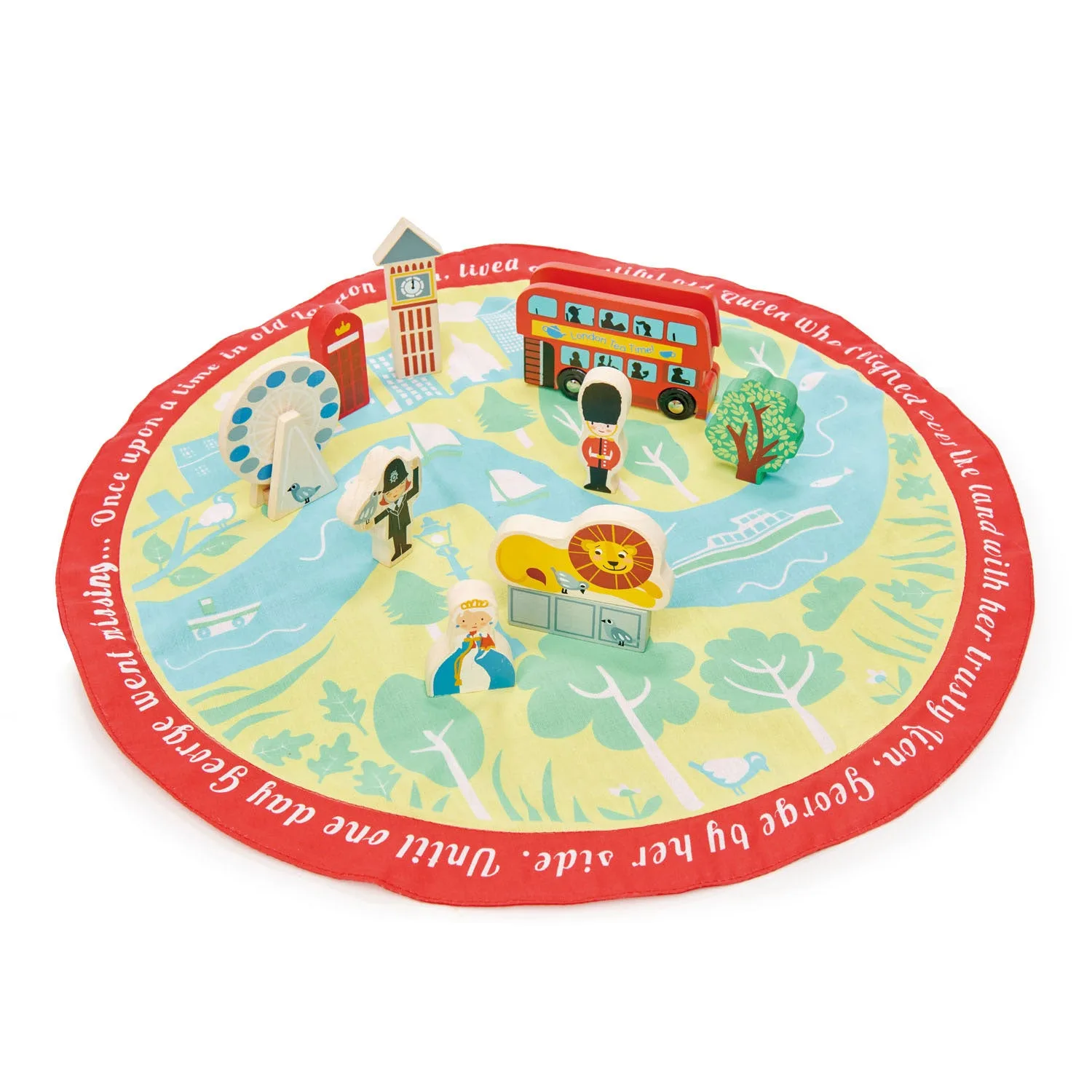
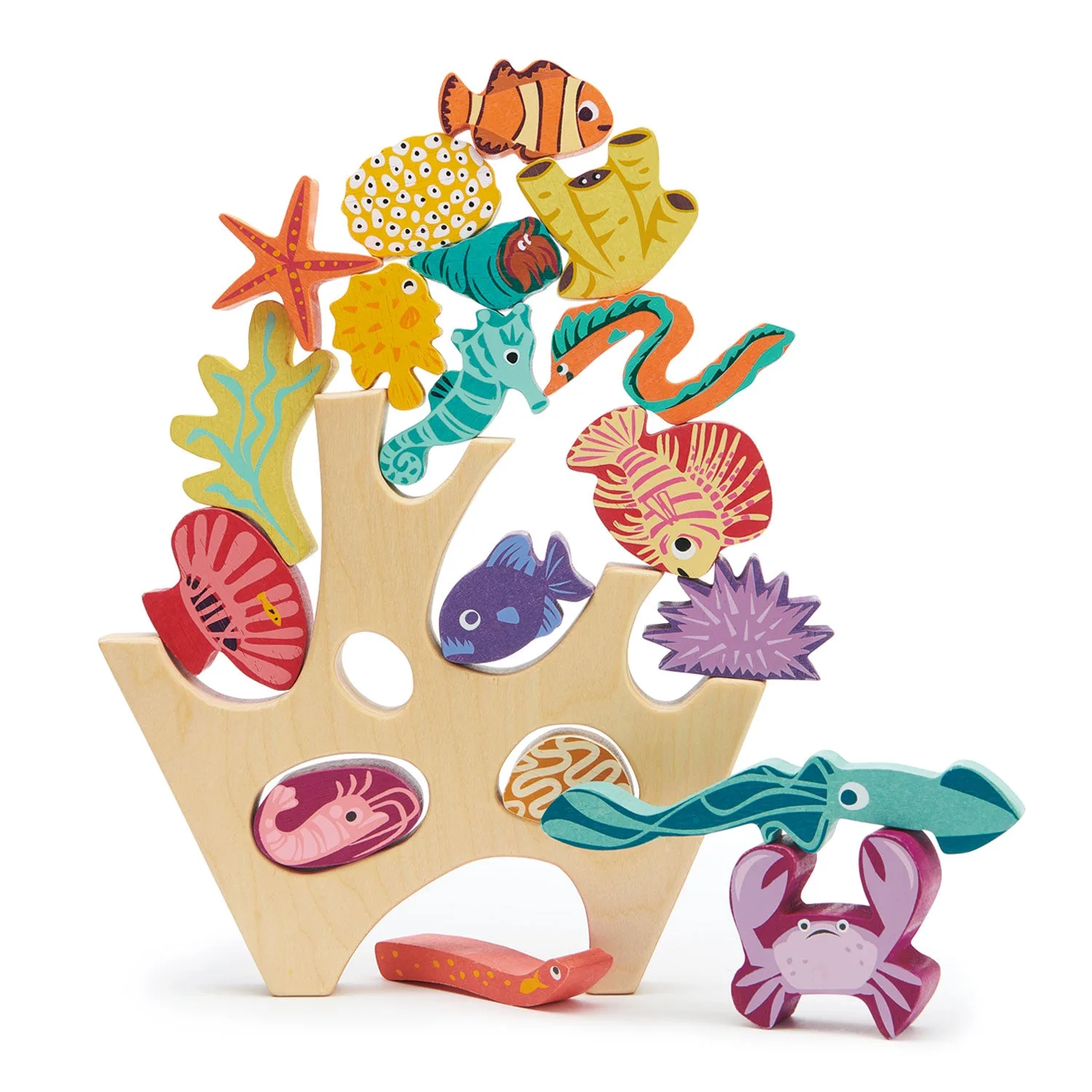
- If the child is four to six: Choose open-ended pretend play or building. The London Story Bag and Stacking Coral Reef both allow the child to invent the story or arrangement. Look for sets that can be used more than one way.
- If space or shipping is tight: Choose a flat or bag-based gift. The London Story Bag folds into its own bag, and the Winter Holiday Garland stores flat. Small footprint gifts get used more in small homes.
- If you are buying for a child you do not know well: Choose a set that supports sorting, counting, and pretend play. How Many Acorns? works as a quiet activity or a color game. Versatility lowers the risk of a gift being ignored.
Gift-ready options and what they are good for
- Baby Block Walker: Made from high quality wood, the handle is sturdy enough for toddlers to lean on, and it includes 29 garden themed wooden blocks for extra play and creative construction. A strong first-birthday or holiday gift for a child who is pulling up and starting to walk, because it supports balance and then becomes a building toy.
- How Many Acorns?: Includes 10 colored wooden acorns, each revealing the corresponding colour and number of dots, to help the little squirrel count all the acorns and learn numbers and colors. A compact, quiet counting gift for a two- or three-year-old, and easy to store or ship because it has a small footprint.
- London Story Bag: All you need to create a London town adventure contained in an exciting printed landscape and bag, with the Queen, London bus, Royal Guard, Lion and Police woman. A good storyteller gift for a four- to six-year-old, and the bag format makes it easy to carry to a restaurant or on a trip.
- Stacking Coral Reef: A wooden stacking under the sea rock with 18 wonderfully colored sea creatures including a shrimp, a squid, a crab, 2 eels, a sea urchin, a sea anemone, a starfish, a seahorse, 4 fish, four coral pieces, and a hermit crab. Suits a builder who likes many pieces and color sorting, but it needs table or floor space and has more small parts to keep track of.
Who this gift guide is for
Best for
- Parents, grandparents, and friends choosing a birthday or holiday gift for a child aged one to six.
- Shoppers who want a wooden toy that will be used repeatedly rather than a single-use novelty.
- Buyers who need to consider storage space, noise, or shipping before choosing.
Not for
- Shoppers looking for electronic or app-connected toys.
- Buyers who need a specific safety certification or material detail that is not listed in the product facts.
- Anyone choosing for a child outside the one-to-six age range without checking the individual product guidance.
Pick the gift that matches the child's stage, play style, and the space it will live in. If you are still unsure, choose a set with one clear activity and a small footprint, such as How Many Acorns? or the London Story Bag, and you will usually get more play than from a larger, more complicated toy.