Set up a two-person sweet shop, not a solo stash
The easiest way to make sharing the point of this set is to give the jar two roles: one child runs the shop, the other is the customer. The shopkeeper holds the scoop and the paper bags; the customer chooses. Then swap. That single rule does more for turn-taking than any adult reminder, because the child with the scoop has a real job to hand over.
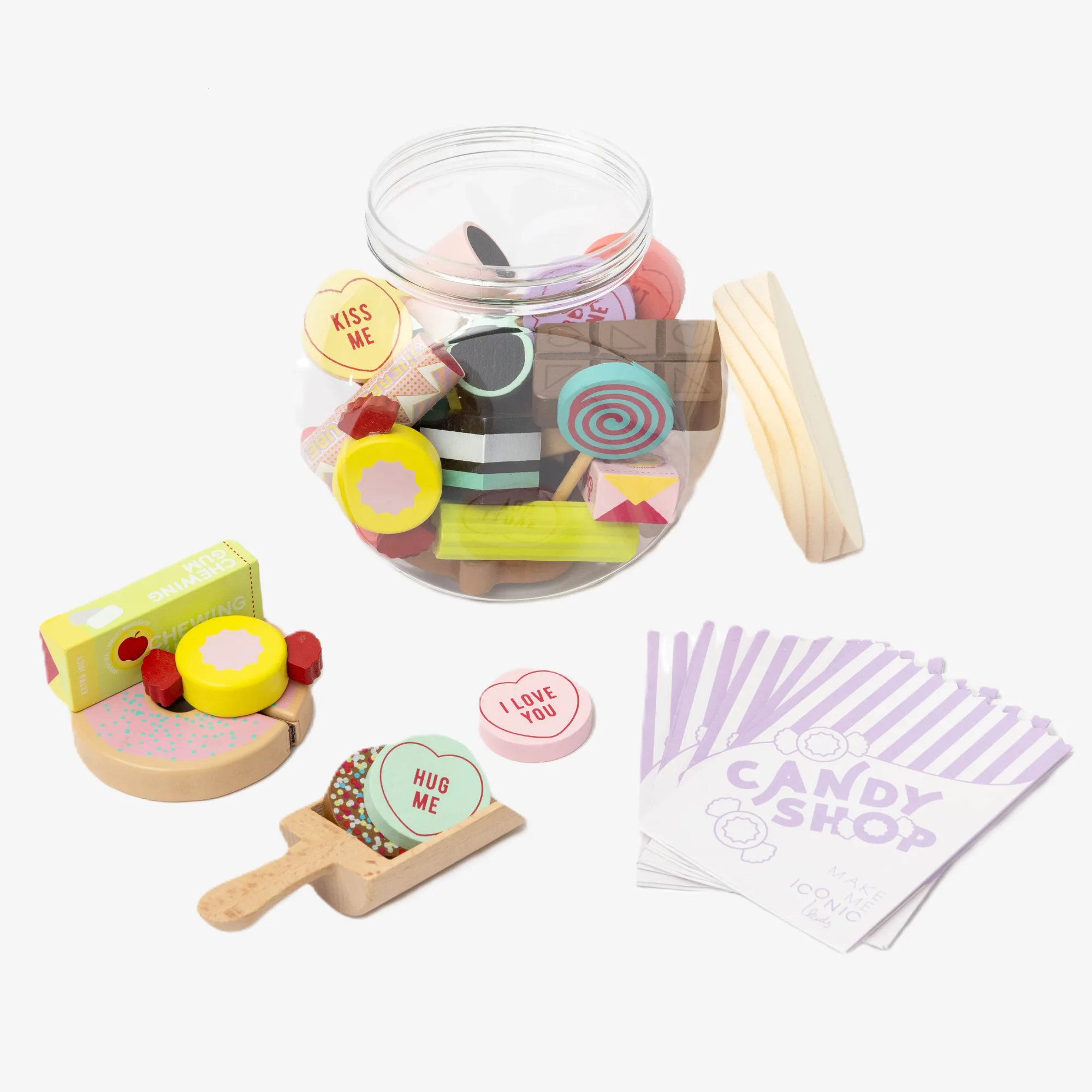
The wooden iconic candy jar is built for exactly this kind of back-and-forth. The supplied product information describes it as encouraging social play, sharing, turn-taking and creative storytelling, with chunky wooden pieces sized for little hands to grasp, sort and share. Start there rather than with a lecture about sharing.
A scoop-and-serve routine that practises sharing
Keep the first few rounds short and let the routine carry the lesson. These steps use only what the supplied product details describe.
- 1. Stock the jar together: Tip the wooden treats into the clear acrylic jar and put the lid back on. Sorting the pieces into the jar is a calm first task, and it gives both children a turn handling the set before any choosing starts.
- 2. Assign the first shopkeeper: One child takes the wooden scoop and the paper bags. The other is the customer. Say the roles out loud so the handover later feels like part of the game, not a punishment.
- 3. Let the customer order: The customer names what they want from the jar — a candy cane, a wrapped sweet, a colourful favourite. The shopkeeper scoops it into the bag. This is where pretend play does the teaching: the child with the scoop has to listen and give something away.
- 4. Swap roles after one bag: One bag each, then trade places. Short rounds keep the waiting manageable for younger children and give the scoop back and forth several times in a single session.
- 5. Close the shop together: Return the treats to the jar and put the lid on as a shared job. A clear ending stops the game from turning into a negotiation over who keeps the last piece.
Prompts that keep the sharing going without nagging
Language matters more than rules here. These prompts fit the sweet-shop setup and keep the focus on the other person.
- "What would your customer like?": Shifts the shopkeeper's attention to the other child's choice, which is the core of sharing.
- "Can you make their bag different from yours?": Encourages sorting and comparing, and makes giving feel like a creative decision rather than a loss.
- "It's your turn to choose now.": Names the handover clearly so the child who just gave something up hears that their turn is coming.
- "Let's fill two bags the same.": A fairness game for siblings who both want the same piece — each child builds an identical bag from the jar.
What the Iconic Candy Jar set actually gives you
-
WOODEN TOY - ICONIC CANDY JAR: The set includes classic Aussie lollies — candy canes, wrapped sweets and colourful favourites — for pretend sweet-shop play. Enough variety to let two children make genuinely different orders, which is what makes the shopkeeper-and-customer swap worth repeating.
WOODEN TOY - ICONIC CANDY JAR
-
WOODEN TOY - ICONIC CANDY JAR: It comes with a clear acrylic jar with a lid and a wooden scoop with paper bags. The scoop and bags are the sharing tools: they create a natural give-and-take action rather than a pile of pieces to grab.
-
WOODEN TOY - ICONIC CANDY JAR: The pieces are chunky, hand-painted wooden treats designed for little hands to grasp, sort and share. Easy grasping means younger children can take part in the routine without needing fine-motor help from an adult.
-
WOODEN TOY - ICONIC CANDY JAR: The supplied product information describes the set as supporting social play, sharing, turn-taking and creative storytelling. The sharing lesson is already built into how the toy is meant to be used, so you are guiding play rather than adding a separate lesson.
Where the supplied information stops
The product record does not list a recommended age, a piece count, or care and cleaning instructions. It also does not confirm whether individual lollies can be reordered separately. Treat those as open questions rather than assuming anything: if age suitability or replacement pieces matter for your household, check with the store before ordering.
What the record does support is the play pattern above. The set is described as a screen-free gift that suits all ages and looks good on display, so it can sit out between sessions — but without supplied care guidance, keep any cleaning routine conservative and avoid guessing at methods the manufacturer has not confirmed.
Candy Jar or a different pretend-play set?
If sharing is the specific skill you want to practise, the Candy Jar has an advantage over open-ended toy piles: it comes with scoop-and-bag tools that force a handover. A set without those tools can still teach sharing, but the adult has to create the turns.
- Choose the Candy Jar if: You want a two-person routine with built-in roles, a nostalgic Aussie sweet-shop theme, and a set that doubles as display.
- Look elsewhere if: You need a confirmed age rating, a known piece count, or documented cleaning instructions before buying — the supplied record does not provide them.