Quick answer
Most quality wooden toys are made from rubberwood, beech, or pine, and the material matters less than the finish and construction. Look for smooth sanded edges, water-based or plant-based finishes, and tight joints. If you want a simple starting point, rubberwood sets like the Tender Leaf Toys range are a practical, durable choice for everyday play.
Wooden toys feel simple, but the labels rarely explain what is actually inside them. Parents often ask the same questions: what wood is used, what the finish is made of, and whether a painted toy is still safe. This FAQ answers those questions directly, without the marketing language.
Use it as a checklist before you buy or when you are sorting through a toy box. The goal is not to memorize tree names. It is to know which details actually affect safety, durability, and how a toy feels in your child's hands.
What wood are wooden toys usually made of?
Rubberwood is the most common material in mass-produced wooden toys because it is dense, smooth, and comes from trees that have finished producing latex. Beech and pine also appear often, especially in Europe. Each has tradeoffs: rubberwood holds fine detail well, beech is harder and heavier, and pine is lighter but dents more easily.
You will rarely see a toy labeled with a single species unless the brand chooses to share it. When a listing does not name the wood, treat that as a missing detail rather than a red flag, and judge the toy by its finish, weight, and how the edges are sanded.
- Rubberwood: dense, smooth, good for painted details and small parts.
- Beech: harder and heavier, often used for blocks and vehicles.
- Pine: lighter and softer, better for larger simple shapes.
Are rubberwood toys a good choice?
Yes, rubberwood is a solid choice for children's toys. It is a byproduct of the latex industry, so it does not require cutting down old-growth forest, and its tight grain takes paint and sanding well. That combination is why so many play sets, puzzles, and pretend-play pieces use it.
The practical downside is weight. Rubberwood pieces are heavier than pine, which is fine for a tool box or a boat but noticeable in a large set a toddler wants to carry around. If portability matters, mix rubberwood pieces with lighter accessories.
- Good for: small parts, painted details, sets that get daily use.
- Less ideal for: oversized toys a small child needs to lift often.
What finishes are used on wooden toys?
Finishes fall into three broad groups: water-based paints, plant-based oils and waxes, and untreated or lightly sanded wood. Water-based paint is the most common on colorful toys because it dries hard and holds bright pigment. Oils and waxes leave a more natural look but need occasional reapplication if the toy is washed often.
A finish is not automatically unsafe just because it is paint. What matters is whether it is described as child-safe, whether it has been tested for heavy metals, and whether it stays put after normal play. Chipping is the real signal to watch.
- Check for words like water-based, non-toxic, or child-safe on the listing.
- Reapply oil or wax finishes if the wood starts to look dry.
- Retire any toy where paint flakes off in sheets.
What makes wooden toy materials safe?
Safe wooden toy materials share a few practical traits: smooth sanded surfaces, no splinters at the edges, securely fixed parts, and a finish that does not come off on a damp cloth. Safety is about the finished object, not just the wood species. A beautifully grained wood with a rough edge is still a hazard.
Age labeling matters here too. Small parts such as screws, nuts, and pegs are fine for older children but are a choking risk for anyone still mouthing toys. When a set includes small pieces, store them out of reach of younger siblings.
- Wipe with a damp cloth and check whether color transfers.
- Run a finger along every edge and joint before handing a toy over.
- Follow the age guidance on sets with small removable pieces.
Do wooden toys need special care?
Less than you might think. A damp cloth and mild soap handle most messes. Avoid soaking wooden toys, dishwashers, and harsh disinfectants, because water and heat can swell the wood and lift the finish. Dry immediately after wiping.
Humidity is the bigger long-term issue. In damp climates, store wooden sets somewhere air can circulate rather than sealed in a plastic bin. If a joint loosens or a surface feels rough, a light sanding and a child-safe oil can bring it back.
- Never submerge wooden toys or put them in a dishwasher.
- Dry thoroughly after cleaning, especially around joints.
- Store in breathable containers in humid rooms.
How can you judge material quality in a product listing?
Look for specific, checkable details rather than mood words. A good listing names the wood or at least the finish type, describes removable parts, and shows the toy from several angles. Vague phrases like premium quality tell you nothing about what will arrive.
Price alone is not a reliable signal either. A small accessory can be inexpensive and still well made, while a large set can cost more simply because it contains more pieces. Compare what is included and how the parts are finished.
- Named wood or finish type is a good sign.
- Clear photos of edges and joints beat lifestyle shots.
- Check the included-parts list against the photos.
Quick material checks before you buy
Is the wood named?
Look for rubberwood, beech, pine, or another species in the listing. If it is not named, judge the toy on finish, weight, and edge quality instead. A named wood is a helpful signal, not a requirement.
Is the finish described?
Water-based paint, plant-based oil, or wax each behave differently. Water-based paint is the most common on colorful sets and holds up to normal play. Match the finish to how often the toy will be wiped clean.
Are small parts listed?
Sets with screws, nuts, pegs, or removable pieces suit older children. Check the age guidance and keep those parts away from younger siblings. Small-part lists are a safety cue, not a flaw.
Does it survive a damp cloth?
Wipe a hidden area and check for color transfer or a tacky surface. A finish that stays put is doing its job. If paint transfers, stop using the toy and contact the seller.
How these details show up in real sets
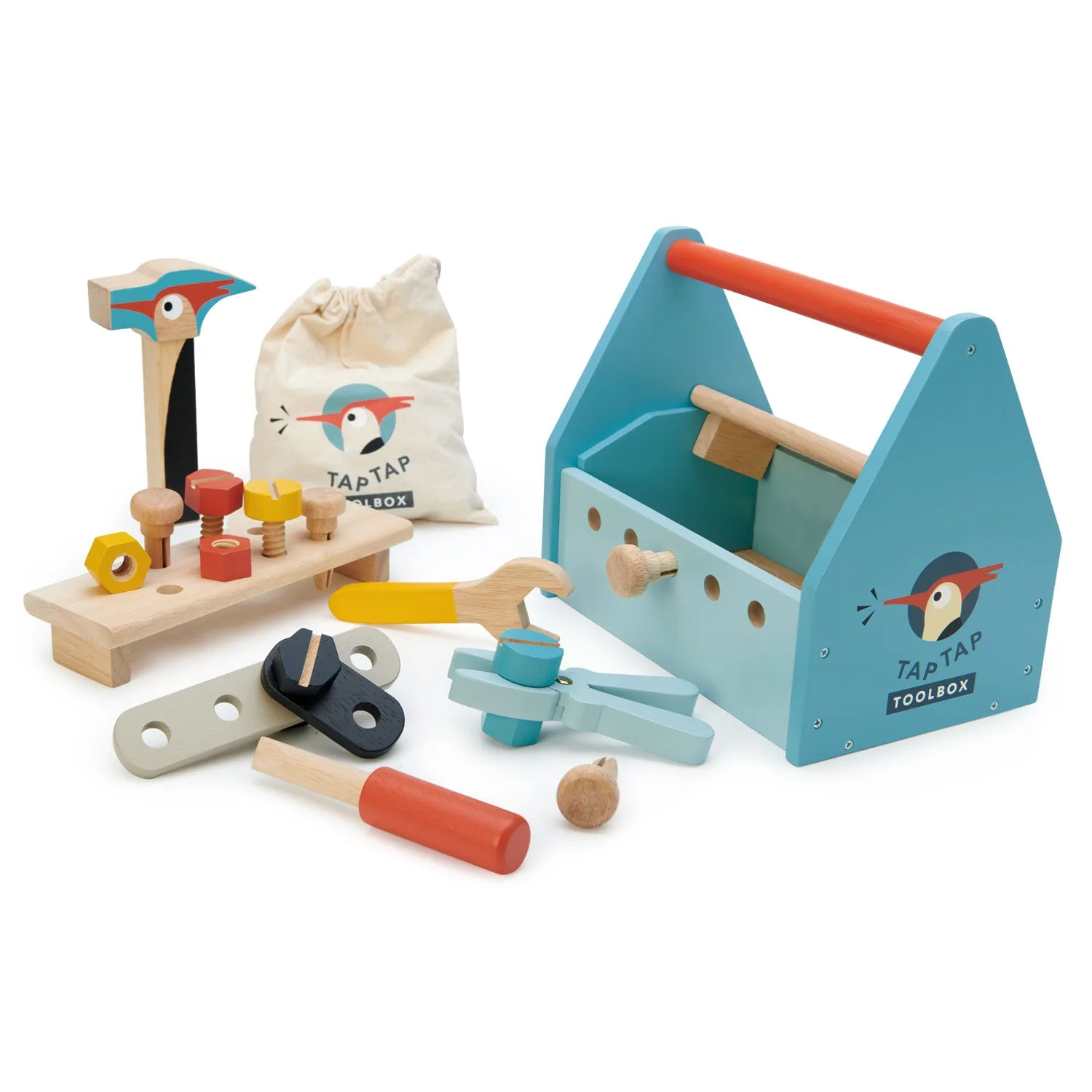
- Tap Tap Tool Box: A woodpecker-themed tool box with two removable lid pieces that turn into screwable plates, plus a woodpecker hammer, pliers, screwdriver, spanner, 2 screws, 2 bolts, 2 planks, 4 nuts, 4 pegs, and a chalkboard on one end. It is a clear example of why small-part lists matter: the screws, bolts, nuts, and pegs make this a set for children past the mouthing stage, and the removable lid pieces show how construction affects play value.
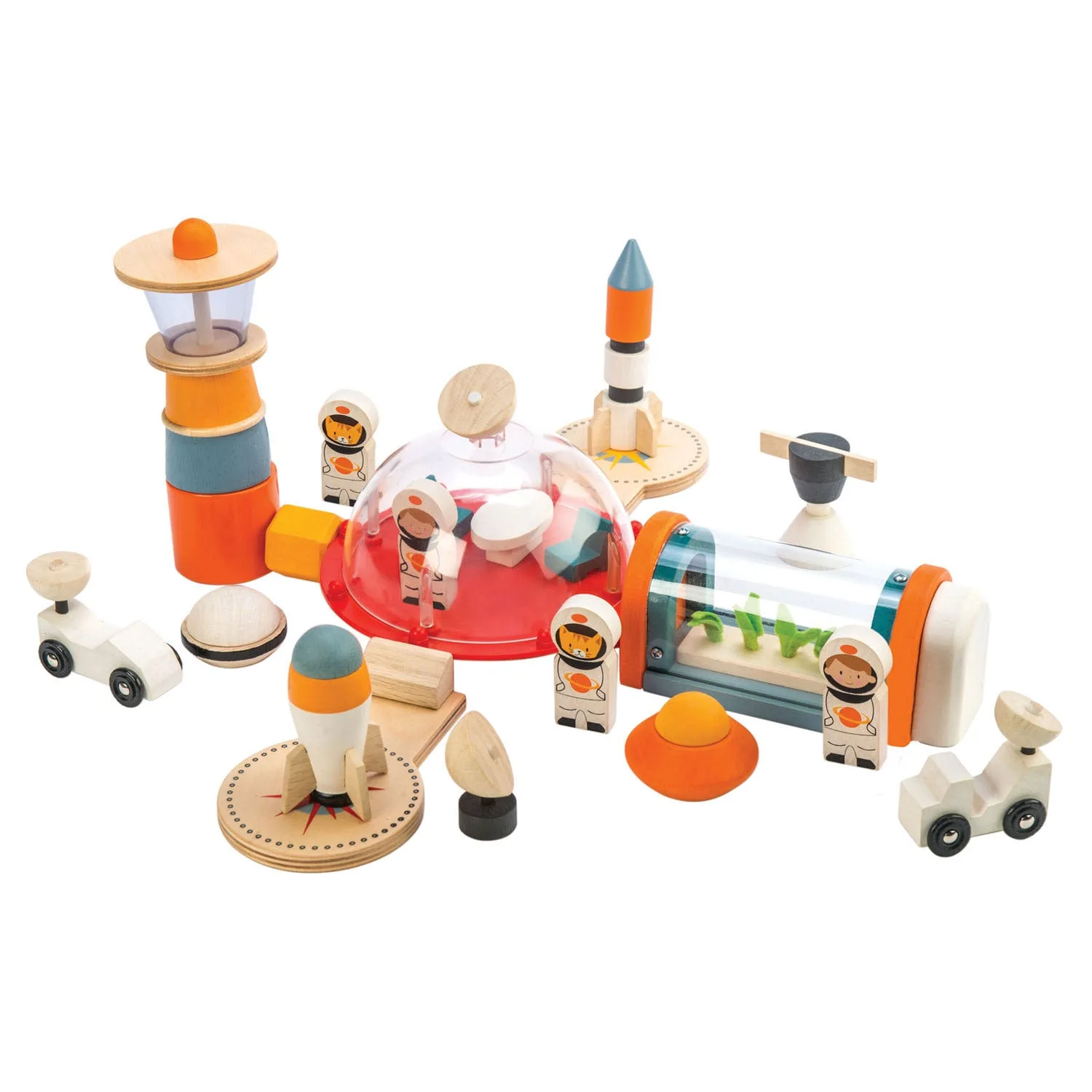
- Life on Mars Set: A realistic space station with communication towers, astronauts, and UFOs, designed to build interest in science and creative role play. Multi-part themed sets like this depend on tight joints and a durable finish, because the pieces are handled and repositioned constantly during pretend play.
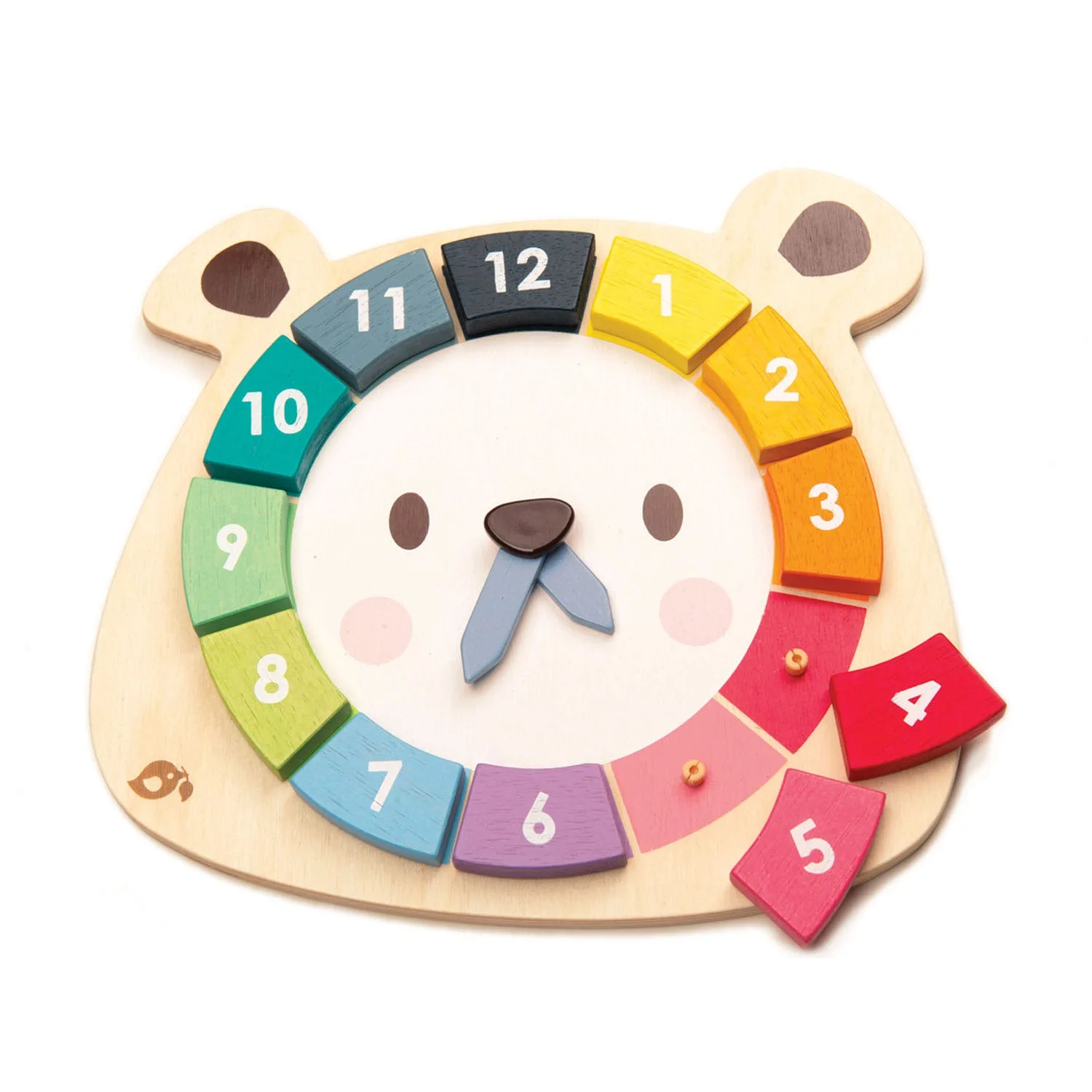
- Bear Colors Clock: A color-matching and time-learning clock that can be hung on a wall using a small bracket on the reverse. Wall-mounting means the finish and edges get inspected up close at eye level, so smooth sanding and a stable paint finish matter more than on a floor toy.
Wooden toy materials are easier to judge than most listings suggest. Name the wood when you can, check the finish and edges when you cannot, and treat small-part lists as guidance rather than a warning. Do that, and you will pick toys that hold up to daily play.