Quick answer
Most wooden toy myths fall apart when you look at what a toy is actually made of and how it is meant to be used. Wooden toys are not automatically safer or more durable than plastic, and plastic toys are not automatically worse. Judge each toy by its materials, its finish, its size for your child, and the play it invites, not by the material alone.
Parents hear a lot about wooden toys: that they are always safer, that they last forever, that plastic is somehow toxic by default. Those claims get repeated so often that they start to feel like facts. They are not. They are shortcuts, and shortcuts hide the details that actually matter when you are choosing a toy for a one-year-old or a five-year-old.
This article takes five of the most common wooden toy myths and gives each one a clear verdict. The explanations stick to what is knowable from product materials and design, not from invented studies or vague claims. Where a detail is not supplied, that absence is treated as a limitation, not filled in with guesswork.
Myth 1: Wooden toys are always safer than plastic
Verdict: Not automatically. Safety depends on the specific toy, not the material category. A wooden toy with small detachable parts can be a choking hazard for a baby, and a well-made plastic toy with no loose pieces can be perfectly safe. The material itself does not decide safety; the design, size, finish, and age suitability do.
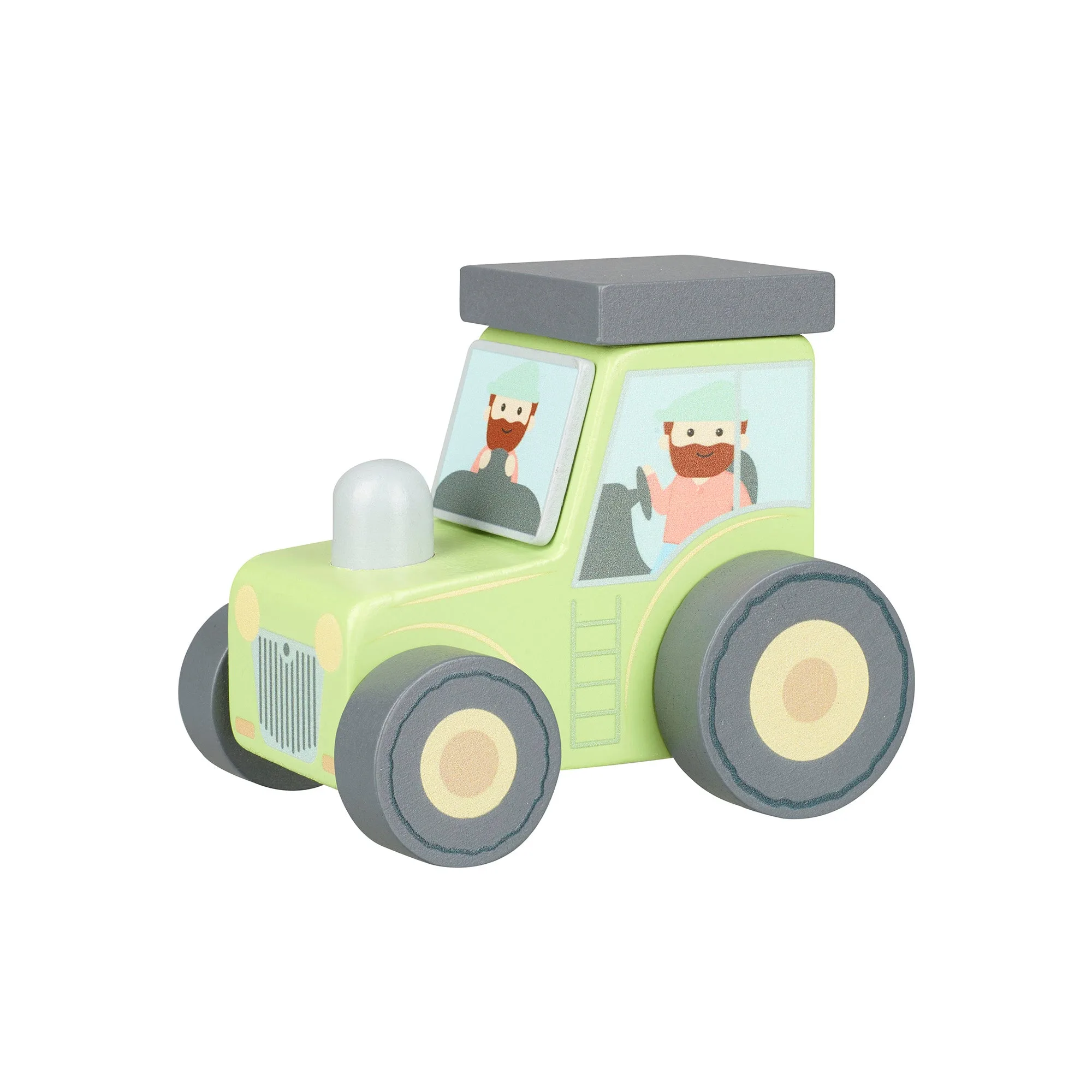
What you can check is concrete. Look for FSC-certified wood, which tells you the wood comes from responsibly managed forests, and look at the size and shape of the parts. A chunky wooden vehicle like the Tractor is described as great for little hands and helpful for developing movement and coordination, which points to a design made for young children rather than a guarantee based on material.
Tractor
- Check the toy's parts, not just its material, before giving it to a child under three.
- FSC-certified wood is a sourcing fact, not a safety rating on its own.
Myth 2: Plastic toys are toxic, wooden toys are not
Verdict: Too broad to be true. You cannot judge toxicity by material alone. A wooden toy can be painted or finished in ways that matter, and a plastic toy can be made to meet the same safety standards. The honest answer is that both materials can be done well or poorly, and the label and certifications tell you more than the material name.
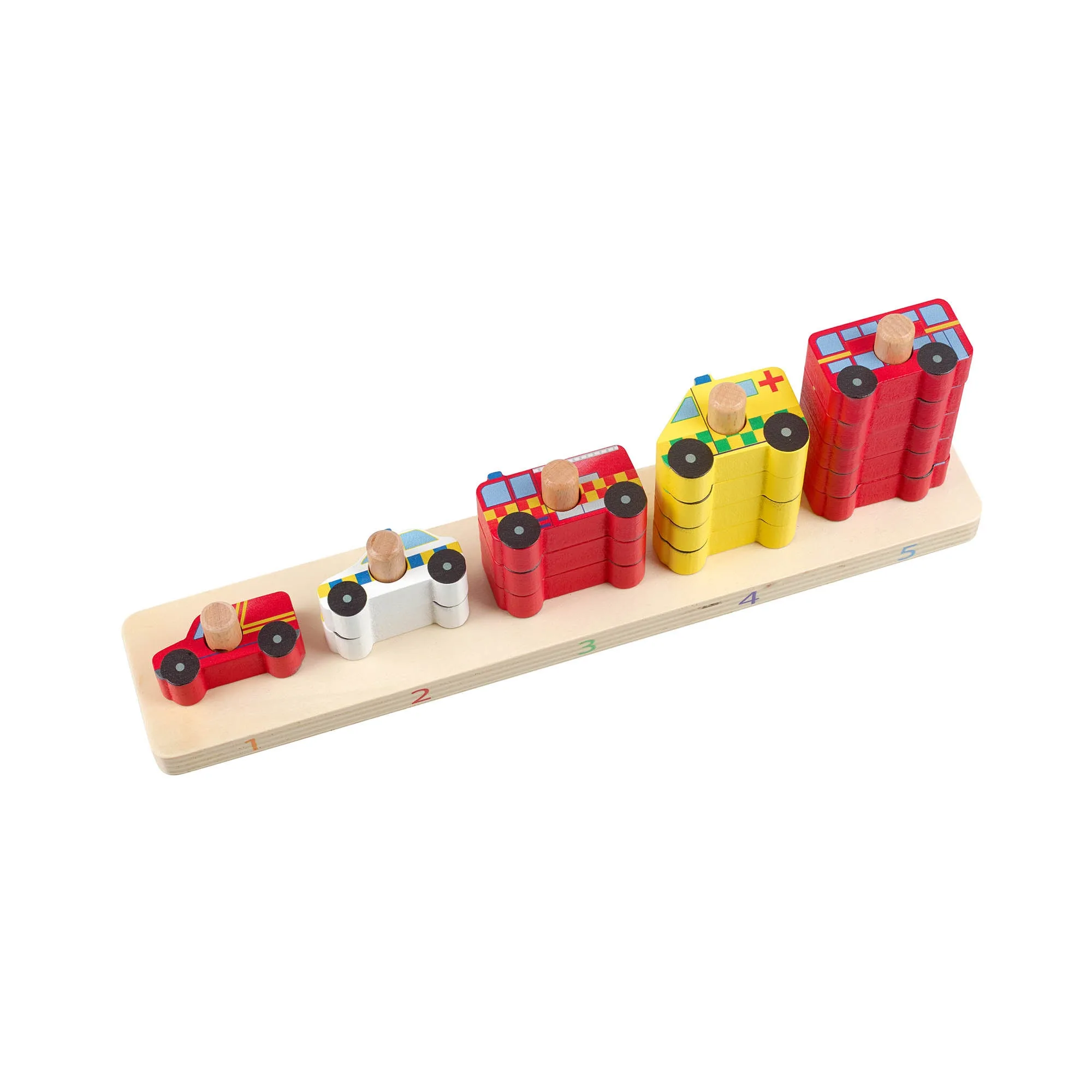
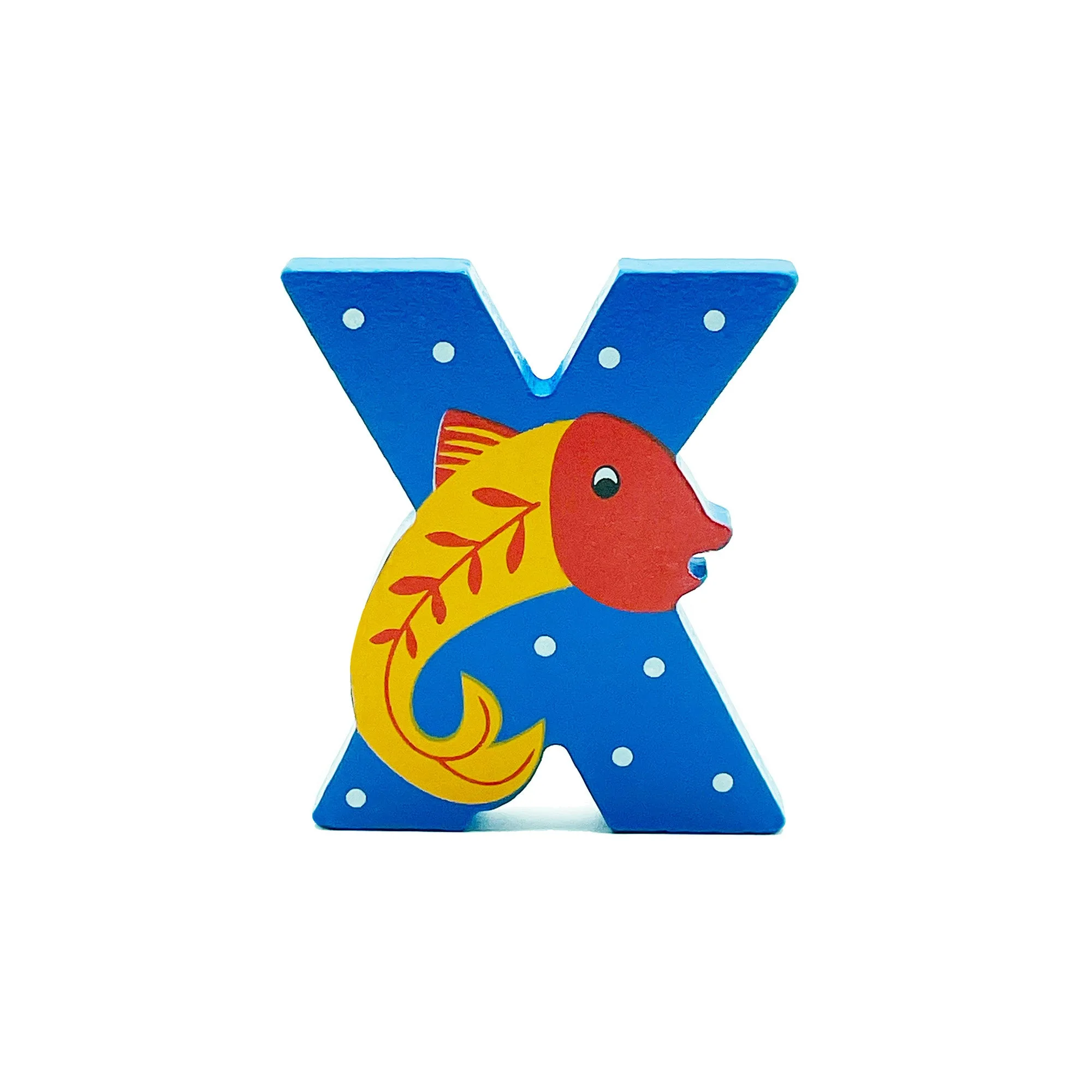
This is where specific product facts help. The Emergency Services Counting Game is made from FSC-certified wood with fully recyclable packaging, and the Alphabet letter X is crafted from FSC-certified wood with a timeless finish. Those are verifiable material and packaging details. They do not prove a toy is nontoxic, but they do tell you what the toy is made of, which is the part you can actually evaluate.
- Read the material and finish details on the listing instead of assuming from the material type.
- Recyclable packaging is a real, checkable fact and a reasonable tiebreaker between similar toys.
Myth 3: Wooden toys last forever
Verdict: Durable, not indestructible. Wooden toys can chip, crack, or lose paint if they are thrown, chewed hard, or left in water. The durability myth sets parents up for disappointment when a favorite toy shows wear after a year of heavy play. Wood is sturdy, but it is not immune to the way young children actually use toys.
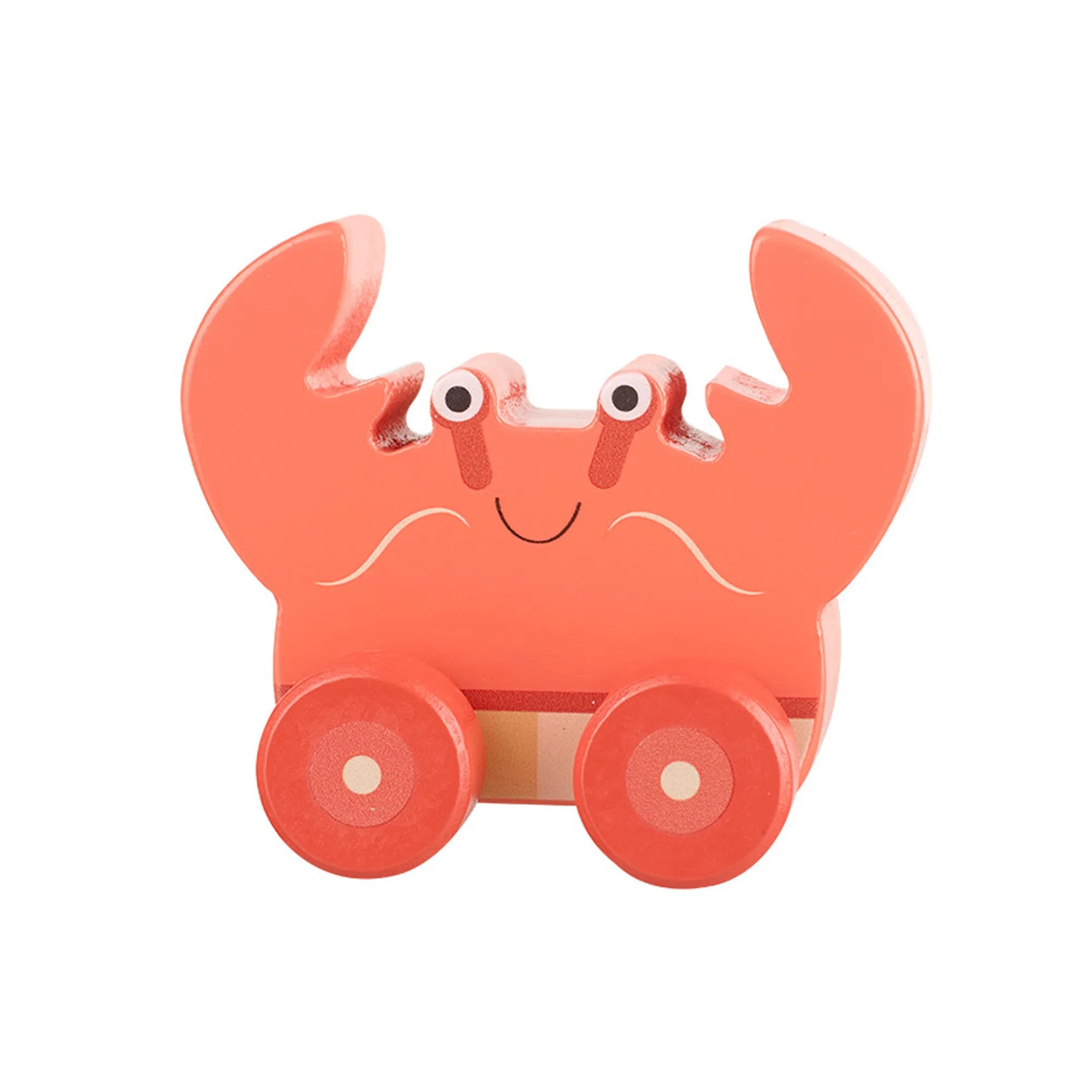
The practical takeaway is to match the toy to the play. A push toy like the Crab First Push Toy is described as a wooden crab on wheels, perfect for little hands to push along, and it is made from FSC-certified wood. That is a toy built for pushing on a floor, not for being used as a teething ring or a hammer. Using it as intended is what makes it last.
- Rotate toys and store them dry; prolonged moisture is hard on wood and paint.
- Inspect wooden toys periodically for splinters, loose wheels, or chipped finish.
Myth 4: Wooden toys are only for quiet, calm play
Verdict: False. Wooden toys can support active, social, and imaginative play just as well as quiet play. A push-along duck or a chunky tractor invites movement, narration, and turn-taking. The material does not limit the type of play; the toy's shape and purpose do.
The Emergency Services Counting Game is a good example. It contains 15 brightly colored emergency service vehicles and is described as stimulating key motor skills and helping develop color recognition while teaching counting to five. That is hands-on, interactive play, not a shelf ornament. Wooden toys can be loud, busy, and social when the design invites it.
- Look for toys that invite an action, such as pushing, sorting, or counting, rather than just sitting on a shelf.
- Wooden toys work well in group play because they are usually simple enough for children to share.
Myth 5: You can tell a wooden toy is high quality just by looking at it
Verdict: Appearance is a clue, not a verdict. A smooth finish and neat paint job are good signs, but they do not tell you the wood source, the age suitability, or how the toy will hold up. Quality shows up in the details a listing can state: material, finish, packaging, and intended use.
The Peter Rabbit letter U is described as painted in pastel colors and made from FSC-certified wood, and the Alphabet letter X is described as crafted from FSC-certified wood with a timeless finish. Those details are more useful than a photo. When a specification is not supplied, treat that as a limitation and ask the seller rather than assuming the best.
- Prefer listings that state material, finish, and age suitability in writing.
- If a key detail is missing, ask before buying instead of filling the gap yourself.
Myth verdicts at a glance
- Wooden toys are always safer: Safety comes from design, part size, finish, and age suitability, not from the material name. Verdict: myth. Check the specific toy.
- Plastic is toxic, wood is not: Both materials can be made well or poorly; material and finish details are what you can verify. Verdict: myth. Read the specs.
- Wooden toys last forever: Wood is durable but can chip, crack, or lose paint with rough use or moisture. Verdict: overstated. Use toys as intended.
- Wooden toys are only for quiet play: Push toys, counting games, and chunky vehicles support active, social, and imaginative play. Verdict: myth. Match the toy to the play.
- You can spot quality by looking: Appearance is a clue, but material, finish, packaging, and intended use are the real evidence. Verdict: unreliable. Ask for missing details.
What the product details actually tell you
- Crab First Push Toy: A wooden crab on wheels, made from FSC-certified wood, sized for little hands to push along and grasp. This is a concrete example of a toy whose safety and durability depend on design and intended use, not on the word wooden.
- Emergency Services Counting Game: Contains 15 brightly colored emergency service vehicles, made from FSC-certified wood with fully recyclable packaging, and helps teach counting to five. It shows that wooden toys can support active, social, and educational play, which busts the quiet-play-only myth.
- Tractor: A chunky wooden farm tractor made from FSC-certified wood, described as great for little hands and helpful for developing movement and coordination, with fully recyclable packaging. Chunky sizing and a stated developmental purpose are the kind of details that matter more than material alone.
- Alphabet letter X: Crafted from FSC-certified wood with a timeless finish, designed for spelling names, decorating, and learning ABCs. It is a decor and learning item, not a rough-play toy, which shows why matching a toy to its intended use is the real quality test.
Wooden toy myths survive because they are simple, and simple is comforting when you are choosing for a child. The more useful habit is to read the specifics: what the toy is made of, how it is finished, how big the parts are, and what play it is built for. That approach works whether the toy is wood, plastic, or something in between, and it is the one that actually protects your child and your budget.