Quick answer
For most families, a safe wooden toy is one made from solid, well-sanded wood with a finish that is labelled non-toxic and appropriate for children, plus an age recommendation that matches your child. Buy from sellers who publish material and finish details, check the toy yourself when it arrives, and inspect it every few months for cracks, loose parts, or worn coating.
Wooden toys earn their reputation for durability, but durability is not the same as safety. A sturdy block set can still have a chipped edge, a wobbly wheel, or a finish that was never intended for mouthing. The good news is that the checks that matter most take a few minutes and do not require a lab.
This FAQ answers the questions parents actually ask: which woods are used, what non toxic toy finishes mean in practice, whether wooden toy paint safety is a real concern, and how to tell when a toy has reached the end of its useful life.
Which woods are used in wooden toys, and does the species matter?
Most quality wooden toys use hardwoods such as beech, maple, rubberwood, or birch because they resist denting and hold a shape well. Softer woods like pine are lighter and cheaper but dent and splinter more easily, which matters most on thin parts such as wheels, pegs, and handles.
Species matters less than construction. A toy made from a modest wood but sanded smooth, joined securely, and finished properly will usually outlast a toy made from a premium wood with rough edges. If a listing does not name the wood, treat that as a gap in the information rather than a hidden flaw, and judge the toy on the finish and joinery you can see.
- Run a finger along every edge and inside every hole; you should feel no roughness or raised grain.
- Check that wheels, pegs, and knobs are firmly fixed and cannot be twisted loose by hand.
What does non toxic toy finishes actually mean?
A non-toxic finish is one that does not contain harmful levels of substances such as lead or other heavy metals, and that is suitable for the way young children use toys, which often includes mouthing. In practice, you will see finishes described as water-based, plant-oil based, or simply as child-safe paint or stain.
The label is only as good as the seller behind it. Look for a brand that states the finish type and the safety standard it meets, rather than one that uses the phrase as decoration. If a product page is silent on the finish, ask before buying, especially for toys aimed at children under three.
- Prefer listings that name the finish type, not just the word safe.
- For mouthing-age children, choose unpainted or clearly finished wood where possible.
Is wooden toy paint safety a real concern, or just marketing?
It is a real concern, but a manageable one. The historic risk was lead in paint, which is now restricted in children's products in most markets. The modern risks are more mundane: paint that flakes off in small pieces, or a coating applied so thickly that it chips at edges and corners.
You can judge a lot by eye and touch. Good paint sits smoothly on the surface without bubbles, drips, or a plastic-like crust. If you can scrape a sliver off with a fingernail on a new toy, that coating will not survive a toddler. For painted toys, check edges and high-wear spots first, since that is where failure starts.
- Wipe a new painted toy with a damp cloth and look for colour transfer on the cloth.
- Retire any painted toy once the coating lifts enough to expose bare wood underneath.
How do age labels relate to wooden toy safety?
Age labels are about developmental suitability and hazard type, not intelligence. A toy marked for three years and up usually contains small parts that are a choking risk for a child who still mouths objects. A toy marked for younger children has been designed around that behaviour.
This is why the same brand can sell a family of figures for older children and a chunky stacking set for younger ones. If you are buying for a mixed-age household, choose the younger child's age band and let the older child enjoy it too, rather than buying up and supervising constantly.
- Match the label to the youngest regular user, not the intended recipient.
- Keep small-part toys in a separate bin if a child under three shares the play space.
How should I inspect and care for wooden toys over time?
Wood moves with humidity, so a toy that was tight in winter can loosen in a damp summer. A short inspection every few months catches most problems early: press each joint, spin each wheel, and run a thumb along painted edges for lifting or roughness.
Cleaning matters too. A damp cloth with mild soap, wiped dry immediately, removes grime without soaking the wood. Avoid submerging wooden toys, dishwashers, and harsh disinfectants, all of which can swell grain, dull a finish, or break down the coating faster than normal play would.
- Check toys after any drop onto a hard floor, since cracks often start at impact points.
- Store wooden toys indoors and away from radiators to limit drying and cracking.
Quick checks before you buy or hand over a wooden toy
Finish is named, not implied
The listing should state the finish type, such as water-based or plant-oil based, rather than only claiming the toy is safe. No finish information means ask the seller before buying for a child under three.
Edges and joints pass the hand test
Rub your fingers along edges, holes, and joins, then try to twist wheels and pegs loose. Smooth surfaces and firm joints are the two strongest signals of good construction.
Age label matches the youngest user
Buy for the youngest child who will regularly play with the toy, not the child receiving the gift. This single check prevents most small-part incidents at home.
Wear is monitored, not ignored
Inspect painted edges and moving parts every few months and after hard drops. Retire a toy once coating lifts to bare wood or a joint will not stay tight.
How this looks in real products
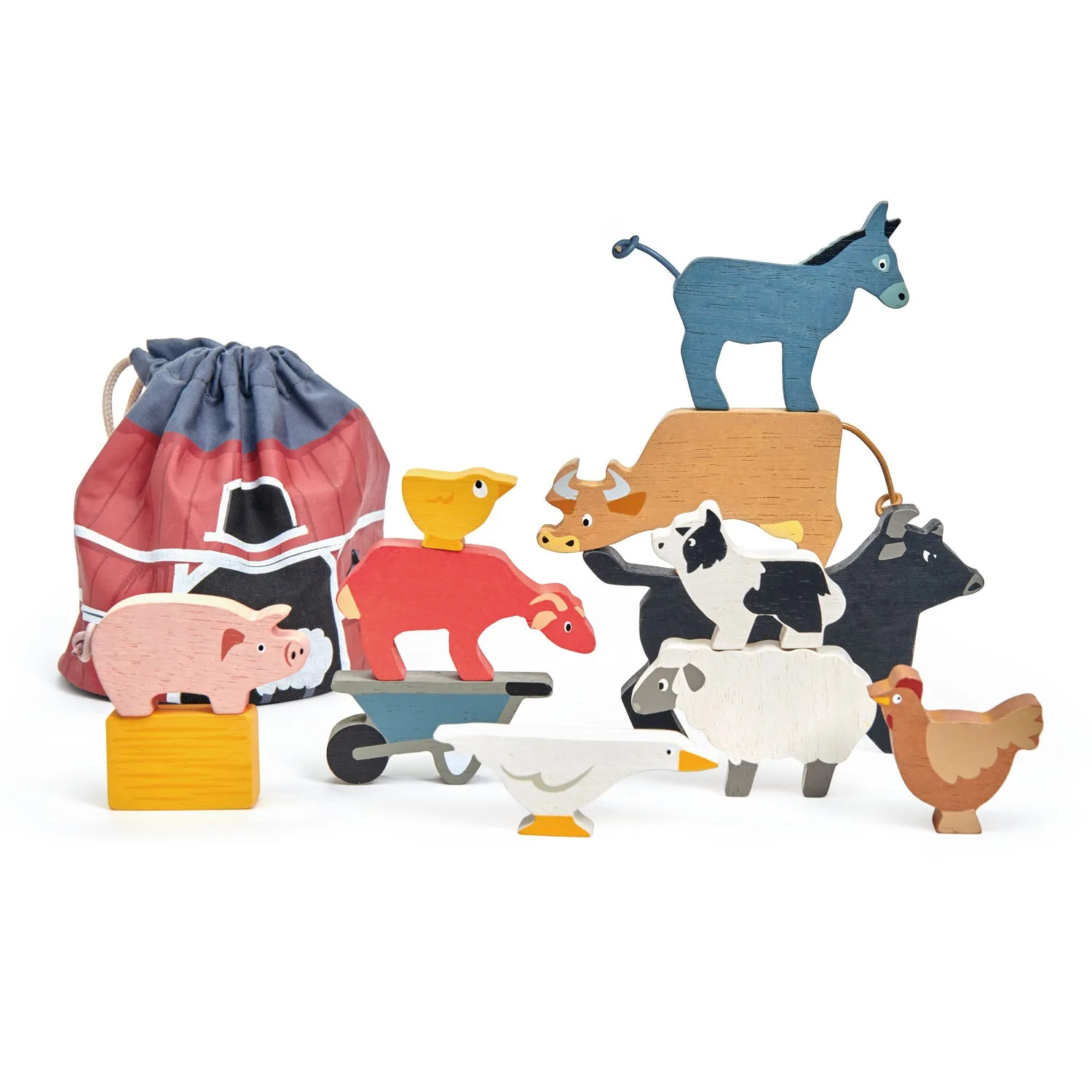
- Stacking Farmyard: Includes 10 popular farmyard animals, a wheelbarrow, and a hay bale, all contained in a barn-style drawstring bag. Chunky stacking pieces suit younger children, and the drawstring bag keeps small parts together so they are less likely to be scattered where a mouthing child can find them.
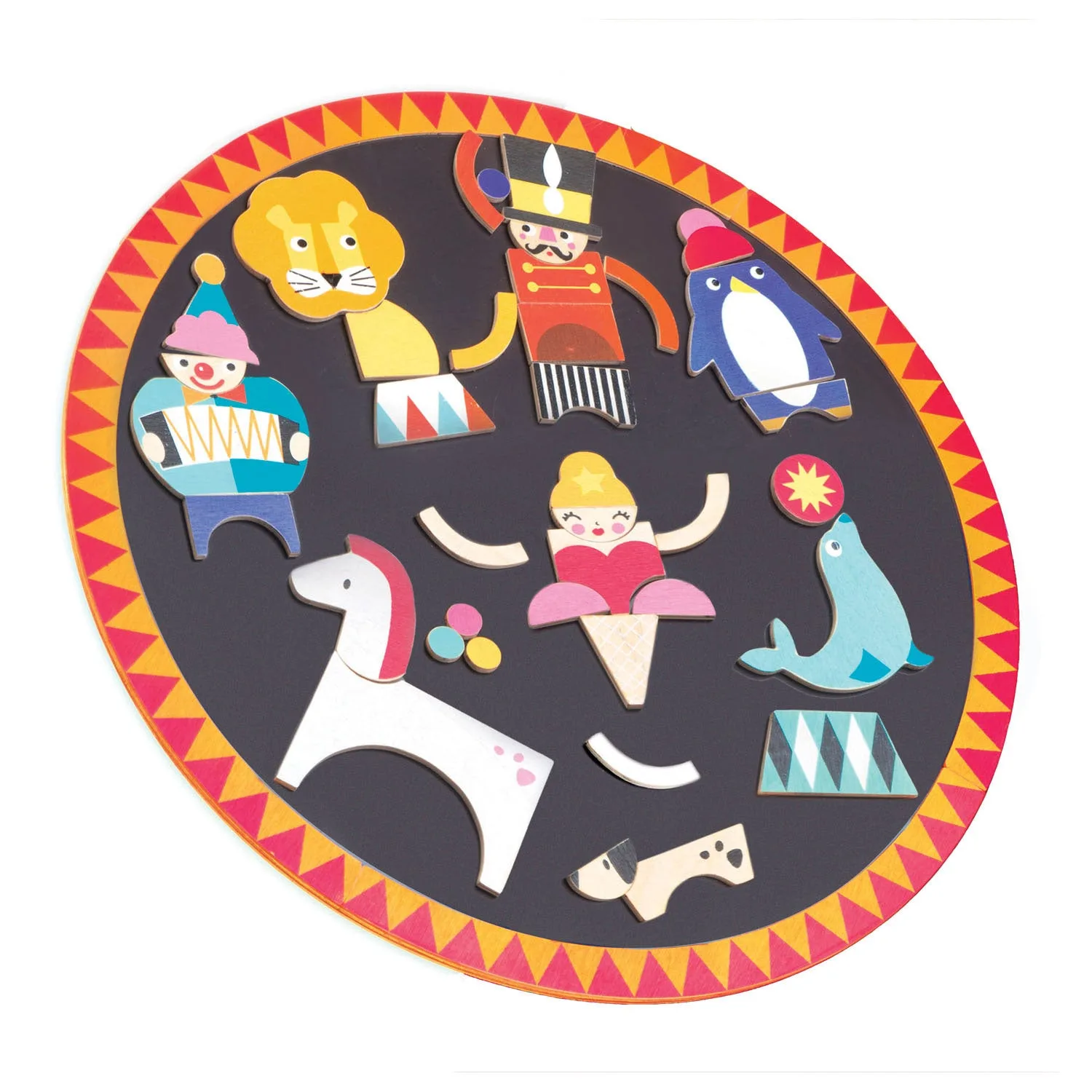
- Circus Night: Uses 37 wooden magnetized pieces on a circular board, and the board can be hung on a wall using a small bracket on the reverse. Magnetized pieces mean no loose small parts rolling under furniture, and wall hanging keeps the set out of reach between play sessions.
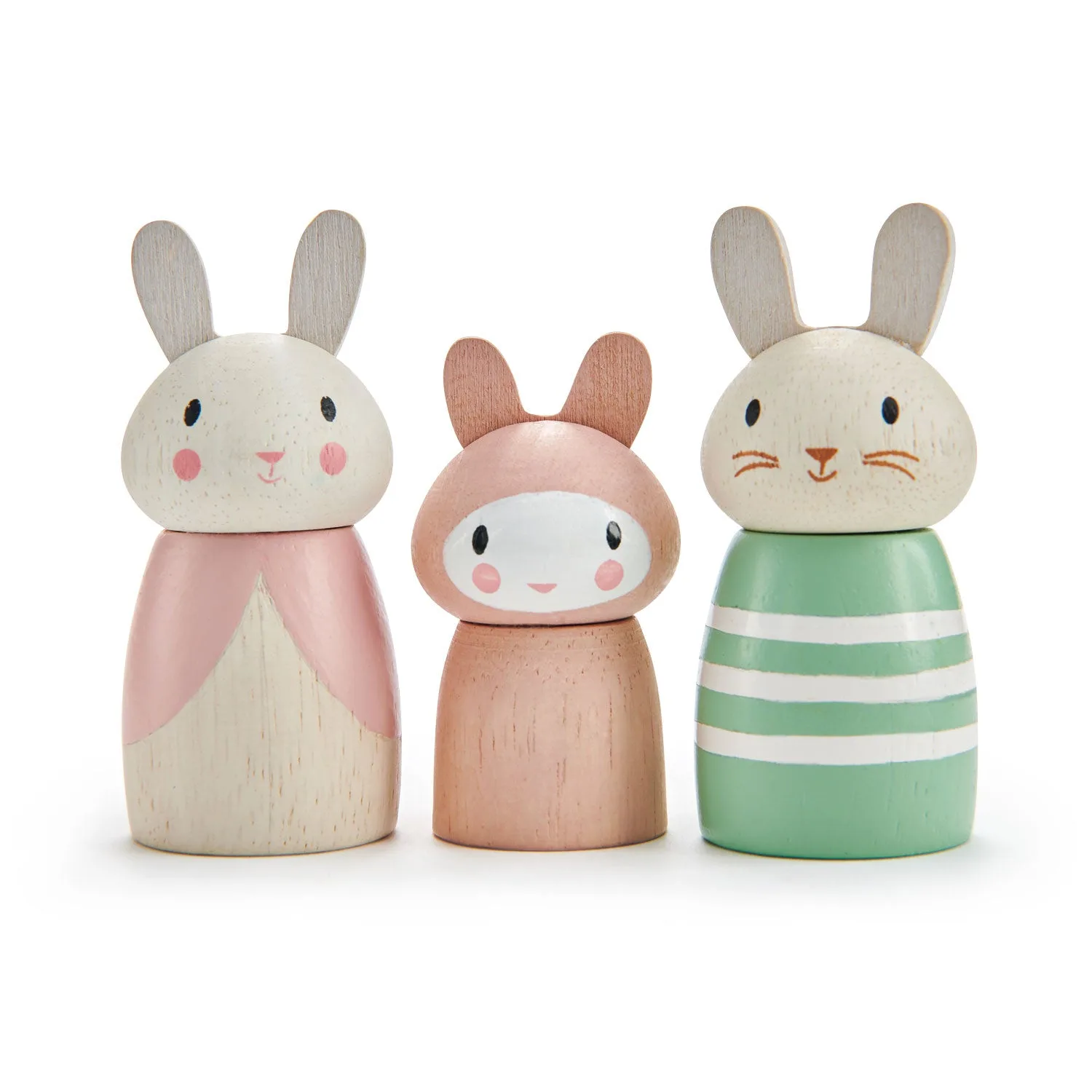
- Bunny Tales: A solid bunny family with Dotty the mum, Benny the dad, and Pip the baby, finished in stylish colors and ready to add to any dolls house set or open-ended play set. Small painted figures are a good example of a toy to check for coating wear and to keep away from children who still mouth objects.
Wooden toy safety comes down to a few repeatable habits: buy from sellers who name their materials and finishes, match the age label to your youngest player, and inspect toys as they age. Do that, and a well-made wooden toy will stay a safe favourite for years.