Quick answer
For most families, wooden toys win on longevity, repairability, and open-ended play, while plastic toys win on low upfront cost and easy cleaning. If you want fewer, better toys that hold value and can be passed down, choose wood; if you need lightweight, budget-friendly options for travel or messy play, plastic still has a place. Moover wooden toys like the Kids' play kitchen and Ride-on Bike 4 wheels Light green show how wood can be both sturdy and safe.
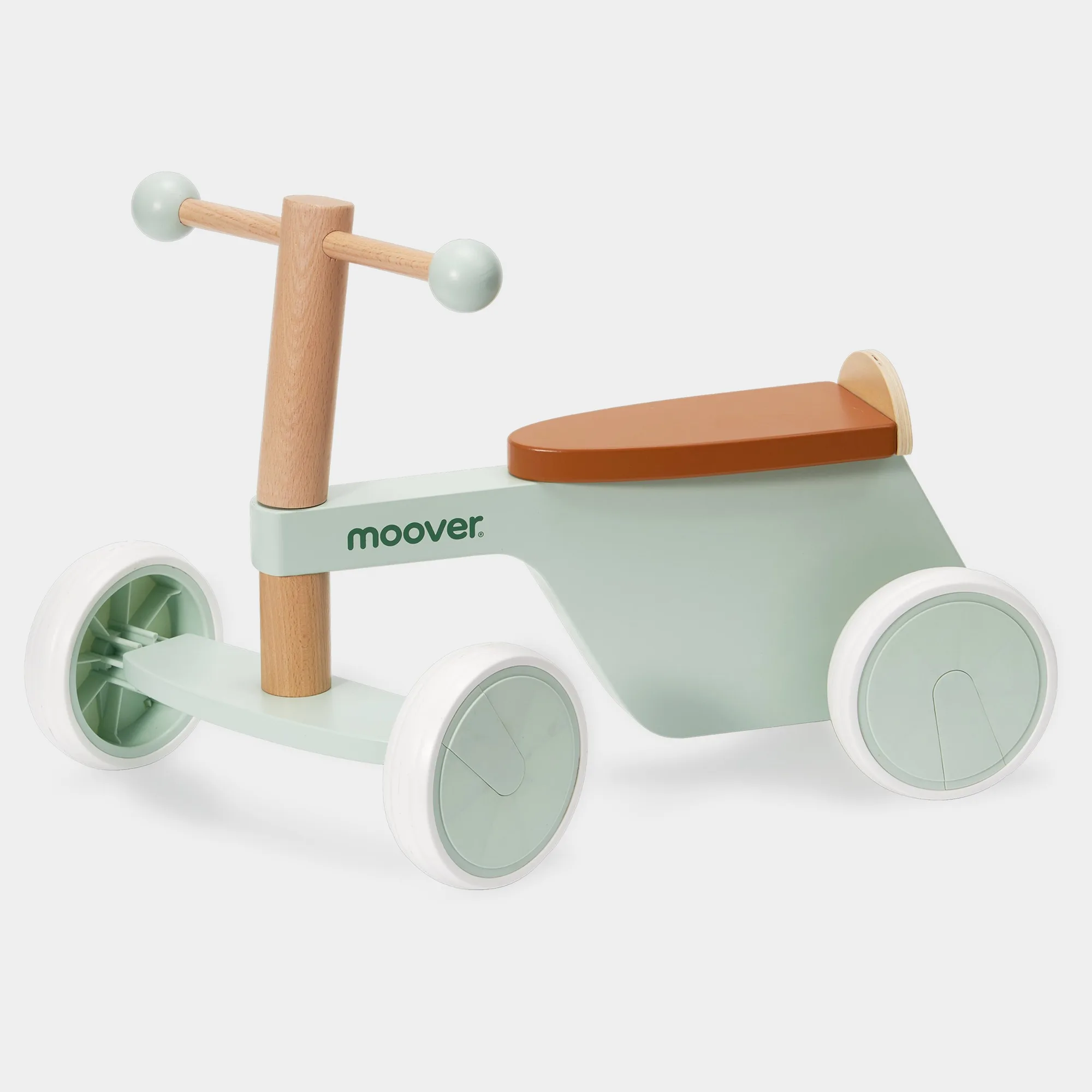
Ride-on Bike 4 wheels Light green
Walk down any toy aisle and you'll see the same choice: a bright plastic version for a few dollars, or a wooden one that costs more but feels solid. The decision isn't about being a purist—it's about matching the material to how your child plays, where the toy will live, and how long you want it to last.
This comparison looks at wooden toys vs plastic toys using real examples from Moover Toys, so you can see what the differences mean in daily use. We'll cover durability, safety, cleaning, and play value, then help you decide which material fits your situation.
Durability and repairability
Wooden toys generally outlast plastic ones because they resist cracking, fading, and the slow degradation that UV light causes in many plastics. A solid wood ride-on like the Ride-on Bike 4 wheels Light green is built to handle years of indoor and outdoor use, and if a part loosens, it can often be tightened or repaired rather than thrown away. Plastic toys may survive falls, but thin parts can snap and cannot be glued back reliably.
That said, wood isn't indestructible. Dropping a heavy wooden toy on a hard floor can dent the corners, and prolonged water exposure can warp untreated pieces. Plastic wins if you need something that can be hosed down or left outside without worry. For most indoor play, wood's repairability and resale value make it the longer-term choice.
- Check for solid wood construction rather than particleboard, which swells when wet.
- Keep a small bottle of wood-safe glue and fine sandpaper for minor repairs.
Safety and materials
Both materials can be safe, but the details matter. Moover wooden toys use environmentally-friendly, water-based, non-toxic paint, and the Doll House - White is made from birch plywood with the same paint. That's a meaningful difference if your child still puts toys in their mouth. Plastic toys can be safe too, but some cheaper plastics may contain additives you'd rather avoid, and you won't always know what's in them.
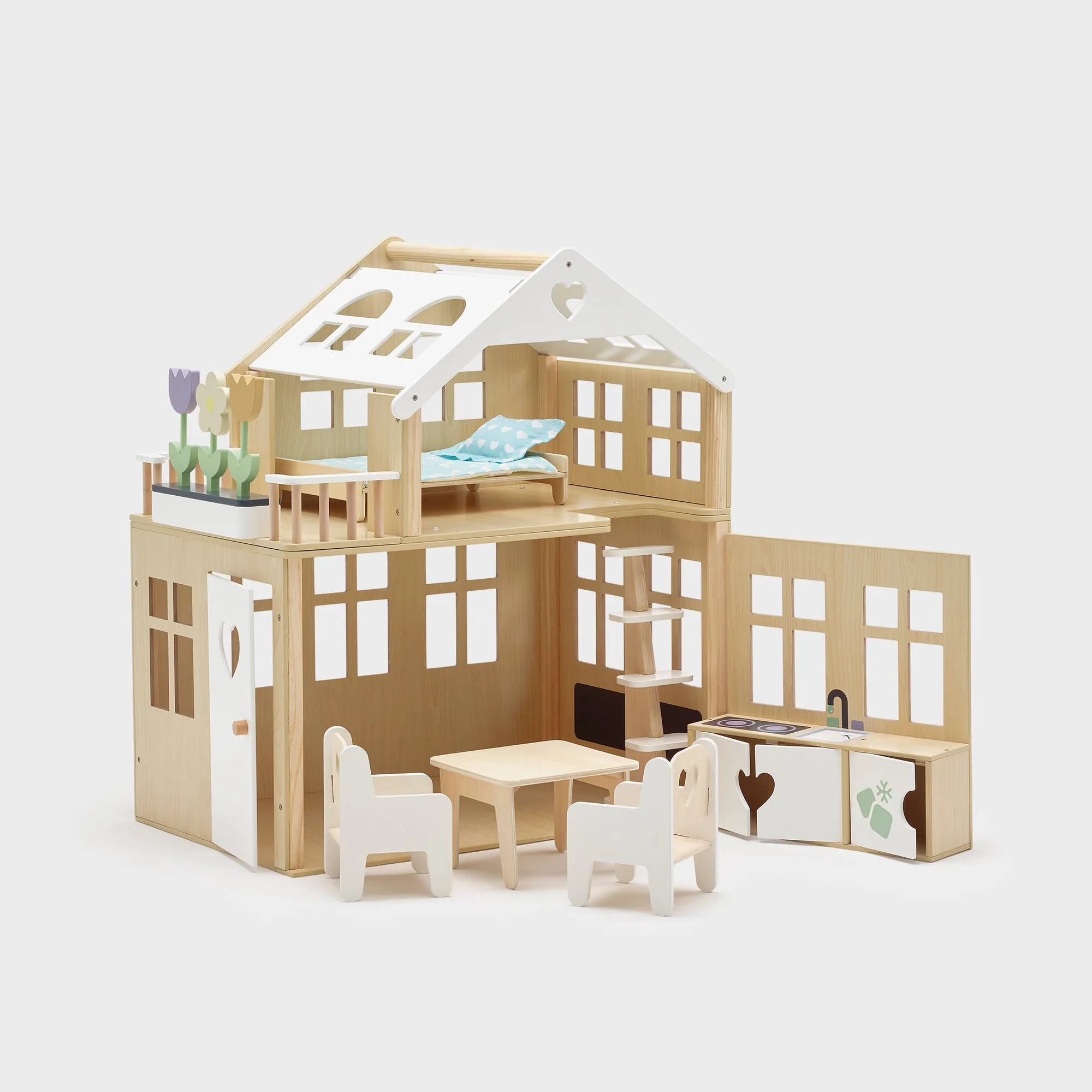
Doll House - White
Wooden toys are also heavier, which means they stay put during play and are less likely to tip when a toddler pulls up on them. The trade-off is weight: a wooden toy can hurt more if thrown, and it's harder for a small child to carry. Plastic is lighter and often has rounded, hollow shapes that are easier for little hands to grip.
- Look for water-based, non-toxic paint claims on wooden toys.
- For plastic, check for BPA-free or phthalate-free labels if available.
Cleaning and maintenance
Plastic toys are easier to clean: a wipe with a damp cloth and mild soap usually does it, and many can be submerged. Wooden toys need a bit more care. You should avoid soaking them, use a slightly damp cloth, and dry immediately. For the Kids' play kitchen, which is made from bass plywood and requires no assembly, a quick wipe after play is enough to keep it looking good.
The upside is that wood doesn't harbor odors or stains the way some porous plastics can, and it doesn't become sticky or tacky over time. If your child is prone to messy play with paint or playdough, plastic might be the lower-stress option. If you prefer a toy that stays looking neat with minimal effort, wood holds its finish well.
- Never submerge wooden toys in water; wipe and dry right away.
- Use a mild, non-abrasive cleaner on both materials.
Play value and longevity
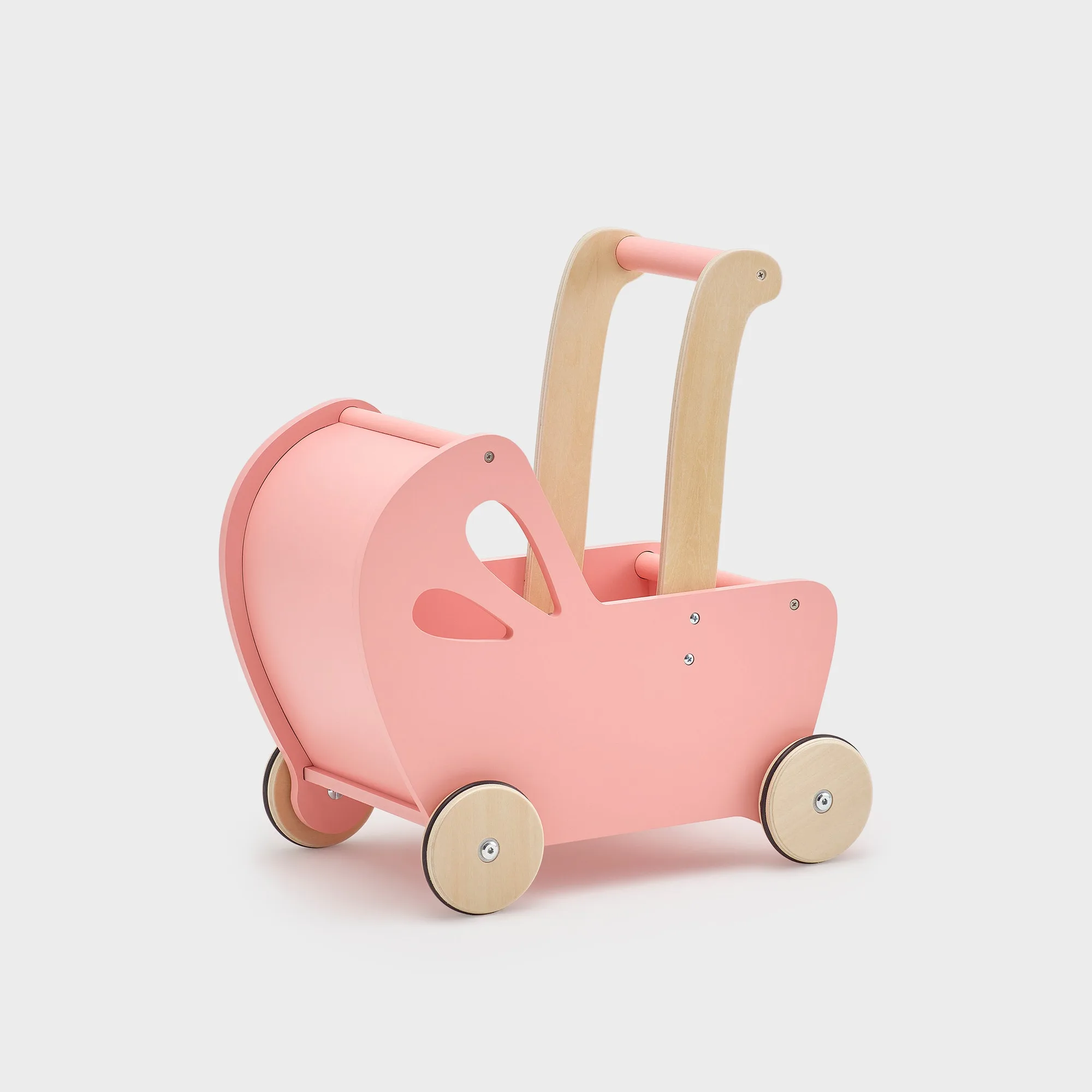
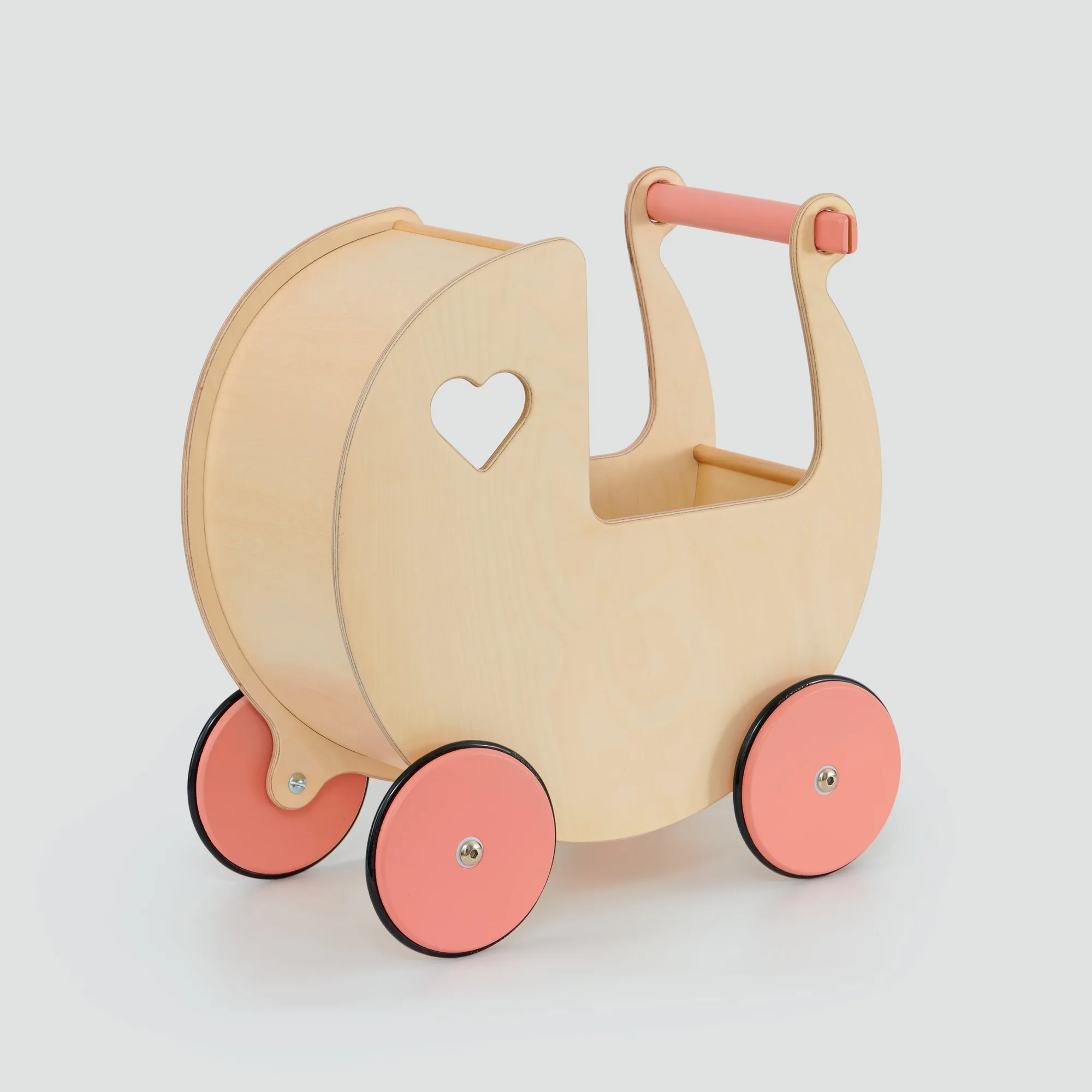
Wooden toys tend to be open-ended, which means they grow with your child. A simple doll stroller can become a shopping cart, a bed for stuffed animals, or a race car. The Traditional Doll Stroller Natural + pink and the Essential Pram Pink 2337 C are both designed for role-play and motor-skill development, and their classic look doesn't feel babyish as your child gets older. Plastic toys often have a single function and a shorter shelf life before they feel outdated.
That said, plastic excels at specific, short-term needs: a lightweight stroller for travel, a bath toy, or a cheap distraction for a waiting room. Wooden toys cost more upfront, but because they last and stay appealing, many families end up buying fewer of them. The real question is whether you want a toy library that turns over quickly or a small collection that stays.
- Choose open-ended wooden toys for children who like pretend play.
- Keep a few plastic toys for travel, bath time, or messy outdoor play.
Cost and value over time
Plastic toys usually cost less at checkout, but they often need replacing sooner. A wooden toy like the Doll House - White costs more upfront, yet its solid construction and timeless design mean it can be used by multiple children and then passed on or resold. If you calculate cost per year of use, wood often comes out ahead, especially for larger items.
However, not every family wants to spend more now. If your budget is tight or your child is in a phase of rapid change, plastic's low price is a real advantage. You can also mix: invest in a few wooden staples and fill gaps with affordable plastic.
- Consider resale value when comparing prices.
- Mix materials to balance budget and longevity.
Trade-offs: wooden vs plastic at a glance
- Upfront cost vs long-term value: Wooden toys cost more initially but often last for years and can be resold or handed down. Plastic toys are cheaper to buy but may need replacing sooner. If you plan to keep toys for multiple children, wood usually costs less per year of use.
- Cleaning ease vs material care: Plastic can be wiped, rinsed, or submerged. Wood needs a damp cloth, immediate drying, and should never be soaked. Choose plastic for messy or outdoor play; choose wood for indoor play where you can control moisture.
- Safety and material transparency: Moover wooden toys use water-based, non-toxic paint and solid wood or plywood. Plastic safety varies by manufacturer and is harder to verify. If you want to know exactly what's in the paint and material, wood offers more transparency.
- Weight and portability: Wooden toys are heavier and stay put during play, which helps with stability. Plastic toys are lighter and easier for small children to carry. For travel or a child who likes to move toys around, plastic may be more practical.
Moover wooden toys: facts that matter
- Kids' play kitchen: Made from bass plywood, no assembly required, size 18.7 x 12.2 x 21.26 inches (47.5 x 31 x 54 cm), for ages 18M+. The compact footprint fits small play areas, and no assembly means it's ready to use right out of the box.
- Ride-on Bike 4 wheels Light green: Solid wood with environmentally-friendly, water-based, non-toxic paint; for ages 18+ months; promotes mobility and role-play. The solid wood build supports active riding, and the non-toxic paint is a safer choice for toddlers who still mouth toys.
- Traditional Doll Stroller Natural + pink: From the original highest-quality line of luxury wooden mobility toys; sturdy and dependable; free bedding with purchase. The classic design encourages walking and role-play, and the included bedding adds value without extra cost.
- Doll House - White: Birch plywood with water-based, non-toxic paint; assembly required; size 65 x 43 x 74 cm (25.59 x 16.93 x 29.13 inches); for ages 36M+. The larger size and moving parts support detailed pretend play, but assembly and floor space are needed.
Which should you choose?
Choose wooden toys if you want
- Toys that last through multiple children and hold resale value
- Open-ended play that grows with your child
- Non-toxic, water-based paint and solid construction
Choose plastic toys if you need
- The lowest upfront cost and frequent replacement
- Toys that can be submerged, hosed down, or left outside
- Very lightweight options for travel or a child who carries toys everywhere
There's no single right answer, but for most families the best approach is a mix: invest in a few wooden staples like the Kids' play kitchen or Ride-on Bike 4 wheels Light green for daily play, and keep a small stash of plastic for travel, bath time, and messy days. Match the material to the job and you'll get more value from every toy.