Quick answer
Wooden game organizers generally last longer than foam board inserts. Laser-cut baltic birch resists crushing, moisture, and repeated handling far better than foam board, which dents and delaminates over time. Choose wood for games you play often or store long-term; choose foam only if you need the lightest possible insert and accept a shorter lifespan.
Material reality check: what each insert is actually made of
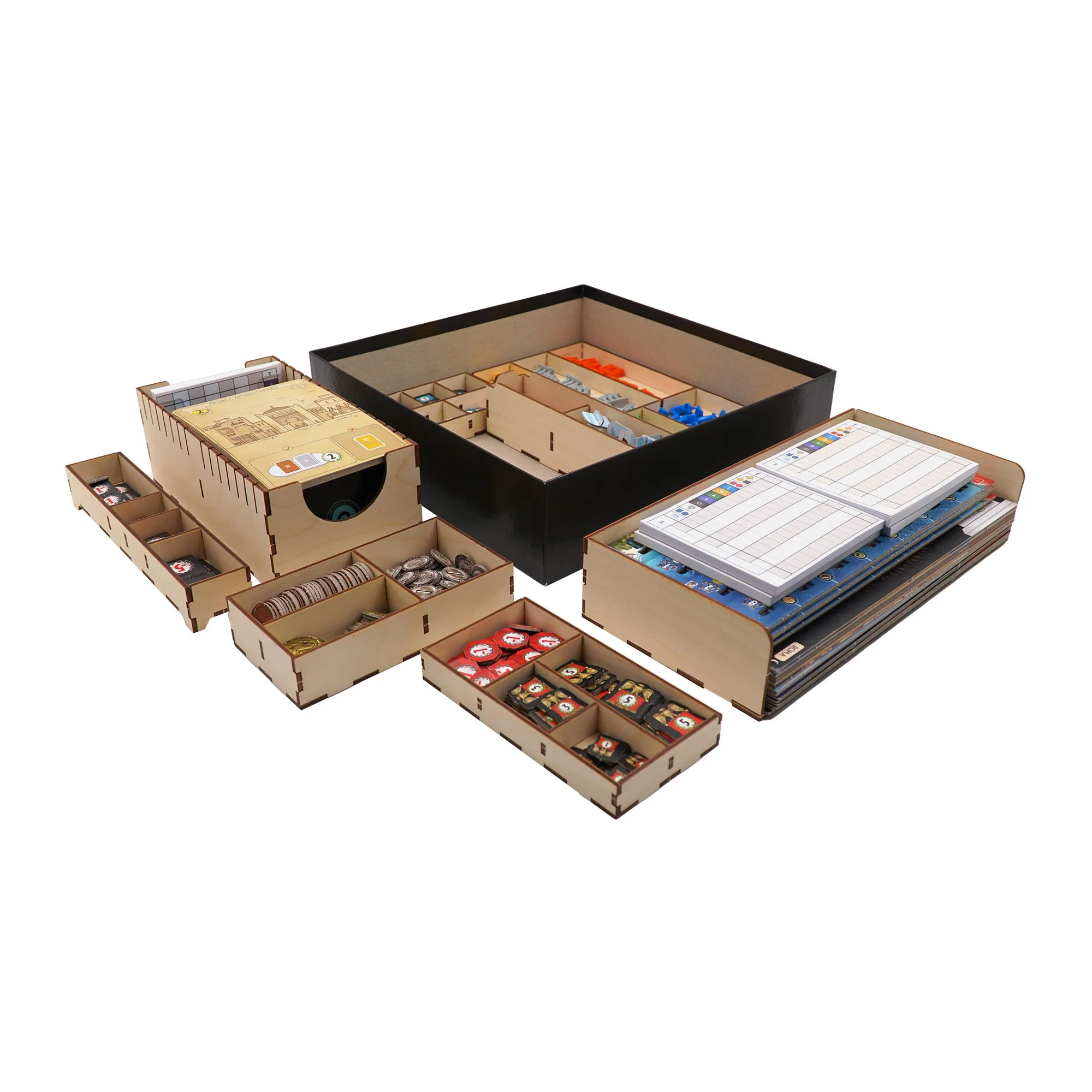
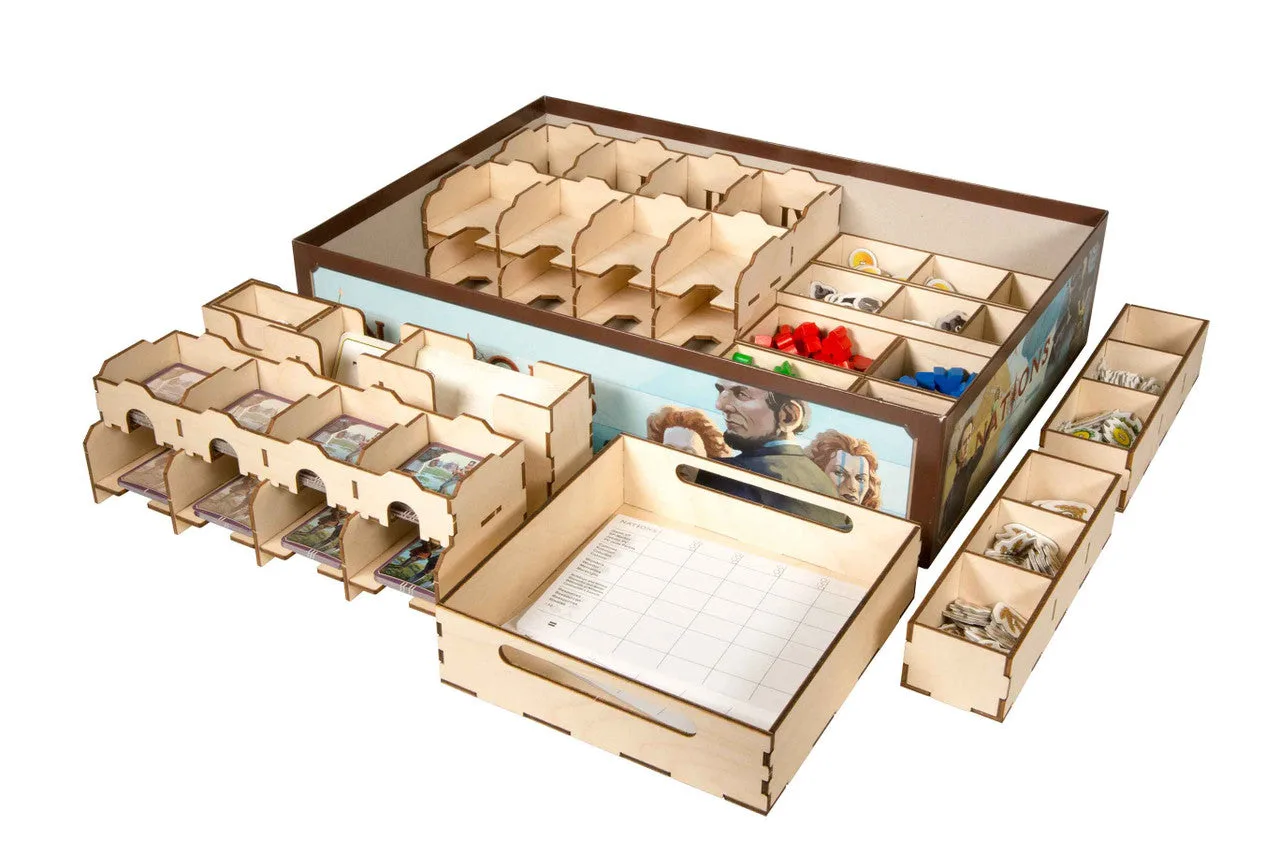
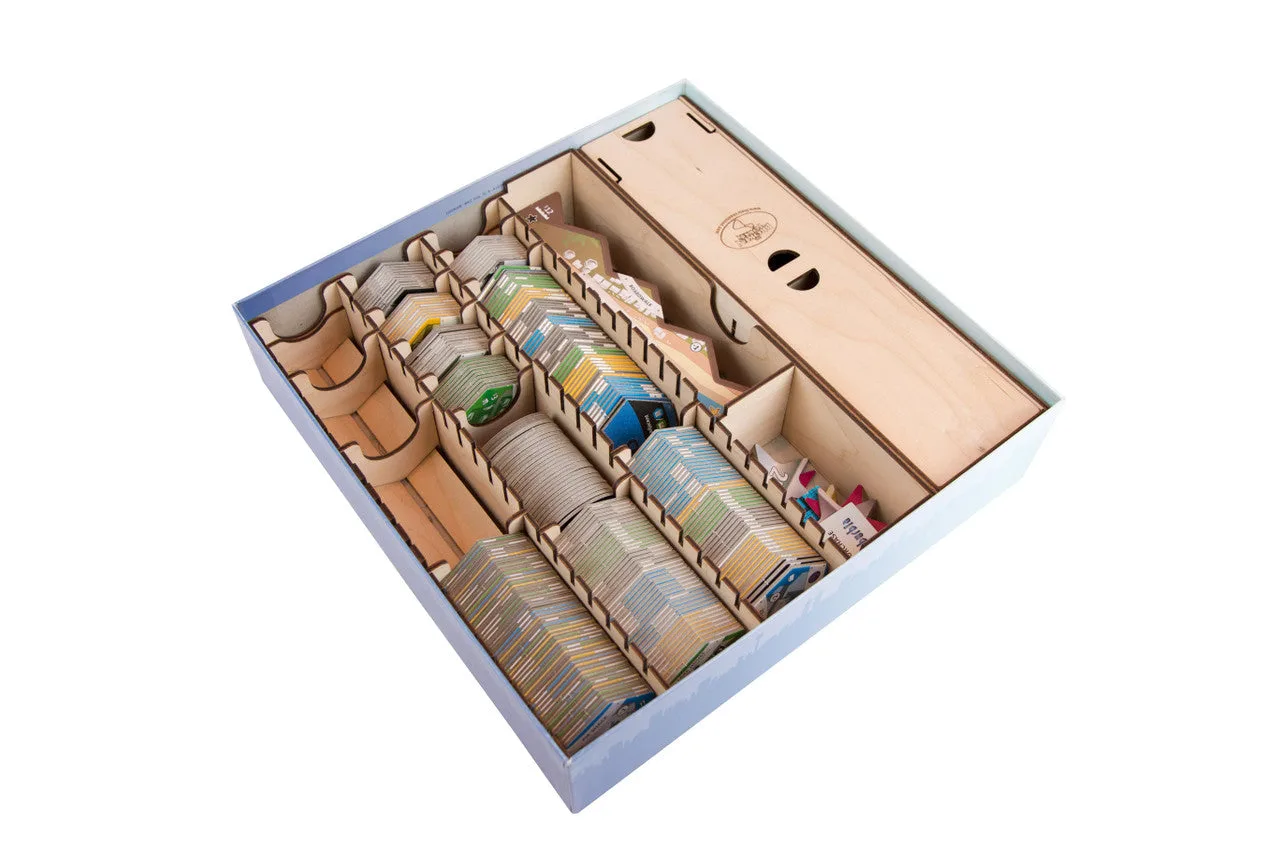
Wooden organizers from The Broken Token are made from high-quality laser-cut baltic birch. That matters because baltic birch is a plywood with thin, uniform layers and minimal voids, so it holds screws, hinges, and repeated tray removal without splitting. It also resists warping from humidity changes better than particleboard or MDF. Foam board inserts, by contrast, are typically a foam core sandwiched between paper or thin plastic facing. They are light and cheap to produce, but the facing can peel and the core can compress permanently under stacked boxes.
The practical difference shows up in how each material fails. Wood fails slowly, if at all, under normal game-night use. Foam board fails suddenly: a crushed corner, a delaminated divider, or a hinge that tears out. If you store games vertically or stack them, foam board is the weaker link.
Durability under real game-night conditions
Repeated setup and teardown is the hardest test for any insert. Wooden trays hold their shape when you pull them in and out, and hinged-lid boxes stay aligned because the hinges are mounted into solid material. Foam board trays tend to loosen at glued joints, and their edges fray. Spills are another differentiator: a quick wipe with a damp cloth is fine on sealed wood, but moisture can swell and ruin foam board.
That said, foam board has one durability advantage: it absorbs impact. If a game box is dropped, foam may dent instead of transmitting force to miniatures. Wood transmits more shock, so you need to pack minis with some cushioning if you use a rigid wooden insert. Neither material is indestructible, but wood holds up longer across years of regular play.
Protection and fit: what each material does well
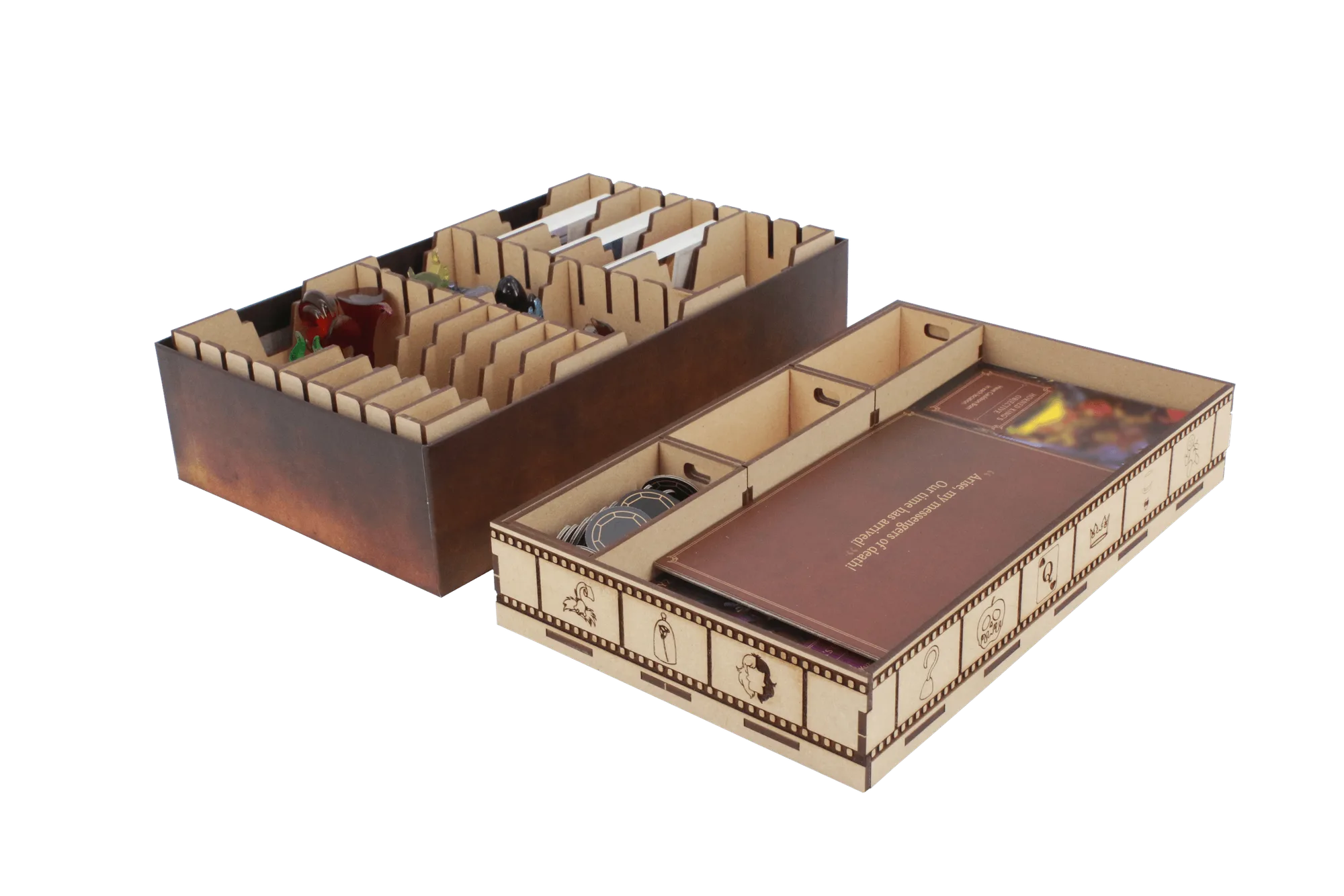
Fit is where the two materials diverge most. Wooden inserts are designed for a specific game box, often accommodating expansions and sleeved cards. For example, the Mice and Mystics Compatible Game Organizer accommodates the base game as well as the Heart of Glorm expansion, and it stores cheese and wounds in table-ready, hinged-lid boxes with a spare hinged box for extra components. That kind of game-specific engineering is difficult to achieve with generic foam board, which is usually cut to approximate dimensions.
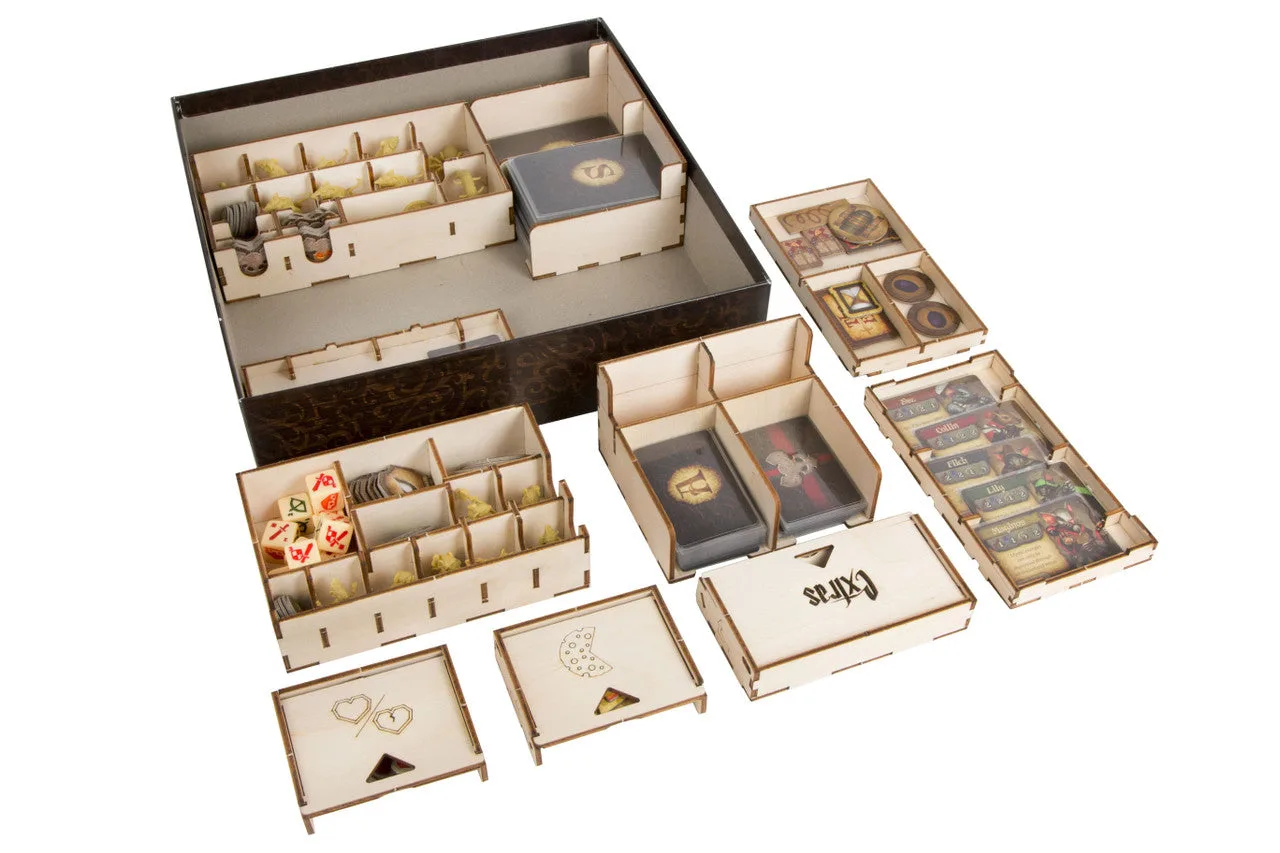
Mice and Mystics Compatible Game Organizer
Foam board can be custom-cut at home, which makes it flexible for odd-shaped components or prototype storage. But it does not provide the same structural support for heavy card stacks or large miniatures. If your priority is protecting a complete collection with expansions, a wooden game organizer designed for that game will usually fit and protect better than a homemade foam board insert.
Weight, cost, and storage trade-offs
Wood is heavier than foam board. A full wooden insert can add noticeable weight to an already heavy box, which matters if you carry games to a friend's house or a convention. Foam board keeps the box lighter and is often cheaper upfront. However, wooden organizers are a one-time purchase for a given game, while foam board inserts may need replacement after a few years of heavy use.
Storage style also matters. Wooden trays stack and slide predictably, so vertical storage is safer. Foam board trays can compress under the weight of boxes above them. If you stack games high or store them on their sides, wood is the more reliable choice. If your games live on a single shelf with little stacking, foam's weight advantage is less important.
Trade-offs at a glance
- Durability: Baltic birch resists crushing, moisture, and repeated handling; foam board dents, delaminates, and frays. Wood wins for long-term use.
- Weight: Wood adds noticeable weight to a game box; foam board keeps the box lighter for transport. Choose foam if portability is critical.
- Fit and protection: Wooden inserts are game-specific and often accommodate expansions and sleeved cards; foam board is generic or custom-cut and offers less structural support. Wood fits and protects better for complete collections.
- Upfront cost: Wooden organizers cost more initially; foam board is cheaper but may need replacement. Wood is a one-time investment per game.
Wooden organizer examples and what they show
- Arkham Horror 3rd Edition Compatible Expansion Organizer: Made from high-quality laser-cut baltic birch with numerous trays to keep components organized and protected. Demonstrates the material durability and game-specific tray design that foam board rarely matches.
- Marvel Legendary Compatible Game Organizer: Innovative pinwheel design allows for maximum card storage in the game box while saving enough room for the game board and manuals; includes 6 wooden dividers. Shows how wooden inserts can be engineered for high card capacity and still fit the original box contents.
- High Capacity Card Case -3 Row- Engraved -The Longer, Harder Wood: The Longer, Harder Wooden Card Case is a harder, longer card storage solution with adjustable dividers and support for sleeved or unsleeved cards; available in two-row and three-row settings. Illustrates how wood construction enables adjustable, durable storage for large card collections outside the game box.
Which material fits your game?
Best for
- Collectors who store games vertically or stack boxes
- Games with expansions, many sleeved cards, or heavy miniatures
- Players who want a durable, game-specific insert that lasts for years
Not for
- Players who need the lightest possible box for frequent travel
- Budget-first buyers who are willing to replace inserts periodically
- Games with irregular component shapes that require custom foam cutting