Quick answer
Wooden play equipment wins on durability, repairability, and eco-friendly appeal, while plastic wins on upfront cost and weather resistance. For indoor home use, wood is the better long-term investment because it can be sanded, refinished, and passed down. Choose plastic only if you need a lightweight, budget option you can hose down outdoors.
When you're setting up a play space, the material you choose shapes everything from safety to how often you'll need to replace pieces. Wooden vs plastic play equipment is a real fork in the road: one is heavy, repairable, and naturally warm; the other is light, cheap, and easy to clean. Neither is universally better—it depends on where you'll use it, how long you want it to last, and what you value.
This comparison breaks down the trade-offs using real product examples from our catalog, so you can match the material to your home, your child's age, and your budget. We'll cover durability, safety, maintenance, environmental impact, and resale value, then give you a clear fit guide.
Durability and lifespan
Wooden play equipment is built from solid natural wood, which means it can take years of climbing, swinging, and balancing without cracking under normal use. If a surface gets scratched or dented, you can sand it and refinish it. Plastic equipment, by contrast, is often hollow and can become brittle over time, especially if left in direct sun. It may crack at stress points like joints or handles, and those cracks usually can't be repaired.
That said, plastic has one durability advantage: it doesn't warp or rot from moisture. If you plan to leave equipment outside year-round in a rainy climate, plastic may outlast wood that isn't properly sealed. For indoor use, wood's repairability gives it a much longer practical lifespan.
- Check for solid wood construction, not particleboard, in wooden sets.
- Plastic can become brittle after repeated UV exposure; store it shaded if possible.
Safety and stability
A heavy wooden climbing set stays put when a child hangs or swings, reducing the risk of tipping. Wood also has natural shock absorption, which can make falls feel less jarring than landing on hard plastic. However, wood requires regular checks for splinters, loose screws, or worn finishes. Plastic is generally smooth and splinter-free, but lightweight plastic pieces can slide or tip if not anchored.
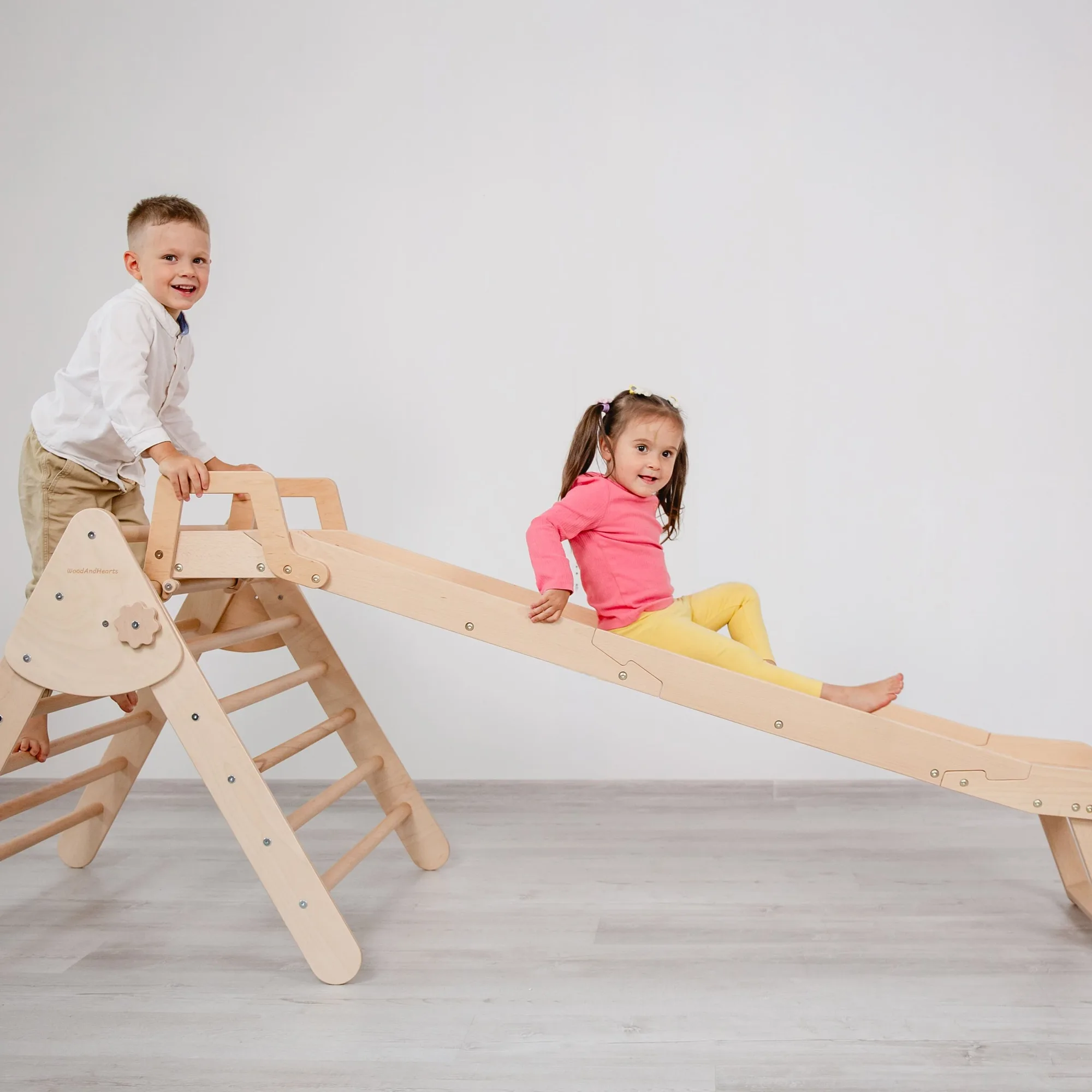
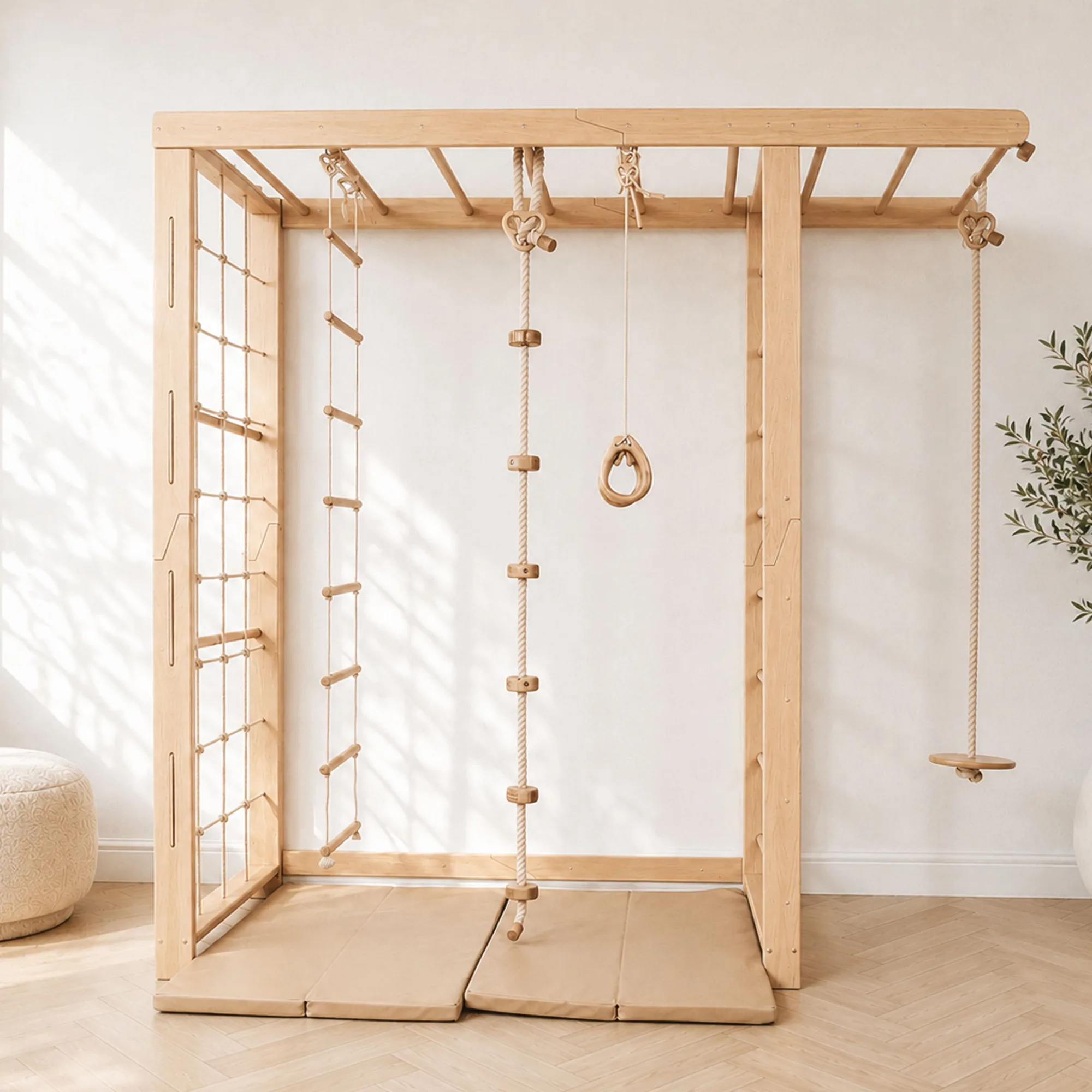
wooden climbing set
Both materials can be safe when assembled and maintained correctly. The key difference is that wood gives you more opportunities to inspect and tighten over time, while plastic may hide cracks inside hollow sections.
- Always anchor tall climbing equipment to a wall or use anti-tip straps.
- Inspect wooden surfaces for splinters monthly and sand if needed.
Eco-friendliness and sustainability
Wood is a renewable resource when sourced responsibly, and it biodegrades at the end of its life. Many wooden play equipment brands use natural finishes instead of plastic coatings, reducing chemical exposure. Plastic is typically made from petroleum, takes centuries to decompose, and recycling options are limited for bulky play items. If eco friendly play equipment is a priority, wood is the clear winner.
That said, not all wood is equal. Look for FSC-certified wood or brands that specify natural, non-toxic finishes. Some plastic equipment is made from recycled plastic, which improves its environmental profile, but it still won't biodegrade.
- Choose wooden items with water-based, non-toxic finishes.
- Recycled plastic is better than virgin plastic but still not biodegradable.
Maintenance and cleaning
Wooden play equipment needs occasional maintenance: wiping with a damp cloth, checking for splinters, and reapplying a child-safe oil or finish every year or two. You can't hose it down or leave it in standing water. Plastic, on the other hand, can be sprayed with a hose, wiped with disinfectant, and left outside without much worry. For busy families who want minimal upkeep, plastic is easier.
But wood's maintenance is simple and infrequent for indoor use. A quick dusting and an annual check are usually enough. If you're comparing a wooden climbing set to a plastic one for a playroom, the wood will need less cleaning because it doesn't develop static that attracts dust.
- Use a mild soap solution for wood; avoid soaking it.
- Plastic can be cleaned with most household disinfectants, but check for fading.
Cost and resale value
Plastic play equipment usually costs less upfront. A basic plastic slide or climbing structure might be a fraction of the price of a wooden set. However, plastic tends to depreciate quickly and often ends up in landfill. Wooden play equipment costs more initially, but it holds its value. You can resell a well-maintained wooden climbing frame or pass it down to younger siblings.
When you calculate cost per year of use, wood often wins. A wooden set that lasts ten years and serves two children costs less per year than replacing a plastic set every three years. If your budget is tight right now, plastic can be a reasonable short-term choice, but wood is the better long-term investment.
- Factor in resale value: wooden sets often sell for 50-70% of their original price.
- Plastic sets rarely resell for more than a token amount.
Trade-offs at a glance
- Upfront cost: Plastic is cheaper to buy, but wood lasts longer and can be resold. If budget is the only factor, plastic wins short-term; wood wins long-term.
- Maintenance: Plastic is easier to clean and weather-resistant; wood needs occasional oiling and indoor storage. Choose plastic for outdoor leave-out use; choose wood for indoor or covered spaces.
- Eco-friendliness: Wood is renewable and biodegradable; plastic is petroleum-based and persists in landfills. For eco friendly play equipment, wood is the clear choice.
- Safety and stability: Wood is heavier and more stable; plastic can tip if lightweight and unanchored. Anchor any tall equipment, but wood needs less anchoring for stability.
Product facts: wooden options that illustrate the trade-offs
- Climbing Jungle Gym: This versatile wooden play set brings climbing, swinging, hanging, and balance activities together in one compact setup that supports your child’s development and looks beautiful in a modern home. A single wooden structure can replace multiple plastic pieces, saving space and offering more play value per square foot.
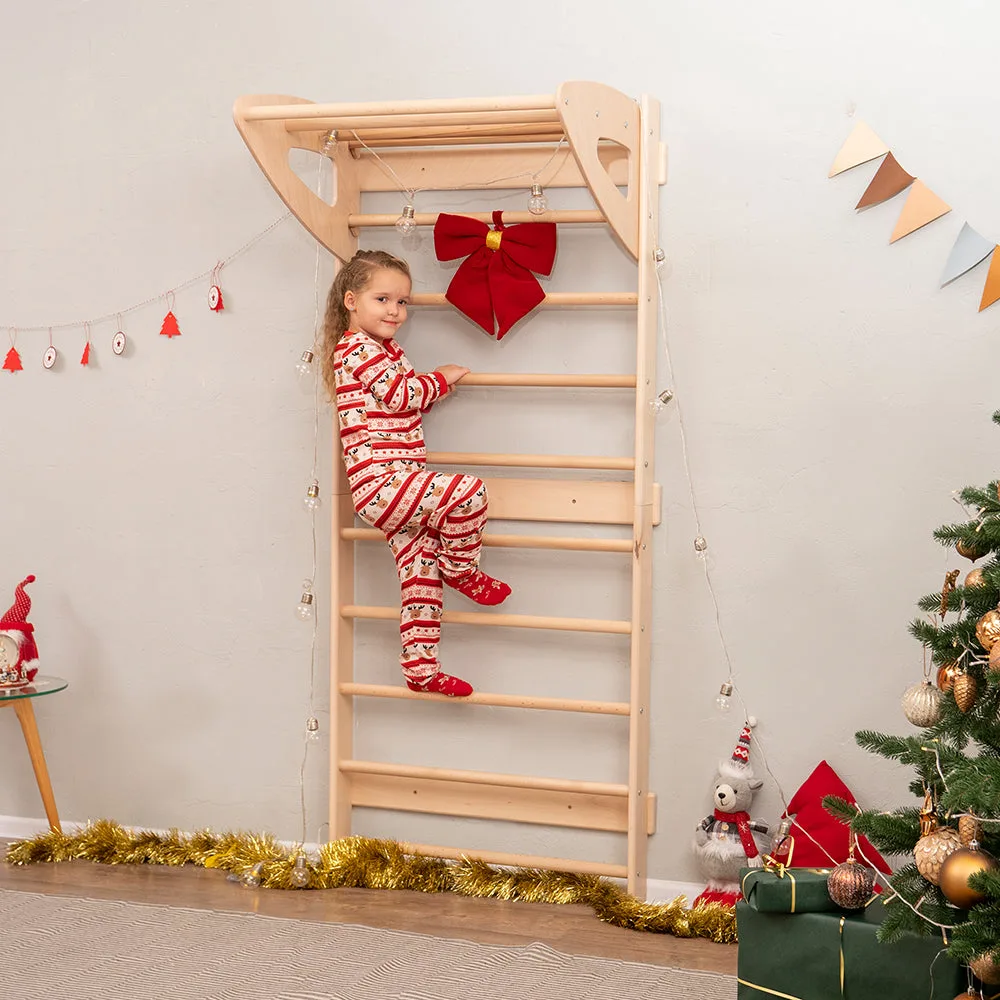
- Wooden Playground: This multifunctional Wooden Playground with an innovative teepee-inspired design creates a fun and safe environment for children aged 3 to 8 years. Made of high-quality natural wood, it helps kids stay active, develop coordination, and enjoy creative play — no matter the weather outside. Natural wood construction and a design for indoor/outdoor use show how wood can be both durable and aesthetically pleasing, unlike typical plastic play sets.
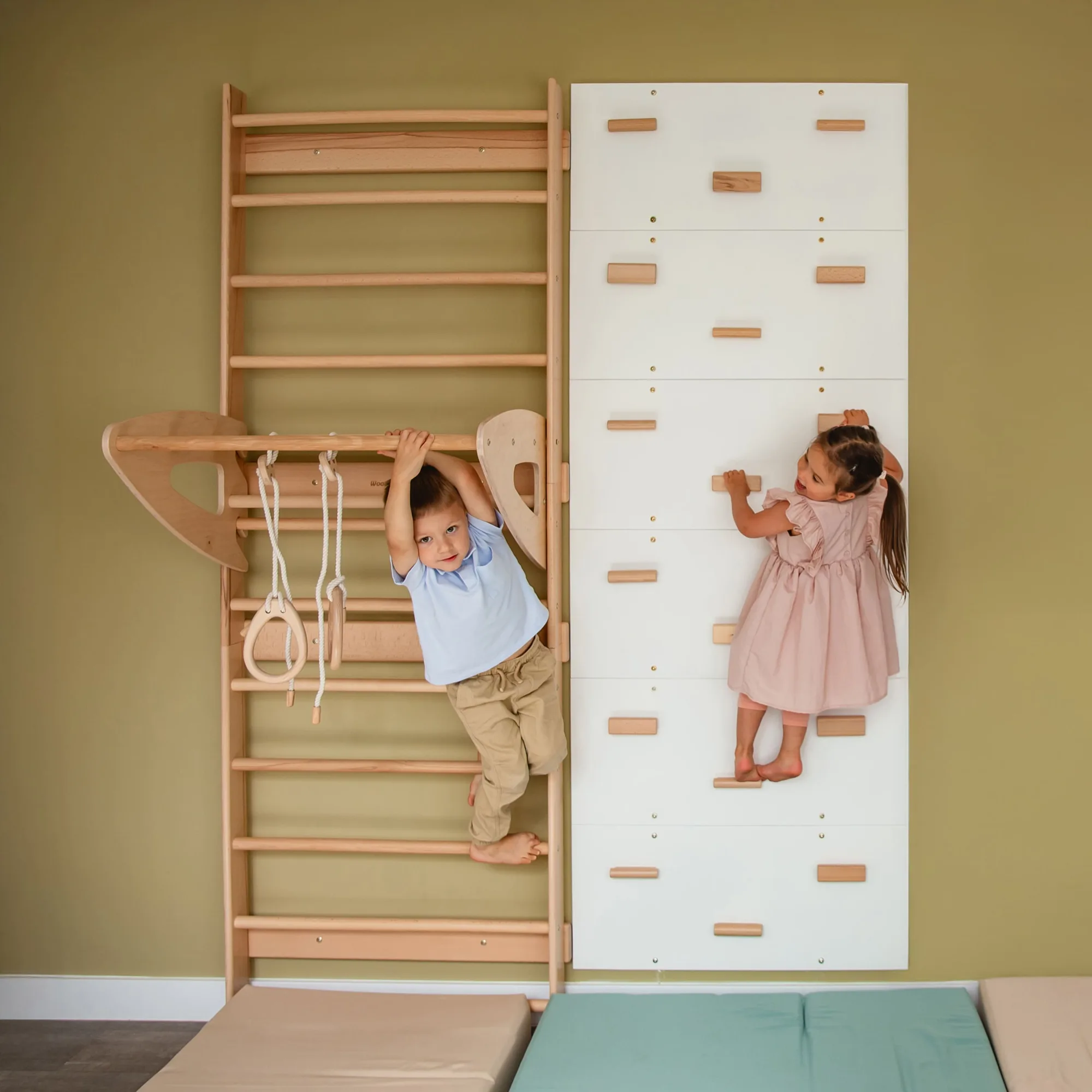
- Swedish Climbing Wall: This set includes a Swedish wall in Natural wood and 6 climbing panels in rectangular shapes. The panels can be selected in 4 color variations, allowing you to customize the look. Wood can be finished in different colors without losing its structural integrity, giving you plastic-like customization with better longevity.
Which material fits your family?
Choose wooden play equipment if you:
- Want a long-lasting investment that can be repaired and passed down
- Prioritize eco friendly materials and natural aesthetics in your home
- Need stable, heavy equipment for climbing and swinging indoors
Choose plastic play equipment if you:
- Have a very tight budget and need the lowest upfront cost
- Plan to leave equipment outside in all weather without maintenance
- Want the lightest possible option for easy moving and storage
There's no single right answer, but for most families setting up an indoor play space, wood offers better durability, safety, and environmental value. Plastic makes sense for tight budgets or fully outdoor, low-maintenance setups. Whichever you choose, anchor it safely and inspect it regularly—that matters more than the material.