Quick answer
For toddlers who need extra motivation to walk, the Woodpecker Walker's pecking birds and playful sound offer unique engagement. A classic push toy with a wider base may be better for early stability and balance practice.
Why engagement matters for first steps
Some toddlers hesitate to walk because they don't see the point. A push toy that responds with movement and sound can turn walking into a game. The Woodpecker Walker does this with two bird heads that peck up and down as the toy rolls, creating a playful sound that draws attention. This can inspire kids to walk around and move more.
Stability and base design trade-offs
Classic push toys often have a wider, heavier base that resists tipping, which is helpful for very new walkers who still wobble. The Woodpecker Walker's design focuses on the interactive pecking mechanism, which may mean a slightly narrower stance. If your child needs maximum stability, a traditional push toy might be a safer start.
Woodpecker Walker vs Classic Push Toy: Trade-offs
- Motivation to walk: The Woodpecker Walker's pecking birds and sound reward each push, making it ideal for toddlers who need extra encouragement.
- Stability for beginners: Classic push toys often have a wider base and lower center of gravity, which may be more forgiving for children still finding their balance.
- Long-term play value: The Woodpecker Walker remains engaging as a pull-along or pretend-play prop even after walking is mastered, while a basic push toy may be outgrown sooner. If your child already walks confidently, the Woodpecker Walker offers more lasting fun.
Product facts at a glance
-
Woodpecker Walker: As the Woodpecker Walker is pushed, two bird heads peck up and down while making a playful sound. This turns walking into a cause-and-effect game, motivating reluctant walkers to keep moving.
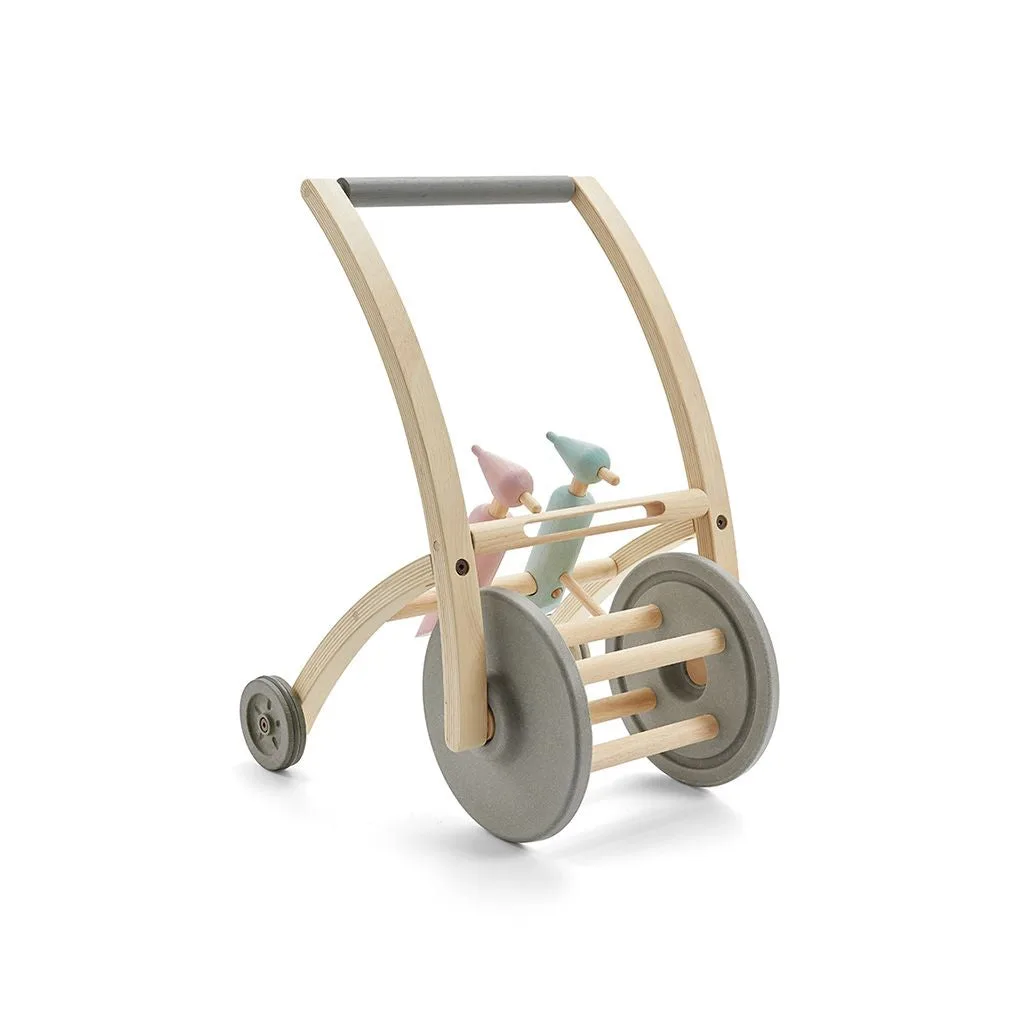
Woodpecker Walker
Which one fits your toddler?
Best for
- Toddlers who need playful motivation to take their first steps
- Families who value interactive cause-and-effect toys
Not ideal for
- Very early walkers who require maximum stability and a wide base
- Parents who prefer a silent, distraction-free walking aid