Quick Answer
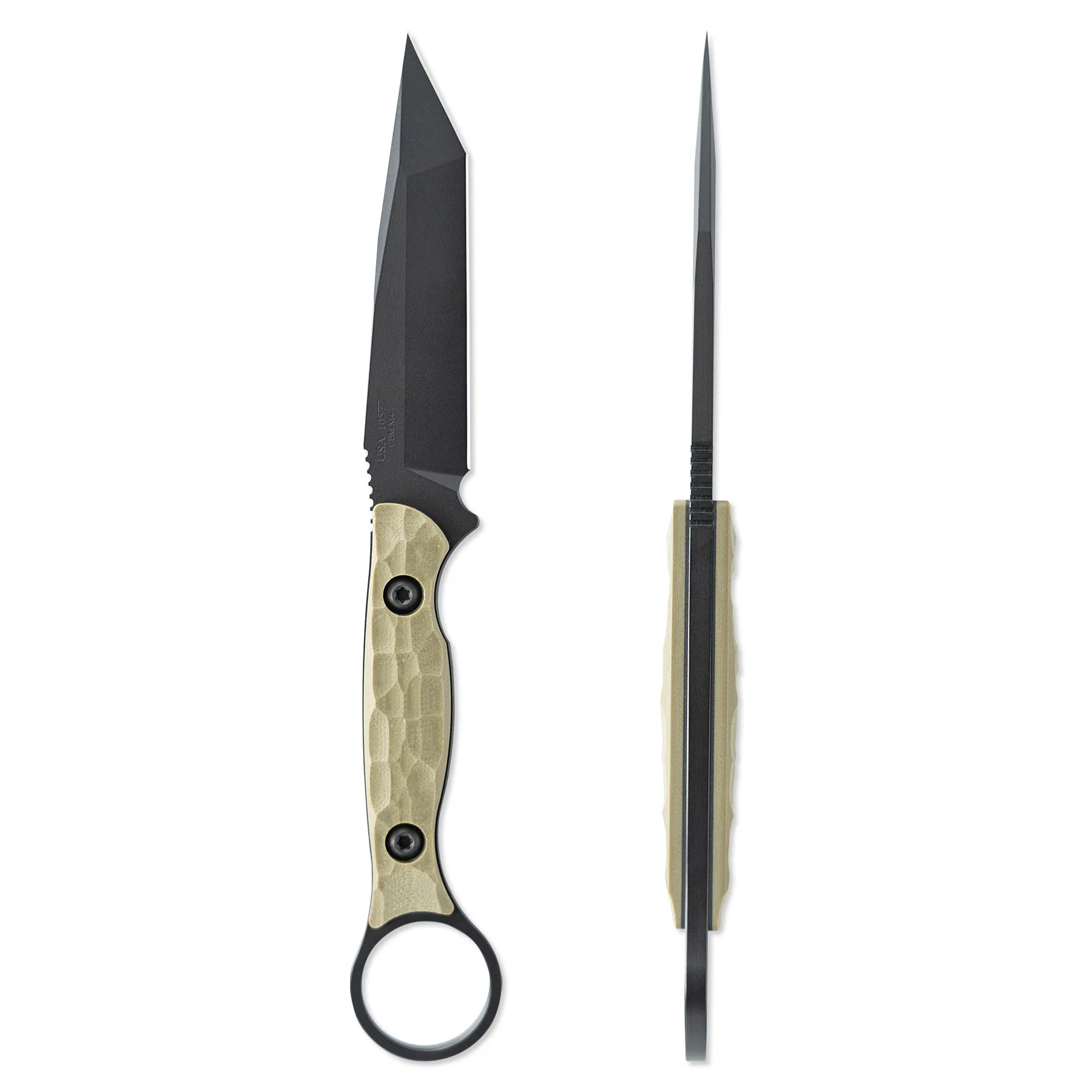
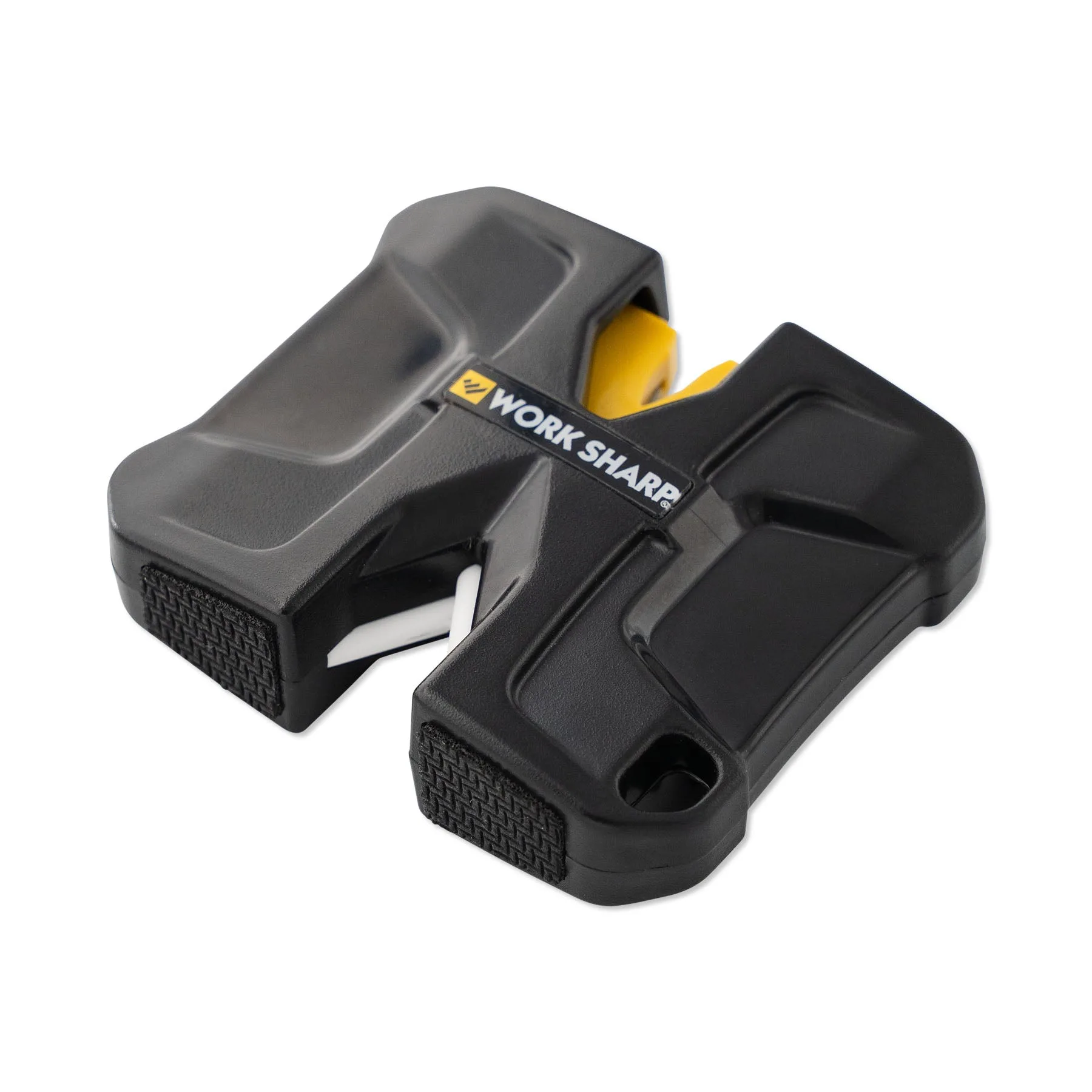
The Work Sharp Pivot Knife Sharpener is a compact pull-through tool that combines a Convex-Carbide sharpening stage with a fine ceramic hone, so you can bring a working edge back in a few strokes without carrying stones. It is best for quick field touch-ups on a folding knife or a fixed blade like the Serpent T - Ranger Green, but it will not replace a full stone session for reprofiling or repairing heavy damage.
What the Pivot Actually Does
The Pivot is a two-stage pull-through sharpener. The Convex-Carbide stage does the cutting work, and the fine ceramic hone refines the edge. You place the knife in the slot and pull, which means you do not need to hold a consistent angle freehand. That is the main reason it works as a field knife sharpening tool: fewer variables, less time, and no flat stone to keep level on a tailgate or log.
A small diamond plate is also included for touching up edge tools or damaged edges. That gives you a way to address a rolled or lightly damaged edge before you move to the carbide and ceramic stages. The trade-off is that pull-through sharpeners remove steel faster than a guided system or a stone, so you should use light pressure and only as many strokes as the edge actually needs.
How to Use It Without Over-Sharpening
Start with the diamond plate only if the edge has visible damage or will not bite. Then use the Convex-Carbide stage in short, even pulls, checking the edge after every few strokes. Finish with the ceramic hone to align and refine the edge. If the knife is already sharp and just feels slightly dull, skip the carbide stage and go straight to ceramic.
Keep the blade perpendicular to the slot and pull straight through rather than twisting. Twisting can round the tip or put uneven pressure on one side. After use, wipe the blade and the sharpener, and keep the Pivot dry. It is small enough to live in a pack pocket or glovebox, but it is not a replacement for cleaning and drying a blade after wet or dirty work.
Where It Fits in an EDC or Field Kit
The Pivot earns its place when you want a portable knife sharpener that adds almost no weight or bulk. It pairs naturally with a fixed blade carried in a slim sheath, because you can touch up the edge at camp or in a vehicle without unpacking a full sharpening kit. For a knife like the Serpent T - Ranger Green, the 1.125-inch ring and FlexTech sheath are built for a quick draw, so a fast touch-up tool matches that carry style.
If your main concern is a razor edge for fine cutting, a strop or a guided stone system will give you more control. If your main concern is getting a working edge back fast so you can finish a task, the Pivot is the more practical choice. That is the honest trade-off: speed and simplicity versus ultimate edge refinement.
Decision Rules for Buying a Field Sharpener
- If you need speed more than a polished edge: Choose a pull-through sharpener like the Work Sharp Pivot Knife Sharpener. It gets a knife back into service in a few strokes and needs no angle control. Best for working knives that see daily use.
- If you are maintaining a fixed blade with a thick spine: Use light pressure and check the edge often. A blade like the Serpent T - Ranger Green is thick enough to pry, which means it can tolerate a slightly toothy working edge better than a fine slicer. Do not grind away more steel than the task requires.
- If you want the smallest possible kit: Carry the Pivot alone for touch-ups and leave the stones at home. Add a small diamond plate only if you expect damaged edges. Match the tool to the trip, not to every possible edge problem.
- If your knife is dull from neglect or has chips: A pull-through sharpener will take a long time to repair heavy damage and may remove more steel than necessary. Use a guided system or a stone for that job, then keep the Pivot for maintenance. Use the right tool for repair versus upkeep.
Product Facts
- Work Sharp Pivot™ Knife Sharpener: The Work Sharp Pivot Knife Sharpener uses a Convex-Carbide sharpening stage and a fine ceramic hone, with a small diamond plate for edge tools or damaged edges. This gives you a fast two-stage touch-up plus a damage option in one compact tool, so you can maintain a working edge without carrying stones.
- Serpent T - Ranger Green: The Serpent T - Ranger Green has a 1.125-inch ring for an easy draw with or without gloves, a Tanto grind with two straight edges, and a 0.1875-inch thick blade that can be used as a prying tool while staying thin enough to cut. A fixed blade with this geometry benefits from frequent light touch-ups rather than heavy grinding, which is exactly what a pull-through sharpener like the Pivot is designed for.
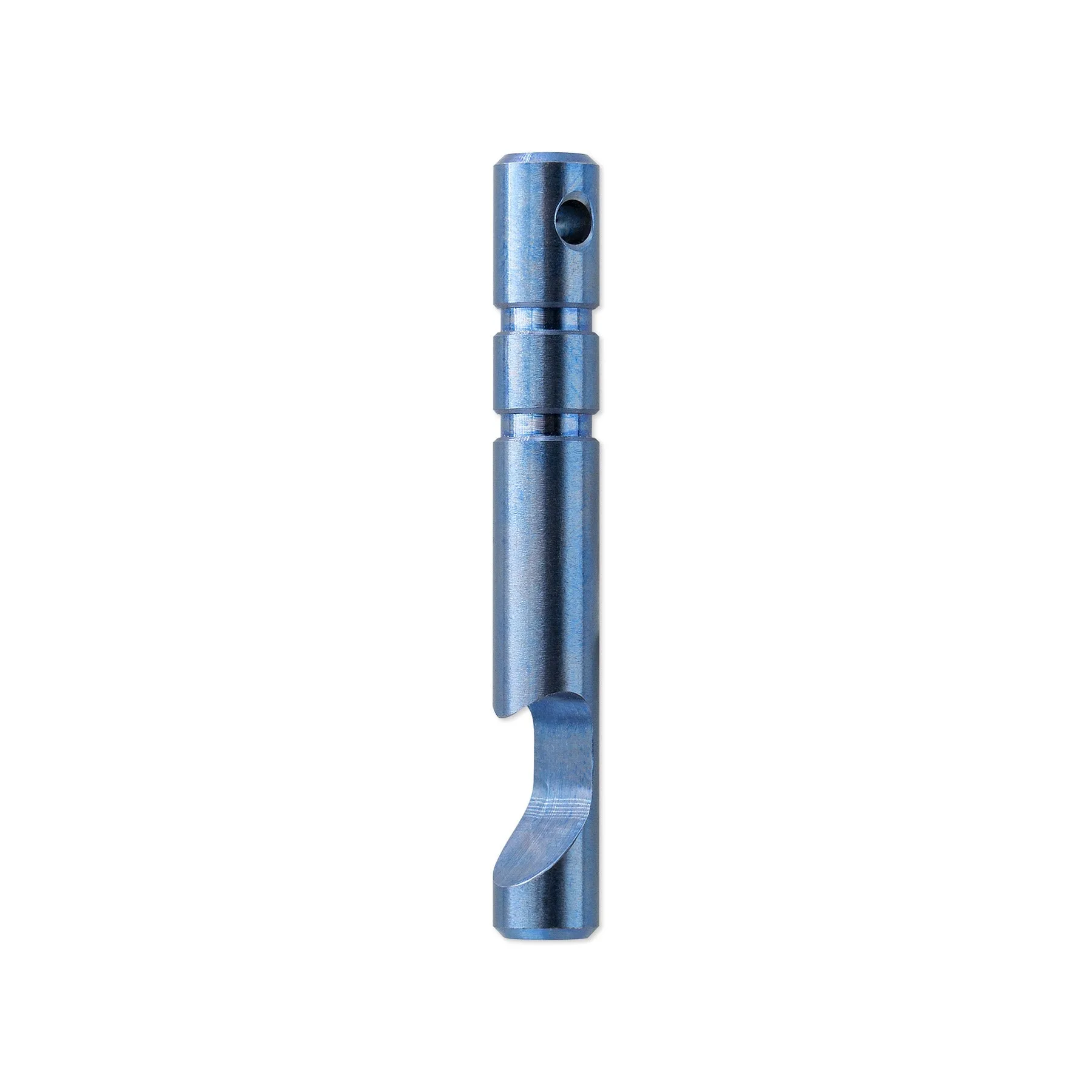
- Titanium Bottle Opener: The Titanium Bottle Opener is made in San Diego from lightweight 6Al-4V Titanium and is designed to be minimal on a key ring. It shows the kind of small, durable EDC tool that pairs well with a compact sharpener in a pocket or pack without adding bulk.
Who Should Carry the Work Sharp Pivot
Best for
- Hunters, campers, and tradespeople who need a fast field touch-up on a working knife
- EDC carriers who want a compact portable knife sharpener that fits in a pocket or glovebox
- Owners of fixed blades like the Serpent T - Ranger Green who want to maintain an edge without carrying stones
Not for
- Collectors or chefs who want a polished, refined edge and full control over angle
- Anyone repairing chips, reprofiling, or restoring a very dull knife
- Users who prefer a guided sharpening system or water stones for every sharpening task