Quick answer
The World Map Floor Puzzle is a hands-on way to introduce geography, but it works best for kids who enjoy floor-based activities and need a gentle start with world maps.
Why choose a floor puzzle over a wall map?
Floor puzzles invite kids to engage physically—spreading pieces on the floor, sorting by shape and color, and building the map step by step. This tactile process can improve spatial awareness and problem-solving skills more effectively than a static wall map.
Trade-off: space and supervision
Floor puzzles require a clear area on the floor, which may not suit small playrooms. Younger children might need help with piece placement, so plan for some guided playtime.
Decision rules for choosing a world map puzzle
- Age and ability: Check the recommended age on the puzzle. For younger kids (3-5), look for large, chunky pieces with bright colors. Older kids (6+) can handle smaller pieces and more detailed maps.
- Space available: Measure the floor area where the puzzle will be used. Floor puzzles typically need about 2-3 feet of clear space. If space is tight, consider a tabletop puzzle instead.
- Learning goals: Decide if you want to focus on country names, continents, or cultural landmarks. The World Map Floor Puzzle includes vibrant illustrations that encourage global thinking and cultural appreciation. If your child shows interest in specific countries, supplement with books or flashcards.
Product facts
-
World Map Floor Puzzle: Designed as both a mindfulness tool and educational activity, this interactive puzzle sparks curiosity, boosts focus, and encourages global thinking. It combines geography learning with mindfulness, helping children stay engaged while developing cultural appreciation.
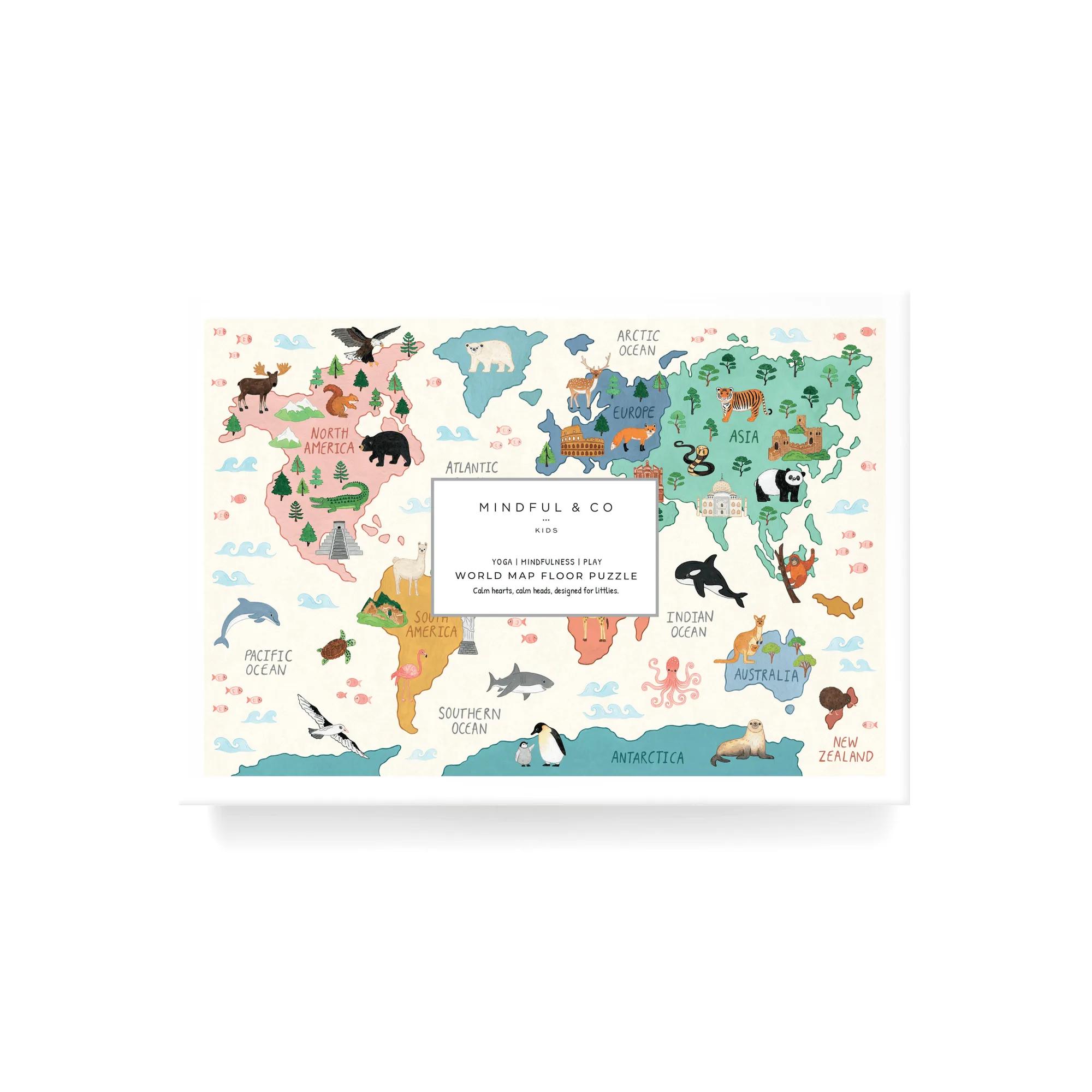
World Map Floor Puzzle
Who is this puzzle for?
Best for
- Kids who enjoy hands-on, floor-based activities
- Parents wanting a gentle, play-based introduction to world geography
Not ideal for
- Families with very limited floor space
- Children who prefer digital or screen-based learning tools