Why a Cork Block Supports Better Alignment
A yoga block is more than a height adjuster—it's a tool to help you find safe, stable alignment in poses where flexibility or strength is still developing. The JadeYoga Yoga Block, made from sustainably harvested cork, offers firm support that doesn't compress under weight. This stability lets you trust the block to hold your hand, hip, or sacrum exactly where you place it, making it easier to maintain proper joint position throughout a pose.
Cork also has a naturally grippy texture and is antimicrobial and water-resistant, so it stays clean and slip-resistant during sweaty practices. The block is available in two sizes: Small (3" x 4.75" x 9") and Large (4" x 6" x 9"). Choosing the right size depends on your body proportions and the poses you practice most.
JadeYoga Yoga Block at a Glance
-
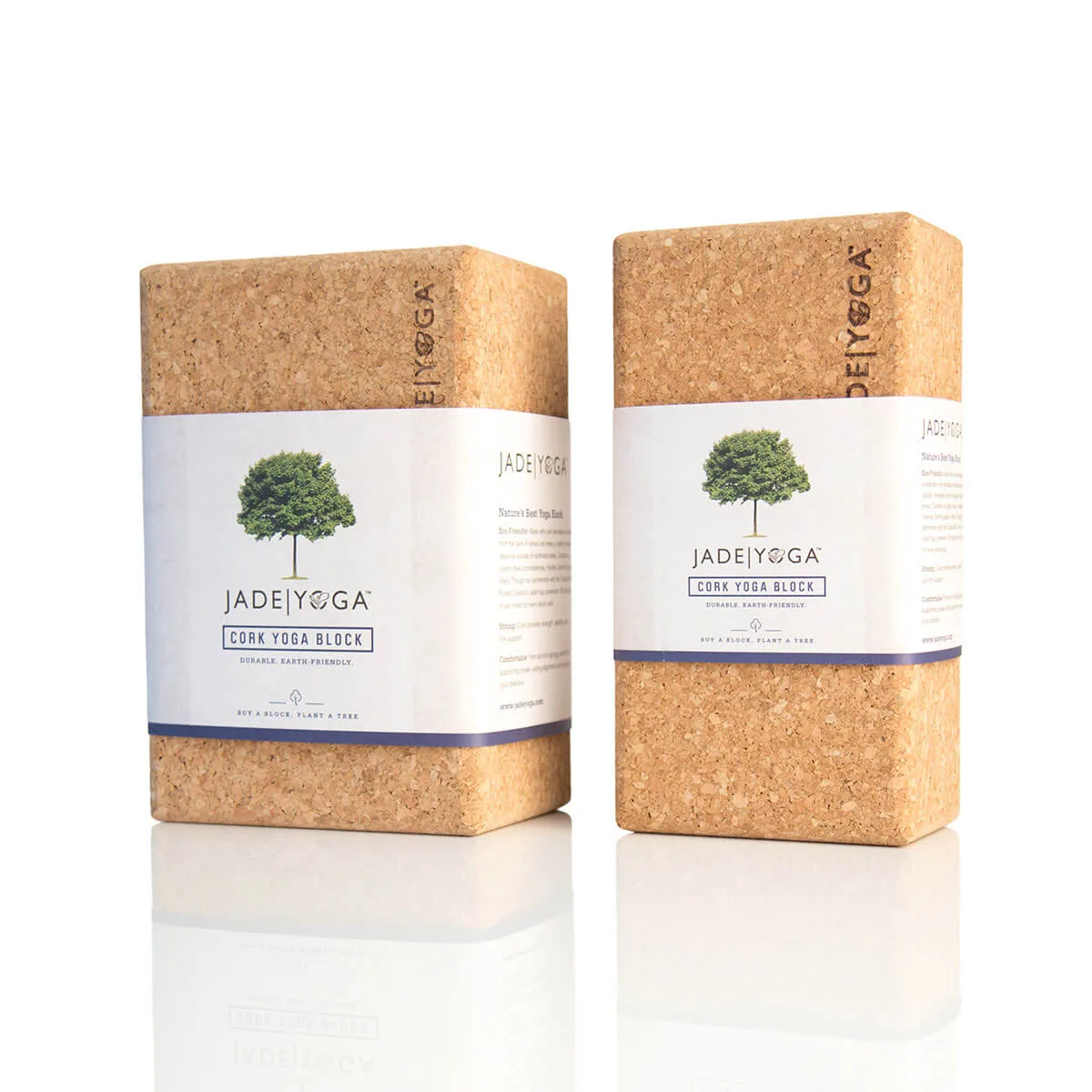
Yoga Block – JadeYoga: Made with sustainably harvested cork from Portugal; bark is harvested from native cork trees, a rapidly renewable resource. Cork is lightweight, firm, and naturally antimicrobial, making it a durable and hygienic choice for regular alignment work.
Yoga Block – JadeYoga
-
Yoga Block – JadeYoga: Available in Small (3" x 4.75" x 9") and Large (4" x 6" x 9") sizes. Blocks are sold individually. The Small size suits tighter spaces under the hand or sacrum; the Large offers a taller lift for deeper forward folds or standing balance work.
-
Yoga Block – JadeYoga: Naturally antimicrobial and water-resistant. Cork resists moisture and bacteria better than foam, so the block stays fresh even with frequent use in hot yoga or restorative sessions.
Using the Block Under Your Hand for Standing Poses
When your hand doesn't reach the floor in poses like Triangle (Trikonasana) or Half Moon (Ardha Chandrasana), place the block under your lower hand to bring the floor closer. This prevents collapsing into the lower back or straining the hamstrings.
- Choose the right height: Start with the block on its tallest side (6" for Large, 4.75" for Small). If that feels too high, rotate it to the medium height (4" Large, 3" Small) or flat side. The goal is a straight line from your bottom hand to your top shoulder.
- Place the block under your palm: Position the block directly under your shoulder, not off to the side. Press firmly into the block to engage your arm and shoulder muscles, which helps protect the wrist and creates space in the side body.
- Check your alignment: Your bottom hand, shoulder, and hip should stack vertically. If you feel a pinch in the lower back or can't keep the front leg bent enough, raise the block height or bring it closer to your foot.
Using the Block Under Your Sacrum for Restorative Poses
In supported bridge or legs-up-the-wall variations, placing the block under your sacrum (the flat bone at the base of your spine) can gently lift the pelvis and release the lower back. This is especially useful after long periods of sitting or standing.
- Set up the block on its lowest height: Lie on your back with knees bent and feet flat. Place the block under your sacrum with the widest side down. The block should sit snugly under the bony part of your pelvis, not the soft tissue of your lower back.
- Adjust for comfort: If the pressure feels too intense, slide the block slightly lower toward your tailbone, or switch to the Small size for a lower lift. You can also place a folded blanket on top of the block for extra cushioning.
- Relax and breathe: Stay for a comfortable duration, letting your legs relax. The block supports the natural curve of your lower spine without active effort from your glutes or hamstrings. Follow the product instructions for recommended hold times.
Using the Block for Seated Poses
Sitting on a block can help tilt your pelvis forward, which makes it easier to keep your spine long in forward folds, twists, and hip openers. This is especially helpful if your hamstrings or hip flexors are tight.
- Sit on the block's tallest or medium side: Place the block lengthwise or widthwise under your sitting bones. Experiment with height: the Large block on its tallest side (6") offers the most lift; the Small (4.75") provides a moderate lift. You want your knees to be at or below hip height.
- Position your feet and legs: In Staff Pose (Dandasana), press your hands into the floor beside your hips and lift your chest. For a seated twist, keep the block under both sitting bones and twist from your waist, not your lower back.
- Use the block between your thighs: For poses like Bound Angle (Baddha Konasana) or Butterfly, place the Small block between your inner thighs to activate the adductors and keep the knees from splaying too wide. Squeeze gently to engage the core and protect the groin.
Choosing the Right Size for Your Practice
The JadeYoga Yoga Block comes in Small (3" x 4.75" x 9") and Large (4" x 6" x 9"). If you're taller or have longer limbs, the Large block gives you more height for standing poses and a bigger surface for seated support. The Small block is more portable and works well for smaller hands, for placing between thighs, or for lower lifts under the sacrum. Both sizes are made from the same firm cork material, so the choice is purely about fit and the poses you do most.