Quick answer
For most bag and pouch projects, choose a nylon coil zipper with a long-pull slider; for jackets and outerwear, choose a molded plastic zipper with a separating bottom; for jeans, trousers, and heirloom garments, choose a metal zipper. Match the zipper size and tape width to your pattern, not to the fabric's weight alone, and buy the length slightly longer than the opening so you can shorten it cleanly.
Zippers are the one notion that can make or break a finished seam. Pick the wrong type and the zipper puckers, the slider jams, or the tape shows through your topstitching. Pick the right one and installation is almost invisible.
This guide walks through the three main zipper types, how zipper sizes and tape widths work, and the measurements to check before you buy. It closes with decision rules you can apply at the cutting table, plus a few Crosscut Sewing Co. notions that make zipper work easier.
The three zipper types you will actually use
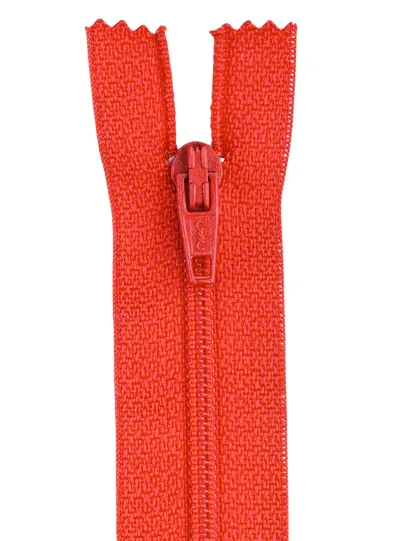
Nylon coil zippers are flexible, lightweight, and forgiving. The teeth are a continuous spiral of nylon, so they bend around curves and tolerate a slightly uneven seam allowance. They are the default for bags, pouches, pillow covers, and casual garments. Because coil teeth are soft, they are also the easiest type to shorten with flush cutters.
Molded plastic zippers have individual teeth molded onto the tape. They are stiffer and stronger than coil, which makes them a good match for outerwear, luggage, and heavy-duty totes. Metal zippers use brass or aluminum teeth and are the traditional choice for denim, trousers, and vintage-style garments. They are the heaviest and least flexible of the three, so they belong on straight openings rather than curves.
- Coil: best all-rounder for bags, pouches, and curves
- Molded plastic: best for jackets, luggage, and heavy loads
- Metal: best for jeans, trousers, and structured garments
Zipper sizes: what the numbers mean
Zipper size refers to the width of the teeth when the zipper is closed, measured in millimeters. A #3 zipper has roughly 3 mm teeth, a #5 has roughly 5 mm teeth, and so on. Size is not the same as length. A #5 zipper can be 7 inches or 22 inches long; the number tells you how chunky the teeth are, not how long the zipper is.
As a rule, dress and skirt zippers run #3, bag and pouch zippers run #5, and heavy outerwear or luggage zippers run #8 or #10. If your pattern specifies a size, follow it. If it does not, match the size to the project's weight and to the slider you plan to use. Sliders are size-specific, so a #5 slider will not fit a #3 zipper.
- Measure the closed teeth width, not the tape, to identify size
- Keep sliders and zippers in the same size number
- When in doubt on a bag, size up to #5 for durability
Tape width, length, and the measurements to check
Tape width is the fabric strip on either side of the teeth. Standard zipper tape is about 1 inch wide, but decorative and bag-specific zippers can be wider or narrower. If your pattern calls for a specific tape width, a wider tape may show outside the seam allowance. Narrow tape can be harder to pin but disappears more easily in a narrow seam.
Length is the most common source of returns. Buy a zipper that is at least as long as your opening, then shorten it from the top. Shortening from the top is simple: add a zipper stop, trim the excess tape, and sew across the teeth. Shortening from the bottom is much harder because the bottom stop and slider parking area are already set. For separating zippers, the length must match the opening exactly because you cannot shorten the separating end.
- Buy 1 to 2 inches longer than the opening when you can
- Shorten from the top, never the bottom, on closed-bottom zippers
- Separating zippers must match the opening length
Matching the zipper to the project
For a lined pouch or a simple tote, a #5 nylon coil zipper with a long-pull slider is the easiest choice. The coil flexes around the corners, and the long pull is easier to grab. For a jacket or a coat, choose a molded plastic separating zipper in a size that matches the pattern; the separating bottom lets the garment open fully. For jeans or trousers, choose a metal zipper in a size and length that matches the fly opening.
Home decor projects such as pillow covers and cushion backs usually call for a coil zipper that can be hidden in a seam. If the cover will be washed often, a polyester coil zipper holds up better than a metal one, which can tarnish or catch on lint. For heavy upholstery, a molded plastic zipper with a metal slider gives you the strength without the weight of a full metal chain.
- Pouches and totes: #5 nylon coil, long-pull slider
- Jackets and coats: molded plastic separating zipper
- Jeans and trousers: metal zipper sized to the fly
Zipper buying guide: what to check before you pay
Before you add a zipper to your cart, confirm four things: type, size, length, and slider compatibility. Type decides how the zipper behaves in the seam. Size decides how chunky it looks and what slider fits. Length decides whether you can install it without piecing. Slider compatibility decides whether the zipper will actually close. If any one of these is wrong, the zipper is the wrong zipper, even if the color is perfect.
Color matching is the last check, not the first. Zipper tape is usually matched to the fabric, but the teeth and slider can be a different finish. If you are working with a print, pull the zipper color from the darkest tone in the print so the teeth recede. If you are working with a solid, match the tape to the fabric and choose a slider finish that complements your hardware.
- Write the pattern's zipper size and length on your shopping list
- Check that the slider size matches the zipper size
- Buy one extra zipper for test-fitting the opening
Decision rules for choosing a zipper
- If the opening curves, choose coil: Nylon coil zippers bend around curves and tolerate slightly uneven seam allowances. Molded plastic and metal zippers resist bending and can pucker on curved openings. Coil is the safest choice for pouches, bags, and curved pillow openings.
- If the garment opens fully, choose separating: A separating zipper has a bottom that comes apart, which is required for jackets, coats, and cardigans. A closed-bottom zipper will not let the garment open fully. Check the pattern for the word separating before you buy.
- If the project takes heavy wear, size up: A #5 coil zipper handles most bags, but a #8 or #10 molded plastic zipper is a better match for luggage, heavy totes, and upholstery. The larger teeth distribute stress over more surface area. Match the zipper size to the load, not just the fabric weight.
- If the pattern specifies a size, follow it: Pattern designers choose a zipper size to match the seam allowance, the slider, and the finished look. Substituting a different size can change how the zipper sits in the seam and may require a different slider. Write the size and length on your shopping list before you browse.
- If you are unsure of the length, buy longer: A zipper that is too short cannot be lengthened. A zipper that is too long can be shortened from the top with a zipper stop and a few stitches across the teeth. Buy 1 to 2 inches longer than the opening when the pattern allows.
Notions that make zipper work easier
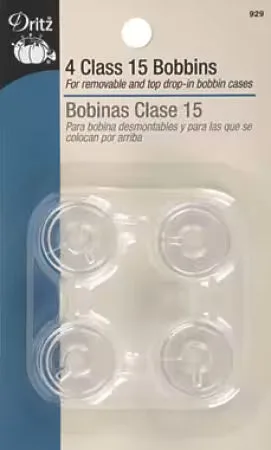
- Bobbin Plastic Class 15 4ct: Pack of 4 Class 15 plastic bobbins designed to fit machines such as Singer, Baby Lock, Brother, Riccar, Simplicity, and White. Zipper installation often means switching to a different thread color for topstitching. Having extra bobbins wound and ready lets you swap thread without stopping to rewind, and the Class 15 size fits many common home machines.
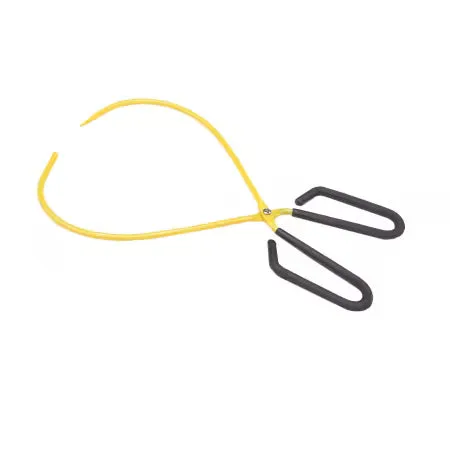
- EZ Point and Turner from Famore Cutlery: A larger point and turner tool with a soft handle grip, easy open and close, and a point that locks into a groove for turning. After you sew a zipper into a pouch or bag, the corners need to be turned and the zipper tape pressed flat. A point turner helps you push out corners without poking through the fabric, which is especially useful on lined zipper pouches.
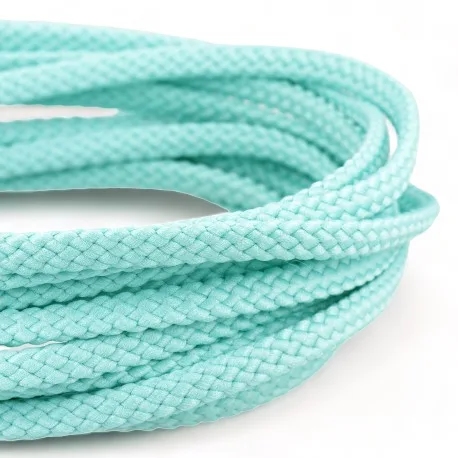
- Polyester Drawstring Cording - For the Crosscut Sewing Drawstring Backpack: 6 mm (1/4 inch) polyester cording sold in 3.5 yard pieces for the Crosscut Sewing Co. Drawstring Backpack Kit. If your zipper project is a bag, you may also be adding a drawstring closure. This cording is sized for the Crosscut drawstring backpack kit, so it is a practical add-on when you are already buying zipper supplies for a bag project.
Who this zipper guide is for
Best for
- Sewists choosing a zipper for a bag, pouch, or garment pattern
- Beginners who want a clear rule for zipper type, size, and length
- Shoppers restocking zippers who want to avoid returns
Not for
- Sewists looking for a step-by-step zipper installation tutorial
- Projects that require a specialty zipper such as an invisible or two-way zipper without a pattern reference
Choosing a zipper comes down to four checks: type, size, length, and slider compatibility. Start with the pattern's recommendation, adjust for the project's weight and curve, and buy slightly longer than you need. With the right zipper in hand, the installation is the easy part.