Quick Answer
Use the floor seat mode from 4 months (when your baby holds their head up) until they sit steadily, then switch to booster mode for mealtimes. Always secure the booster to a sturdy chair and check the seat's stability before each use.
Why a 2-in-1 Seat Makes Sense for Growing Families
A 2-in-1 floor and booster seat grows with your child, saving money and storage space. The floor seat gives your baby a safe, supported spot for play and tummy time, while the booster mode brings them to the table for family meals. Understanding each mode's purpose helps you use the seat confidently and safely.
Key Differences Between Floor and Booster Modes
The floor seat mode is designed for babies who can hold their head up (around 4 months) but aren't yet sitting independently. It provides a soft, supportive nest on the floor, perfect for play and interaction. The booster mode is for older babies and toddlers who are transitioning to solid foods and can sit upright in a regular chair. The booster raises your child to table height and secures them with a harness.
Step-by-Step Safety Guide
- Check age and head control: Use the floor seat mode only when your baby can hold their head up unassisted (typically around 4 months). Do not use the seat before this milestone, as neck and back support is not yet sufficient. If your baby's head still wobbles, wait a few weeks before starting floor seat time.
- Set up the floor seat on a flat surface: Place the floor seat on a clean, flat, and non-elevated surface. Never put the floor seat on a table, counter, or any raised area, as falls can cause serious injury. Always keep the floor seat on the floor—never on furniture or raised surfaces.
- Secure your baby in the floor seat: Position your baby so their back is against the seat back and their bottom is fully seated. Use the harness if included, and never leave your baby unattended. The soft foam sides provide support, but they are not a substitute for supervision. Stay within arm's reach while your baby is in the floor seat.
- Transition to booster mode at the right time: Switch to booster mode when your child starts solid foods and can sit upright without support (usually around 6 months or older). Ensure the booster is placed on a sturdy, stable chair with a solid seat and back. Avoid chairs that are wobbly or have thin seats. Test the chair's stability before placing your child in the booster.
- Secure the booster to the chair: Follow the manufacturer's instructions to attach the booster securely to the chair. Use all provided straps or clips and tighten them firmly. Check that the booster does not slide or shift when you push on it. Re-tighten straps before each use, as they can loosen over time.
- Use the harness every time: Always buckle your child into the booster's harness, even for short meals. The harness prevents your child from sliding or climbing out. Position the straps snugly but comfortably—you should be able to fit one finger between the strap and your child's chest. Never skip the harness, even if your child protests.
- Supervise and inspect regularly: Never leave your child unattended in either mode. Regularly inspect the seat for cracks, tears, or worn straps. Stop using the seat if you notice any damage or if your child exceeds the manufacturer's weight limit. Replace the seat if any part is damaged or if your child outgrows it.
Product Spotlight
-
My Little Seat® 2-in-1 Floor and Booster Seat - Blue: The Regalo Baby My Little Seat 2-in-1 Floor and Booster Seat is made of soft, durable expanded foam and is easy to clean. The foam construction makes it lightweight and comfortable, while the wipe-clean surface simplifies mealtime messes.
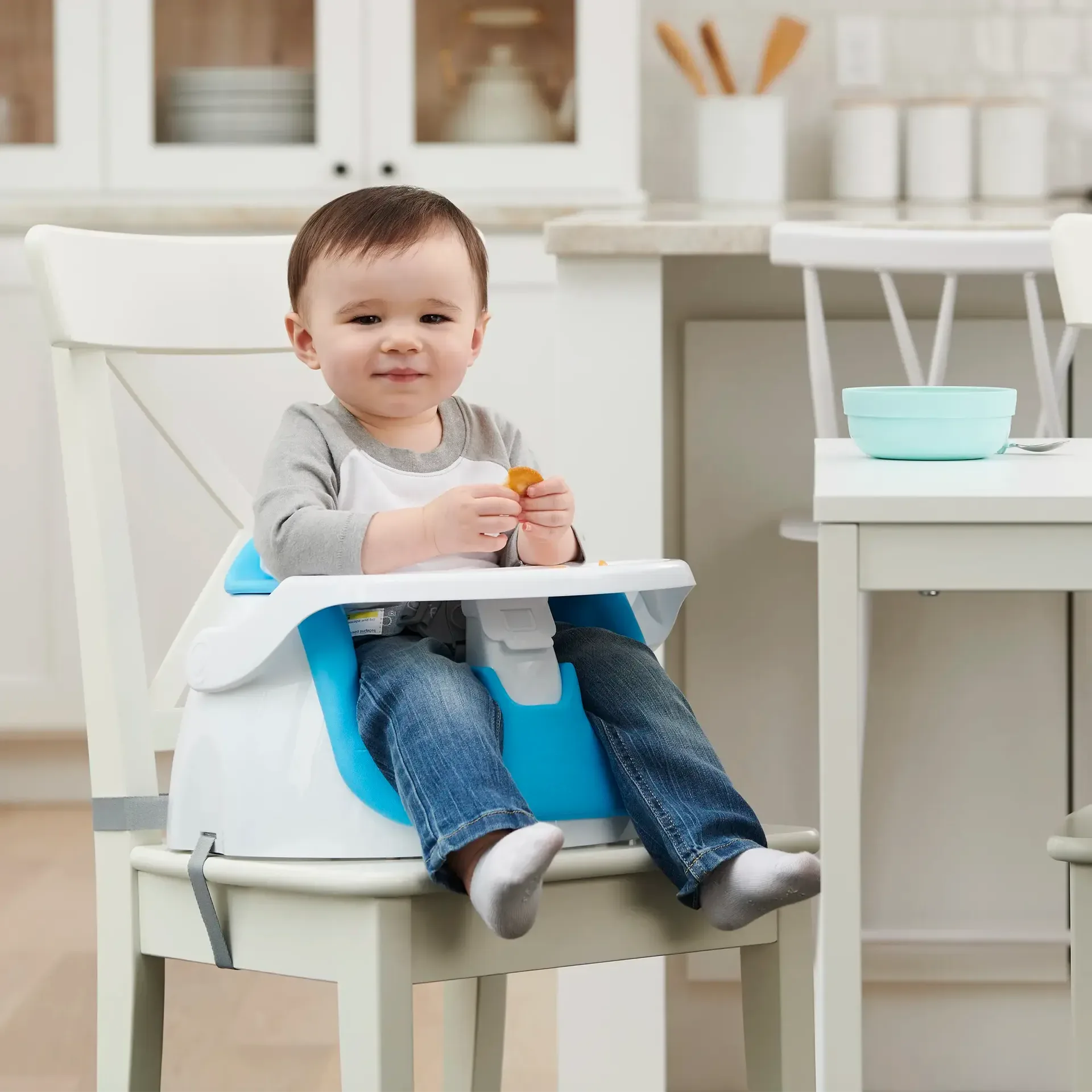
My Little Seat® 2-in-1 Floor and Booster Seat - Blue