Quick answer
Choose the 240 LED Bi-Color Video Light Panel if you shoot run-and-gun video, need to switch between 3200K and 5400K, and want a hot-shoe mount that travels light. Choose the 800 Watt Softbox Photography Studio Video Lighting Light Kit if you want soft, broad light for portraits or interviews and can work with a 5500K daylight-only setup. They solve different problems, so the right pick depends on whether you value color control and portability or softness and coverage.
What each light actually gives you
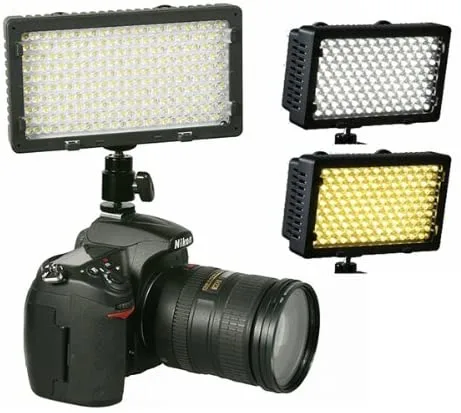
The 240 LED Bi-Color Video Light Panel is a camera-mountable unit with a standard hot shoe connection and a metal rotating mount. It lets you change color temperature between 3200K and 5400K and dim brightness, so you can match indoor tungsten or daylight without gels. The removable hot shoe piece means you can also use it off-camera when you need to.
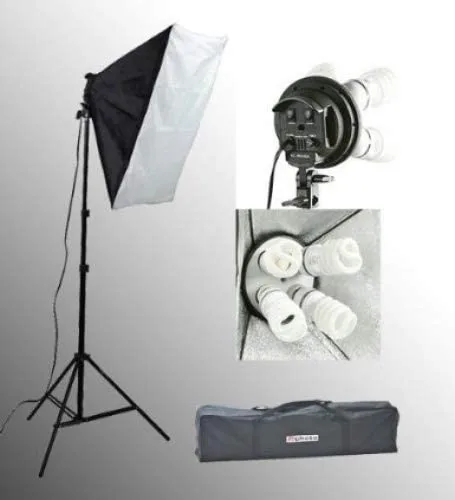
The 800 Watt Softbox Photography Studio Video Lighting Light Kit is a four-bulb continuous setup built around a 16 x 24 inch soft box. It includes a 4-light adapter head, four 45W daylight bulbs rated 5500K, a 6.5ft light stand, and a deluxe carrying case. This kit is designed to stay in one place and produce a broad, soft source rather than to travel on a camera.
Color control and output differences
The LED panel’s key advantage is variable color temperature across 3200K to 5400K. That range is useful when you move between rooms with different ambient light or need to warm up a shot without changing bulbs. The softbox kit, by contrast, uses 5500K daylight bulbs, so its color is fixed. If you need warmer or cooler output from the softbox, you would normally add gels or change bulbs, which are not included.
On output, the softbox kit spreads light across a larger area, which flattens shadows and flatters skin. The LED panel is smaller and more directional, so it is better for accent, fill, or on-camera use than for lighting a whole scene softly by itself. Neither option is inherently brighter in every situation; the softbox kit’s four bulbs and large modifier suit room-scale lighting, while the panel’s dimmer gives fine control close to the subject.
Setup, mounting, and portability
The LED panel mounts to a camera or camcorder hot shoe and includes a rotating metal mount, so it goes from bag to shooting in seconds. It is the easier choice when you are moving between locations or shooting handheld. The softbox kit requires assembling the adapter head, soft box, and stand, then positioning the 6.5ft stand where you need it. That is more work, but it also gives you a stable, stationary key light that does not sit on the camera.
If you already own a light stand, the panel can also be used off-camera, but you would need a bracket or clamp that is not included. The softbox kit includes its own stand and carrying case, so it is self-contained for studio or on-location setups where you can park the light.
Where the 3-softbox kits fit
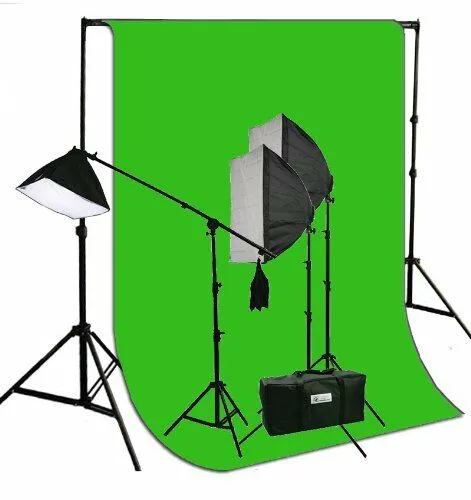
If you need multiple soft sources for a full three-point setup, the 3 Softbox Photography Video Studio Boom Stand Hair Chromakey Lighting Kit 6x9G includes three softboxes and adjustable output across four light outputs, with a claimed 2700 watts output. It is aimed at studio photography or videography and on-location projects where you want a main light plus fill and hair light. The 10x12 White Background Support & 3 Softbox Photography Video Boom hair Lighting kit similarly provides two large softboxes and one hair light softbox with a claimed 2000 watts output, plus a white background support. These kits cost more than the single softbox kit or the LED panel, so they make sense only if you need the extra lights and background support together.
Trade-offs at a glance
- Color flexibility vs fixed daylight: The LED panel adjusts 3200K-5400K and dims; the 800W softbox kit uses fixed 5500K bulbs. Pick the panel if mixed lighting is common; pick the softbox kit if you always shoot daylight.
- Portability vs soft coverage: The panel mounts to a hot shoe and travels light; the softbox kit needs a stand and assembly but spreads light over a larger area. Run-and-gun favors the panel; interviews and portraits favor the softbox kit.
- Single light vs multi-light kits: The 800W kit gives one softbox; the 3-softbox kits add fill and hair lights plus a background support option. Buy the multi-light kit only if you will use all three lights and have the space.
Product facts
- 800 Watt Softbox Photography Studio Video Lighting Light Kit: 1 x 4 Light Adapter Head, 1 x 16" x 24" soft box, 4 x 45w perfect day light bulbs 5500K, 1 x light Stands 6.5ft, 1 x deluxe carrying case A complete single-softbox setup with stand and case, but fixed 5500K daylight color means no warmth adjustment without gels.
- Professional 240 LED Bi Color Video Light Panel l with Color Temperature Switch 3200K-5400K and Brightness Dimmer CN240CH: Connects to the Standard Sized Hot Shoe Mount on your Camera/SLR or Camcorder, metal rotating hot shoe mount, 3200K-5400K color temperature and brightness dimmer, removable hot shoe piece Camera-mountable and color-adjustable, so it suits run-and-gun video where you cannot change bulbs or add gels.
- 3 Softbox Photography Video Studio Boom Stand Hair Chromakey Lighting Kit 6x9G: 3 softboxes, over 2700 watts output, light output adjustable with 4 light outputs, for studio photography or videography and on-location projects A three-light softbox kit for main, fill, and hair light, but it needs more space and setup than a single panel or one-softbox kit.
Which should you buy?
Best for
- Solo video shooters who need a camera-mounted, color-adjustable light
- Travel or on-location work where a hot-shoe panel is faster than a softbox and stand
- Anyone who needs to switch between 3200K and 5400K without gels
Not for
- Photographers who want a large, soft key light for portraits or interviews
- Studio setups that need multiple soft sources and a background support
- Buyers who want a fixed daylight look and do not need dimming or color control