Quick answer
A 300mm rim is the middle ground of sim racing: small enough to feel quick and direct for formula and prototype cars, large enough to stay comfortable and controllable for GT and road cars. If you drive a mix of cars and only want one rim, 300mm is usually the safest diameter to buy first.
Rim diameter is one of the few sim racing choices you feel in every single lap, yet it rarely gets the attention that force feedback settings or pedal load cells do. A 300mm wheel sits between the tiny formula-style rims and the full-size round wheels, and that position is exactly why it suits so many rigs.
This guide answers the questions that come up most often when people consider moving to a 300mm sim racing rim, including how it changes steering feel, who it suits, and what to check before you buy.
What does a 300mm rim actually change?
Diameter changes the leverage your hands have on the wheel and the distance your hands travel through a corner. A smaller rim needs less hand movement to reach a given steering angle, so corrections feel faster and more direct. A larger rim spreads that same rotation over more travel, which smooths out small inputs and can feel less twitchy at speed.
At 300mm you get a middle setting. It is compact enough that quick counter-steers do not require big arm movements, but it still gives you enough circumference to hold a line smoothly in longer corners. That balance is why 300mm rims appear across so many different car types rather than belonging to one discipline.
- Drive mostly formula and prototype cars? A smaller diameter will feel more natural.
- Drive mostly GT and road cars? 300mm usually feels closer to the real thing.
- Split your time across both? 300mm is the compromise that rarely feels wrong.
Is 300mm better than a smaller formula rim?
Not better, just different. Smaller formula-style rims shorten your hand travel, which makes rapid inputs feel immediate and keeps your arms compact inside a tight cockpit. If your driving is dominated by high-downforce cars and you want that sharp, busy feel, a smaller rim delivers it.
The trade-off shows up in longer sessions and in cars with more steering lock. A 300mm rim gives your hands more room and reduces how much the wheel fights you through slow corners, which many drivers find easier to live with over a full stint. If you can only keep one rim on the rig, 300mm covers more situations without feeling like a compromise in any of them.
- Smaller rim: quicker feel, more effort per input, tighter hand position.
- 300mm rim: smoother inputs, more comfort over long stints, broader car coverage.
Does rim size affect force feedback strength?
Yes, indirectly. A larger diameter gives you more leverage, so the same force feedback torque feels easier to hold and resist. That can make a strong direct drive base feel more manageable, and it can also make fine details easier to read because your hands are not working as hard to keep the wheel steady.
The reverse is also true: a smaller rim transmits the same torque through less leverage, so it can feel heavier and more aggressive. Neither is more correct. It comes down to whether you want the wheel to feel light and precise or weighty and physical, and whether your base has enough headroom to keep the feel you like.
- If your base feels overpowering, a larger rim can tame it without changing settings.
- If your base feels weak, a smaller rim will make it feel stronger.
Will a 300mm rim fit my wheel base and button box?
Fit depends on the mounting pattern, not the diameter. The GSI GT 320 mm Wheel Rim uses a 70mm PCD bolt pattern, which is the common standard for sim racing button boxes and quick releases, and it is compatible with the GSI Interlock system. If your hardware follows that pattern, diameter is a preference choice rather than a compatibility problem.
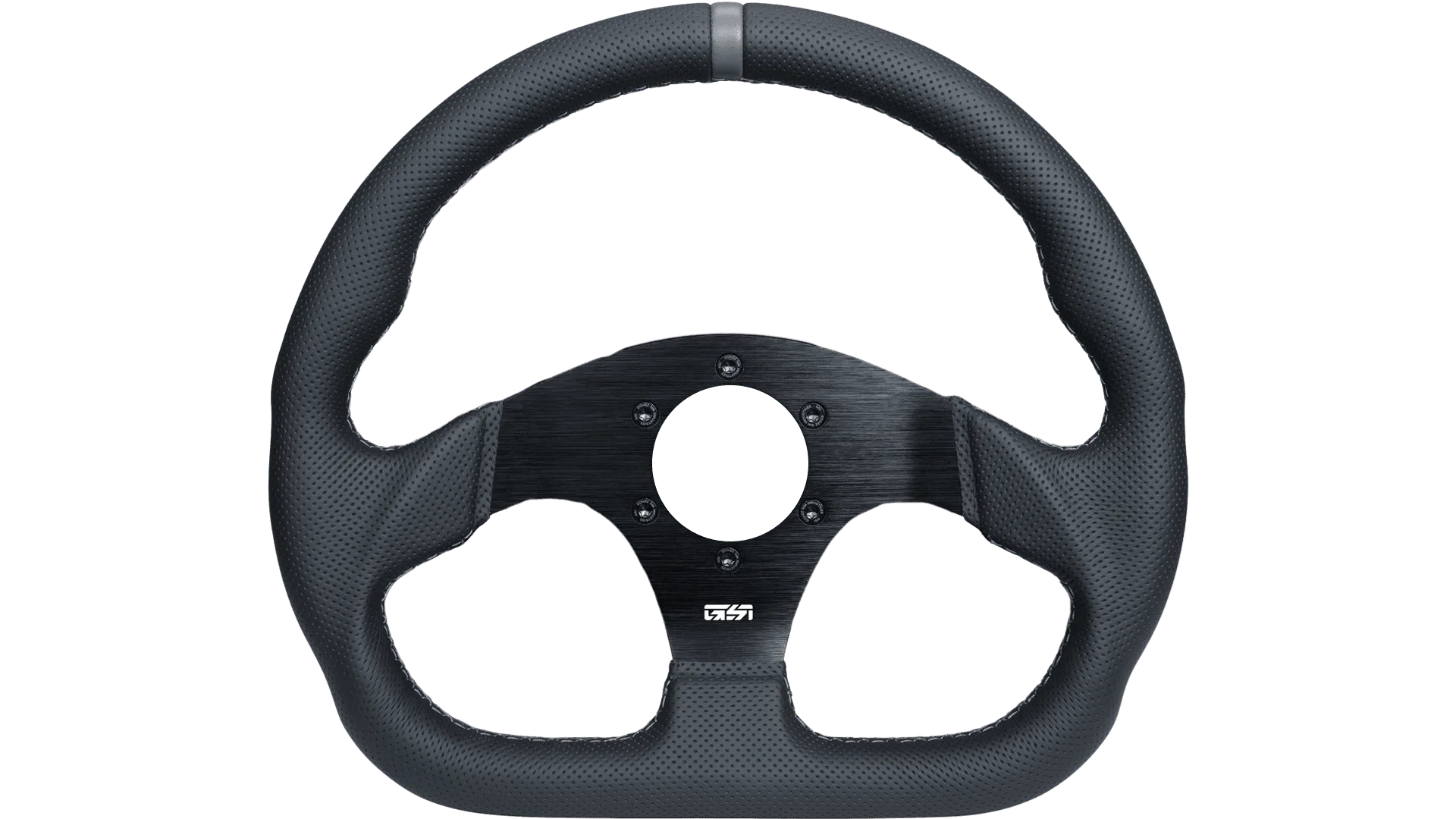
GT 320 mm Wheel Rim
Check two things before ordering: the bolt pattern on your button box or quick release, and whether the rim you want is sold as a bare rim or as part of a complete wheel. A bare rim needs a button box or hub to mount to, while a complete wheel like the GXL V2 includes its own controls and electronics.
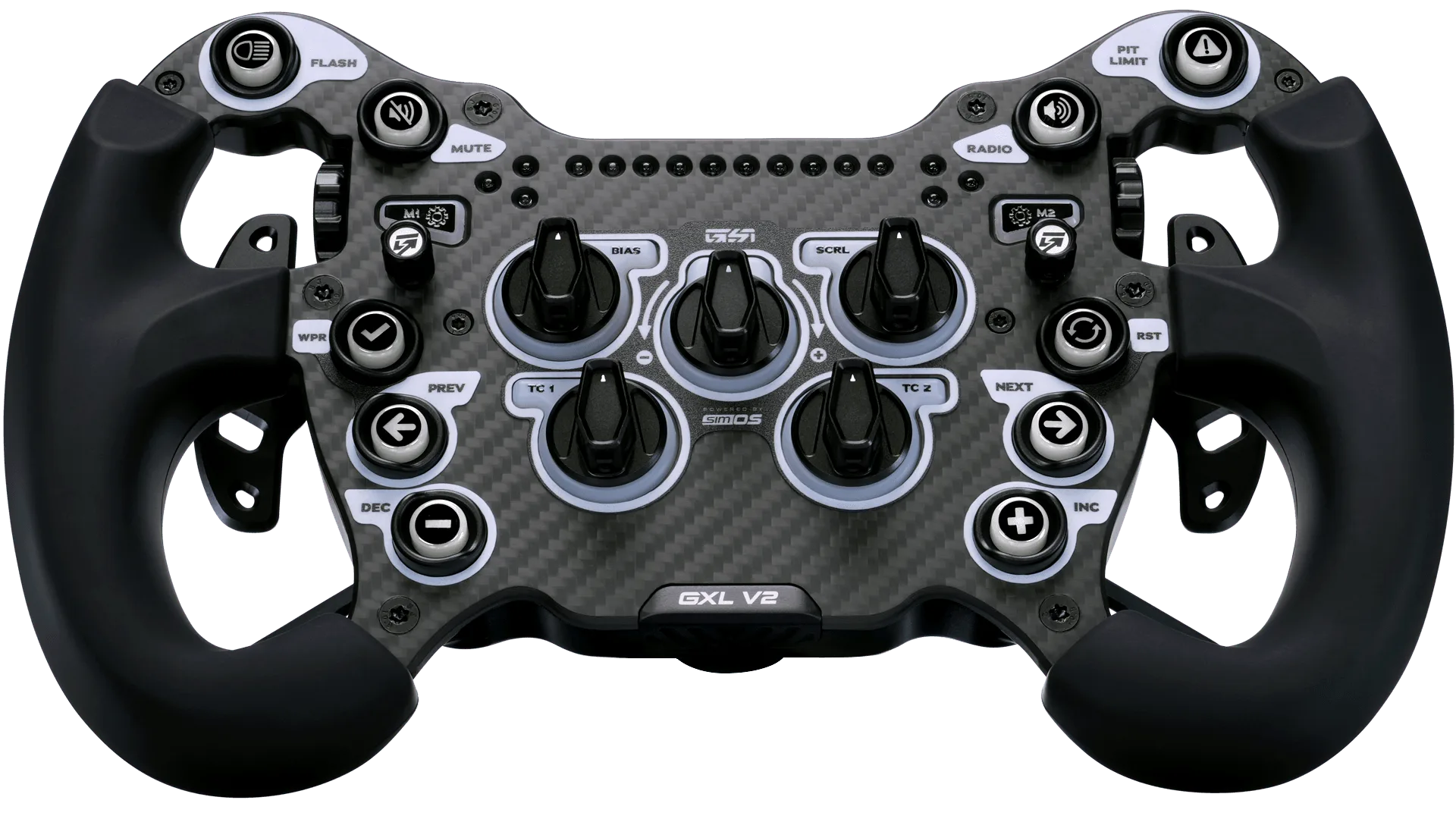
GXL V2
- Confirm 70mm PCD before buying a standalone rim.
- Decide whether you are buying a rim only or a complete wheel with electronics.
Is 300mm comfortable for long sessions?
Generally yes, and that is one of the quieter benefits of the size. Because your hands sit further apart and travel further per degree of rotation, the same corner requires less physical effort per input. Over a two-hour race that difference adds up, especially in cars with heavy steering loads or lots of lock.
Comfort also depends on shape and materials rather than diameter alone. Motorsport-inspired shapes are designed around natural hand placement, and a rigid alloy core keeps the platform stable so force feedback arrives as intended instead of being absorbed by flex. If you regularly run long stints, prioritize a rim that feels right in your hands rather than chasing the smallest or largest number.
- Long stints favor a slightly larger rim for reduced effort per input.
- A rigid core matters more than diameter for consistent feedback.
Should your first rim be 300mm?
For most people, yes. A 300mm rim is the least risky first purchase because it works acceptably across formula, GT, and road cars. You will not get the extreme sharpness of a small formula rim or the relaxed feel of a full-size round wheel, but you also will not find yourself wanting a different rim after a week.
If you already know your driving is narrow, buy for that instead. Dedicated formula racers can go smaller, and drivers who spend most of their time in road cars or drifting may prefer something larger. The 300mm recommendation is for the broad middle, not for every case.
- First rim and mixed car use: start at 300mm.
- Single-discipline driver: buy for that discipline instead.
Quick answers at a glance
What size is a 300mm rim in inches?
Roughly 11.8 inches across. For context, that sits between compact formula-style rims and full-size round wheels. If you have used a 320mm rim, 300mm will feel noticeably quicker to turn.
Does a 300mm rim make you faster?
No diameter makes you faster on its own. It changes how the car feels and how much effort each input takes, which can help you drive more consistently. Choose the size that matches the cars you drive, not the one with the biggest claimed advantage.
Can I swap rims without replacing my wheel?
Often yes, provided your button box or quick release uses the same bolt pattern. The GT 320 mm Wheel Rim uses a 70mm PCD pattern and works with the GSI Interlock system. Verify the bolt pattern first; it is the one spec that decides whether a swap works.
What if I cannot decide between sizes?
Start at 300mm. It covers formula, GT, and road cars well enough that you can learn your own preference before committing to a second rim. Buy the middle, then specialize once you know what you actually drive.
GSI products relevant to rim size
- GT 320 mm Wheel Rim: Engineered on a rigid alloy core, every GSI wheel rim provides a stable platform for precise control and accurate force feedback response. A rigid core means the force feedback you paid for reaches your hands instead of being softened by flex, which matters most when you are making small corrections at speed.
- GT 320 mm Wheel Rim: Compatible with the GSI Interlock system as well as sim racing button boxes that use a 70mm PCD bolt pattern. If your button box or quick release uses the 70mm PCD standard, this rim mounts without adapters, so you can change diameter without changing your whole wheel.
- GXL V2: The GXL V2 retains the same number of inputs and features as the FPE V2, but presents them in a sleek, screenless silhouette. A complete wheel like this already includes its controls, so it is the simpler route if you do not want to pair a bare rim with a separate button box.
- X-29 + Simucube 2 Pro Bundle: The GSI X-29 is our entry-level sim racing wheel that offers exceptional price to performance and is packed with features. If you are still deciding on diameter, a bundle lets you get a base and wheel together and put your budget toward driving rather than a second rim.
Rim diameter is a preference you can reason about rather than guess at. If you want one rim that handles formula, GT, and road cars without feeling out of place, 300mm is the sensible starting point, and the 70mm PCD standard makes it easy to change your mind later.