Quick Answer
Addison's disease (hypoadrenocorticism) is a serious but manageable endocrine disorder in dogs. Early recognition of symptoms like vomiting, trembling, and diarrhea is key, and treatment typically involves lifelong hormone replacement therapy under veterinary guidance.
Why Addison's Disease Is Often Missed
Addison's disease is sometimes called 'The Great Pretender' because its symptoms can mimic other common illnesses. Vomiting, trembling, and diarrhea often come and go, making it easy to dismiss as a stomach bug or stress. This waxing and waning pattern is a hallmark of the condition and can delay diagnosis for weeks or months.
Approximately 70% of dogs diagnosed with Addison's are female, though certain breeds see equal rates in males and females. Knowing this can help you advocate for your dog if symptoms persist without a clear cause.
What Causes Canine Hypoadrenocorticism
Addison's disease results from inadequate production of adrenal hormones, most often due to an immune-mediated destruction of the adrenal glands. Less commonly, it can be triggered by sudden withdrawal of steroid medications or by damage from other diseases. Genetics may play a role, but the exact trigger is usually unknown.
Treatment Is Lifelong but Manageable
Once diagnosed, Addison's disease is treated with hormone replacement medications (mineralocorticoids and glucocorticoids). Most dogs respond well and go on to live normal, active lives. Regular blood work and vet checkups are needed to adjust doses, especially during stress or illness. Owners should never skip doses or stop treatment abruptly.
How to Recognize and Act on Addison's Disease
- Common Symptoms: Watch for intermittent vomiting, diarrhea, trembling, lethargy, and loss of appetite. Symptoms often come and go, so keep a log of episodes. If symptoms appear and disappear without explanation, note the pattern and timing.
- Likely Cause: The most common cause is an immune system attack on the adrenal glands. Sudden steroid withdrawal or other adrenal damage can also trigger it.
- Corrective Action: Take your dog to the vet for blood tests (ACTH stimulation test is the gold standard). If diagnosed, your vet will prescribe hormone replacement medications and a monitoring schedule. Never try to treat Addison's at home. Lifelong veterinary supervision is essential.
- When to Stop or Choose Another Option: If your dog is in a severe Addisonian crisis (collapse, severe vomiting, shock), this is a medical emergency. Do not wait—go to an emergency vet immediately. For mild cases, always follow your vet's treatment plan rather than attempting home remedies. An Addisonian crisis is life-threatening. Seek emergency care without delay.
Recommended Resource
-
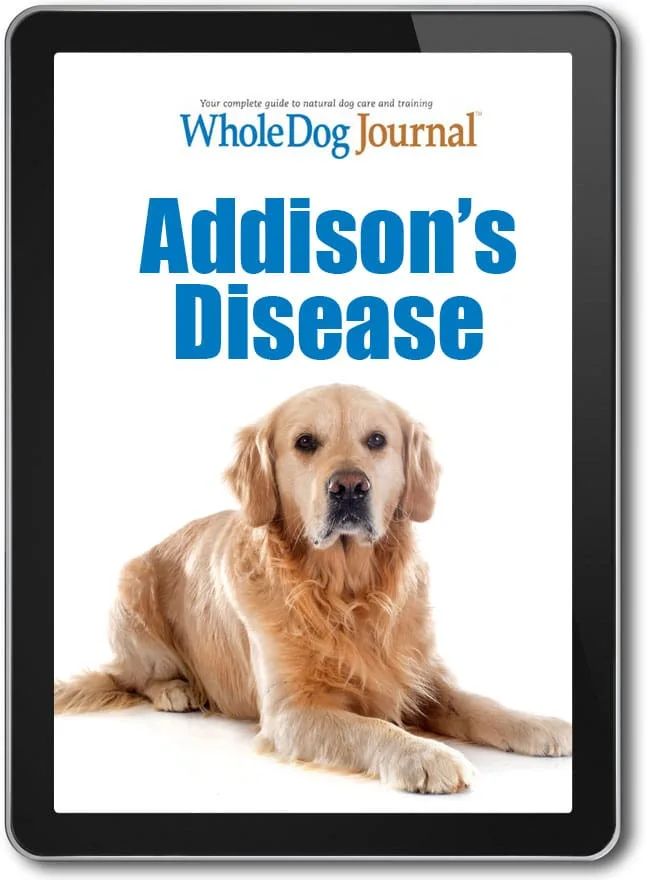
Addison’s Disease: From the editors of Whole Dog Journal, Addison’s Disease will teach you the facts (and fiction) about this insidious condition. Symptoms (including vomiting, trembling, and diarrhea) will often wax and wane, making it difficult to tell that your dog has this serious disease. About 70% of dogs with Addison’s are female (but for certain breeds males & females are equally affected). This guide helps owners recognize the subtle signs of Addison's disease and understand what to expect from diagnosis through long-term management.
Addison’s Disease