Quick answer
Wash printed crib sheets in cold water on a gentle cycle, then tumble dry low or air dry. Avoid bleach and fabric softener to protect the print and bamboo rayon fibers.
Why printed sheets need a gentler approach
Printed crib sheets, especially those with licensed characters like The Very Hungry Caterpillar or Grogu, use heat-set dyes bonded to bamboo rayon. Aggressive washing or high heat can fade the print or cause the fabric to pill over time. A gentle routine keeps the colors sharp and the sheet soft.
The 97% bamboo rayon, 3% spandex blend is naturally silky and stretchy, but it is also more delicate than cotton. High temperatures or harsh detergents can break down the spandex and dull the print. Stick to cold or cool water and skip the dryer sheets.
When to wash before first use
New printed sheets come with a small amount of manufacturing residue. A single cold wash without detergent removes any loose fibers and pre-shrinks the fabric slightly, ensuring a snug fit on a standard crib mattress (28 in x 52 in). Do not use fabric softener even on the first wash — it coats the bamboo fibers and reduces absorbency.
Step-by-step care for printed crib sheets
- 1. Pre-treat stains immediately: Blot fresh stains (spit-up, diaper leaks) with a damp cloth and a drop of mild detergent. Rub gently — do not scrub — to avoid damaging the print. For set-in stains, soak the sheet in cold water for 15 minutes before washing. Avoid hot water on stains; it can set protein-based stains like milk or formula.
- 2. Wash in cold water on gentle cycle: Turn the sheet inside out to protect the print. Use a mild, liquid detergent (no bleach, no fabric softener). Wash with like colors only. Overloading the machine can cause uneven cleaning and excess friction on the print. Fabric softener leaves a residue that reduces the sheet's natural softness and can yellow white areas of the print over time.
- 3. Dry on low heat or air dry: Tumble dry on low heat until slightly damp, then remove and lay flat or hang to finish drying. High heat can shrink the spandex and fade the print. If using a dryer, remove promptly to prevent wrinkles. Do not use dryer sheets or dryer balls with nubs — they can abrade the printed surface.
- 4. Iron only if needed, on low: If wrinkles remain after drying, iron the sheet on the lowest setting with a pressing cloth between the iron and the print. Never iron directly on the printed area — the heat can melt the dye layer. Most wrinkles fall out once the sheet is stretched over the mattress; ironing is rarely needed.
- 5. Store in a cool, dry place: Fold the sheet loosely and store away from direct sunlight, which can fade the print over weeks. Avoid storing in plastic bins that trap moisture — bamboo rayon needs breathable storage. Rotate between two or more printed sheets to reduce wear on a single print and extend the life of each.
Product facts
-
Crib Sheet in The Very Hungry Caterpillar™ and Friends: 97% Rayon made from Bamboo, 3% Spandex. 28 in x 52 in. The bamboo rayon blend is luxuriously soft but requires cold water and low heat to keep the print vibrant and the stretch intact.
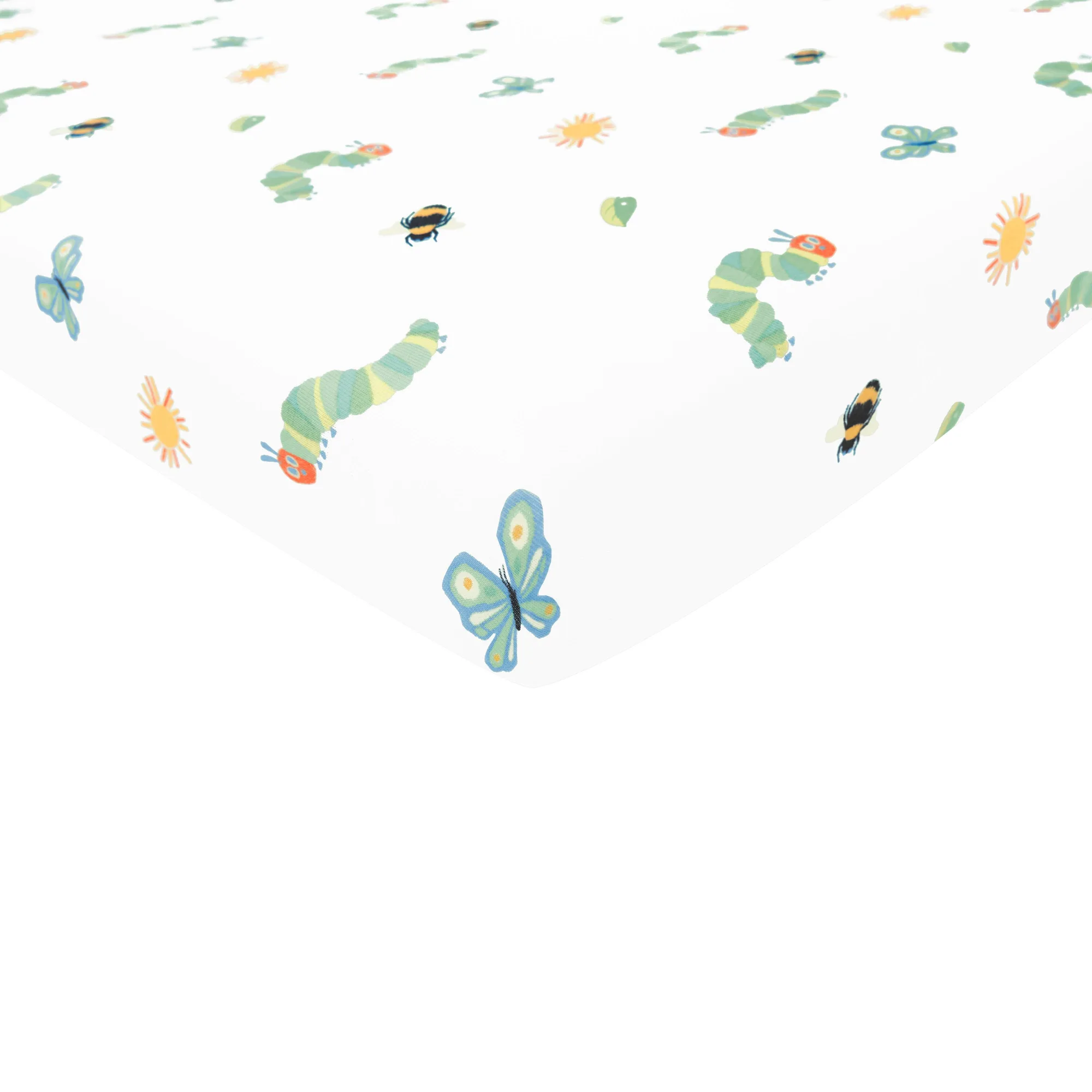
Crib Sheet in The Very Hungry Caterpillar™ and Friends
-
Crib Sheet in Grogu™: 97% Rayon made from Bamboo, 3% Spandex. 28 in x 52 in. The Grogu print uses heat-set dyes; cold washing and air drying prevent fading and keep the character art looking crisp.
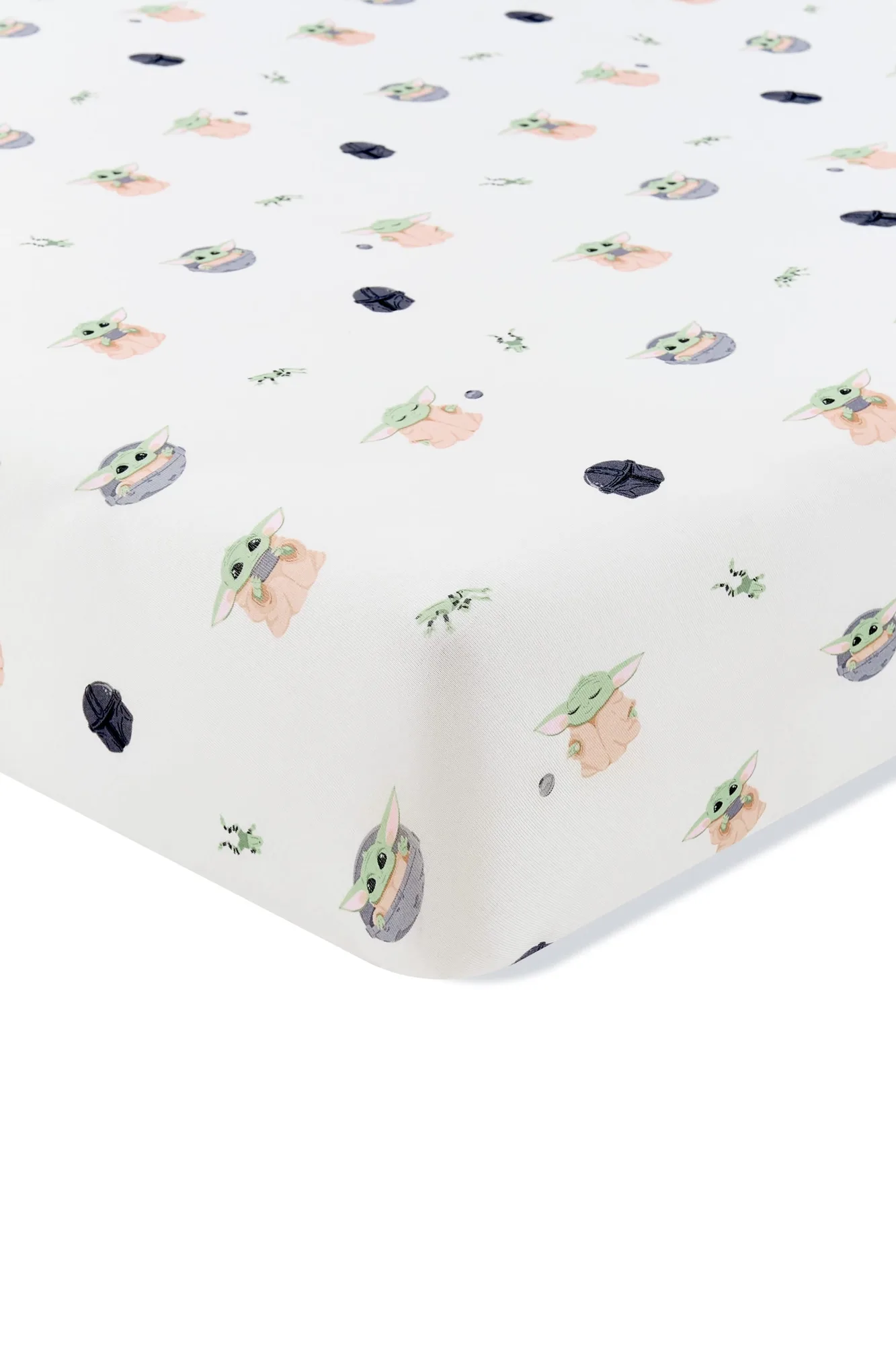
Crib Sheet in Grogu™
-
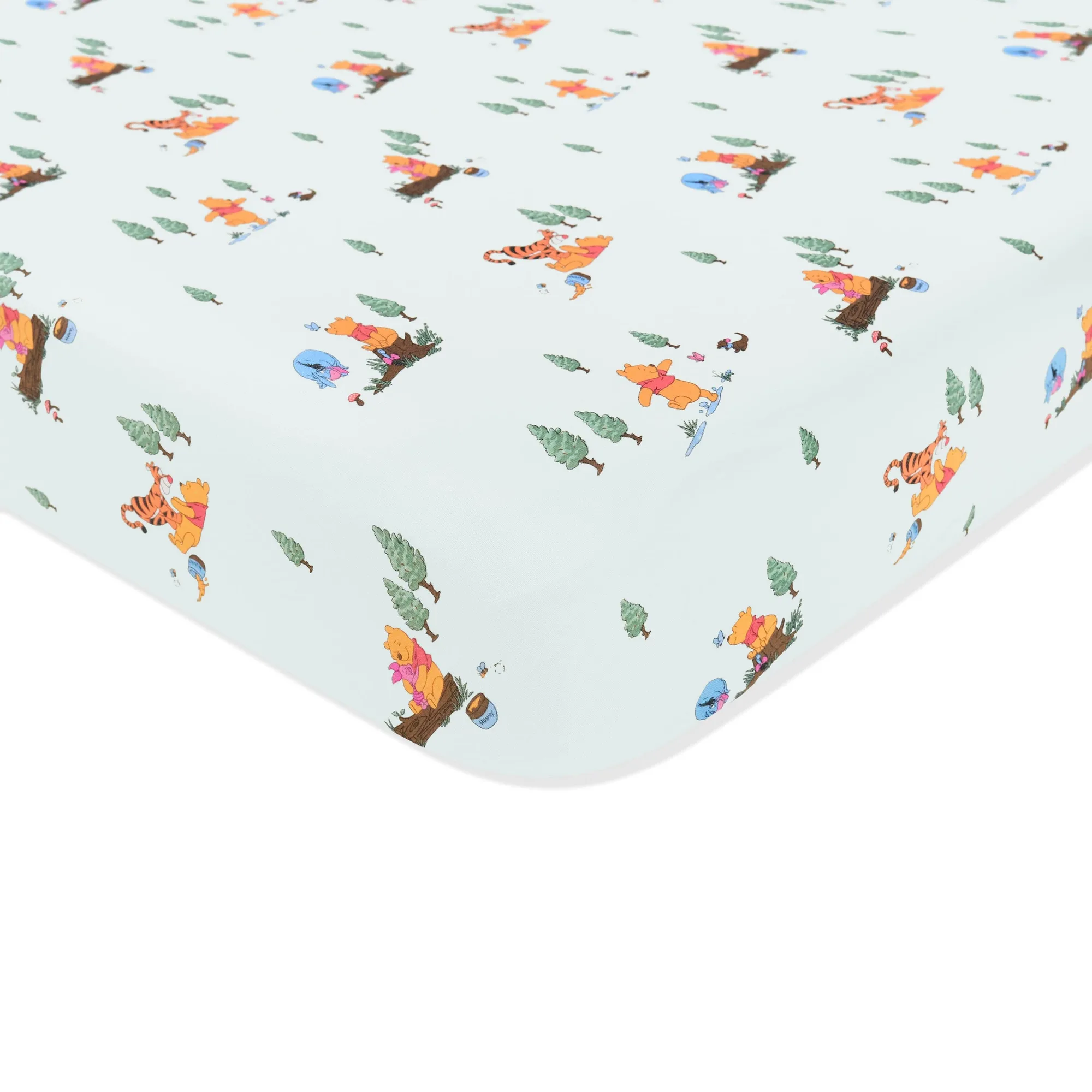
Crib Sheet in Winnie the Pooh Hundred Acre Wood: 97% Rayon made from Bamboo, 3% Spandex. 28 in x 52 in. Winnie the Pooh Hundred Acre Wood print stays colorful longer when you skip bleach and fabric softener, which can dull the print.