Your Incog X holster is engineered for a precise, comfortable concealed carry experience, but even the best holster needs occasional tuning. Retention—the amount of force required to draw and reholster your firearm—directly affects both safety and accessibility. Too tight, and your draw is sluggish; too loose, and your firearm may shift or even fall out during movement. Learning how to adjust retention on your Incog X holster ensures a secure fit that matches your personal carry style.
In this guide, we'll walk you through the retention adjustment process, from understanding the retention screw to testing and fine-tuning. We'll also cover common mistakes, maintenance tips, and how to tailor retention for different activities, whether you're carrying appendix, strong-side, or using a weapon light.
Understanding Retention on the Incog X Holster
Retention in a holster refers to the friction and mechanical grip that holds your firearm in place. The Incog X holster uses a tension screw system that allows you to adjust the pressure applied to the trigger guard or the frame of your pistol. This screw is typically located on the side of the holster, near the trigger guard area, and can be turned with a standard flathead screwdriver or an Allen key, depending on the model.
Proper retention is crucial for both safety and performance. If the retention is too low, your firearm could shift during movement, printing more noticeably or even falling out during a physical altercation. If it's too high, you may struggle to draw smoothly, which could cost you precious seconds in a defensive situation. The goal is to achieve a level where the firearm stays securely in place during vigorous activity but releases cleanly with a firm, deliberate draw.
- Check your holster's manual for the exact screw location and recommended torque.
- Retention preferences vary by carry position and personal comfort—there is no one-size-fits-all setting.
Tools You'll Need for Retention Adjustment
Before you start, gather the necessary tools. Most Incog X holsters come with a small Allen wrench or screwdriver, but if you've misplaced it, a standard #2 Phillips or flathead screwdriver may work. Some models with weapon lights might require a longer tool to reach the screw. Additionally, you may want a thread-locking compound (like blue Loctite) to keep the screw from backing out over time, and a soft cloth to protect the holster's finish.
It's also a good idea to have your unloaded firearm on hand for testing. Always follow firearm safety rules: ensure the gun is unloaded and clear before handling it near the holster. Never attempt retention adjustments with a loaded firearm.
- Use the correct size tool to avoid stripping the screw head.
- If you're using thread-locker, apply it sparingly to avoid excess that could interfere with the mechanism.
Step-by-Step: Adjusting the Retention Screw
Start by making small adjustments. Turn the screw clockwise to increase retention (tighten) and counterclockwise to decrease it (loosen). Begin with a quarter-turn and test the draw. This incremental approach prevents over-tightening, which can damage the holster or make the draw difficult.
To test, insert your unloaded firearm into the holster. It should seat fully with a distinct 'click' or firm stop. Then, try to shake the holster upside down—your firearm should stay in place. Next, practice your draw: the firearm should release smoothly without excessive force or wobble. If it feels too tight, loosen the screw slightly; if too loose, tighten it. Repeat until you find the sweet spot that balances security and accessibility.
For those using a weapon light, the retention point may be on the light itself. The Incog X Holster P365 Macro Weapon Light is designed to accommodate this, and the adjustment process is similar. Always ensure the light is securely attached to the firearm before adjusting retention.
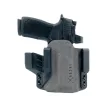
Incog X Holster P365 Macro Weapon Light
- Test retention in various positions—sitting, standing, and bending—to ensure the firearm stays put during movement.
- If you're carrying appendix, you might prefer a slightly higher retention to prevent shifting when you sit.
Common Mistakes and How to Avoid Them
One common mistake is over-tightening the retention screw, which can cause the holster to crack or the firearm to be difficult to draw. Another is ignoring the screw over time—due to vibration and use, the screw can loosen, so it's wise to check retention periodically. Some users also forget to account for the holster's break-in period; new holsters may need a few days of use before the retention settles.
Additionally, avoid using excessive force when inserting or drawing your firearm, as this can stress the holster and the retention mechanism. If you find that your Incog X holster is too tight even after adjustment, you may need to slightly loosen the screw and use the holster more to let the material conform. Conversely, if it's too loose, check that the screw hasn't backed out and that the holster is properly fitted to your specific firearm model.
- Always unload your firearm before making adjustments or testing.
- If you notice the screw is hard to turn, don't force it—check for debris or damage.
Maintaining Your Incog X Holster for Consistent Retention
To keep your retention consistent, clean the inside of the holster regularly. Dirt, lint, and moisture can affect friction and make the retention feel different. Use a soft cloth and a mild solvent to wipe the interior, avoiding harsh chemicals that could damage the polymer. Also, inspect the retention screw for wear and ensure it's tight, but not stripped.
Periodically, apply a small amount of thread-locker to the screw to prevent it from backing out during daily carry. This is especially important if you carry frequently or in high-heat environments. Additionally, if you switch between different firearms (e.g., a compact for summer and a full-size for winter), you may need to readjust the retention for each gun. The Incog X Holster Staccato 2024 C/CS Nonlight w/ Mag Caddy is a great option for those who want a dedicated holster for their Staccato, but if you share a holster between guns, be prepared to tune it each time.
- Store your holster in a cool, dry place when not in use to prevent warping.
- Check the retention screw every few weeks, especially if you carry daily.
Tailoring Retention for Different Carry Styles and Activities
Your carry style and daily activities should influence your retention setting. For appendix carry, you might prefer a slightly tighter retention to keep the firearm from shifting when you sit or bend. For strong-side carry, a moderate retention is often sufficient. If you're active—running, hiking, or training—you may want to increase retention to ensure the firearm stays put, but not so much that it hinders your draw.
The Incog X Holster S&W M&P M2.0 Nonlight w/ Mag Caddy is a popular choice for those who want a complete setup with a spare magazine. With the mag caddy, you'll also want to ensure the magazine retention is appropriate for your needs. While the focus here is on the holster, remember that your entire carry system should be tuned for comfort and security.
- Test your draw from various positions (sitting, standing, lying down) to ensure retention is consistent.
- If you carry while driving, check that the firearm doesn't shift when you reach for the seatbelt.
Adjusting retention on your Incog X holster is a simple yet critical step to ensure a secure and comfortable concealed carry experience. By following these steps and regularly maintaining your holster, you'll have confidence that your firearm is safely retained yet accessible when you need it. For those looking to upgrade or add to their carry setup, consider the Incog X® Holster Staccato CS/C2/P Nonlight, which offers the same adjustability and quality. Explore our full line of Incog X holsters to find the perfect fit for your firearm.

Incog X® Holster Staccato CS/C2/P Nonlight