Quick answer
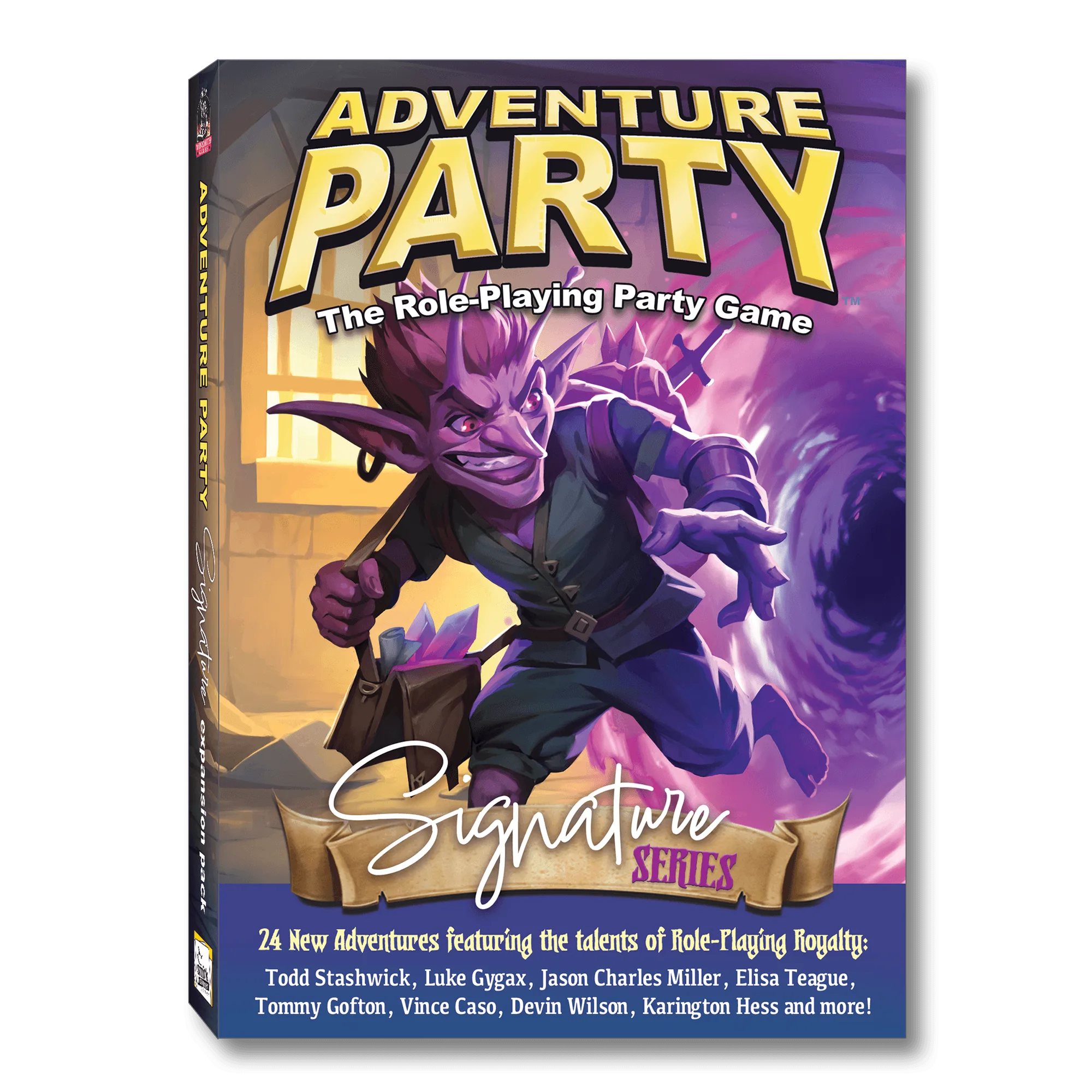
To add the Adventure Party Signature Series Expansion to your base game, first confirm you own Adventure Party: The Role-Playing Party Game, then open the expansion box and separate the 24 new scenario cards from any other components. Shuffle the new scenarios into your existing scenario deck or use them as a standalone set. During setup, follow the base game rules for character and player screen distribution, then draw a scenario as usual. No rule changes are needed; the expansion simply adds more scenarios.
Adventure Party: The Role-Playing Party Game
So you've got the Adventure Party Signature Series Expansion and you're eager to bring 24 new adventures to your table. The good news: integration is straightforward, but a few small steps will keep your game night running smoothly. This guide walks you through exactly how to add the expansion to your base game, from checking components to running your first new scenario.
Whether you're a seasoned GM or new to the party, these steps will help you avoid common pitfalls and get the most out of the new content. We'll also cover what to do if you're mixing old and new scenarios, and how to store everything so it's ready for next time.
What's in the Signature Series Expansion
The Signature Series Expansion includes 24 new adventure scenarios written by well-known role-playing celebrities. These are scenario cards that plug directly into your base game. You must own Adventure Party: The Role-Playing Party Game to use this expansion. There are no additional tokens, dice, or player screens included, so you won't need to swap out any physical components.
Because the expansion only adds scenarios, it's one of the easiest add-ons to integrate. You can mix these new scenarios with the base game's scenarios or play them as a separate set. The variety means you can tailor the tone of your game night, from silly to suspenseful, depending on which cards you draw.
- Check the box contents: you should have 24 scenario cards. If anything is missing, contact the retailer or publisher.
- Keep the expansion box for storage; it's a convenient way to separate new scenarios from base ones if you prefer.
Before You Start: Base Game Check
The most common mistake is trying to play the expansion without the base game. The Signature Series Expansion is not a standalone product. You need the base game's player screens, 20-sided dice, and core rules to play. If you don't own the base game yet, pick up Adventure Party: The Role-Playing Party Game first.
Once you have both, do a quick inventory of your base game components. Make sure you have enough player screens and dice for your group. The base game supports up to 3 unique adventure scenarios per session, but you can play multiple sessions to experience all 24 new ones.
- If your base game is missing pieces, the expansion won't fix that. Replace missing components before game night.
- Consider sleeving your scenario cards if you plan to mix them frequently; it keeps them distinguishable and protected.
Step-by-Step Integration
Start by deciding whether you want to mix the new scenarios with your existing deck or keep them separate. Mixing increases variety but can make it harder to find a specific scenario later. Keeping them separate lets you choose the expansion scenarios deliberately. Either way, shuffle the scenarios you plan to use thoroughly to ensure random distribution.
Next, set up the base game as usual: distribute player screens, hand out dice, and place any shared components in the center. Then, instead of drawing from the base game scenario deck, draw from your combined or expansion-only deck. The rest of the game proceeds exactly as the base rules describe. No additional rules are needed.
- If you're mixing decks, shuffle gently to avoid bending cards. Overhand shuffling works well for large decks.
- For your first game with the expansion, try playing with only the new scenarios so everyone experiences the fresh content.
Playing a Signature Series Scenario
Each scenario card presents a unique situation, such as sweet-talking a troll, battling the demon of sleep, or chasing an interdimensional thief. The base game's core mechanic remains: you roll your 20-sided die behind your player screen, then describe your character's plan of attack and the outcome with enough detail to convince the GM. The scenario provides the context and goals.
Even if you roll a 1, it isn't a failure; it's just a twist in the story. The expansion scenarios are designed to encourage creative interpretation, so lean into the narrative. The GM should read the scenario aloud and then let players react. There's no need to memorize new rules; the same roll-and-describe loop applies.
- Encourage players to justify their actions based on the scenario details; it makes the game more immersive.
- If a scenario references a specific item or character, feel free to adapt it to your group's playstyle.
Common Mistakes and How to Avoid Them
One frequent error is assuming the expansion changes the core rules. It doesn't. Another is forgetting to bring the base game's dice or screens. Since the expansion only adds scenarios, you still need all base components. Also, don't shuffle the expansion cards into the base deck without checking if any scenarios are meant to be played in a specific order; the expansion scenarios are standalone, so order doesn't matter, but mixing thoroughly is key.
Finally, some groups try to play all 24 scenarios in one night. That's a lot of adventuring. Pace yourselves; each scenario can take 20-30 minutes, so plan for a few sessions to see them all.
- Set a scenario limit per session, like 2-3, to keep energy high.
- After playing, note which scenarios you've completed to avoid repeats.
Integration steps at a glance
- Verify base game ownership: Ensure you have Adventure Party: The Role-Playing Party Game. The expansion cannot be played alone. Checkpoint: If you don't own the base game, purchase it before game night.
- Unpack and separate scenarios: Open the Signature Series Expansion and remove the 24 scenario cards. Keep them separate from base scenarios if you want to choose deliberately. Checkpoint: Count the cards to confirm you have all 24.
- Decide on mixing or standalone: Choose whether to shuffle new scenarios into the base deck or use them as a standalone set. Mixing adds variety; standalone gives control. Checkpoint: For first play, standalone is often easier to manage.
- Set up the base game as usual: Distribute player screens, dice, and any shared components per the base rules. No extra setup is needed for the expansion. Checkpoint: Make sure every player has a screen and a d20.
- Draw and play a scenario: Draw from your chosen scenario deck and follow the base game's roll-and-describe procedure. The scenario provides the narrative context. Checkpoint: Remind players that a roll of 1 is not a failure; it's a story twist.
Product facts
- Adventure Party Signature Series Expansion: MUST OWN THE BASE ADVENTURE PARTY GAME TO PLAY. The Signature Series expansion delivers 24 exciting new adventure scenarios penned by some of your favorite role-playing celebrities. You cannot play this expansion on its own; it requires the base game. The 24 scenarios offer significant replay value and variety.
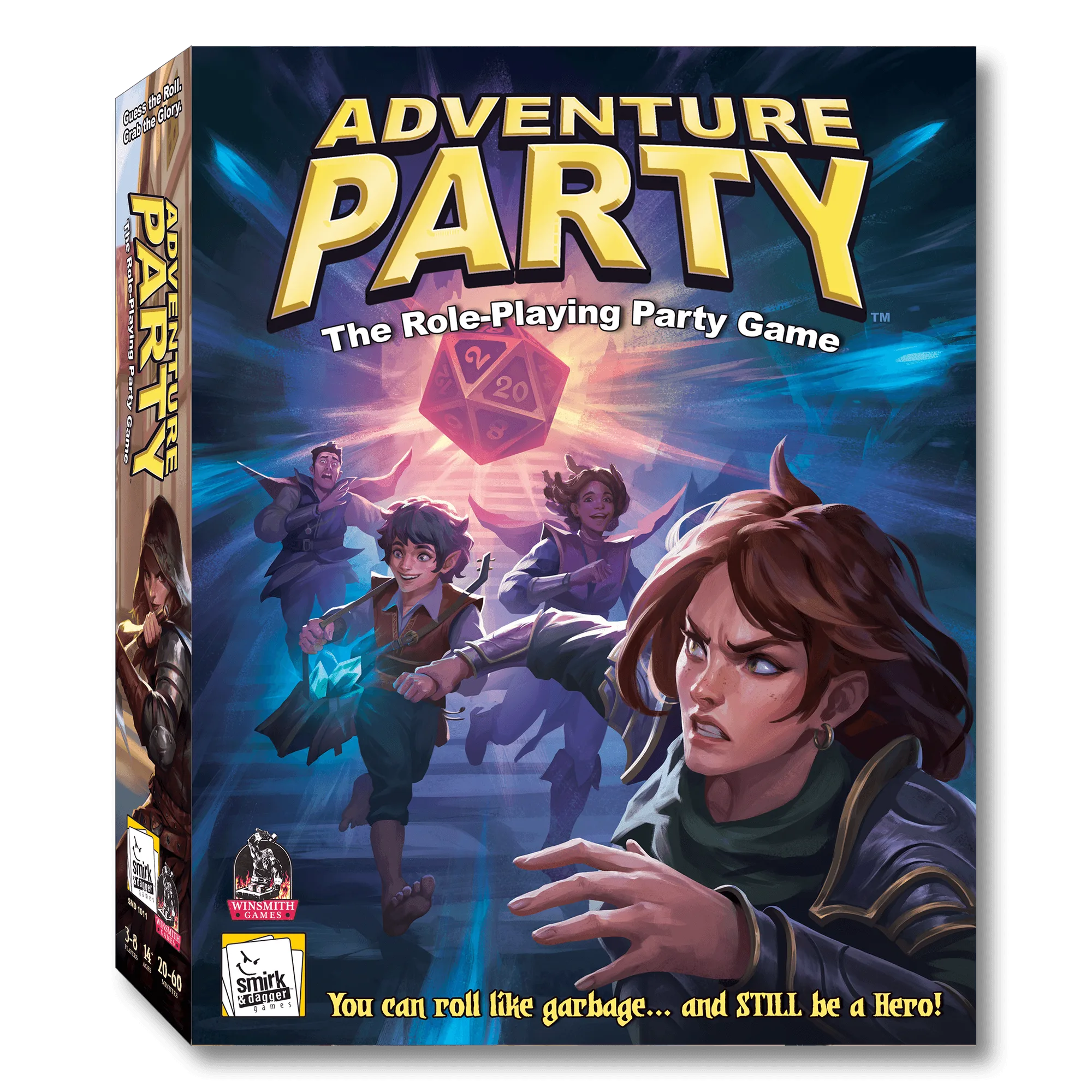
- Adventure Party: The Role-Playing Party Game: A cooperative, party-weight, guessing game that delivers a robust role-playing experience. You and your friends are classic fantasy characters facing up to 3 unique adventure scenarios - but you will be rolling your 20-sided die behind your player screen so no one can see the result. This is the required base game. Its hidden-roll mechanic is central to play, and the expansion builds on that without changing the core loop.
Adding the Adventure Party Signature Series Expansion is a simple way to breathe new life into your base game. With 24 fresh scenarios, you'll have plenty of adventures to explore. Just remember to bring the base game, shuffle well, and enjoy the stories that unfold.