Why one carrier can work across seasons
A carrier that adapts to both warm and cold conditions saves you from buying multiple carriers as your baby grows. The GROWNSY All-Season Ergonomic Infant Carrier includes a built-in zippered mesh panel that you can open for airflow in summer and close for insulation in winter. This single feature lets you regulate temperature without changing carriers. The carrier also comes with a sleeping hood for sun protection and warmth, and it offers two buckle positions: lower buckles for 0–4 month infants and upper buckles for babies 4 months and older. These adjustable support points help maintain proper spinal alignment and ergonomic growth as your baby develops.
Hot weather: keep air moving
In warm weather, your baby's comfort depends on breathability. Start by opening the zippered mesh panel on the carrier to allow air to circulate. Dress your baby in light, breathable fabrics—think cotton or moisture-wicking materials—and avoid thick or synthetic clothing that traps heat. The mesh panel alone won't cool a baby who is overdressed, so check for signs of overheating such as flushed skin, sweating, or fussiness. If you're outside on a sunny day, use the sleeping hood to shade your baby's head and face, but make sure it doesn't block airflow. For hands-free convenience, the carrier's zippered pocket can hold a small water bottle or a lightweight muslin cloth for quick cooling. Remember that the carrier itself doesn't generate cooling; it simply allows you to increase ventilation. Always monitor your baby's temperature and adjust layers accordingly.
Built-in ventilation and sun protection
-
All-Season Ergonomic Infant Carrier with Newborn Support: Built-in zippered mesh panel allows airflow in summer and insulation in winter. This feature lets you adapt the carrier to hot or cold conditions without buying a second carrier.
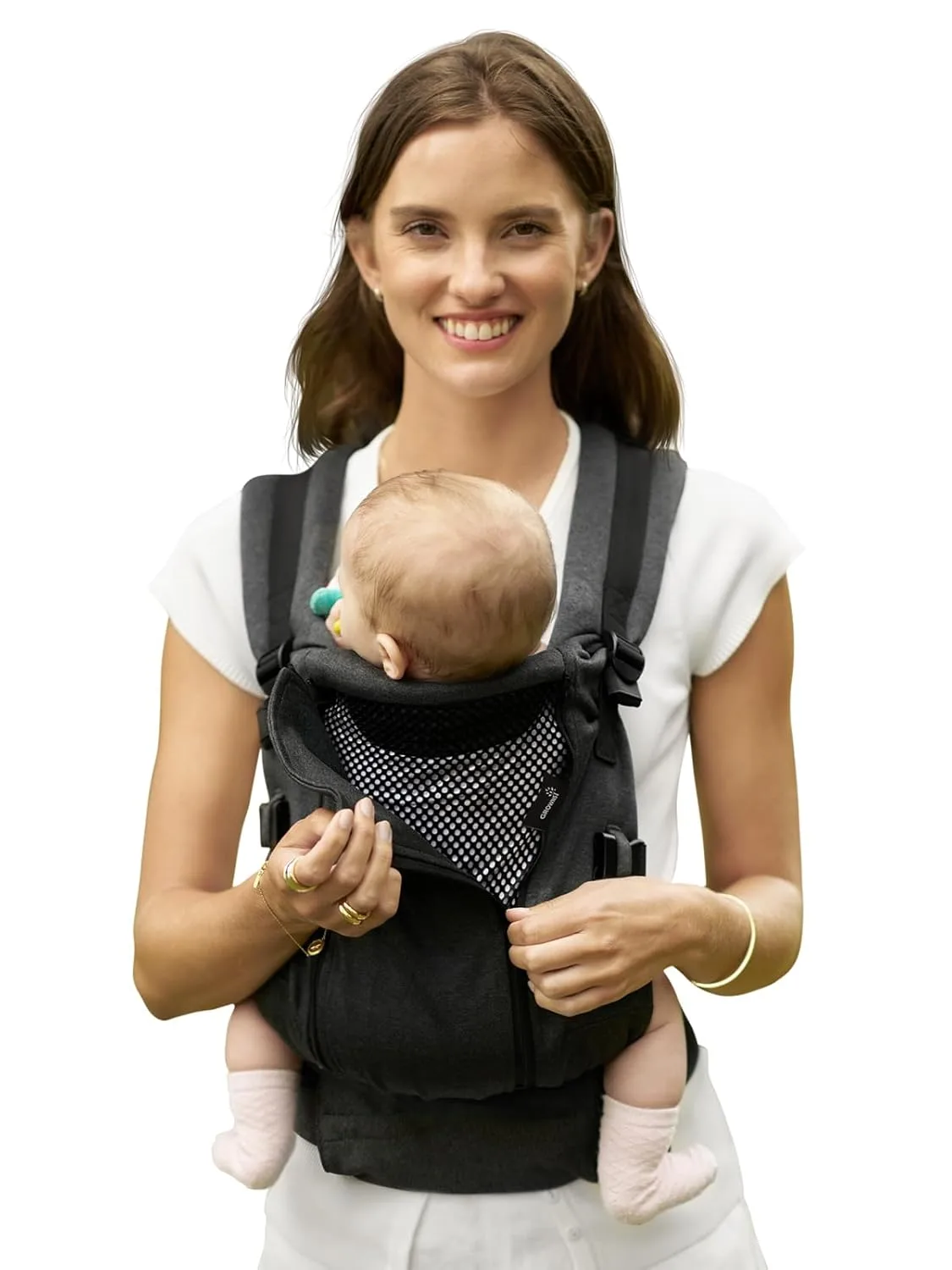
All-Season Ergonomic Infant Carrier with Newborn Support
-
All-Season Ergonomic Infant Carrier with Newborn Support: Comes with a sleeping hood for added sun protection and warmth. The hood provides shade on sunny days and extra warmth on chilly ones, making the carrier more versatile.
Cold weather: layer smart, not bulky
When temperatures drop, your instinct might be to bundle your baby in thick layers. But bulky clothing can interfere with the carrier's fit and make it harder to achieve proper support. Instead, dress your baby in thin, warm layers—such as a long-sleeve bodysuit and a fleece jacket—and close the carrier's mesh panel to trap warmth. The sleeping hood can be pulled up to cover your baby's head and neck for extra insulation. If it's very cold, consider a carrier cover or a blanket tucked around the outside of the carrier, but avoid adding thick layers between your baby and the carrier, as this can affect the ergonomic position. The carrier's X-shaped shoulder straps and padded waist belt evenly distribute weight, reducing back pressure for you, so you can stay comfortable even when wearing extra layers yourself. Always check that your baby's airway is clear and that the carrier is snug but not restrictive.
How to adjust the carrier for seasonal comfort
- Step 1: Open or close the mesh panel: For hot weather, unzip the mesh panel to increase airflow. For cold weather, zip it closed to retain warmth.
- Step 2: Choose the right buckle position: For babies 0–4 months, use the lower buckles to support a natural spinal position. For babies 4 months and older, switch to the upper buckles to accommodate growth.
- Step 3: Dress your baby appropriately: In heat, use light, breathable fabrics and avoid overdressing. In cold, use thin, warm layers and close the mesh panel. Avoid bulky clothing that can interfere with the carrier's fit.
- Step 4: Use the sleeping hood: In sun, use the hood for shade. In cold, use it for warmth. Ensure it doesn't cover your baby's face in a way that restricts breathing.
- Step 5: Check fit and comfort: After adjusting, ensure your baby is securely positioned with knees higher than bottom and back supported. The carrier should feel snug but allow room for breathing.
What about newborns and older babies?
The carrier's two buckle positions are designed to support your baby as they grow. For newborns (0–4 months), the lower buckles help maintain a rounded back and supported legs, which is important for healthy hip development. For older babies (4 months+), the upper buckles allow for a more upright carrying position as their neck and torso strength improves. Always follow the manufacturer's guidelines for weight and age, and consult your pediatrician if you have concerns about your baby's positioning. The carrier's ergonomic design aims to distribute weight evenly for the wearer, but you should still adjust straps for a personalized fit.
Ergonomic support for every season
- All-Season Ergonomic Infant Carrier with Newborn Support: Features lower buckles for 0–4 month infants and upper buckles for babies 4 months+, ensuring proper spinal support and ergonomic growth at every stage. This adjustability means the carrier can accommodate your baby's changing needs across seasons and developmental stages.
- All-Season Ergonomic Infant Carrier with Newborn Support: X-shaped shoulder straps and a padded waist belt evenly distribute weight, reducing back pressure for long-lasting wearing comfort. Comfort for the wearer is crucial for longer outings in any weather, and this design helps reduce fatigue.
Practical checkpoints for any season
Before each use, check that the carrier is properly adjusted and that your baby is secure. In hot weather, feel your baby's chest or back for overheating—if it's damp or very warm, take a break and cool down. In cold weather, ensure your baby's extremities are warm but not sweaty. The carrier's zippered pocket is handy for storing small essentials like a phone or keys, but avoid overloading it. Remember that the carrier is not a substitute for a car seat or safe sleep environment; always follow safe babywearing practices, including keeping your baby's face visible and airway clear.