Quick answer
For cold-weather babywearing, dress your baby in one more layer than you would wear indoors, then add a carrier cover or blanket over the carrier rather than inside it. This keeps your baby warm without adding bulk against their back, which can loosen the carrier fit. Always check that the carrier straps are snug and your baby's face is clear and kissable.
Start with the right base layers for your baby
Begin with a moisture-wicking base layer against your baby's skin, such as a long-sleeve bodysuit or a thin wool or synthetic top. Avoid cotton as a base layer in cold weather because it holds moisture and can make your baby cold if they sweat. Add a mid-layer like a fleece or wool sweater, and finish with a water-resistant outer layer if it's wet or windy. Remember that your body heat will warm your baby, so overdressing is a real risk. A good rule of thumb is to dress your baby in one more layer than you would wear yourself when standing still.
Choose a carrier that accommodates winter clothing
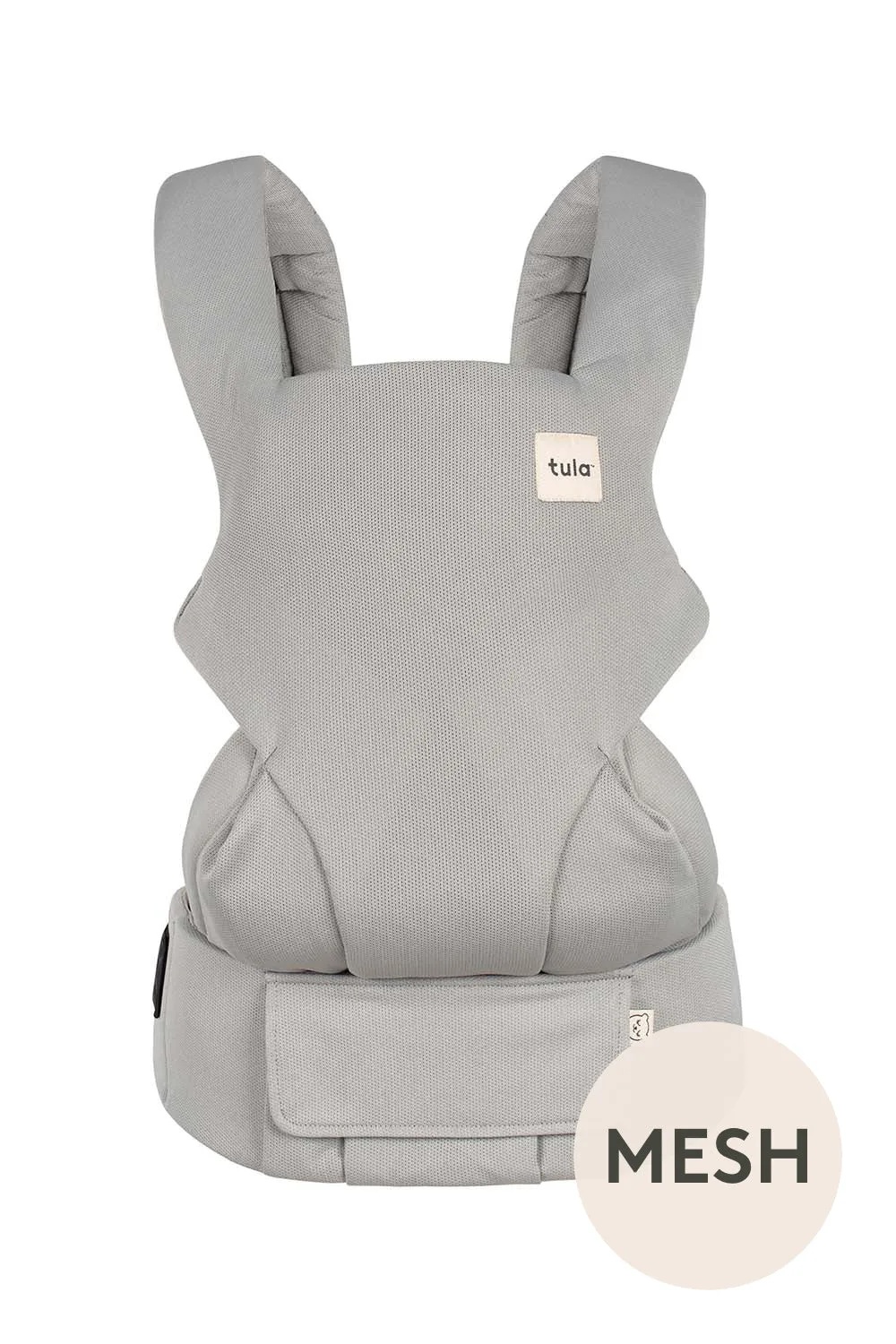
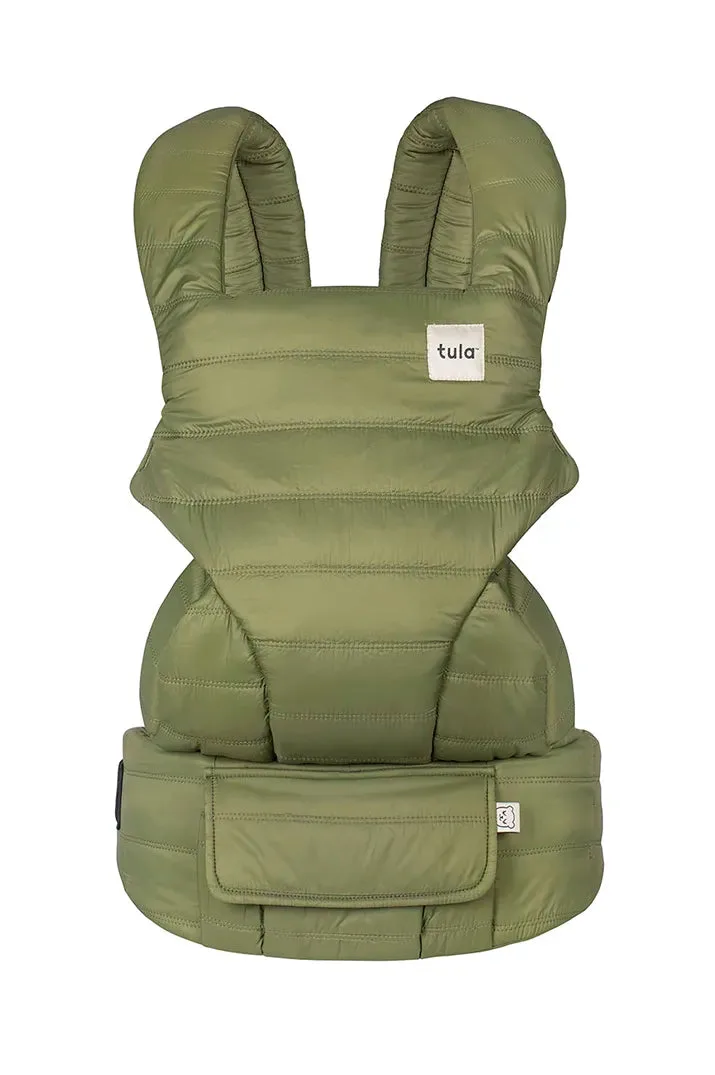
Not all carriers are designed for bulky clothing. Look for a carrier with adjustable straps and a wide seat that can accommodate a thicker diaper or snowsuit without compressing your baby's legs. The Explore Carrier line from Baby Tula, for example, offers front and back carrying options and a soft, quilted exterior on some models. The Puffer Explore Baby Carrier in White or Moss Green has a padded, puffer-style design that adds warmth without extra layers. The Houndstooth Cotton Explore Baby Carrier is a lighter cotton option that works well as a base carrier under a cover. Whichever carrier you use, make sure the buckles and straps can be tightened securely over winter clothing.
Put the carrier on before dressing your baby
Put the carrier on your body first, then dress your baby in their layers and place them in the carrier. This order helps you avoid wrestling with a bulky coat while holding your baby. If you're using a front carry, fasten the waistband and shoulder straps loosely, then tighten them once your baby is in. For a back carry, have your baby sit on your back and bring the panel up before tightening. Always ensure the carrier's chest clip is fastened and the shoulder straps are snug.
Add a carrier cover or blanket over the carrier, not inside
A carrier cover or babywearing blanket should go over the outside of the carrier, never between your baby and your body. Placing a blanket inside the carrier can push your baby's chin to their chest and restrict breathing. Choose a cover that attaches securely to the carrier, such as one with straps or a zip, so it doesn't slip. If you use a blanket, tuck it around your baby's legs and torso, leaving their face uncovered. Check your baby's temperature by feeling their chest or back of the neck—not their hands or feet, which can feel cool even when they're warm.
Check the fit and your baby's airway
After layering, re-check that your baby is in the carrier correctly. Their chin should be off their chest, their face should be visible and kissable, and their back should be supported in a natural position. The carrier should hold your baby close enough that you can tilt your head forward and kiss their forehead. If you can't, tighten the shoulder straps. Also check that the carrier's seat is wide enough to support your baby's thighs knee-to-knee, even with extra clothing. Make sure no fabric is bunched under your baby's chin or covering their nose or mouth.
Adjust layers as you move between indoors and outdoors
Cold-weather babywearing often means going in and out of buildings. Before you go inside, remove the carrier cover or blanket and unzip your own coat to prevent overheating. Your baby's layers should be easy to remove, so choose pieces with snaps or zippers. If you're using a puffer carrier like the White Puffer Explore Baby Carrier, you may not need an extra cover for short trips. For longer outings, add a cover over the carrier. Always check your baby's chest or back for sweating or coldness and adjust accordingly.
Cold-weather layering steps
- Dress your baby in a base layer and mid-layer: Start with a moisture-wicking base layer (wool or synthetic) and add a fleece or wool mid-layer. Avoid cotton as a base layer because it holds moisture. Checkpoint: Your baby should be wearing one more layer than you are when standing still.
- Put on the carrier and adjust the straps: Fasten the carrier's waistband and shoulder straps loosely, then place your baby in and tighten the straps until they are snug. Mistake to avoid: Tightening the carrier before your baby is in can make it hard to get a secure fit over winter clothing.
- Add a cover or blanket over the carrier: Attach a carrier cover or tuck a blanket around your baby's legs and torso on the outside of the carrier. Never put a blanket between your baby and your body. Checkpoint: Your baby's face should be uncovered and visible at all times.
- Check the fit and airway: Ensure your baby's chin is off their chest, their back is supported, and you can kiss their forehead. Adjust straps if needed. Mistake to avoid: Letting bulky clothing push your baby's chin down or create a gap at the back.
- Remove layers when going indoors: Take off the carrier cover or blanket and unzip your own coat before entering a warm building to prevent overheating. Checkpoint: Feel your baby's chest or back of the neck—it should be warm, not sweaty.
Carrier options for winter layering
- White - Puffer Explore Baby Carrier: White colorway provides a versatile and simple aesthetic; puffer style adds a soft, padded appearance; suitable for use in colder months. The padded puffer design adds warmth without extra layers, and the neutral white makes it easy to match with winter coats.
- Moss Green - Puffer Explore Baby Carrier: Moss green with a puffer-style quilted design; Explore carrier suitable for front and back carrying. The quilted puffer exterior provides insulation, and front/back carrying options let you adjust as your baby grows or as weather changes.
- Houndstooth - Cotton Explore Baby Carrier: Houndstooth pattern in cotton fabric; part of the Explore Carrier line. The cotton fabric is breathable and works well as a base carrier under a cover, while the classic pattern adds style.