Carry Positions for the Amanita Lark Baby Carrier
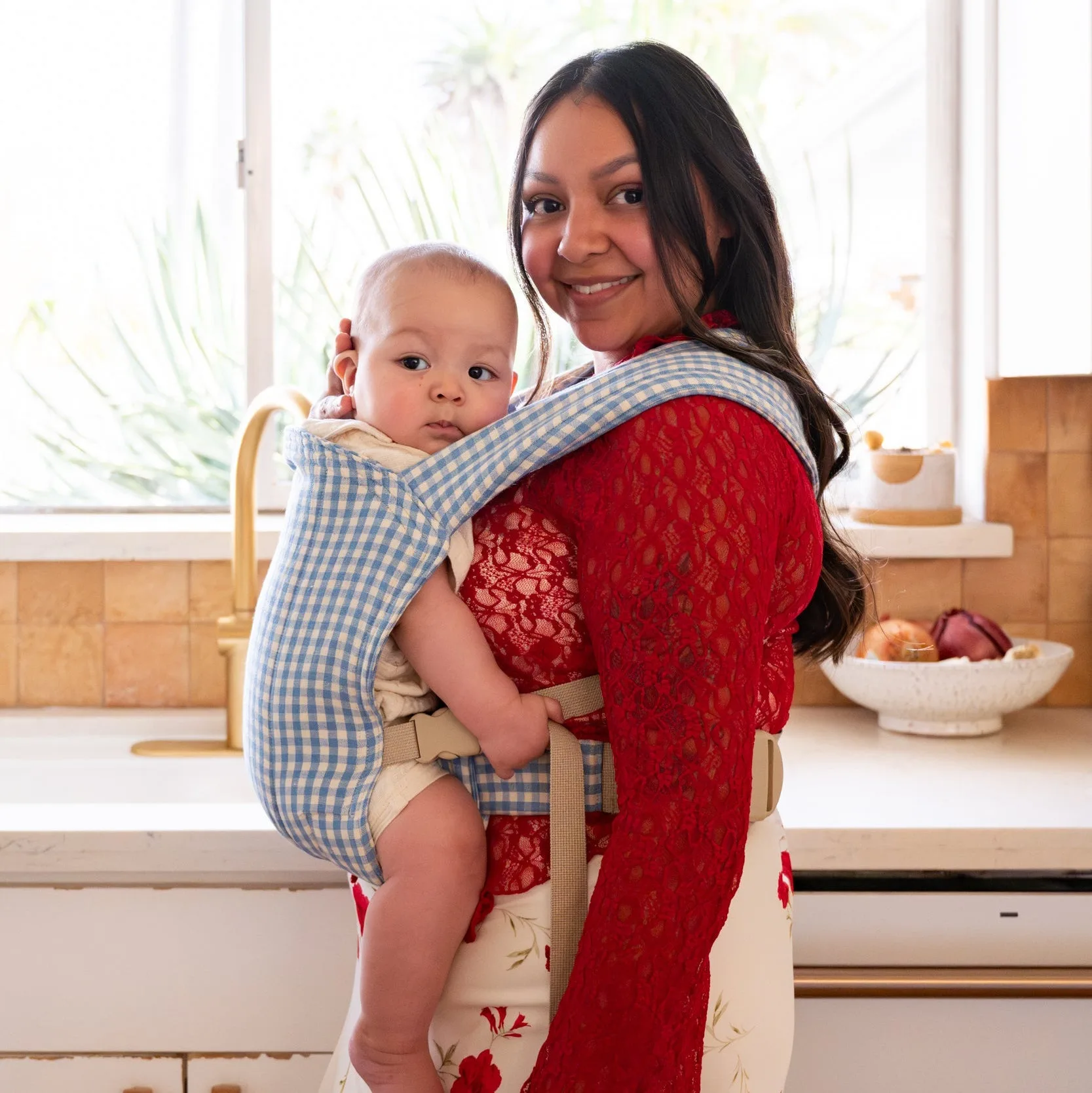
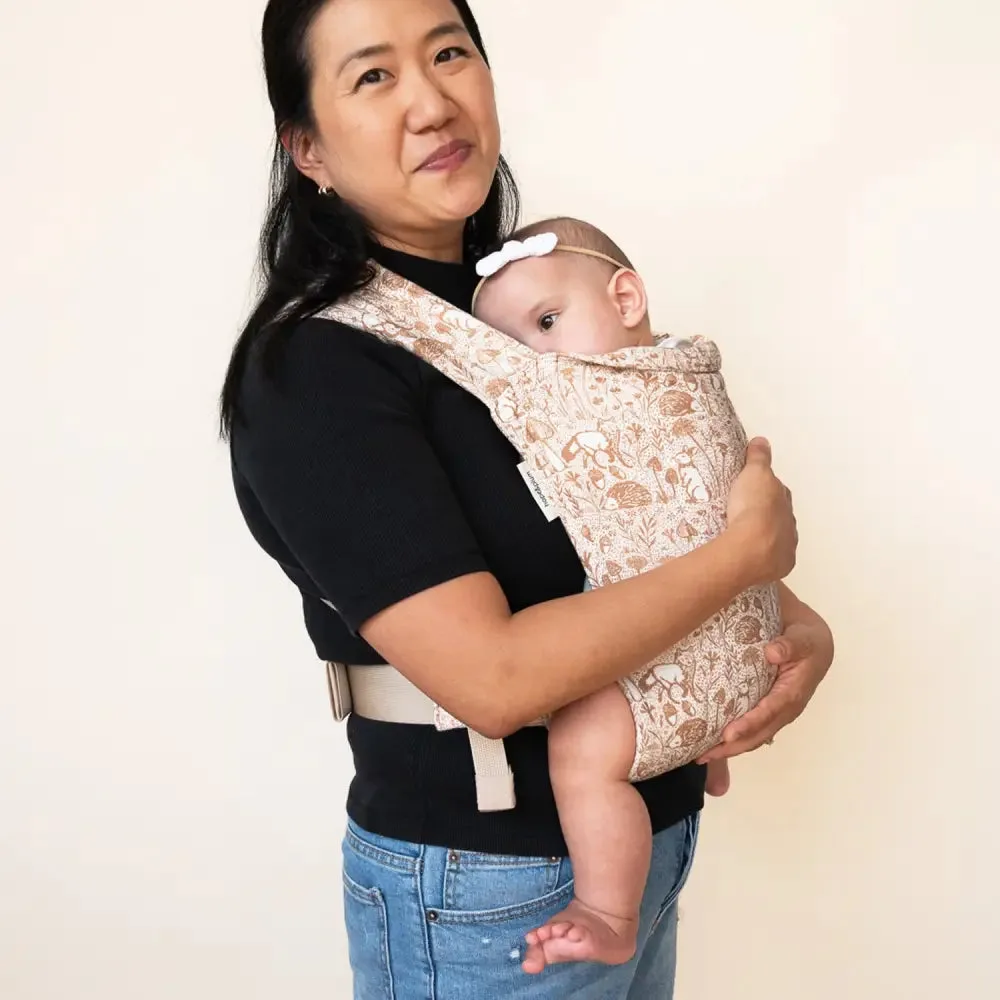
The Amanita Lark Baby Carrier supports front and back carry positions, making it easy to switch between errands, travel, and everyday wear as your baby grows. Designed for babies from 10 to 45 lbs (starting at size 3-6 month clothing), the carrier adapts to your changing needs without extra accessories.
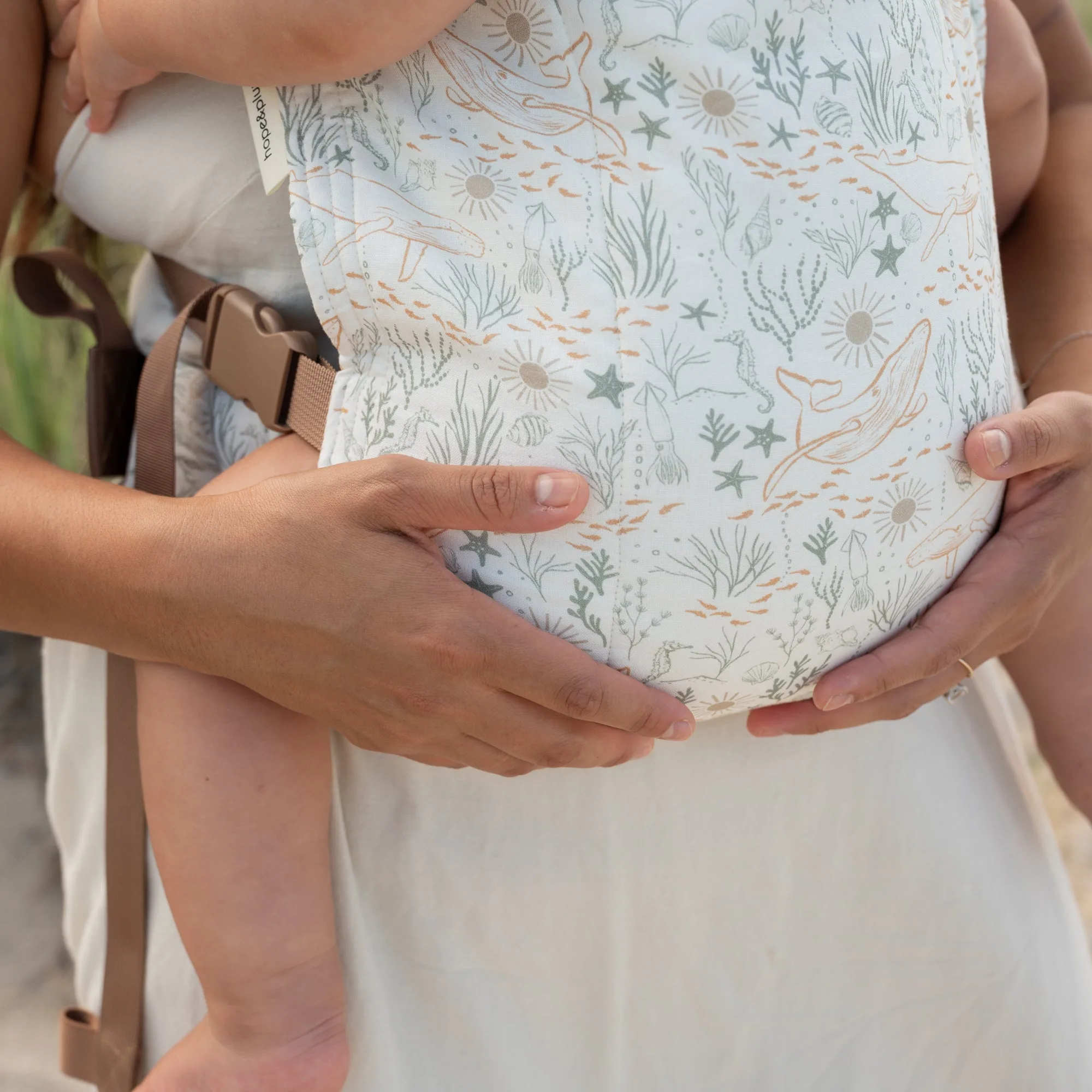
Because the Lark uses an apron-style waistband and wide cross-back straps, the fit and comfort depend on choosing the right carrier length and adjusting the seat depth. Below, we explain how to set up each carry position and what to check for a secure, comfortable fit.
Front Carry Setup
The front carry is the most common starting position for younger babies. Follow these steps to get a secure fit.
- 1. Choose your length: The Lark comes in Short (adult clothing XXS through L) and Long (adult clothing XL through 6X). Select the length that matches your torso size. If you're between sizes, the 30-day return policy makes it easy to exchange.
- 2. Position the waistband: Fasten the apron-style waistband at your natural waist, snug but not tight. The waistband should sit high enough to support baby's weight close to your center of gravity.
- 3. Place baby in the carrier: With baby facing you, bring the carrier up around their back. Adjust the wide seat so it supports from knee to knee in a natural hip-healthy seated position. Baby's knees should be higher than their bottom.
- 4. Tighten the shoulder straps: Pull the cross-back straps evenly to bring baby close to your chest. The straps should distribute weight across your shoulders without digging in. Check that baby's back is supported and their chin is off their chest.
Back Carry Setup
Once your baby has good head and trunk control (typically around 6 months or when they can sit unassisted), the back carry offers a different vantage point and can be more comfortable for longer wear. The Lark's wide cross-back straps help distribute weight evenly.
- 1. Prepare the carrier: Loosen the shoulder straps and place the waistband at your natural waist as you would for a front carry. Have baby nearby or use a safe surface to help with the transition.
- 2. Position baby on your back: Bring baby onto your back using your preferred method (e.g., hip scoot or superman toss). Ensure baby is centered and their bottom is supported by the wide seat. The seat should still support knee to knee.
- 3. Tighten and adjust: Reach over your shoulders and pull the straps to bring baby close to your back. The cross-back design should feel balanced. Check that baby's back is straight and their chin is clear. You should be able to see baby's face by turning your head.
Fit Tips for Both Positions
The Lark's natural fiber construction (55% hemp and 45% organic cotton) softens with every wash, so the carrier may feel slightly stiff at first. Over time, the fabric molds to your body and baby's shape for a more custom fit. No infant insert is needed for smaller babies, but always ensure baby's airway is clear and their back is well supported.
For front carry, baby's face should be visible and their chin should not be tucked into their chest. For back carry, the carrier should sit high enough that you can easily monitor baby's breathing. If you're unsure about the fit, the 30-day return policy allows exchanges between lengths.
Amanita Lark Baby Carrier Evidence
-
Amanita Lark Baby Carrier: The Lark carries babies from 10 to 45 lbs, starting at size 3-6 month clothing. This weight range covers most of the first two years, so you can use the same carrier from infancy through toddlerhood without buying a separate newborn or toddler carrier.
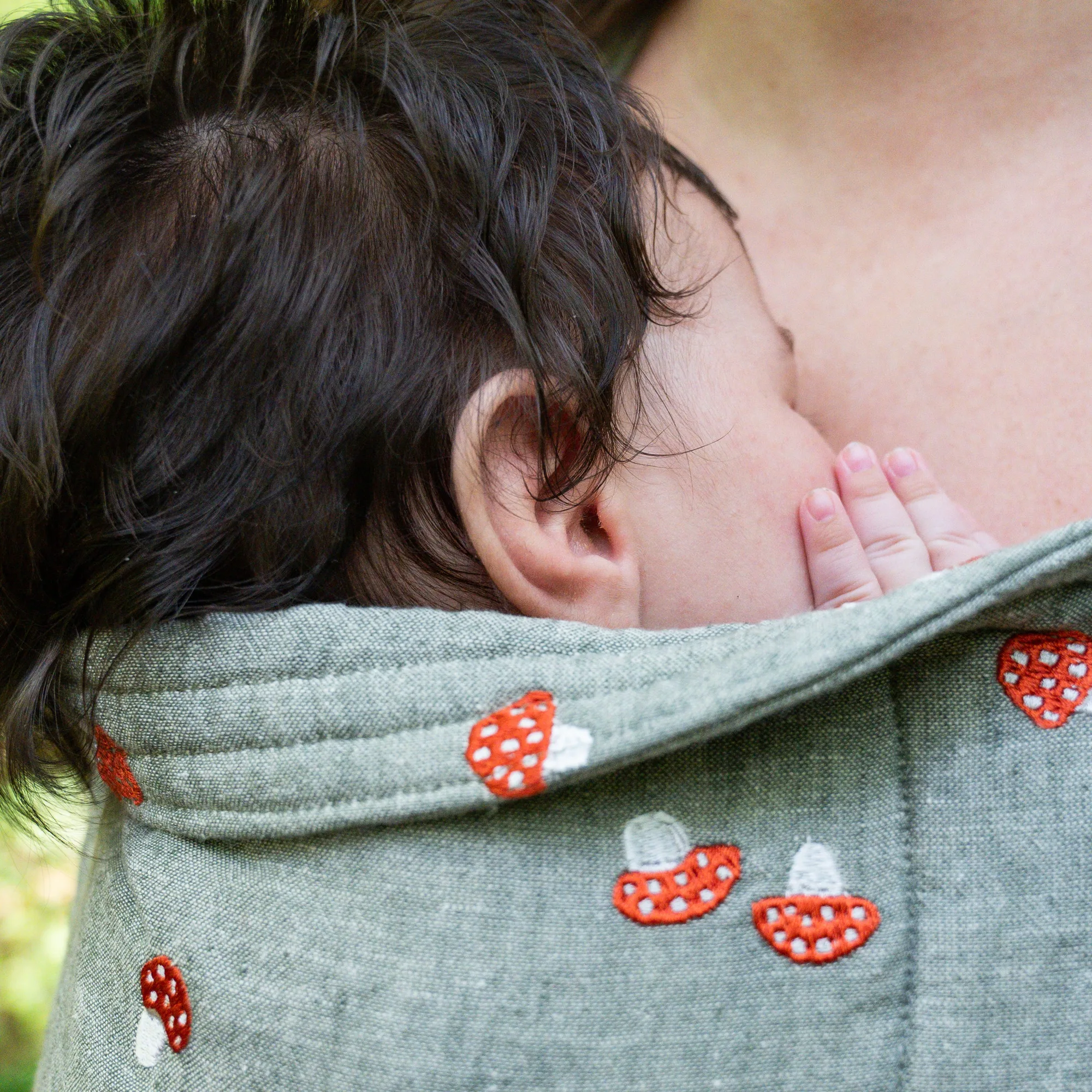
Amanita Lark Baby Carrier
-
Amanita Lark Baby Carrier: Front and back carry make it easy to switch between errands, travel, and everyday wear as your baby grows. Having both carry options means you can choose the most comfortable position for your activity and your baby's age, extending the carrier's usefulness.
-
Amanita Lark Baby Carrier: The apron-style waistband adjusts to your torso while wide cross-back straps distribute weight evenly across your shoulders for all-day comfort. Proper weight distribution reduces strain on your back and shoulders, making longer carries more comfortable for the wearer.