Quick answer
Fit the Amundsen pack empty and snug before adding weight. Load heavy items low and centered, keep total load under 10–15% of your dog's body weight, and recheck straps after the first 10 minutes of walking. Adjust in small increments and watch your dog for signs of discomfort.
Why fit comes before loading
A backpack that shifts or rubs will cause problems no matter how well you pack it. The Amundsen pack is ergonomic and adjustable, designed to sit steadily on the dog's back, but that stability depends on a correct initial fit. Start with the pack empty. Place it on your dog's back so the main body rests over the ribcage, not the shoulders or hips. Tighten the straps gradually until the pack feels snug but you can still slide two fingers under each strap. Check that the pack does not slide side to side when your dog walks or trots. If it does, adjust the girth or chest straps in small steps. A common mistake is overtightening to stop movement, which restricts breathing and causes chafing. Once the empty pack stays put, you are ready to add weight.
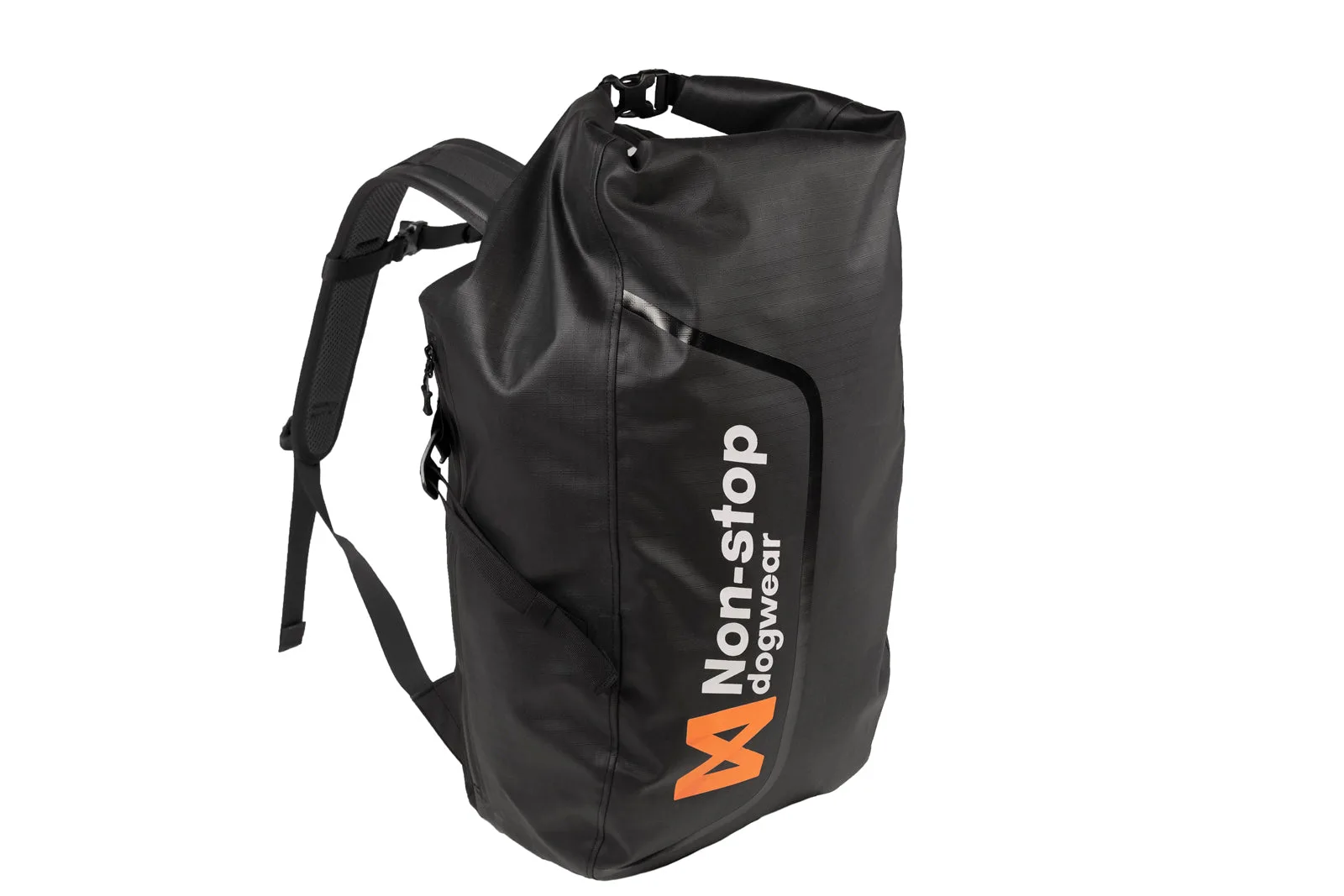
backpack
How to distribute weight for balance
Dogs carry weight most comfortably when it is centered over their back and kept low. Think of the pack as two saddlebags: pack each side with similar weight so your dog does not lean. Put denser items like food or water bottles at the bottom of each side, and lighter bulk like a jacket or sleeping pad on top. Avoid putting anything heavy in the front or rear pockets, as that can pull the pack forward or backward. The Amundsen pack has massive volume, so it is easy to overfill; resist the urge to use every liter. A balanced load moves with your dog instead of bouncing. After loading, lift the pack by the handle and check that it hangs level. If one side sags, redistribute before putting it back on your dog.
Weight limits: how much is too much?
There is no universal weight limit, but a widely used guideline for canine backpacks is 10–15% of your dog's body weight for multi-day hikes. For a 25 kg (55 lb) dog, that means roughly 2.5–3.75 kg (5.5–8.25 lb) total pack weight. Start at the lower end and increase only if your dog shows no signs of fatigue or soreness. Puppies, senior dogs, and dogs with joint issues should carry less or nothing. The Amundsen pack itself has some weight, so factor that in. Weigh your loaded pack on a luggage scale before your trip. If your dog lags, pants excessively, or tries to rub the pack off, reduce the load. Remember that your dog also needs to carry their own body weight over rough terrain, so err on the light side.
Adjusting the Amundsen pack on the trail
Even a perfect fit at home can loosen after a few kilometers. Plan to stop after the first 10 minutes and again after 30 minutes to check straps and load balance. Tighten any straps that have loosened, and shift contents if the pack has settled to one side. If your dog starts to lag, pant heavily, or tries to rub the pack against trees, that is a sign to stop and reassess. On multi-day hikes, check for rubbing at the armpits, chest, and belly each evening. Small red spots or hair loss mean the fit is too loose or too tight. Adjust in small increments, and give your dog a rest day if needed. The goal is a pack that feels like part of your dog, not a burden.
Step-by-step: fit and load the Amundsen pack
- Fit the empty pack: Place the pack on your dog's back with the main body over the ribcage. Tighten straps until snug, leaving room for two fingers under each. Check for side-to-side movement. Checkpoint: The pack should not slide when your dog walks or trots.
- Load evenly and low: Put dense items at the bottom of each side, lighter items on top. Keep weight centered and equal on both sides. Avoid heavy items in front or rear pockets. Checkpoint: Lift the pack by the handle—it should hang level, not tilt.
- Weigh the load: Use a luggage scale to ensure total pack weight is 10–15% of your dog's body weight. Start at the lower end for multi-day hikes. Checkpoint: If your dog lags or pants excessively, reduce the weight.
- Recheck after 10 minutes: Stop after the first 10 minutes of walking. Tighten any loosened straps and redistribute contents if the pack has shifted. Checkpoint: Adjust before continuing—small fixes prevent big problems.
- Monitor for rubbing: Each evening, check armpits, chest, and belly for redness or hair loss. Adjust straps in small increments if you find hot spots. Checkpoint: Persistent rubbing means the fit is wrong—do not ignore it.
Product facts
- Amundsen pack: Heavy-duty dog backpack for expeditions, strength training, and excursions. Ergonomic and adjustable, the pack sits steadily on the dog's back. Massive pack volume, and smart solutions make an excellent fundament for many nice adventures together. The ergonomic design and adjustability help you achieve a stable fit, while the large volume lets you distribute weight evenly for multi-day trips.