Quick answer
Measure your waist at the height where you actually wear your waistband, not at the narrowest point of your torso. Then measure your hip at the fullest part of your seat, and measure rise from the front waistband line down through the crotch to the back waistband line. Use those three numbers together, because waist alone will not tell you whether a trunk or jockstrap will sit and stay where you want it.
Why waist alone is not enough
Most men's underwear is sold by waist size, but waist size is a starting point, not a guarantee. Two men with the same 32-inch waist can have very different hip measurements, and hip measurement is what decides whether a trunk rides up, digs in, or stays put through a full day. Rise matters just as much: it is the distance from the front waistband, through the crotch, to the back waistband, and it controls whether a pair sits at your natural waist, on your hips, or somewhere in between.
This is why finding your underwear size is really a three-number job. Once you have waist, hip, and rise written down, you can compare them against any size chart and predict fit far more accurately than by guessing from your jeans label.
What you need before you start
Use a flexible cloth tape measure, not a metal carpenter's tape. Wear a thin pair of underwear or fitted shorts so the tape follows your body rather than your clothing. Stand in front of a mirror so you can see whether the tape is level, and keep it snug but not tight enough to compress your skin. If you do not have a cloth tape, a piece of string and a ruler work fine; mark the string, then measure it flat.
Write the numbers down as you go. Re-measuring later is annoying, and small differences between a relaxed morning measurement and an end-of-day measurement are normal.
How to measure waist for underwear
Stand relaxed and exhale normally. Wrap the tape around your body at the height where you want your waistband to sit. For most men that is at or just below the natural waist crease, not at the narrowest point of the torso and not down at the hip bones. Keep the tape parallel to the floor all the way around, and check in the mirror that it is not dipping at the back.
Common mistake: pulling the tape tight and sucking in. That gives you a number that fits only when you are standing still and holding your breath. If your measurement lands between two sizes, size up for trunks and jockstraps that need to stay put, since a waistband that is too small will roll or dig in once you sit down.
How to measure your hip
Wrap the tape around the fullest part of your seat, usually a few inches below your waistband line. Keep the tape level and let it rest against your body without squeezing. This is your hip measurement, and it is the number that tells you whether a trunk has enough room through the seat and thighs.
Common mistake: measuring over bulky clothing or measuring at the hip bones instead of the fullest part of the glutes. If your hip measurement is much larger than your waist measurement, look for styles described as anatomically correct or with a shaped seat, because a straight-cut trunk will pull and ride up.
How to measure underwear rise
Rise is easiest to measure on a pair you already own and like. Lay the underwear flat, then measure from the top of the front waistband, down through the crotch seam, and up to the top of the back waistband. That total is the rise. If you are measuring on your body instead, hold one end of the tape at your front waistband line, pass it down through your legs, and bring it up to your back waistband line.
Common mistake: measuring only the front rise. Front rise tells you where the waistband sits in front, but the back rise is what keeps the waistband from sliding down when you bend or squat. If you are between two rise measurements, a slightly longer rise is usually the safer choice for all-day wear.
Turning your numbers into a size
Compare all three measurements against the size chart for the specific style you are buying, not against a generic chart. Waist decides the size band, hip confirms it, and rise tells you whether that style will sit where you want. If the chart only lists waist, treat your hip measurement as a tiebreaker: when your hip measurement is near the top of a size range, consider moving up.
For styles with a defined pouch or shaped seat, such as the Anatomic Mini Trunk, the waist and hip numbers matter more than rise because the construction is doing the shaping work. For a jockstrap, waist fit is the priority since the straps and pouch rely on a stable waistband.
Your measuring sequence, step by step
- 1. Set your waistband line: Stand relaxed, exhale, and decide where you want the waistband to sit. Mark that height with a finger before you wrap the tape. Checkpoint: the tape should be level all the way around, not dipping at the back.
- 2. Measure your waist: Wrap the cloth tape around your body at that line, snug but not compressing. Read the number at the point where the tape meets itself. Common mistake: pulling tight or holding your breath. Re-measure if you did either.
- 3. Measure your hip: Move the tape down to the fullest part of your seat and keep it level. Let it rest against your body without squeezing. Checkpoint: if your hip measurement is much larger than your waist, prioritize styles with a shaped seat.
- 4. Measure rise on a pair you own: Lay a favorite pair flat and measure from the front waistband top, through the crotch seam, to the back waistband top. Common mistake: measuring only the front rise. The back rise controls whether the waistband stays up when you bend.
- 5. Compare against the style's own chart: Match your waist to the size band, confirm with hip, and use rise to choose between a shorter or longer cut. Next step: if you are between sizes on a trunk or jockstrap, size up so the waistband stays put.
Styles that reward accurate measuring
- Anatomic Mini Trunk: The Anatomic Mini Trunk uses a patented anatomically correct design and a V-shaped seam that defines the gluteus. Because the seat is shaped rather than straight-cut, your hip measurement is the key number for predicting whether this trunk will sit smoothly instead of pulling.
- WAVEFORM PRIDE Padded Boxer Trunk: The WAVEFORM PRIDE Padded Boxer Trunk is a trunk with integrated padding and comes in Color and Size options. Padded trunks add structure at the front, so an accurate waist and rise measurement keeps the padding positioned correctly instead of shifting when you move.
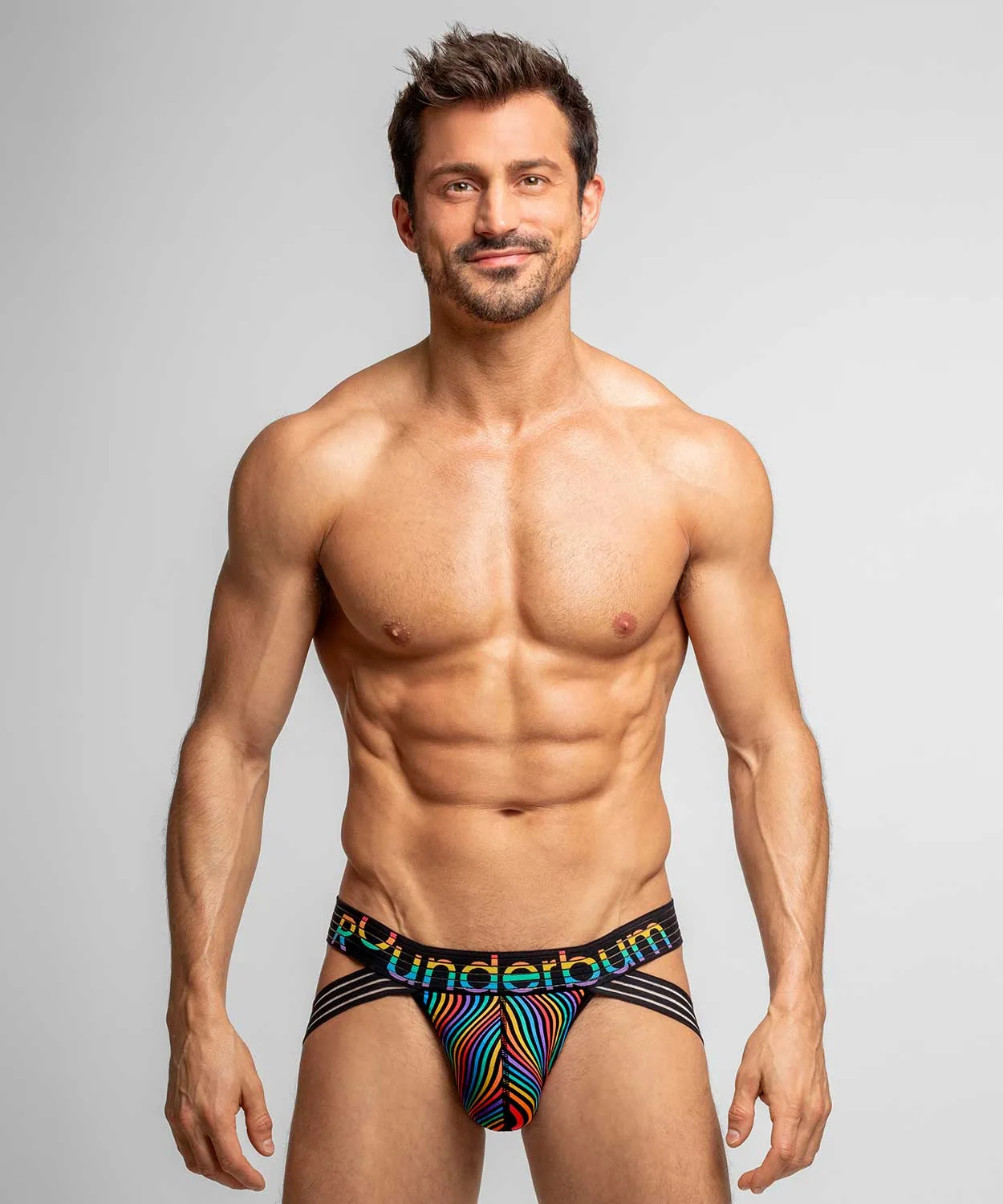
- WAVEFORM PRIDE Lift Jockstrap: The WAVEFORM PRIDE Lift Jockstrap is a jockstrap available in Color and Size options. A jockstrap depends on a stable waistband, so measure your waist at the height you want the band to sit and size up if you are between sizes.